
Tales of Eternia Remastered Review
Nintendo Switch 2
A 2D classic returns with a fresh voice cast, restored skits, and plenty of ways to tune the difficulty.
Reviewed by Adeela Tas on Oct 18, 2026
After the Tales of Remastered project spent its first releases on later 3D games, Graces f, Xillia, and Berseria, the series finally turns back to its 2D era, and the result is a package with real care behind it. Tales of Eternia Remastered brings new English voice work, content that was missing from the older Western release, and a long list of convenience options, all wrapped around a compact adventure that moves at a snappy pace from start to finish.
The game debuted on PlayStation in Japan in 2000, then reached North America in 2001 as Tales of Destiny II. This name later clashed with an unrelated Japanese game, Tales of Destiny 2, which still has no official English release. Europe and Australia got a PSP version in February 2006 under the proper title, while North America never did.

Tales of Eternia Remastered leans heavily on its PSP port and is the first time the game has been officially available on all platforms.
It is the Fourth entry in the series chronologically and the oldest one Bandai Namco has released in recent memory. The story starts in Inferia, where Reid Hershel works as a hunter and farm boy, happily doing the bare minimum and spending the day eating. That routine ends when a girl falls from the sky.
She is called Meredy, speaks a language no one understands, and comes from Celestia, a neighboring world that Inferians look down on. Reid's childhood friend Farah cannot leave the situation alone and drags him along to find out where the girl came from, and Keele, a mage and another old friend, joins in.
He and Reid drifted apart earlier for reasons that are unclear at first, giving their scenes a prickly edge. Reid keeps provoking, Keele overcompensates, and Farah plays peacemaker while Meredy, unable to follow a word, looks on. The trip grows into something much larger involving both worlds and a looming catastrophe called the Great Fall, and you gather the Greater Craymels, elemental spirits that embody magic here.
The two-worlds idea is familiar in this series and returns in Xillia and Arise, so it can feel like a crutch. In Tales of Eternia Remastered, at least, both worlds are part of the setting from the first hours, so the prejudice between them shapes the plot rather than serving as a late twist.
Tales of Eternia Remastered has a modest plot, a simple quest to collect spirits and save the world, and the script is generic in places.
The cast does the heavy lifting. Reid is a reluctant hero whose practical streak and love of a cozy life make more sense the longer you stay with him, though his deeper side arrives late and the constant food jokes fall flat. Farah is the standout: energetic, fighting in full dress, with a personal conflict that slowly adds weight to her urge to help everyone.
Keele is blunt, leans too hard on science and logic, and is clearly not built for travel. Meredy is curious and kind even before anyone understands her. Each pairing among the four gets good moments, and Reid and Farah tend to stumble into trouble together as if sharing a single brain cell; her energy balances his easygoing nature, and the brisk pacing keeps the adventure compact without feeling thin.
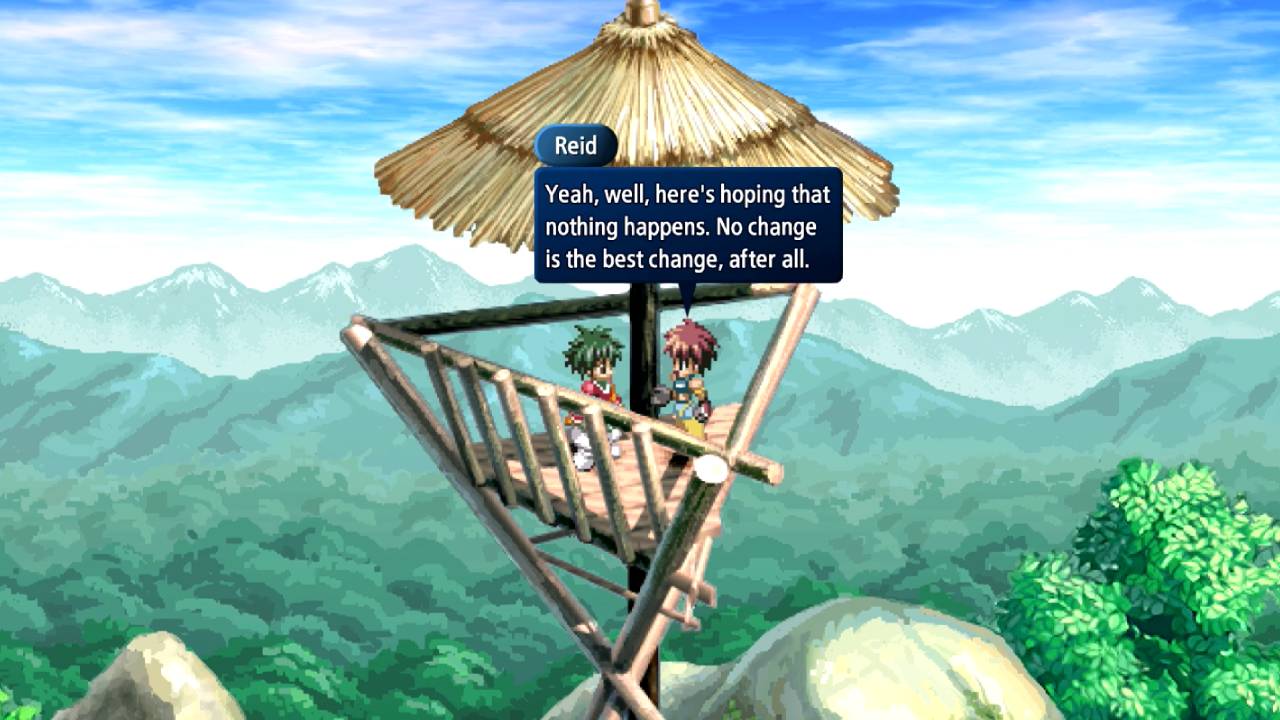
Voices and text were both redone. Japanese and English audio are included, and the English dub was recorded fresh alongside a retranslation. Early on, some delivery sounds flat, as if the actors recorded in separate rooms without knowing the scene, but conversations sound more natural once you leave Rasheans.
Many lines are reworded, and the biggest change is Farah's catchphrase, which shifts from "No problem" to "Easy breezy," evoking an old cosmetics commercial. The skits make up for it. The camp skits were never available in English before, and Tales of Eternia Remastered now includes English translations and full voice acting. Open the world map, pick Camp, and if a skit is waiting, it plays.
The game never indicates whether one is available, so repeatedly camping is the only way to catch them all.
The hint skits on the Select button differ, since they only point to your next destination. Several of the new conversations are genuinely funny and add banter, backstory, and character detail the cast has long deserved. Many were never included in the older Western release. The camp option has a misleading name.
It needs no item and is always available, but it restores only HP, not TP, and it will not revive a knocked-out party member, so Keele can stay down after a rough fight. Beyond that, the structure is traditional: move from town to town, explore dungeons, keep gear updated, and fight whatever turns up, with random encounters back.
Towns are for resting and shopping, but their NPCs rarely give a reason to linger, and large parts of the world map feel empty despite the presence of hidden items. Dungeons hold up better. A few gimmicks overstay their welcome, but most have their own ideas, from puzzles built around the Sorcerer's Ring to odd layouts, though length varies and some are awkward to navigate.
Puzzles and minigames that relied on distinguishing colors were redesigned so that other cues work too, improving accessibility. Cooking matters more in Tales of Eternia Remastered than in most games in the series. Dishes restore HP or give temporary boosts, and hunting the hidden Wonder Chef for recipes gives a reason to look around. Soldiers worldwide teach additional commands to direct AI allies.
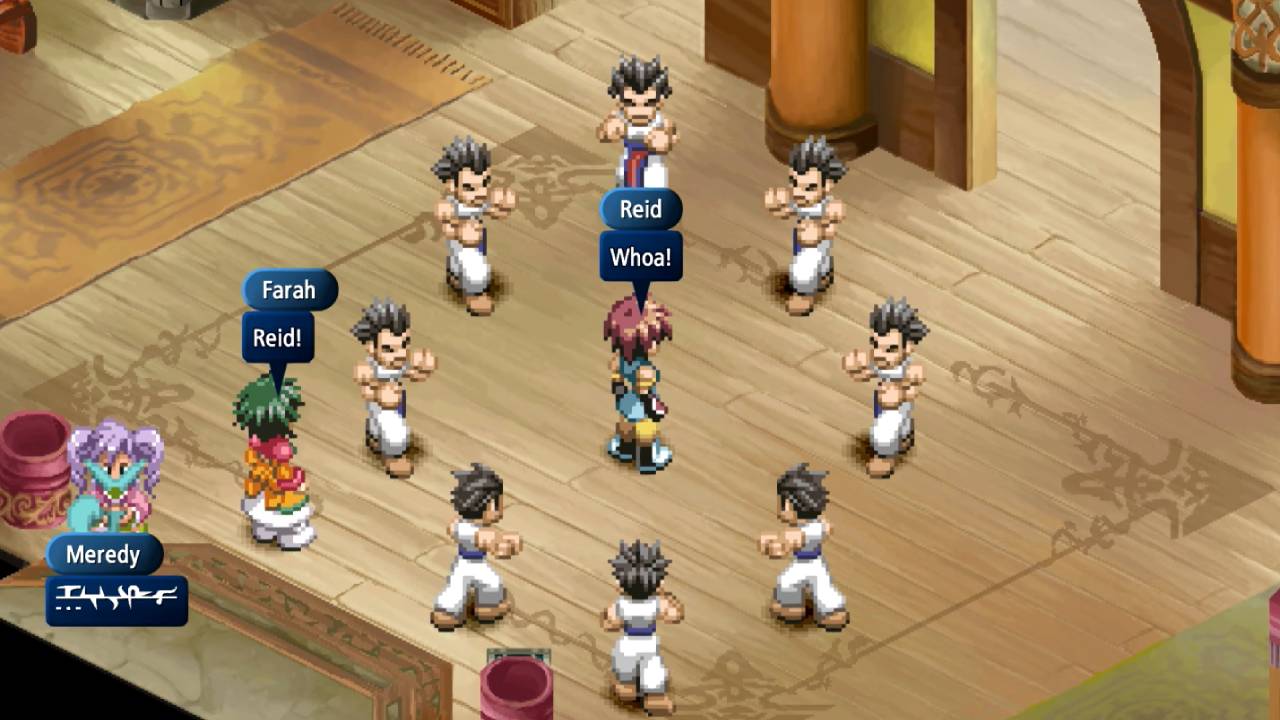
Reid moves fast on the world map, and a setting lets you pick walking or running.
Minigames are everywhere, and quality varies. The Whis card game is dull, and bombing enemies from a minecart is strange. Steering a raft down a river gets awkward if you keep ramming rocks. Giant Ball Chase has you kicking a huge ball around an arena while grabbing pickups that push or pull depending on their color, and it turns into simple fun once it clicks.
The quiz is the best, with updated questions about newer entries. The most frustrating part is the minigames that interrupt the story, and Tales of Eternia Remastered has no local multiplayer. The PS1 version had it; the PSP port dropped it, and it remains single-player.
Combat runs on the Aggressive Linear Motion Battle System, which mixes fighting-game and RPG ideas on a flat 2D line. The attack button gives Reid up to three hits, and holding a direction changes the move to an upward swipe, a jumping slash, or a forward stab. Skills use a direction plus the skill button and cost TP. Positioning is key, since you stand where you can hit groups or guard while waiting for an opening.
Enemies attack quickly and often, so fights stay lively. Unlike newer entries, Tales of Eternia Remastered is not built around big combos. It is about positioning, crowd control, trading blows, and protecting allies. Reading enemy tells and reacting in time decide most fights, and guarding is vital: one boss fires a beam across the whole field, and standing in front with your guard up shields everyone behind you.
Input timing is strict, upward inputs are tricky to land at first, and the stiff movement is one of the game's most archaic parts.
Control mode matters too. By default, Tales of Eternia Remastered puts you in semi-auto: make an input away from an enemy, and the character runs up, attacks, retreats, and repeats while automatically guarding. It is restrictive, and it will not let you jump, which is a problem because jumping matters a lot.
Manual mode unlocks by talking to an NPC at a dojo near the starting town, and locking it for the opening stretch feels pointless. It lets you dash with a double-tap and guard whenever you like, but it doesn't back you up or deflect attacks.
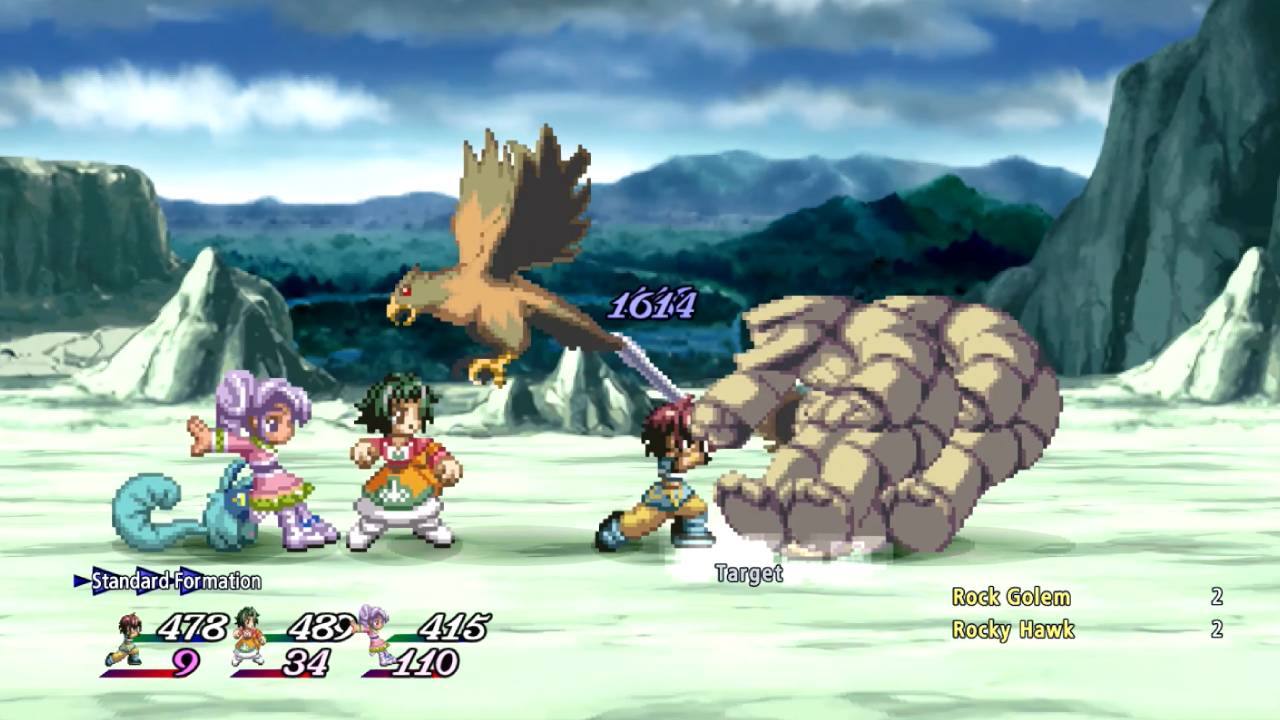
Semi-auto chains move more easily but cost directional inputs, and aerial enemies force you to learn to jump. AI allies have adjustable behavior, yet they sometimes stand around, and you may end up babysitting them with healing items. Early fights can also be rough enough to cost a member and force a retreat to an inn.
Characters in Tales of Eternia Remastered play differently. Reid's attacks split into slash and thrust stats, with Swarm leaning thrust and Demon Hammer leaning slash, so weapon and skill choices need to match. He can use swords, axes, knives, and halberds, and chests drop so many that you rarely need to buy one.
Farah uses punches and kicks and also helps with healing.
Chaining Demon Hammer into Demon Lightning Hammer feels great, especially when allies dive in to follow up, and a shield equipped on Reid shows in battle. Meredy and Keele cast spells through Craymel Cages: Greater Craymels assigned to a cage decide which spells are learned, and fringing combines elements as they grow, so experimenting is half the fun.
Guarding keeps them safe while casting, and other characters bring tricks like stealing. In Tales of Eternia Remastered, the combat has aged well. The 2D spell effects and Mystic Artes still look cool, the fights carry a beat-'em-up feel, and the variety keeps random encounters from getting annoying.
It isn't on the level of Tales of Destiny DC, but it was the first game in the series where a fun, solid battle system came together. On the downside, the early semi-auto lock is awful, allies can be passive, the first story boss is brutal on hard mode, and progression runs quietly in the background.
Slash, Thrust, Punch, and Kick levels now show as numbers, which helps. A new option also speeds battles by setting everyone to auto until the next encounter, handy in weak areas but risky near stronger enemies. Experience is where Tales of Eternia Remastered gives the most control.
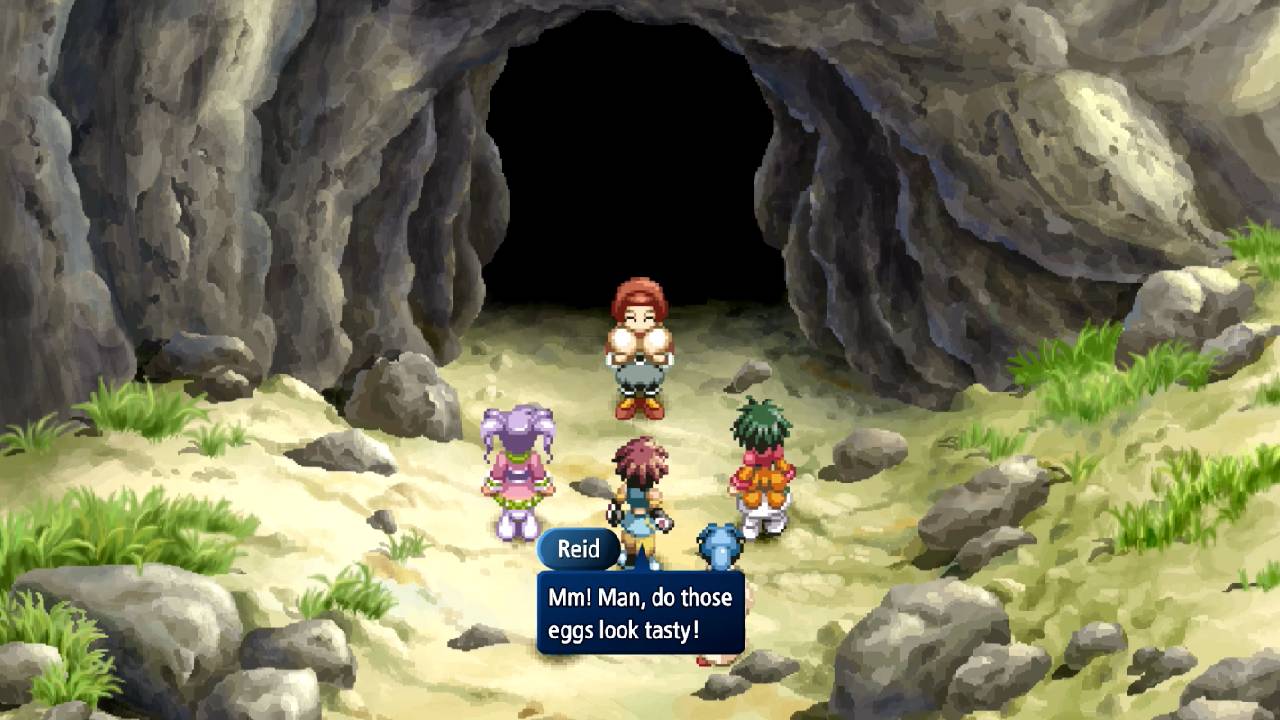
Beyond combat, the boost function gives you control over experience and difficulty.
The old Grade Shop is now the boost function, letting you multiply or reduce experience, gold, damage taken, attack proficiency, and cooking proficiency. Rates can go up to 4x, and you can lower encounter rates, cut skill costs, remove the wipeout penalty, raise the item limit from 15 to 99, and change item drop rates.
Doubling skill usage speeds up learning artes and meeting Mystic Arte requirements; it also doubles cooking proficiency and lets camping restore TP. You can toggle everything at any time, and Steam achievements still unlock. Leaving every boost alone for the first ten hours works fine, but cutting encounters when you just want to reach the next town is a relief.
The results get silly. With boosts raised, you learn Omega Demon Chaos, which leads to the Dragon Demon Chaos Mystic Arte, by the end of the Forest of Temptation. That loses the gradual learning a first run deserves, but it is great for a replay. Faster auto battles also make Farah's 300 Deadly Force battles easier.
Difficulty options build on that. Extreme, formerly Mania, is available from the start, so you can chase the requirements for Maxwell's extensions during a first run and reach the bonus dungeon late in a first playthrough. Unknown unlocks after the ending.
Battle retry lets you retry a fight after a loss; quick healing restores the party to 75 percent or full health; and you can lower or switch off encounters.
Saving works anywhere, and autosave uses green crystals as reload points. Destination markers show the main quest, side quests, minigames, and timed events, which helps since there is no quest log. They stand out against the pixel art and look stapled on, and a skipped timed event leaves an hourglass on screen with no way to dismiss it on its own. All markers can be turned off.
Tales of Eternia Remastered lets you switch between remastered and original graphics, with the remastered look as the default. Backgrounds are cleaner, and sprites stay sharp at any camera distance, fixing the blur that hit characters in battle. In-place detail helps, such as a martial arts school statue that is easy to identify in the new version.
Closer looks reveal problems: textures blend, contrasting pixel colors get a torn-paper edge, foliage changes, and a plank on the ground vanishes. The sharper mountain textures give the 3D overworld a slightly different feel, and because the sprites are identical in both styles, they stand out gently against the backgrounds.
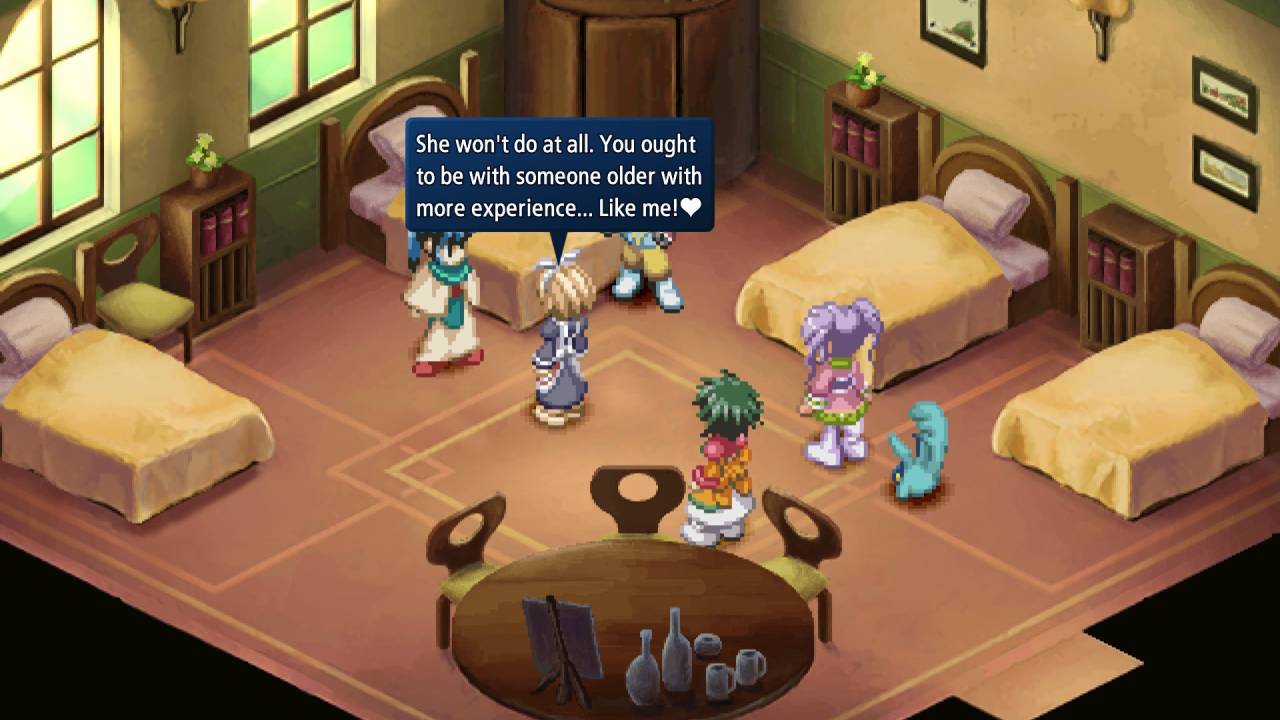
The original keeps its hard pixel lines and looks more natural, though old pixel art leaves so much to inference that the new version helps when you cannot tell what a detail is meant to show. A one-press swap between the two styles would be welcome. The stats menu still features some charming early-2000s anime art, but the menus feel like a mobile port with unused widescreen space, though the text remains legible.
The watercolor feel suits Switch 2 handheld play.
Tales of Eternia Remastered follows the same approach with its sound, since you can choose between original and remastered effects. Dual audio lets you choose the new English cast or the Japanese track, and the English performances improve as the story progresses. The soundtrack ranges from okay to forgettable, with little that sticks in your head after a session, though the spell and Mystic Arte effects add plenty of punch to fights.
Overall, Tales of Eternia Remastered is a careful remaster rather than a lazy port, and it retains the feel of the late 1990s and early 2000s. Skits, redone voices, quality-of-life tools, and flexible difficulty make it the project's strongest remaster so far. It is easy to lose hours to it, since scenes and dungeons move briskly, and walking through familiar locations with clearer backgrounds is a treat.
Flaws remain, including dated menus, uneven voice work, passive progression, no co-op, and no physical release in North America, though other regions get one. Even so, you finish the game wanting a second run with the faster settings, and Tales of Eternia Remastered keeps its original feel while welcoming newcomers. It sets a standard other 2D entries should follow.
Editor, NoobFeed
Verdict
Tales of Eternia Remastered is a smart remaster with sharp combat, a likable cast, and generous options, but held back by dated menus and uneven voice acting. A great way into 2D Tales for newcomers and longtime fans alike.
82
Related News
No Data.