
Is AMD's RX 580 Obsolete in 2025? The $25 GPU That Refuses to Die
The RX 580 continues to deliver solid 1080p gaming performance across modern titles.
Hardware by Naheyan Tahmin on Nov 03, 2025
In 2025, the GPU market is still evolving rapidly, with the latest hardware from Nvidia and AMD dominating the headlines and budgets. As the performance of next-generation cards improves, their prices also increase.
This prompts many gamers to seek out good deals on older gear. Among the forgotten legends of PC gaming, one card still sparks interest among budget builders: the AMD Radeon RX 580.
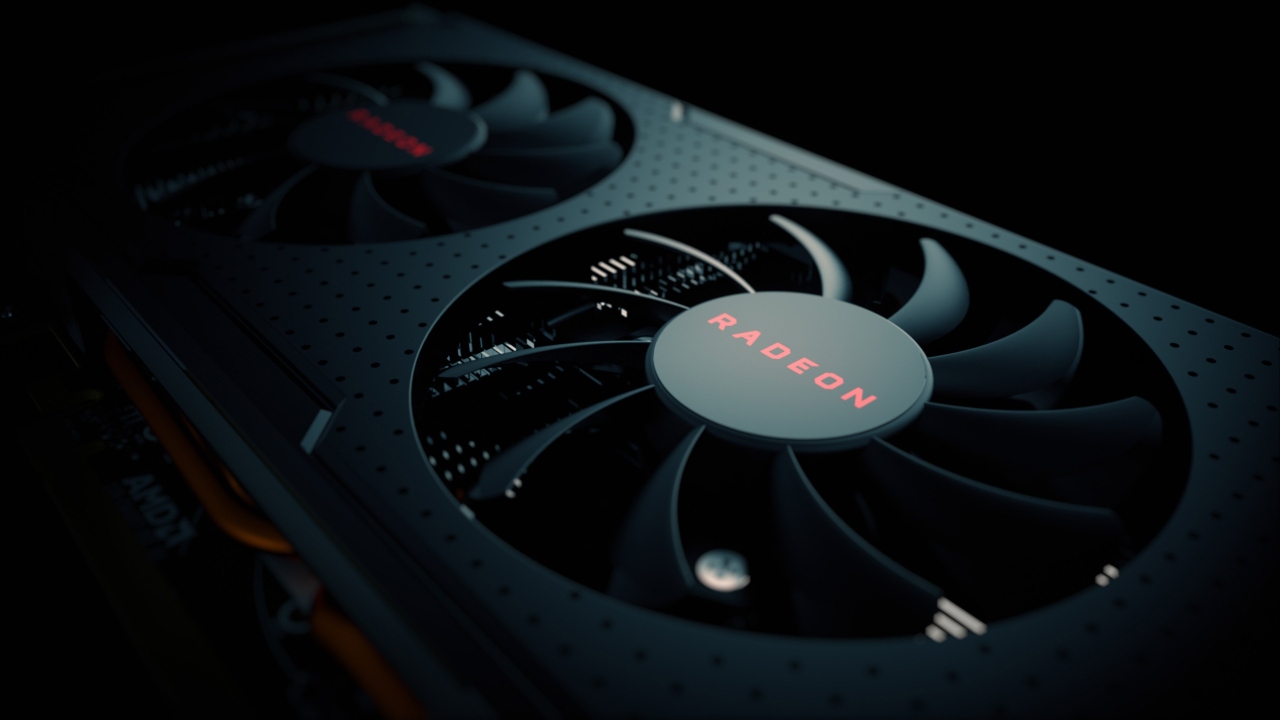
The RX 580 used to be the best option for cheap 1080p gaming, but today you can find it for as little as $25–30 USD.
A Blast from the Past
When it first launched in 2017, the RX 580 was AMD's refined version of its Polaris architecture, featuring 2304 stream processors, 8 GB of GDDR5 memory, and a boost clock of around 1340 MHz. It was a direct competitor to Nvidia's GTX 1060 and quickly became a favorite among gamers for its strong 1080p performance and excellent value.
Nearly a decade later, those specs are modest by modern standards. Yet, the RX 580's generous 8 GB of VRAM remains a significant advantage. As contemporary games continue to consume more memory, this older card surprisingly still holds its own in many scenarios where 4 GB GPUs falter.
First Impressions
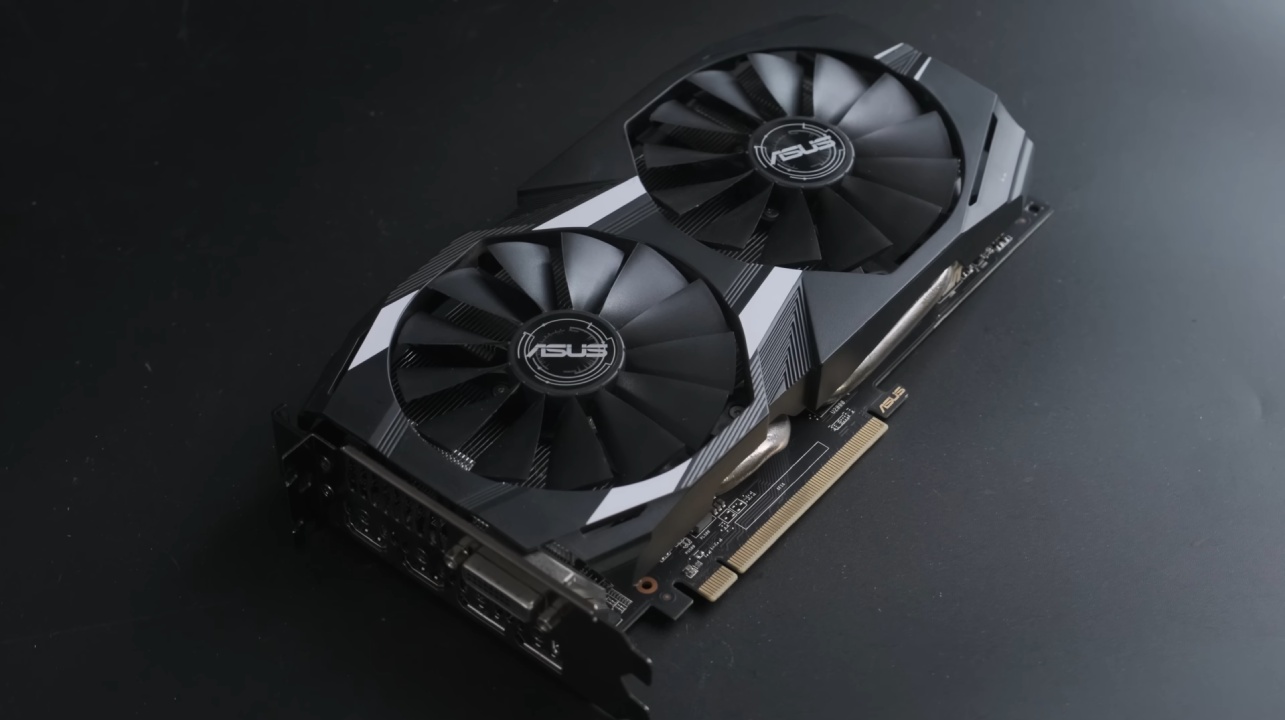
For this test, a Sapphire Pulse RX 580 8 GB was purchased on eBay for just £22.78 (around $28 USD). To our surprise, the card arrived in almost pristine condition, complete with its original box, stickers intact, and no visible signs of damage or heavy mining wear.
Once installed, it powered on without issue, and AMD's latest Adrenalin 2025 drivers recognized it instantly.
But right away, the card's age was revealed in its thermals. When the load was applied, the temperature immediately rose to approximately 81°C, and the boost clock settled to around 1340 MHz, which resulted in some slight throttling. This behavior wasn't terrible, but it did highlight the RX 580's well-known power and heat requirements, which needed to be addressed.
Fixing the Heat: Undervolting the RX 580
Polaris GPUs have a reputation for being power-hungry, and this one was no exception. In stock form, the Sapphire RX 580 consumed roughly 150 watts, which pushed its cooling system to the limit. To improve thermals and efficiency, an undervolt was applied, reducing the voltage from 1150 millivolts to 1030 millivolts.
The result was a dramatic improvement. The power demand dropped to approximately 120 watts, the load temperatures decreased to a pleasant 67°C, and the fan noise became significantly quieter. Even though the voltage dropped, performance actually improved slightly because the boost clocks were more stable.
The Time Spy test in 3DMark went up from 4,747 to 4,832 points. This suggests that by spending some time optimizing an old GPU, you can achieve improved performance and stability.
Gaming Performance
Once tuned, the RX 580 still delivered a surprisingly solid gaming experience. In Grand Theft Auto V (Enhanced) at 1440p with very high settings, the card averaged around 46 fps, maintaining smooth playability. Forza Horizon 5 also performed well at 1440p high settings, maintaining a steady frame rate of approximately 52 fps.
The RX 580 scored roughly 42 fps and achieved approximately low FPS settings in more demanding current titles like Cyberpunk, such as v2.12. This isn't the best performance available, but for a $25 GPU that can run one of the most demanding games on the market, it's very impressive.
Apex Legends and Valorant, two competitive games, were easy to play.
They easily exceeded 60 fps and often reached triple digits at 1080p high settings. Even in a performance setting, Fortnite, running under Unreal Engine 5, had smooth gameplay with no perceptible stuttering.
The 8 GB of VRAM also helped older titles, such as Shadow of the Tomb Raider, which maintained a stable 48 fps at maximum 1440p settings. It's clear that the RX 580 isn't meant for 4K or the greatest visuals, but it can still play games at 1080p very effectively in 2025.
Thermals, Noise, and Efficiency
Undervolting transformed the RX 580's thermal and acoustic profile. It was much more comfortable to use for long gaming sessions because the fans were quieter and the temps rarely went above 70°C. The card remained stable during testing, even at idle temperatures of around 40°C.
Power efficiency is still not its strongest suit; the Polaris architecture was built on older manufacturing processes, but given its rock-bottom price, that drawback is easily overlooked. The improved cooling and lower power draw make this GPU suitable even for compact builds, provided there's reasonable airflow.
Value and Use Case
At roughly $25–30 USD, the RX 580's price-to-performance ratio is exceptional. It offers enough power to transform older office PCs into competent gaming systems capable of running e-sports titles, classic AAA releases, and many modern games at reduced settings.
While its 150-watt draw isn't ideal for energy-conscious builds, the low upfront cost easily compensates for that inefficiency.
For new builders, students, or anyone on a tight budget, the RX 580 serves as a realistic entry point into PC gaming, eliminating financial strain. It's also an excellent backup card or an affordable solution for secondary systems, streaming setups, or retro gaming PCs.
Is It Obsolete?
The RX 580 is almost ten years old, but it still works really well. Although it may not offer the ray-traced graphics or 4K frame rates provided by newer GPUs, it remains a suitable choice for most gamers who play at 1080p.
The RX 580 is also a great way for people who want to learn about overclocking, undervolting, and performance tuning to do so. It is fantastic for testing things out without breaking expensive gear because it is forgiving. Its long-lasting nature illustrates the robustness of AMD's Polari architecture.
.jpg)
Final Thoughts
The AMD Radeon RX 580 is still a hallmark of good design, endurance, and accessibility in 2025. It shows that good hardware may endure longer than its generation if it is used and cared for correctly. It will never be as fast as the newest GPUs, but it still gives good results for people who just want to play games without spending a lot of money.
If you find one in decent condition, the RX 580 is definitely worth considering. It's not just a relic of the past; it's a reminder of when gaming was affordable, simple, and still fun. Eight years later, this Polaris legend is still alive and well, refusing to fade into obsolescence.
Also, check our other AMD articles:
- AMD Ryzen 9 9950X3D Review: Setting The Standard For 2025 Gaming CPU
- AMD Ryzen 7 9800X3D Review: 3D V-Cache Goes God Mode with Stunning Gaming Performance
- AMD RX 9070 Performance Review: Thermals, Clocks, and Real-World FPS
- AMD Ryzen 5 7600 Review: Best Budget Gaming CPU of 2025?
- AMD Radeon RX 7800 XT Review: RDNA 3 Power For Midrange Gaming
- Sapphire NITRO+ AMD Radeon RX 9070 XT Review: The Ultimate 4K Gaming GPU
- AMD Ryzen 7 7800X3D: Delivers Gaming Performance Far Beyond Expectations
- AMD Ryzen 9 7900X Review: Powering the AM5 Era with DDR5 & PCIe 5.0
- ASRock Radeon RX 7800 XT Challenger OC Review: Best Price-to-Performance GPU of 2025
- Intel Core i9‑14900K vs. AMD Ryzen 7 7800X3D: Power Profiles & Gaming Benchmarks
Editor, NoobFeed
Gaming Hardware Updates
No Data.