
AMD Radeon RX 9070 XT Benchmarks Show Why It's the Best Gaming GPU Under $800
AMD Radeon RX 9070 XT delivers high-end 1440p and capable 4K gaming without pushing GPU pricing into premium territory.
Hardware by Shinji Okazaki on Jun 29, 2026
It doesn't have to cost thousands of dollars to build a quality gaming PC in 2026. Many people think that top-tier gaming requires the highest-priced technology, but some graphics cards deliver good performance without the high price tag. AMD Radeon RX 9070 XT is one of the best GPUs for those aiming for 1440p or 4K gaming without spending more than $1000 on a graphics card.
RX 9070 XT is the card to keep recommending for high-end 1440p or entry-level 4K gaming. ASUS Prime OC version was tested, though the factory overclock yields only about 1-3% more performance.
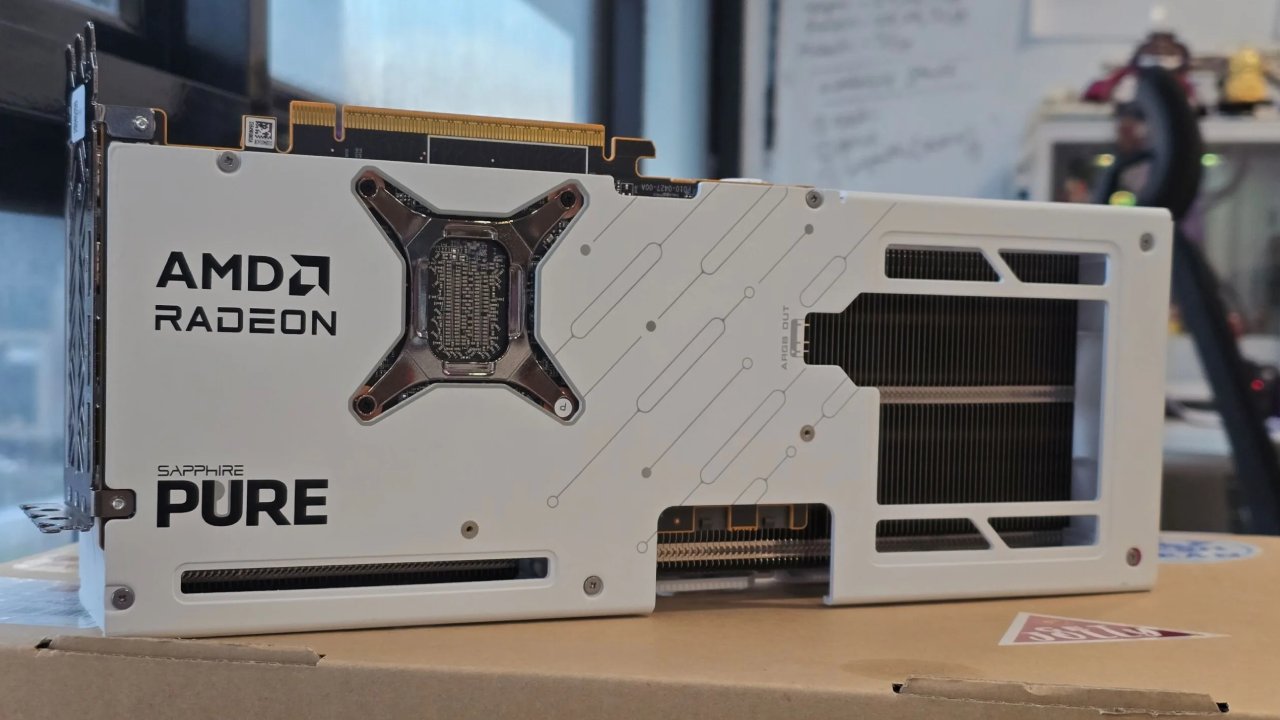
Another factor that sets this card apart is its pricing. It has often been available for about $730, which is also lower than the competition. RX 9070 XT offers better rasterization performance than the GeForce RTX 5070 Ti, and the price difference is hundreds of dollars.
Small Size and Low Power Consumption
RX 9070 XT offers better rasterization performance in many games and is hundreds of dollars cheaper than the GeForce RTX 5070 Ti. RTX 5070 Ti can lead in some games with DLSS, but we're more interested in the performance a graphics card delivers on its own. For those looking for better performance via upscaling, there's also FSR 4.1 for AMD.
The first good thing about the RX 9070 XT is its design. The card's design uses 2.5 slots, unlike many flagship GPUs, which use multiple slots. It is much more compact than some larger graphics cards and will fit well in a wide range of PC cases. Power delivery is another benefit. ASUS Prime RX 9070 XT features three standard 8-pin connectors instead of a single power connector.
That simplifies installation in many cases for existing power supplies and eliminates concerns about newer power connector designs. The card's weight is also not a concern, as we did not need to use a GPU anti-sag bracket, which would have eased installation.
Test System Configuration
For realistic performance, we used the RX 9070 XT paired with the AMD Ryzen 7 5800X3D processor, 64GB DDR4DDR4 RAM, and a 44K 144Hz monitor144Hz monitor. It wasn't a high-end showcase system; it was designed to align more with what most builders could afford. Overall, the used Ryzen 7 5800X offers good value for those looking to maintain a $1,300 full gaming system.
All graphics settings are set to max, and Resident Evil Requiem is tested at native 4K resolution. To determine pure rasterization performance, ray casting and frame generation were turned off. In such cases, the RX 9070 XT maintained a rate close to 100 fps in games and stayed above 60 fps in challenging scenes.
With medium ray tracing enabled, performance dropped to approximately 60fps – still playable. But when the resolution was lowered to 1440p, everything changed. At medium ray tracing, the performance level was approximately 120 fps, and at maximum ray tracing, it was still close to 100 fps.
.jpg)
This GPU is more than enough for those who primarily play at 1440p.
The 16GB VRAM is another improvement that's felt. Even the 4K card, like RTX 5070, will be able to play most 4K games, but a bit earlier than the 12GB card. This may necessitate texture shrinking and impacts 1% low frame rates. We had plenty of space to keep all the visual settings at their highest levels, thanks to 16GB of storage.
AMD has marketed this GPU aggressively, offering higher rasterization performance than some of its more expensive competitors. There should be no reason to pay the extra cost of the RTX 5070 or RTX 5070 Ti unless DLSS acceleration is your top concern.
With an older Ryzen 7 5800X, the RX 9070 XT could play today's games at high levels of fidelity without needing to render frames. When paired with its 16GB of VRAM, efficient cooling, low power consumption, and compact size, it is an excellent option for gamers seeking top-tier gaming without breaking the bank.
Editor, NoobFeed
Gaming Hardware Updates
No Data.