
DLSS Enabler Mod Brings 4x Frame Generation to RTX 30 and 40 GPUs
DLSS Enabler Version 4 unlocks multi-frame generation and additional graphics features across compatible older GPUs without hardware upgrades.
Hardware by Nahe Yan on Aug 12, 2026
Multi-frame generation has become one of the main features separating newer graphics cards from older generations. NVIDIA introduced multi-frame generation with its RTX 50 series, presenting it as a feature tied to newer hardware. However, a mod called DLSS Enabler Version 4 is now being used to unlock multi-frame generation and other features on DirectX 12-compatible GPUs from NVIDIA, AMD, and Intel.
NVIDIA announced multi-frame generation at CES, claiming it requires RTX 50 series hardware and a new AI tensor breakthrough that older cards cannot handle. The feature runs on DirectX 12, however, and GPUs such as the RTX 3070 from 2020 and RTX 4060 already support DirectX 12. AMD and Intel cards also support DirectX 12.
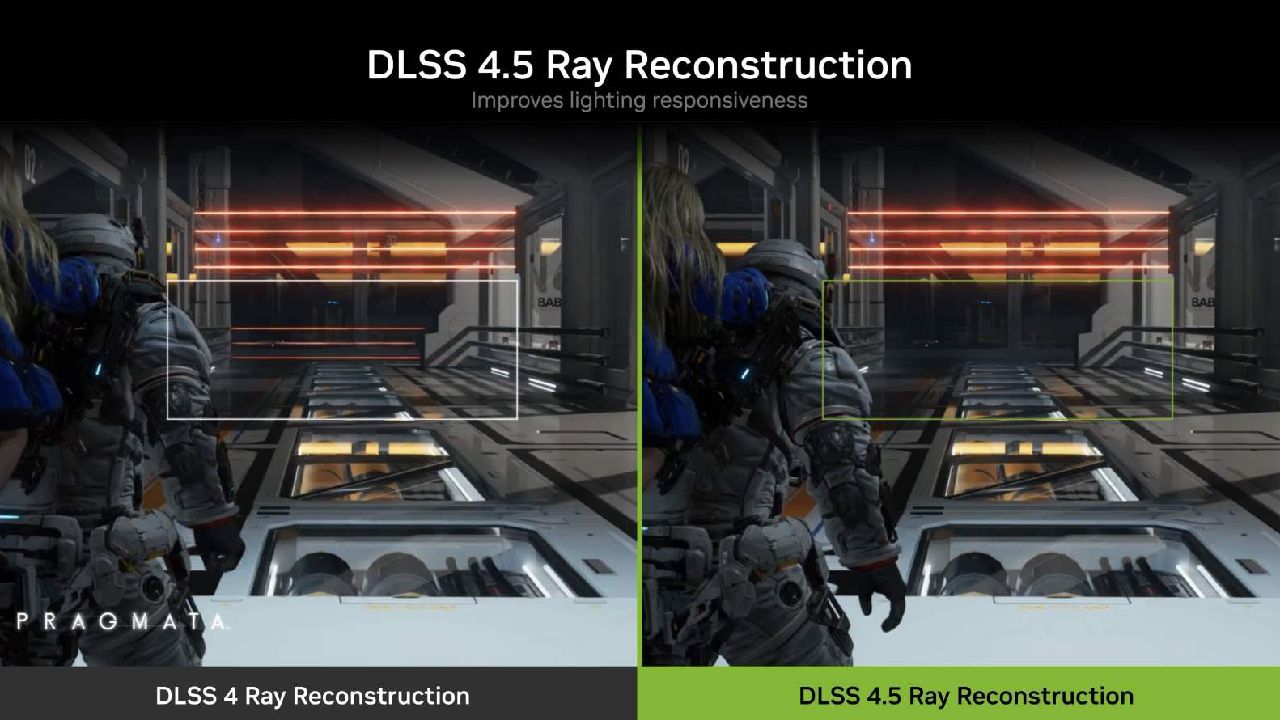
DLSS Enabler Unlocks Multi-Frame Generation
DLSS Enabler Version 4 has now appeared as a tech preview on Nexus Mods. The mod unlocks 4x multi-frame generation, screen space ray-traced global illumination, and adaptive frame generation on DirectX 12-compatible GPUs from NVIDIA, AMD, and Intel. It is experimental software, so bugs can be expected.
Installation starts by downloading DLSS Enabler from the tech preview section on Nexus Mods. The mod had more than 126,000 downloads at the time of the recording, with users reporting that it works across multiple GPU generations.
The downloaded file needs to be renamed to one of five names depending on the game. version.dll works for many modern games. The renamed file then needs to be placed in the game's root folder, where the game executable is located. It should not be placed in the system directory or a binary subfolder.
After launching the game, pressing the tilde key, located to the left of the number 1 key, opens the mod's settings overlay. Multi-frame generation can then be set to 4x, while adaptive frame generation can be enabled to automatically control when frame generation is active. Fake ray tracing can also be enabled through the same menu. After clicking apply, the setup is complete.
Cyberpunk 2077 Reaches Almost 200fps
Cyberpunk 2077 provides an example of what the mod can do. With an RTX 5070, DLSS Performance at 2K and full path tracing produced around 50fps to 60fps depending on scene density. The game remained playable, but the frame rate could feel uneven during fast camera movements.
After enabling 4x multi-frame generation, the frame counter reached almost 200fps with the same RTX 5070, path tracing settings, and 4K resolution. The result made the RTX 5070 appear closer to the experience expected from a much more expensive RTX 5090.
Multi-frame generation works by creating three generated frames between every real frame rendered by the GPU. A 70fps base frame rate can therefore produce around 280fps on the counter, while 80fps can reach around 320fps. These generated frames are interpolated rather than physically rendered by the GPU. The generated frames can still change how motion feels.
At a high refresh rate, the additional frames can make camera movement appear smoother than the base frame rate would suggest. For single-player games, that can make a difference during movement and camera pans. Cyberpunk 2077 is also a useful example because it already supports multi-frame generation natively. The mod essentially makes the feature available to GPUs outside the RTX 50 series.
Screen Space Ray-Traced Global Illumination
DLSS Enabler also adds screen space ray-traced global illumination to games. The feature can provide indirect lighting, light bouncing from surfaces, changes in wall illumination, depth, shadows, and ambient occlusion in corners. The lighting effect can resemble what is normally associated with ray tracing without requiring a full ray-tracing implementation. In actual gameplay, however, the difference may not always be easy to notice.
Stalker 2 provides a different example because its Unreal Engine 5 performance can already be demanding, with shader stutters and frame pacing issues. At 2K and Epic settings without path tracing, the tested system produced around 50fps to 80fps outdoors, with lower performance in dense areas.
Enabling 4x multi-frame generation increased the displayed frame rate by around 75%. However, the limitations became more visible when the base frame rate dropped below 60fps during heavy combat or in anomaly fields. At lower base frame rates, generated frames can introduce artifacts and ghosting during fast movements. Sudden changes in motion can also make interpolation less consistent.
The game remains playable, but the result is not as clean as in Cyberpunk 2077. Multi-frame generation does not replace the need for a usable base frame rate. If the underlying performance is poor, multiplying the frame output mainly produces a higher frame counter while the underlying limitations remain.
Adaptive Frame Generation Helps With Drops
Adaptive frame generation is designed to handle changing performance. When the base frame rate reaches around 100fps or higher, the mod can disable multi-frame generation because the additional generated frames may not be necessary.
When performance falls below around 60fps to 70fps, the feature can activate and generate additional frames. Once performance stabilizes, it can turn off again. This approach can reduce the visibility of artifacts in demanding sections because frame generation is not being applied continuously regardless of the base frame rate.
Anti-cheat systems can also detect software after a delay. A player may continue using a modified setup for some time before receiving a suspension. For that reason, the mod should be kept to single-player games such as Cyberpunk 2077, Stalker 2, Elden Ring, Black Myth: Wukong, and Red Dead Redemption 2. Competitive multiplayer games should not be used with the mod when an account suspension is a concern.
Native DLSS Still Has Advantages
Native DLSS multi-frame generation on RTX 50 series GPUs remains ahead of the modded implementation. NVIDIA's official solution offers lower latency through hardware acceleration, driver integration for frame pacing, and tighter integration with Reflex. The official implementation can also provide better artifact handling through NVIDIA's AI models.
Those differences matter more in competitive games where latency can affect gameplay. The mod provides another option for GPUs that do not officially support multi-frame generation. RTX 30 and RTX 40 series cards, along with compatible AMD and Intel GPUs, can gain additional generated frames without purchasing a new graphics card.
The trade-off is additional latency and the possibility of artifacts.
In single-player games, where response time is generally less important than in competitive shooters, those compromises can be easier to accept. DLSS Enabler Version 4 shows how modding can extend features beyond their official hardware support.
The performance gains depend heavily on the base frame rate and the game. Cyberpunk 2077 demonstrates how 4x multi-frame generation can push a 50fps to 60fps base result toward 200fps, while Stalker 2 shows how lower base performance can expose artifacts and frame-generation limitations.
The mod remains experimental, so backing up game saves and avoiding anti-cheat multiplayer titles are important precautions. For single-player games, it provides a way to experiment with multi-frame generation, adaptive frame generation, and screen space ray-traced global illumination without purchasing a new graphics card.
Editor, NoobFeed
Gaming Hardware Updates
No Data.