
CXMT's DDR5 and LPDDR5X Push Reshapes the Memory Market
CXMT's rapid DRAM expansion is reshaping the memory market as demand rises across AI, PCs, servers, and smartphones.
Hardware by Nahe Yan on Aug 12, 2026
These days, memory is very important for computers. It's being used more and more in gaming PCs, laptops, smartphones, servers, and AI data centers. Memory companies are increasing production to capture a bigger share of the market as demand keeps rising. ChangXin Memory Technologies, or CXMT, is one company that has gotten a lot of attention.
It quickly grew its DRAM business and caught the attention of everyone in the semiconductor industry. CXMT stands for ChangXin Memory Technologies and is based in Hefei. The company was founded back in 2016 with heavy state backing, and its whole job is making DRAM.
That's the memory that goes into your phone, laptop, servers, cars, basically anything with a brain inside. For years, CXMT was the quiet underdog nobody took too seriously.
CXMT's Stock Market Debut
But that's not even the crazy part. On the very first day of trading, the stock absolutely exploded. It opened way up and at one point was up more than 500%. It closed around 466% above the offer price, giving CXMT a market cap of roughly 3.3 trillion yuan, which is nearly $489 billion.
That number launched CXMT past Industrial and Commercial Bank of China to become the most valuable company listed on mainland exchanges. Think about that for a second. A memory chip maker beat the banks, and it was also the second-largest IPO on any mainland exchange since Agricultural Bank of China went public back in 2010.
The debut was so explosive that it genuinely rattled Micron, the big American memory player, and it even triggered a bipartisan investigation over in Washington. When a stock market debut makes Congress nervous, the company has officially arrived. And we love a good underdog moment, because this was a proper one.
CXMT's Revenue Growth
Markets don't hand out that kind of valuation for nothing, so let's actually look at the business behind it. In the first quarter of 2026, CXMT pulled in about 50.8 billion yuan in revenue, which is roughly $7.5 billion. That was up over 700% year over year. Net profit jumped more than 1,200%.
The company is forecasting first-half revenue somewhere between 110 and 120 billion yuan. Those aren't growth numbers; those are rocket numbers. The reason is pretty simple. The world is in the middle of a memory shortage driven by the AI boom.
Data centers are gobbling up every chip they can find, prices have gone through the roof, and the big three, Samsung, SK Hynix, and Micron, simply can't keep up with the demand. CXMT walked right into that gap at exactly the right moment, and we can break down the actual products because this is where it gets interesting.
CXMT's DDR5 Memory
DDR5 is the current standard for modern memory, and that's the stuff in the newest gaming PCs, workstations, and servers. CXMT's DDR5 is genuinely competitive, which even a year ago a lot of people doubted. The company's chips hit speeds of up to 8,000 megabits per second, and they come in 16-gigabit and 24-gigabit die densities. They use about 20% less power than DDR4.
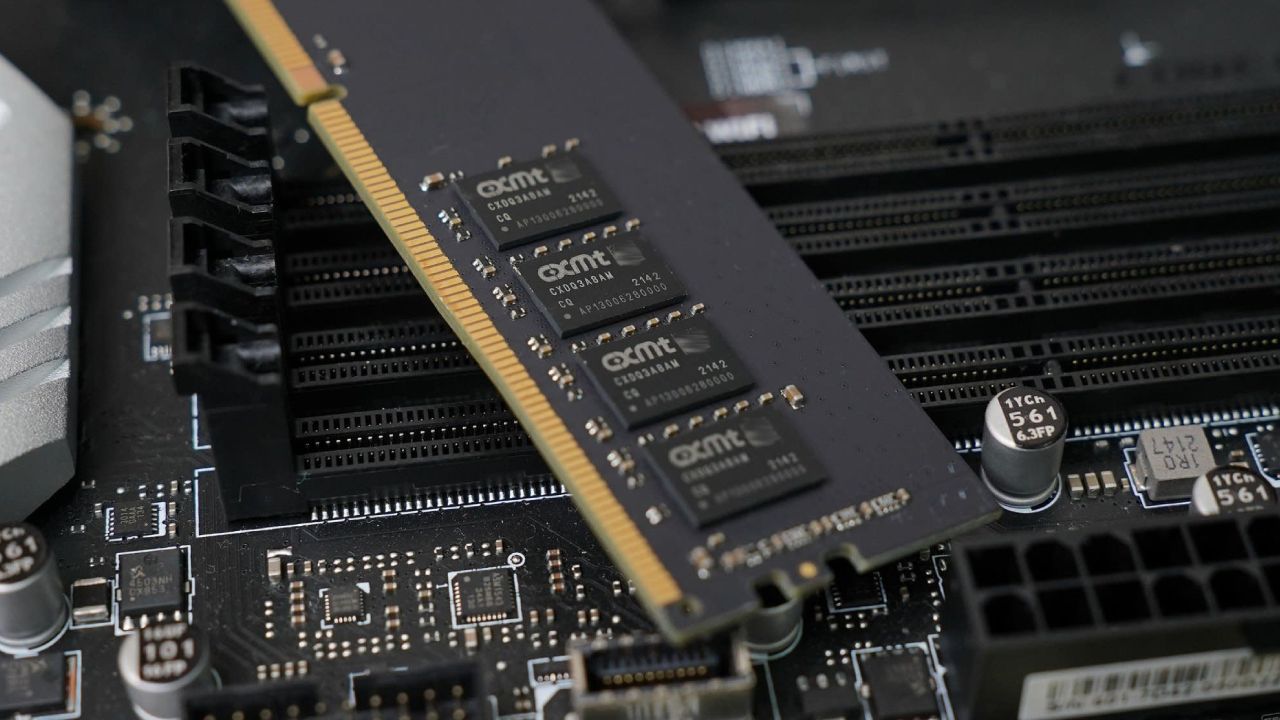
They've also got on-die error correction baked in, which basically means better stability and cleaner data under load. What impressed us the most is the sheer range of form factors. They are not just making one flavor. They've got UDIMM for desktops, SODIMM for laptops, and RDIMM and MRDIMM for servers, and even CUDIMM and CSODIMM for the high-end overclocking crowd.
This is a full lineup and not a science experiment. Their newest generation of DRAM cells is around 20% smaller than the previous one, which means more chips per wafer and lower cost down the line. And here's the real kicker. Every single one of the three biggest motherboard makers, ASUS, MSI, and Gigabyte, now validates memory built on CXMT's chips.
Brands like Lexar are dropping CXMT dies into kits rated up to 7,600 megatransfers. This isn't theory anymore. This is a shipping product. And in a market where a 32GB DDR5 kit that cost around $100 a year ago now runs $400, a fresh supplier flooding the market is exactly what gamers and PC builders have been praying for.
CXMT's DDR4 History
Now we can rewind a little because CXMT did not start with DDR5. They cut their teeth on DDR4. That's the older generation that powered a massive chunk of the world's PCs and servers for the better part of a decade. It's reliable, low power, and very cheap, which is exactly what a lot of industrial and consumer gear still needs.
But here's the plot twist. CXMT is reportedly winding down DDR4 production for PCs and servers around the middle of this year, apparently at Beijing's direction, so that it can pour everything into the cutting edge instead. Funny enough, this aggressive DDR4 pricing already pushed Samsung, SK Hynix, and Micron to end their own DDR3 and DDR4 production. So, even the memory they're walking away from, they reshaped on the way out.
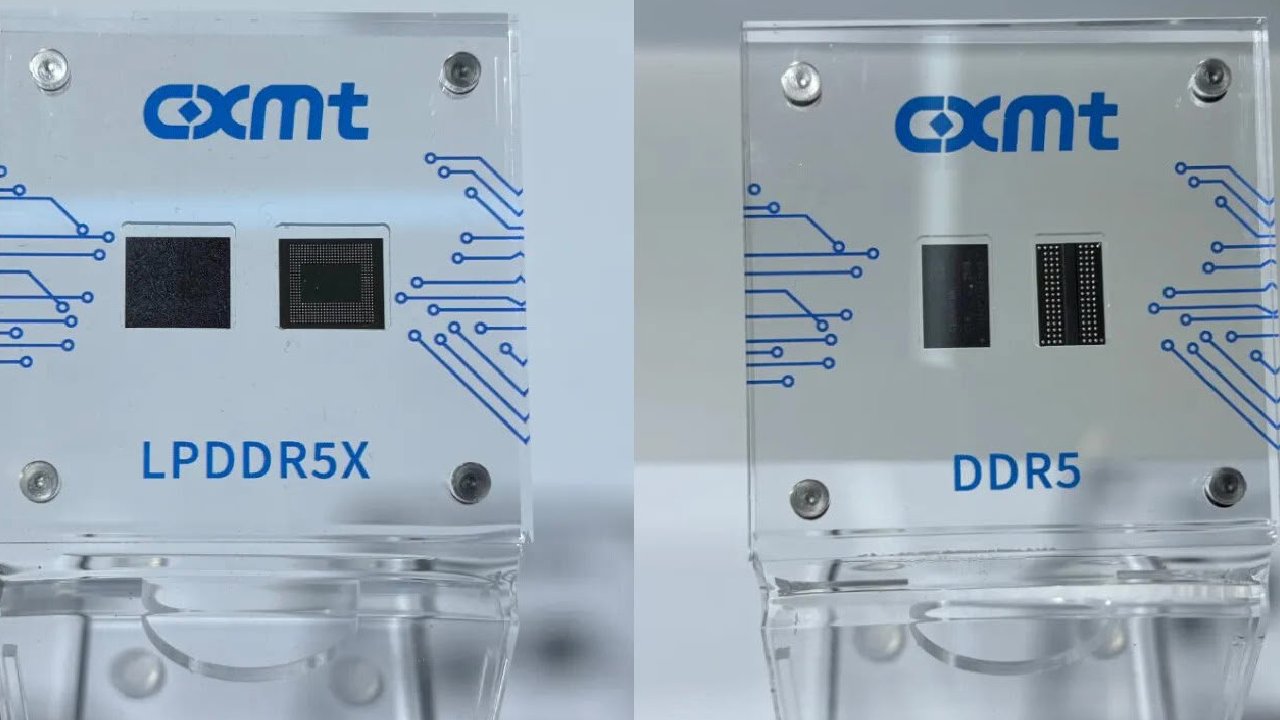
This is where CXMT is quietly dominating, and most people aren't even watching. LPDDR is the low-power version of DDR, the memory that goes into phones, tablets, and thin laptops. CXMT's LPDDR5 and LPDDR5X business is enormous. Get this: those two products made up roughly 66% of the core business revenue in 2025. That is the beating heart of the whole company.
These chips enable phone and laptop configurations running from 12GB all the way up to 32GB.
.jpg)
Their LPDDR5X comes in 12-gigabit and 16-gigabit die capacities and hits top speeds of 10,667 megabits per second. That's a 66% improvement over regular LPDDR5, and it sips about 30% less power. CXMT kicked off mass production of the 8533 and 9600 megabit versions back in May 2025, and its flagship 10,667 version followed into sampling and production after that.
Who's actually buying this stuff? Well, it's Xiaomi, Oppo, Vivo, and Honor. Those are some of the biggest phone brands on the entire planet, and when that's the customer list for mobile memory, CXMT is not a side character anymore.
What genuinely impresses us is the pace of it all. CXMT went from mass producing LPDDR5 in 2023 to sampling high-end LPDDR5X in 2025. That's two generations in under three years, and for a company plenty of people wrote off as years behind, this is a fast sprint.
Editor, NoobFeed
Gaming Hardware Updates
No Data.