
PC Hardware Crisis Deepens as Memory Prices Surge and Launches Stall
Escalating AI infrastructure demand continues to divert critical components away from consumer PCs and gaming hardware.
Hardware by Tanvir Kabbo on Feb 09, 2026
The tech news over the previous week has been heavy, with shortages, delays, and changing priorities in the PC hardware business. The current crisis in PC memory and general hardware is getting worse. Expected releases like Valve's Steam Machine and new Nvidia and Intel GPUs are either being delayed or silently disappearing.
But even if it is frustrating, a few things have happened that show some success in stopping the uncontrolled growth of AI and its control over the world's hardware supply. Some corporations are now listening to customers who don't want AI everywhere, and some new technologies hint at a future when data centers won't need as much gear and patience.
Deepening Hardware Crisis and Memory Prices
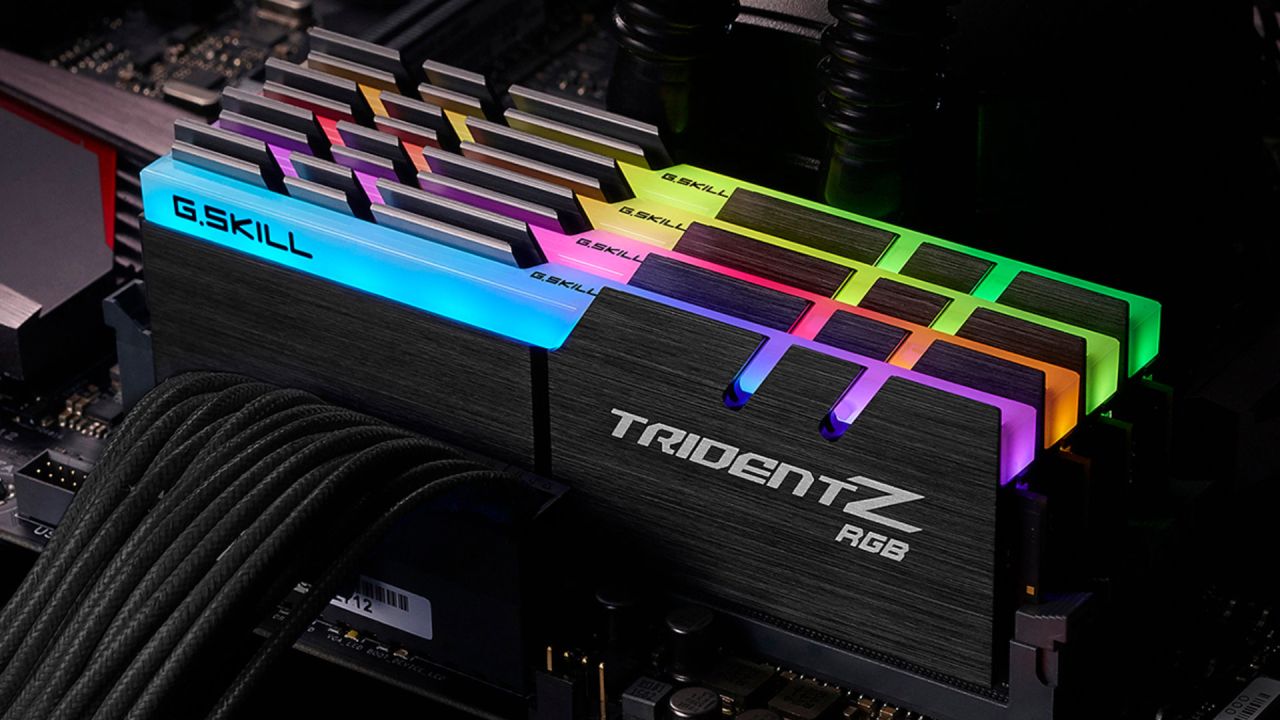
The lack of RAM and PC hardware is far from finished, and fresh information just makes things worse. Counterpoint, a research company, released a report saying memory prices would rise by 80% to 90% in the first quarter of 2026, on top of already rising prices late last year. This has made some even more worried that people won't be able to afford personal computers at all.
When asked about the health of the consumer market, AMD CEO Lisa Su said she was optimistic that AMD could keep growing its PC business by focusing on the enterprise and premium/high-end markets, even when consumer demand is low due to financial problems.
At the same time, major PC makers and system integrators are racing to secure RAM. Companies, including HP, Dell, Acer, and Asus, have resorted to the memory maker CXMT, which had just announced lower prices, but their prices went up, too. Adding to the stress, the prices of raw materials such as copper, tin, and aluminum are also rising, making the global hardware supply chain even more difficult.
Late hardware and launch windows that disappear
Hardware scarcity is now clearly affecting more than just the companies that make it. Product launches are being delayed and are not certain. Valve introduced the Steam Machine tiny PC and Steam Frame VR headset in November. People were excited but also worried because they didn't know how much they would cost or when they would be available, especially since RAM prices were rising.
Valve later acknowledged these concerns and said the release would be delayed, though it still said the game would come out in the first half of 2026. The company said it had hoped to provide pricing and availability information by now, which shows how often hardware timetables are flexible and fragile.
Because of this, there is still no guaranteed price or release date for the Steam Machine. Valve, like other system integrators, has said that prices may have to go up. GPU news doesn't help much either. According to Nvidia officials, the RTX 50 Super refresh, which was supposed to launch in Q12026, was put on hold due to a shortage of memory chips worldwide.
These sources say that Nvidia might not produce any new consumer graphics cards in 2026. This would be the first time in three decades that this has happened. The Reuben architecture-based RTX60 series was supposed to enter commercial production at the end of 2027. Still, that date is now becoming less and less likely.
PC fans are also unhappy with Intel. Many people thought the ARC B770 GPU would rival the two biggest GPU makers, but it never came out, and leaks suggest it may never. The explanation is straightforward but disappointing: it doesn't make enough money compared to professional and enterprise GPUs, which have higher margins. If these reports are true, the B770 might be dead for good.
Data on reliability is a rare bright spot
There is at least some good news about reliability after all the bad news. People often cite anecdotal evidence to back their assertions of hardware breakdowns that are not connected to anything else. At the same time, big data tells a more interesting story. Puget Systems, a company that puts systems together, presented reliability data based on thousands of systems that were made and tested in 2025.
Their analysis showed that both the Intel Core Ultra 200S and the AMD Ryzen9000 CPUs had failure rates of about 2.5%, while Intel's 265K stood out with a failure rate of only 0.77%. The Ryzen 9000X3D processors did even better than the other models in the series, with a 1.51% failure rate. The Founders Edition RTX50 series cards had the lowest GPU failure rate at just 0.25%.
The Gigabyte B860M Aorus Elite Wi-Fi6E ICE has a spotless record among motherboards. In contrast, the Asus TUF B850M Plus Wi-Fi had only one failure. In general, the data shows that most of the hardware decisions made last year were good, at least in terms of reliability.
AI Investment Pullbacks and Changes in Demand
For PC hardware prices to return to normal, either supply needs to increase or demand needs to decrease. New fabrication operations are on the way, but they won't make a difference for years. That leaves demand, especially from AI data centers, as a key factor.
The highly publicized letter of intent between Nvidia and OpenAI, which suggested a huge $100 billion investment in AI infrastructure, was a big deal. NVIDIA CEO Jensen Huang made it clear that this number was never a single investment, and he stressed a more conservative, step-by-step strategy instead.
This more measured wording was different from past stories that helped Nvidia's stock reach all-time highs. At first, the markets didn't like the news, but the stock quickly bounced back. Still, if AI data center construction slows or stops, that might be excellent news for consumer hardware availability.
People are against AI everywhere
Many people are tired of how quickly AI features are being added to daily applications. AI tools are becoming increasingly necessary across operating systems and search engines. People are clearly against AI, and at least one corporation seems to be paying attention.
Mozilla said that Firefox will soon include clear AI controls that let users turn off AI capabilities completely or only certain ones. Users will be able to turn off AI-powered translations, alt text generation, and chatbot sidebars in Firefox 148, scheduled for release on February 24. For people who want to have control over their browsing experience, this is a modest but important win. It strengthens Firefox's reputation as a better choice for consumers.
Storage Technology That Could Help Ease the Stress
Western Digital has shared some early information on potential improvements to hard drive technology. Hard drives haven't been interesting in years, but any advancement is worth noting given the ongoing storage problems. WD is looking into high-bandwidth drive technology that might enable 50TB to 100TB drives to achieve sequential speeds of up to 1200MB/s, which is much faster than the 300MB/s common today.
You might achieve these benefits by reading and writing to multiple tracks simultaneously and by employing twin-actuator designs. This won't change random-access speed as SSDs do. Still, it could help reduce workloads in data centers composed mostly of long sequential operations. If data centers use these drives, it might help ease the strain on other storage and memory resources, but it's not obvious when that will happen.
GTA 6 and a Rare No to Generative AI
GTA6 is one big launch that hasn't been pushed back again. It's still set to be out on consoles on November 19, 2026. Take-Two Interactive CEO Strauss Zelnick said in a recent interview that generative AI has nothing to do with the creation of GTA6. The game's worlds are made by hand, and AI is used only for internal tools that support workflows rather than replacing creative work.
Because the franchise makes so much money, there is no reason to cut corners, and it's good to hear a strong stance against AI-generated material in such a well-known title. There have been several delays in the game, and some of them may have been caused by internal AI technologies. However, people still expect the end result to be worth the wait.
Looking Forward
The IT news over the past week has been tiring because of shortages, delays, and companies changing their objectives. But amid all the dissatisfaction, there are faint hints of opposition to unfettered AI growth, a greater focus on consumer choice, and slow technological progress that could help reduce long-term constraints.
For now, staying informed and being picky is the best way to protect yourself as the business navigates an unclear, more difficult future.
Also, check our other articles below:
- AMD Ryzen 9 9950X3D Review: Setting The Standard For 2025 Gaming CPU
- AMD Ryzen 7 9800X3D Review: 3D V-Cache Goes God Mode with Stunning Gaming Performance
- AMD RX 9070 Performance Review: Thermals, Clocks, and Real-World FPS
- AMD Ryzen 5 7600 Review: Best Budget Gaming CPU of 2025?
- AMD Radeon RX 7800 XT Review: RDNA 3 Power For Midrange Gaming
- Sapphire NITRO+ AMD Radeon RX 9070 XT Review: The Ultimate 4K Gaming GPU
- AMD Ryzen 7 7800X3D: Delivers Gaming Performance Far Beyond Expectations
- AMD Ryzen 9 7900X Review: Powering the AM5 Era with DDR5 & PCIe 5.0
- Intel Core i9‑14900K vs. AMD Ryzen 7 7800X3D: Power Profiles & Gaming Benchmarks
- NVIDIA GeForce RTX 5080 Review (2025): Still A 4K Gaming Powerhouse?
- NVIDIA RTX 5070 Review: Mid-Range Muscle or Marketing Hype?
- RTX 5070 Ti Review: Performance, Thermals & Power Efficiency Tested
- ASUS GeForce RTX 5090 LC Liquid Cooled GPU Review: Unmatched Silence & Speed
- MSI GeForce RTX 5090 32GB SUPRIM SOC Review: Power Efficiency, Cooling, and Gaming Performance
- INNO3D RTX 5060 Ti 16 GB X2 Review: Gaming Benchmarks, Temps, and Power Efficiency
- HP Omen 45L Review: RTX 5090 Performance, Thermals, and Value Analysis
- ASUS TUF Gaming GeForce RTX 5060 Ti Review: DLSS 4, Power Efficiency, and Gaming
- ASUS Prime RTX 5060 Ti OC 16GB Review: DLSS 4, Ray Tracing, & Thermals Tested
- NVIDIA GeForce RTX 5060 Review: Specs, Gaming, and Cost per Frame
- MSI GeForce RTX 5090 GAMING TRIO OC Review: A Monster Power GPU
Senior Editor, NoobFeed
Gaming Hardware Updates
No Data.