

RTX 5070 Ti vs. RX 9070 XT: The Upscaling Battle of 2025
Game performance comparisons reveal alternating wins for Nvidia and AMD, depending on engine optimization and upscaler efficiency.
Hardware by Godrics01 on Nov 04, 2025
The GPU market in 2025 continues to evolve rapidly, with upscaling technologies like DLSS 4 and FSR 4 reshaping how we evaluate graphics performance.
The GPU market is undergoing rapid changes in 2025, and new technologies like DLSS 4 and FSR 4 are transforming how we evaluate graphics performance. Suppose you're a gamer who usually plays with upscaling enabled and wants to upgrade to a higher-end graphics card.
In that case, the big question is whether to get Nvidia's GeForce RTX 5070 Ti or AMD's Radeon RX 9070 XT. Both cards aim squarely at high-performance 1440p gaming, offering comparable real-world results depending on the titles, upscalers, and settings used.

Test Setup and Methodology
For this comparison, we used the MSI Ventus 3X OC version of the RTX 5070 Ti and the Sapphire Pulse RX 9070 XT. To ensure fairness, all GPUs, including the RTX 5070 and RX 9070 that had already been tested, were set to the same base clock speed.
The test bench featured a Ryzen 7 9800X3D processor, 32GB of DDR5-6000 CL30 memory, the latest Windows and game updates, and drivers 581.57 for Nvidia and 25.10.1 for AMD. We used the most recent global overrides for DLSS 4 and FSR 4 to test both cards.
Testing focused primarily on 1440p performance across native, quality, balanced, and performance upscaling modes. Native data was included for reference, but the primary goal was to evaluate realistic gaming conditions—those most players would use.
Gaming Performance
The RX 9070 XT was 4% faster natively and 6% faster with quality upscaling in Horizon Zero Dawn Remastered. At the same time, both GPUs kept high frame rates. The RTX 5070 Ti was the clear winner in Ratchet & Clank: Rift Apart, with a 16% lead in native mode and a 15% lead in DLSS quality mode, giving substantially better graphics at the same performance level.
The Last of Us Part One showed near-identical performance, with the RTX 5070 Ti edging ahead by up to 5% when upscaling. In Spider-Man 2, the GeForce card widened its lead to 19% using DLSS quality, delivering smoother 1% lows—30% higher than the Radeon's results.
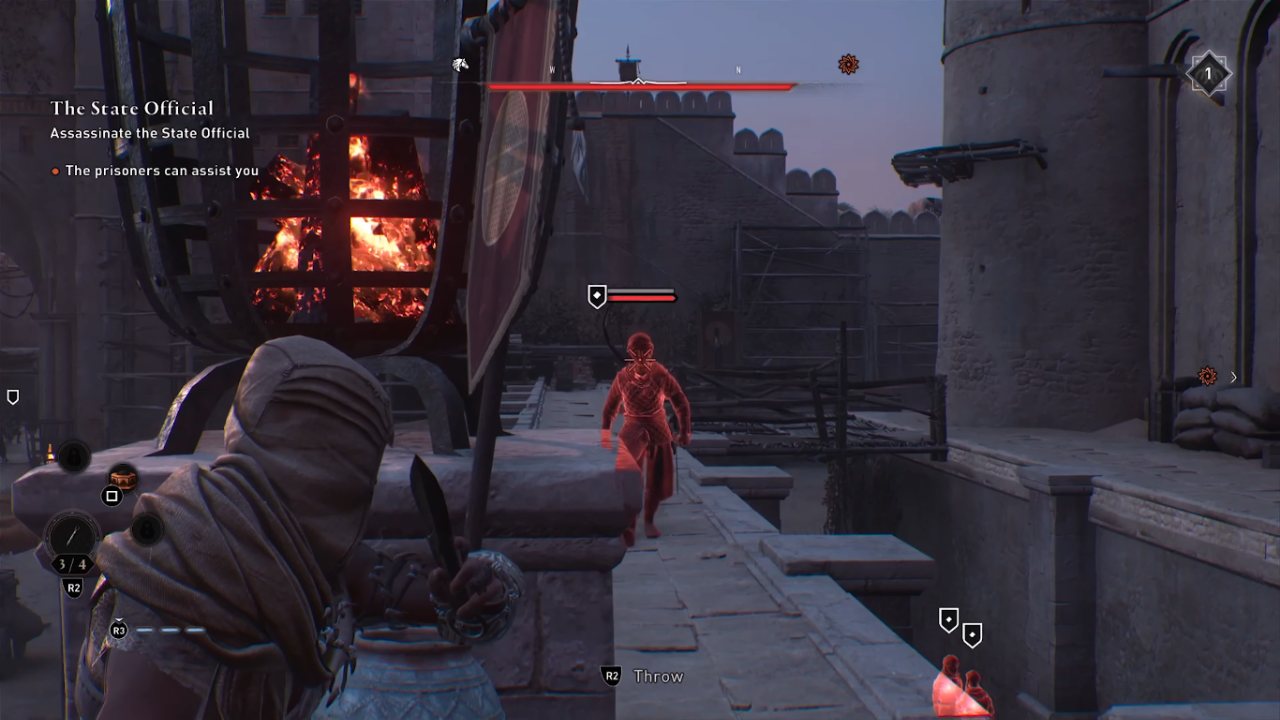
Assassin's Creed Shadows favored the RX 9070 XT, leading by 15% natively and 10% with quality upscaling. Similarly, The Last of Us Part Two saw AMD's card ahead by 13% natively and 9% upscaled. In Ghost of Tsushima, the RX 9070 XT again led by 8% using quality upscaling.
In Stalker 2, Nvidia initially led by 12% natively. Still, the margin shrank to 3% with upscaling, indicating that FSR 4's scaling is better on Radeon hardware. Marvel Rivals was close, with the Nvidia RTX 5070 Ti just 5% faster, while Kingdom Come Deliverance 2 saw the RTX 5070 Ti ahead by 10% natively and 12% with quality upscaling.
Star Wars Outlaws reversed the trend—AMD's RX 9070 XT pulled ahead by 8% using quality upscaling, despite trailing 8% natively, as FSR 4 scaled 39% better versus DLSS 4's 18%. Hunt Showdown was effectively tied, with the RX 9070 XT 3% faster in both native and upscaled runs.
In God of War: Ragnarok, results were nearly even, though the Radeon gained a slight 5% lead with upscaling. Stellar Blade, however, was a clear Nvidia win, with the RTX 5070 Ti 29% faster natively and 27% with quality upscaling. F1 25 flipped results depending on the metric—Nvidia was 6% faster natively, AMD 2% ahead on average frame rate using upscaling, but Nvidia was still 9% better in 1% lows.
When tested with the Ultra Ray Tracing option, Cyberpunk 2077 showed a significant preference for Nvidia. The RTX 5070 Ti was 18% faster natively and 13% faster with quality upscaling, and it had 24% smoother 1% lows. Hogwarts Legacy and Borderlands 4 both ended in practical ties, with minimal performance variance.
Mafia: The Old Country leaned toward Radeon, with the RX 9070 XT 9% faster natively and 13% faster using quality upscaling. On the other hand, Dying Light: The Beast showed one of the largest Nvidia wins, with the RTX 5070 Ti 19% faster natively and 14% faster using quality upscaling.
The Alters showed slight fluctuations, with Nvidia being 3% faster natively and AMD 4% faster using quality upscaling. Meanwhile, Battlefield 6 saw the GeForce card ahead by 5% natively and 9% with quality upscaling. Across the board, Nvidia generally delivered more consistent 1% lows, particularly in demanding, ray-traced games.
Overall Performance Analysis
Across a 22-game average at 1440p, the RTX 5070 Ti was 5% faster than the RX 9070 XT natively and only 2% faster using quality upscaling—effectively a tie. At lower upscaling modes, Nvidia maintained a 2–3% advantage.
In rasterized and ray-traced mixes, both GPUs performed nearly identically when upscaling was used.
When compared to previous-generation models, the RTX 5070 Ti was 15% faster than the RX 9070 natively and 9% faster with quality upscaling. That means the RX 9070, when using balanced mode, roughly matched the RTX 5070 Ti, which uses DLSS quality.
Against the RTX 5070, the Ti model was 27% faster natively and 24% faster when upscaling, showing clear separation within Nvidia's own lineup.
Performance variation across games was well balanced. The RTX 5070 Ti led by over 5% in nine games, while the RX 9070 XT led by that margin in four. With upscaling, Nvidia was 5% faster in seven games, AMD was 5% faster in five, and ten games were tied—showing an even matchup overall.
Pricing and Value Comparison
At MSRP, the RTX 5070 Ti costs $750, while the RX 9070 XT costs $600—a 20% price difference for nearly identical upscaled performance. In that context, the Radeon model is clearly a better value, offering similar results for less money. However, actual pricing currently places the RX 9070 XT around $650, narrowing the gap to $100, or 13% cheaper. This makes it less of a value win but still competitive.
Even then, the RX 9070 remains a standout option. At $550, it’s only 9% slower than the RTX 5070 Ti when upscaling but 36% cheaper, making it about 20% better in cost-per-frame terms. Both the 9070 XT and 9070 also feature the same VRAM capacity as the 5070 Ti, maintaining parity across the range.
Upscaling Ecosystem and Feature Set
DLSS 4 is still the more developed and widely used technology, even though the average performance is similar. DLSS 3 and DLSS 2 improve image quality, make scaling more consistent, and provide solid backup options in older games. FSR 4 has come a long way, especially with new updates, but it still doesn't have as much game support as Nvidia's ecosystem.
For players sticking primarily to newer titles, FSR 4’s coverage has been excellent throughout the year, often available at launch in major games. However, for those with a mixed library of older and newer releases, DLSS 4’s broader compatibility may prove more valuable over time.

Final Thoughts
If both GPUs cost the same, then the RX 9070 XT is a better deal because it provides nearly the same performance at a 20% lower price. DLSS 4 offers better scaling and image quality, providing the RTX 5070 Ti an edge in features. However, the overall frame rates are almost the same; thus, the 25% price difference isn't worth it.
The RTX 5070 Ti is 13% faster on average and has 24% better 1% lows in intensive ray tracing workloads like Cyberpunk 2077, but the extra expense is not worth it for most users. The RX 9070 XT remains the better value unless you specifically desire the best ray-tracing or path-tracing experience.
The RX 9070 XT is a better deal for players who want to save money, although both GPUs are suitable for gaming at 1440p. The RX 9070, in contrast, may be the true winner, offering customers seeking the best deal in the mid-range market an optimal combination of performance, pricing, and efficiency.
Also, check our other articles below:
- Intel Core Ultra 9 285K Review And Performance Breakdown (2025)
- Intel Core Ultra 9 285K vs AMD Ryzen 7 9800X3D: In-Depth Gaming Performance and Benchmark Comparison
- Intel Core i5-13400F Gaming Performance: Still Worth It in 2025?
- Intel Core i9‑14900K vs. AMD Ryzen 7 7800X3D: Power Profiles & Gaming Benchmarks
- Intel Core i9 14900K: Specs, Benchmarks, and Competitor Comparison
- Intel Core Ultra 5 245K Review: Gaming, Productivity & Power Efficiency Tested
- Intel Core Ultra 9 285 K's iGPU Gaming: In-Depth Benchmarks & Analysis
- Intel vs. AMD Gaming Laptop: Performance, Thermals & Battery Life Compared
- AMD Ryzen 7 9800X3D vs.7800X3D vs. Intel Core Ultra 7 265K: Gaming, Thermals & Price Analysis
Editor, NoobFeed
Latest Articles
No Data.