
Steam Deck OLED vs. Competitors: The Best Handheld Gaming Value in 2025
Valve’s partnership with AMD created a breakthrough handheld that reshaped the portable gaming landscape through innovation and accessibility.
Hardware by Tanvir Kabbo on Oct 13, 2025
Steam Deck OLED is not the fastest or the newest handheld in 2025, but it might be one of the most important. To truly appreciate its impact, we need to look at where it all started. The original Steam Deck LCD model was first released in February 2022 and completely changed expectations for PC gaming handhelds.
AMD was finally making integrated graphics that worked well when the Steam Deck came out, but the rest of the industry was still using chips that weren't that powerful. There were gaming portable PCs earlier, but they were largely niche imports from small firms.
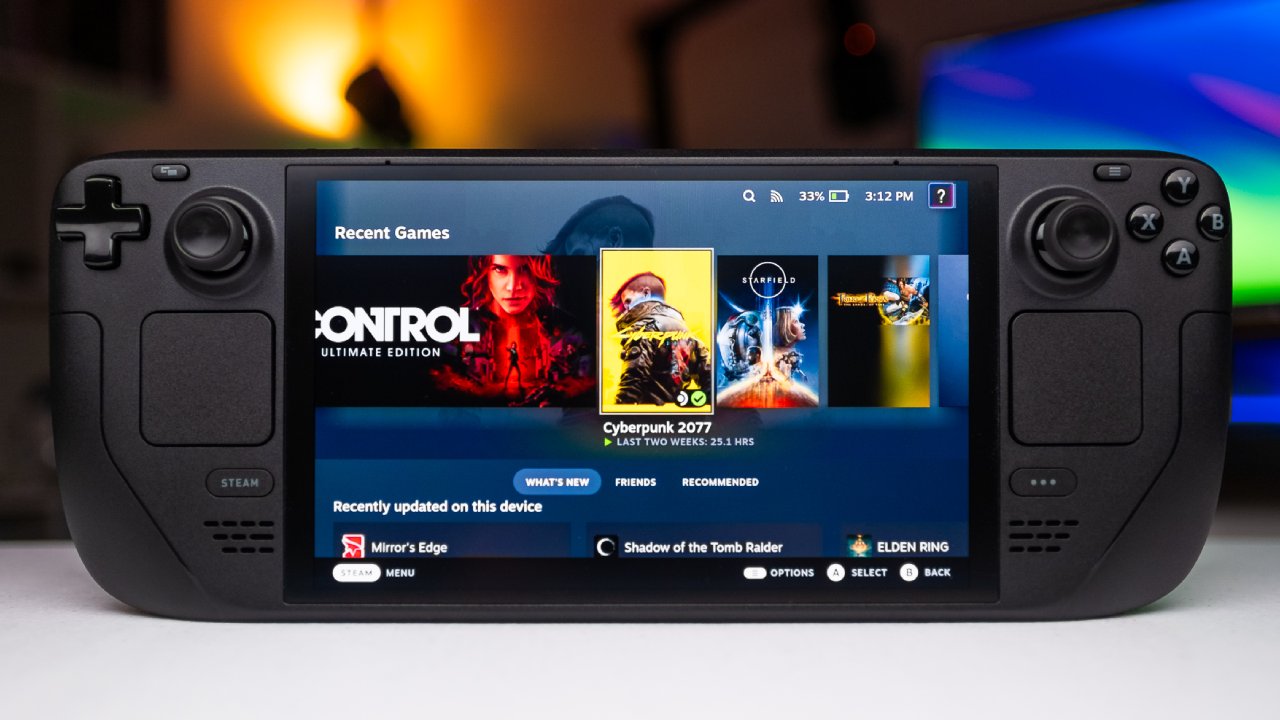
These devices had trouble running newer games smoothly without AMD's proprietary chip. Moreover, international shipping and warranty issues made those options unappealing for most people. At that time, the only serious competition was the Nintendo Switch, which had captured the portable gaming market.
Valve did something revolutionary. They partnered with AMD to build a custom Zen 2 APU and designed an entire Linux-based operating system around it. SteamOS became the secret sauce. It is clean, fast, and like a console, so it doesn't have the extra stuff and background processes that Windows does.
Most handhelds still can't match features like fast sleep and wake, even in 2025. Valve also set the price of the Steam Deck very low, frequently close to the cost, with the real money coming from selling Steam games. Millions of units later, the Steam Deck didn't just succeed—it trailblazed a new category of handheld gaming.
Devices like the ROG Ally, Lenovo Legion Go, and MSI Claw all owe their existence to it.
Pricing and Market Context
The Steam Deck OLED comes in two models: 512GB for $549 and 1TB for $649. Meanwhile, the LCD 256GB version is on sale for $319, including a carrying case. Both models deliver essentially the same performance, so the OLED's upgrades focus primarily on display and fluidity.
The used market is thriving as well. A pristine 512GB OLED model can be found for around $320. Compared to competitors, the Deck is still an incredible value. ROG Ally Z1 Extreme retails for $649, the Lenovo Legion Go Z1 Extreme for $749, the ROG Ally X for $999, the Lenovo Legion Go 2 for $1,349, and the GPD Win 5 with Ryzen AI Max 395 processor costs $1,650.
Even the Nintendo Switch 2 is $449. At $300–$650, the Steam Deck is practically unmatched.
Why the Steam Deck OLED Still Matters
Even years later, the Steam Deck OLED remains relevant. The OLED screen is slightly larger than the LCD version at 7.4-inch versus 7-inch and supports a 90Hz refresh rate instead of 60Hz. That might seem minor, but it makes a noticeable difference in responsiveness.
The 1280x800 resolution may look low compared to today's 1080p or 1440p handhelds, but it allows the modest GPU to push frames efficiently, giving smoother gameplay, longer battery life, and less heat. The OLED display's contrast and color pop remain among the best on any handheld.
The Steam Deck's hardware includes an AMD 6nm APU with Zen 2 cores and 8 GPU RDNA2 compute units. The power runs from 4 to 15 watts TDP, and it has 16GB of LPDDR5 RAM and either 512GB or 1TB of storage. It also has a microSD card. It's not only about sheer power; it's also about balance, performance, and efficiency.

Indie games like Hollow Knight run great with little fan noise at lower TDPs. AAA titles like Ghost of Tsushima, Hogwarts Legacy, or Cyberpunk require 15 watts TDP, but the Deck still delivers playable performance—around 45fps on Cyberpunk compared to the ROG Ally's 61fps at 25 watts. Modern 2025 AAA titles like Baldur's Gate 3 and Spider-Man 2 are playable with compromises.
Some limitations exist. Games with anti-cheat systems like Fortnite or Valorant don't run natively on SteamOS. You can use workarounds like Xbox Game Pass cloud or dual-boot into Windows, but if you need full Windows compatibility, a Windows-based handheld may be better. SteamOS also favors the Steam ecosystem.
While you can use launchers like Heroic for Epic or GOG games, it requires tinkering, and even verified Steam Deck titles can occasionally have issues.
The Advantages of the Steam Deck
We consider the Steam Deck the king of handheld gaming for several reasons. First, price remains unmatched for the value it delivers. Ergonomics are outstanding, with perfect curvature, grip, and balance. The software is efficient and intuitive, tailored for gaming without Windows headaches.
Valve's customer support and warranty system are industry-leading compared to competitors.
The sleep/wake functionality is another advantage. Instant resume is huge for busy gamers. On Windows handhelds, it can take five to ten minutes just to resume a session, but on the Deck, it's just one button press. Battery life is also impressive.
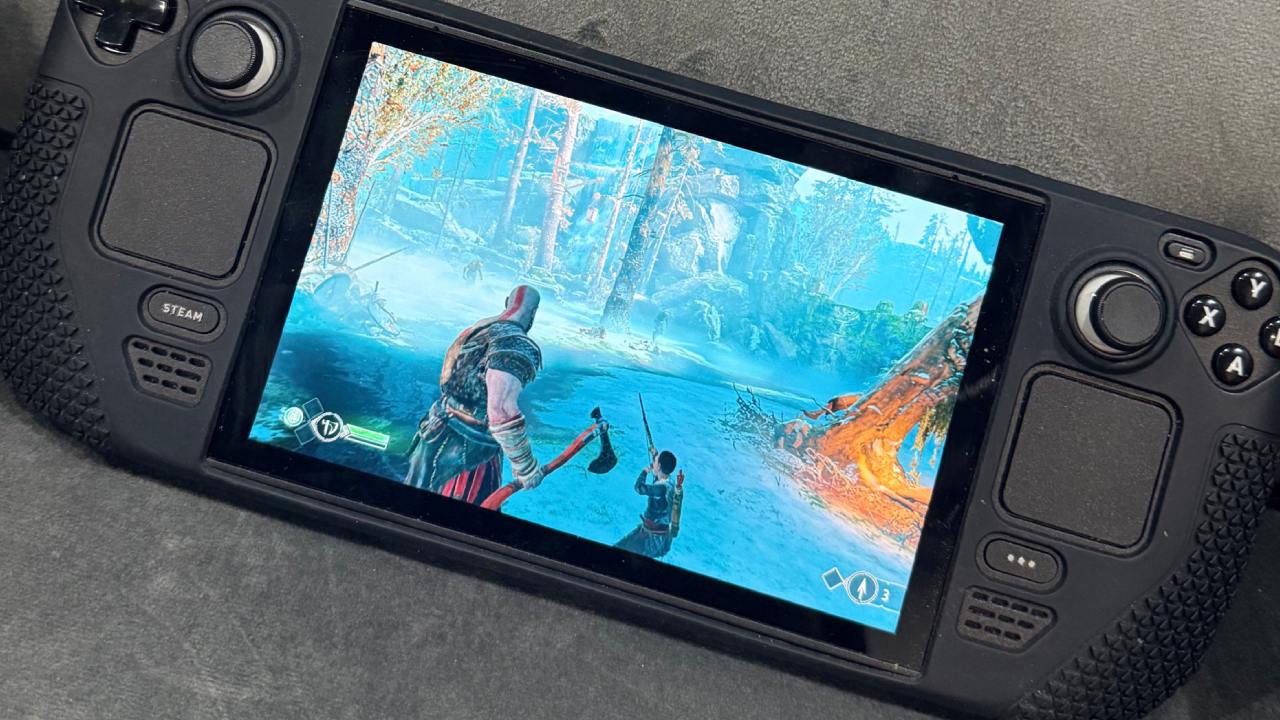
With the 50Wh OLED battery and a 4W CPU draw, you get about 7 hours of total system battery life. At 10 watts, battery life drops to around 3.5 hours, and at 15 watts, it's roughly two hours. The LCD model's 40Wh battery is about 20–25% shorter. Whether on a long flight or a short train ride, it holds up well for portable gaming sessions.
Final Thoughts
The Steam Deck OLED isn't the most powerful portable, it doesn't have the best resolution, and it doesn't work with all games. Still, when you think about comfort, user experience, and affordability, it's still very rewarding. Compared to Nintendo's exorbitant costs, Steam deals make games cheaper.
For those of us balancing lifestyle, time, and budget, the Steam Deck OLED is the handheld that continues to stand out and deserves a place in your gaming arsenal.
Check our Other Handheld Articles :
- ASUS ROG Ally X Handheld Review: Double the Battery, Double the Comfort
- Nintendo Switch 2 Vs. Original Switch 1: A Full Comparison
- How To Connect A Camera And Join Voice Chat With Nintendo Switch 2
- Nintendo Switch 2 Review: Handheld Performance, Features & Value Breakdown
- ROG Xbox Ally X Vs. ROG Ally X: Display, Battery & Controls
- ASUS ROG Ally X vs. Steam Deck OLED: Display, Battery & Gaming Benchmarks
- MSI Claw 8 AI+ Review: Display, Controls & Gaming
- Nintendo Switch 2 vs. Steam Deck OLED: Gaming, Performance, Battery, Display and Value
- PlayStation Portal Review: Remote Play, Cloud Streaming & Travel Gaming
- PlayStation Portal vs. Lenovo Legion Go: Best Portable Gameplay
- Cyberpunk 2077 Patch 2.3 FPS Test on MSI Claw 8 AI+
Senior Editor, NoobFeed
Gaming Hardware Updates
No Data.