

DDR5 Prices Drop Slightly as PC Hardware Shortage Deepens in 2026
Rising AI-driven demand intensifies RAM and SSD shortages while PC hardware prices remain significantly elevated in 2026.
Hardware by Katmin on Feb 24, 2026
Personal computers still exist. People are still buying PC hardware, and the entire supply chain has not completely broken down. Yet fewer PCs and parts are being sold, and buyers are paying more for the available hardware. Supply chain updates continue to swing between fabricators reporting increased shipments to AI data centers and warnings that broader capacity expansion will not meaningfully ease constraints until at least 2028.
There is a choice to ignore the constant doom and instead focus on small but meaningful positives. Some RAM prices have actually dipped in the past month. Delay, frustrating as it may be, can sometimes work in our favor. Even delayed launches can be viewed optimistically when we step back and look at the bigger picture.
.jpg)
If anyone asks whether PC gaming has been abandoned due to soaring RAM and storage prices, the answer is simple: We have not given up; we are waiting for conditions to improve. In the interim, we can play around with used and refurbished hardware, make older systems last longer, and catch up on some older Steam games that run well on low-end computers.
Shortages Spread Beyond PCs
The lack of DRAM and storage is now affecting more than just traditional PCs. Analysts from IDC, Omdia, and Counterpoint say smartphone prices will rise in 2026, but there will be fewer options for consumers. Manufacturers are increasingly focused on making money by producing high-end, premium equipment. Because of this, $1,000 may start to look more and more like a starting price. At the same time, newly launched phones are less likely to feature upgrades in memory and storage capacity.
Routers, internet gateways, and set-top boxes are also being affected. Memory once accounted for 3% of a router's bill of materials; now it is closer to 20%. Telecom providers are expected to pass those higher costs along through increased monthly rental fees, reduced installation discounts, or new upfront charges.
On the storage side, Western Digital revealed in a recent earnings call that it is effectively sold out for calendar 2026. Nearly all planned hard drive production for the year has already been allocated. Only 5% of its revenue now comes from regular consumers, with the majority tied to enterprise and data center customers.
Even handheld gaming has not been spared. The $399 256GB Steam Deck model is reaching end of life at the end of 2025, while the $550 OLED version has disappeared from the store. The $650 1TB variant is also sold out. Valve has confirmed that memory and storage shortages are the cause. These broader impacts appear to be only the beginning.
Dire Predictions and a Sliver of Relief
In a recent interview, the CEO of storage manufacturer Phison warned that by the end of 2026, many system vendors could go bankrupt or exit product lines due to insufficient memory supply. The number of mobile phones made could drop to 200–250 million, and the number of PCs and TVs could also drop significantly. NVIDIA's plans to build tens of millions of Vera Rubin AI systems, each requiring 20TB of SSD storage, are driving demand even higher. It has been said that memory fabricators want three years' worth of payment in advance to guarantee supply, something smaller manufacturers can't do.
Yet there are faint signs of improvement. German outlet ComputerBase, which tracks hardware pricing, observed that average DDR5 kit prices fell from January to February. Compared to pre-crisis pricing, they were still up 314%, but that was down from 344% the previous month. The increase remains steep, but the direction has shifted slightly. PCPartPicker charts also show a small downward trend at the tail end. Panic buying may have subsided, but in the current market, any positive movement is welcome.
Zen6, Nova Lake, and the Question of Timing
In a market without inflated RAM and SSD prices, rumors about upcoming Zen6 CPUs would be purely exciting. Desktop Zen6 processors, codenamed Olympic Ridge, are expected to increase per-CCD core counts from 8 to 12. That could mean single-CCD configurations of 6, 8, 10, or 12 cores, and dual-CCD setups such as 8+8 for 16 cores, 10+10 for 20 cores, or 12+12 for 24 cores, for a potential flagship like a Ryzen 10950X.
Intel's next-generation Nova Lake CPUs are also rumored to scale up to 52 cores. In theory, late 2026 could deliver an impressive matchup. In reality, if DDR5 memory and SSDs remain more expensive than CPUs, demand may be muted.
There are also reports suggesting Zen6 could be delayed until 2027. A delay may be more strategic than disappointing. Launching high-performance CPUs into an unaffordable ecosystem may not make sense. A limited late-2026 release with broader 2027 availability could be a possible compromise.
Intel ARC and the Elusive Comeback
Intel's ARC GPUs, once thought capable of competing with Nvidia and AMD, are still in limbo. The portfolio is now in limbo because there is no B770, and prices are uneven, even with recent introductions. Intel's roadmap indicates that GPU development will continue, with new architectures such as XE Next following XE2 and XE3P. While much of the company's public focus is now on AI and data center products, discrete gaming GPUs have not been officially abandoned. For now, we hold onto cautious optimism.
Extreme GPUs and a Shrinking Hobby
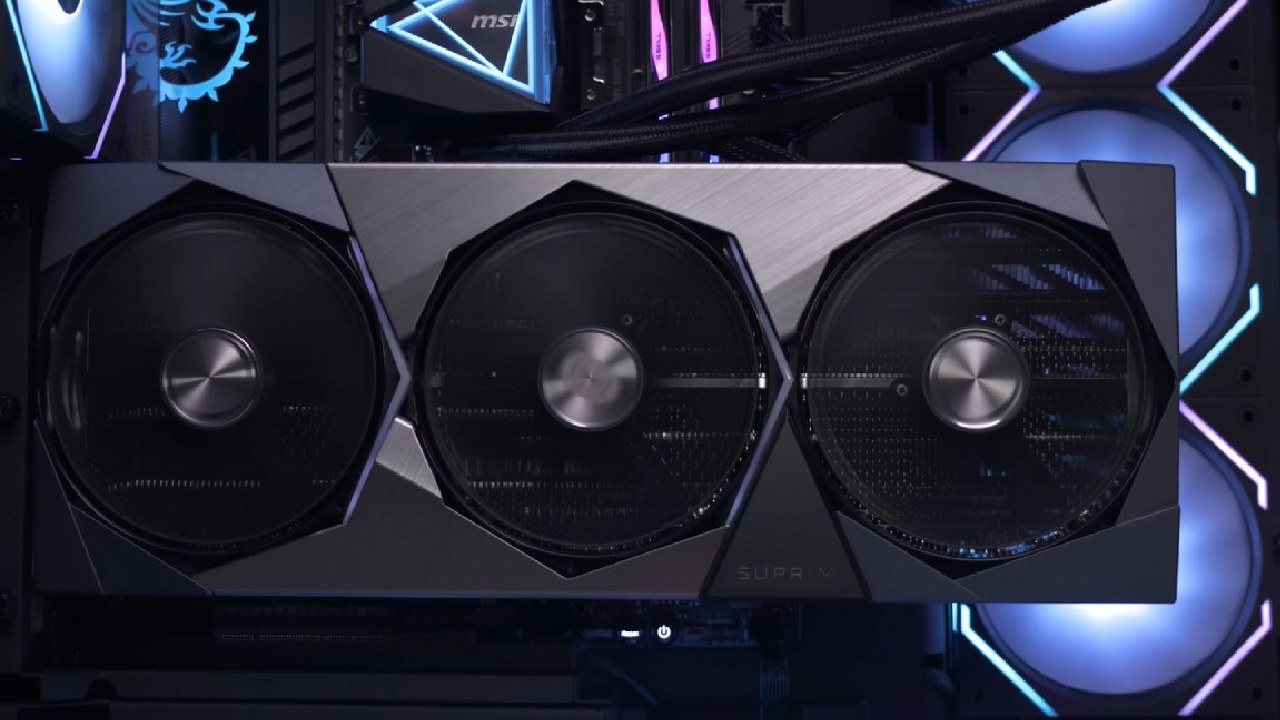
NVIDIA's RTX 5090 has gone to the extreme end of the scale. The MSI RTX 5090 Lightning has two 12v2x6 connectors with BIOS modes that can handle 800W, 1000W, and even 2500W in extreme overclocking situations. There is also a 2000W BIOS for the Asus Astral RTX 5090. These developments excite the overclocking community, but for most enthusiasts facing inflated DDR5 prices, GPUs costing several thousand dollars feel increasingly out of reach.
If prices continue rising, PC hardware tinkering risks becoming more of a spectator sport than a hands-on hobby. We may end up watching overclocking feats the way we watch elite athletic competitions: impressive but unattainable for most participants.
Leadership Changes at Microsoft Gaming
Microsoft announced a major leadership shift, with Phil Spencer retiring from overseeing its gaming division. Asha Sharma has stepped in as the new CEO of Microsoft Gaming, which includes Xbox and subsidiaries such as Activision Blizzard. Matt Booty has been promoted to chief content officer.
Asha Sharma outlined three priorities: great games, the return of Xbox, and the future of play. With her previous role focused on Core AI, some worry about excessive AI integration into beloved franchises. She addressed those concerns directly, stating that existing worlds and characters will not be treated as static IP to be milked and monetized, and that the ecosystem will not be flooded with soulless AI content. It remains to be seen how this vision unfolds, but Microsoft Gaming's direction will significantly influence the broader industry.
Waiting, Watching, and Holding On
There is a true hardware shortage, and its impacts are spreading. Prices are still high, supply is limited, and demand driven by AI is changing priorities across the board. But tiny price drops, delayed debuts, and ongoing pledges to the plan show that things aren't completely hopeless.
We might be stuck in a holding pattern, but sometimes the best thing to do is wait. In the meantimemeantime, we improve what we currently have and watch the market closely for signs of a real recovery.
Also, check our other hardware articles:
- AMD Ryzen 9 9950X3D Review: Setting The Standard For 2025 Gaming CPU
- Amazon Luna 2025 Review: Is Prime Gaming's Cloud Service Your Go-To For Casual Fun?
- AMD RX 9070 XT Review: AMD's RDNA 4 Champion for 1440p Gaming
- GeForce Now Ultimate: Ditching Your Gaming PC For Cloud RTX 4080 Power?
- NVIDIA GeForce RTX 5080 Review (2025): Still A 4K Gaming Powerhouse?
- Intel Core Ultra 9 285K Review And Performance Breakdown (2025)
- AMD Ryzen 7 9800X3D Review: 3D V-Cache Goes God Mode with Stunning Gaming Performance
- Intel Core Ultra 9 285K vs AMD Ryzen 7 9800X3D: In-Depth Gaming Performance and Benchmark Comparison
- NVIDIA GeForce RTX 5080 Super Performance In Cyberpunk 2077: Path Tracing & DLSS 4.0 Tested
- AMD Radeon RX 9070 XT In Cyberpunk 2077: Ray Tracing & FSR 4.0 Tested
- Intel Arc B580 Review: The $250 GPU Revolutionizing 1440p Gaming
- Intel Arc B570 Vs. B580: Value, Specs, And Real-World Gaming Performance
- RTX 5090 Laptop Vs. M4 Max MacBook Pro: Ultimate Raw Performance Vs. Battery Endurance
- Intel Arc b580 Vs. RTX 4060: Game Performance And Value Analysis
- RTX5090 Hell Is Us Demo 4K Ultra Benchmark: DLSS Vs. Native Performance Guide
- NVIDIA RTX 5070 Review: Mid-Range Muscle or Marketing Hype?
- Nintendo Switch 2 Review: Handheld Performance, Features & Value Breakdown
- RTX 5070 Ti Review: Performance, Thermals & Power Efficiency Tested
- Samsung Odyssey OLED G81SF Review 2025: Ultimate 32-Inch QD-OLED Gaming Monitor
- AMD RX 9070 Performance Review: Thermals, Clocks, and Real-World FPS
- AMD Ryzen 5 7600 Review: Best Budget Gaming CPU of 2025?
- AMD Radeon RX 7800 XT Review: RDNA 3 Power For Midrange Gaming
- Asus ROG RTX 5090 Astral OC Vs. Founders Edition: The 4K Gaming Benchmark
Senior Editor, NoobFeed
Latest Articles
No Data.