
Intel i7 14700K Review: Is it Worth it in 2025?
Combines high-performance P-cores and efficient E-cores to deliver balanced power usage across gaming and productivity tasks.
Hardware by Masaru Hoshino on Aug 06, 2025
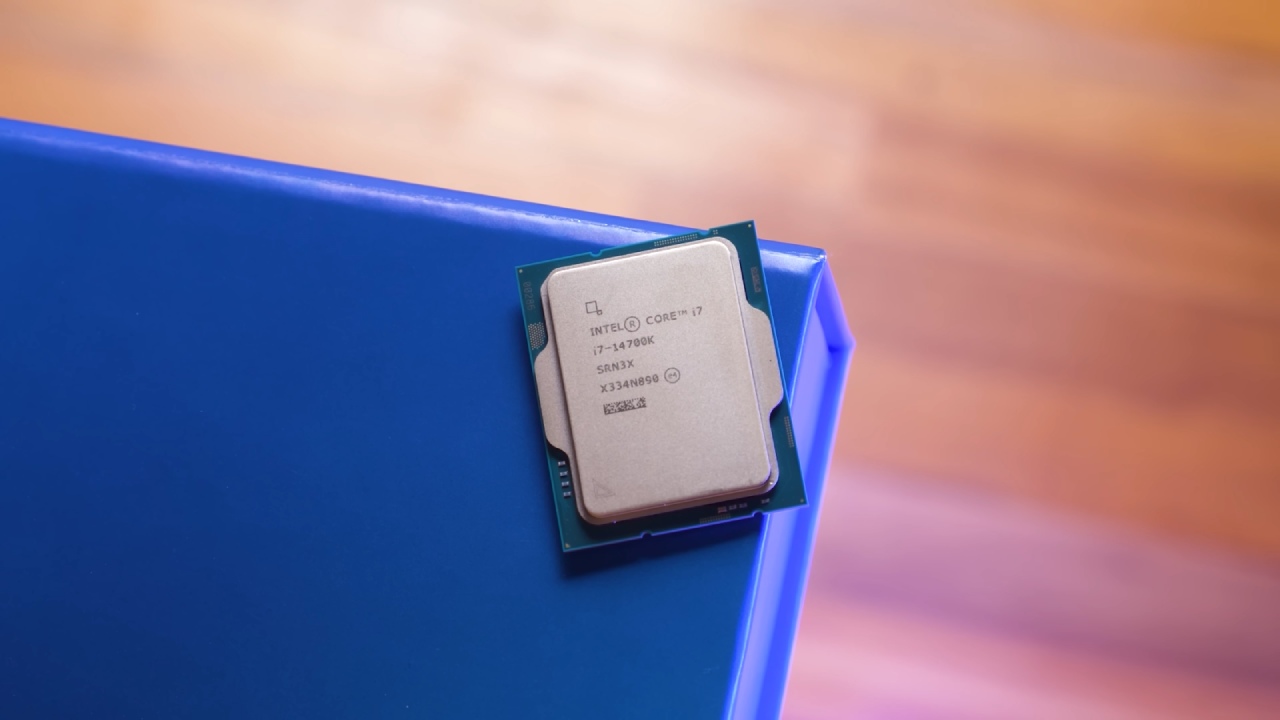
Core i7-14700K, one of Intel's fastest desktop CPUs, was released in October 2023. Energy-efficient E-cores are used for normal work, like web browsing or background programs. On the other hand, fast Performance cores are used for demanding tasks like gaming.
This combination enables the chip to provide outstanding performance when required and limit power consumption when not in use. Even in 2025, i7-14700K remains a top choice for anyone who wants both smooth high-frame-rate gaming and quick results in creative applications like video editing or 3D design.
Test Bench Specifications
Our testbed consists of a Z690 DDR4-based motherboard paired with an RTX 4070 GPU. Although DDR5 provides more bandwidth, the quick DDR4-3600 MT/s CL16 memory frequently has reduced latency, which is advantageous in some gaming situations.
One PCIe 4.0 NVMe SSD (a TeamGroup Tech Gen 4 Premium) and one Western Digital Black SN770 handle storage. For mid-2025 evaluations, this cost-optimized platform offers a reasonable CPU, GPU, and memory balance.
Gaming Performance
Apex Legends
In this DX12 esports title at 1080p, we averaged 255 fps with a 1% low of 163 fps. Frame pacing was rock-solid, and even with an RTX 4070, there's headroom for higher-end GPUs. You'll enjoy smooth, high-refresh-rate gameplay.
Call of Duty: Black Ops 6
Using the basic preset and DLSS Performance, i7-14700K delivered 259 fps on average and a 1% low of 133 fps. Visuals were modest, but CPU headroom ensured no stutters.
Warzone
At the same settings, Warzone averaged 145 fps with a 1% low of 95 fps. The GPU hovered at 60% load, indicating CPU limitation. Tweaking presets can boost frame rates further if you crave extra performance.
Counter-Strike 2
Under DX11 on low settings with FSR Balanced, we saw 290 fps average and a 1% low of 103 fps, with peaks up to 436 fps. Disabling the efficiency cores improved consistency, demonstrating how some engines play better on P-cores alone.

Cyberpunk 2077
Even at low preset with DLSS Balanced, the CPU capped performance: 90 fps average and 50 fps 1% low. Enabling or disabling E-cores yielded similar results, suggesting the game leverages both single-thread speed and parallel cores.
Fortnite
With DLSS Balanced on low, we hit 226 fps average but noted a 1% low of 79 fps during drop sequences. Once in combat, dips below 100 fps were rare, but chunk loading can introduce brief hitches.
Helldivers 2
This DX12 title at low preset and Balanced upscaling averaged 111 fps with a 1% low of 66 fps. The GPU sat at ~50% utilization, again signalling a CPU bottleneck. AMD X3D alternatives edge out the 14700K slightly here.
Marvel Rivals
On low with DLSS Performance at 1080p, we saw 166 fps average and a 1% low of 78 fps. The GPU idled around 50%, highlighting CPU limits. An eight-core AMD part would push higher frame rates, but you'd sacrifice four extra E-cores for other tasks.
Minecraft Java Edition
At 1.21.4 and 32-chunk render plus 16-chunk simulation, the average was 318 fps with a 1% low of 40 fps. Chunk loading impacts lows significantly, though sustained gameplay remains smooth once loaded.
Productivity Focus
Beyond gaming, 14700K shines in photo/video editing, Blender, Unreal Engine, and similar workloads. It's 12 E-cores boost thread-parallel tasks Premiere Pro and DaVinci Resolve see massive gains compared to older 16-core Ryzen chips.
If your workflow spans both content creation and occasional gaming, the hybrid core count accelerates render times and iteration.

Heterogeneous Architecture
Intel's P-cores deliver low latency and high single-thread throughput: 36 KB L1 I-cache, 48 KB L1 D-cache, 2 MB L2, plus 3 MB L3 per core.
The Gracemont-based E-cores share 4 MB L2 per quad cluster and feature 64 KB L1 I-cache plus 32 KB L1 D-cache. Modern OS schedulers map urgent tasks to P-cores and background threads to E-cores, though some games may misallocate BIOS macros can disable E-cores temporarily if needed.
Clocks and Power Consumption
Out of the box, P-cores boost to 5.6 GHz (tuned to 5.7 GHz or briefly 5.8 GHz), while E-cores reach 4.3 GHz. Base TDP sits at 125 W, with PL2 up to 253 W.
Under heavy renders, we observed ~200 W sustained; gaming rarely exceeds 125 W. Robust cooling tower air or 360 mm AIO is essential to tame occasional 300 W spikes.
Connectivity and Memory Support
The chip supports PCIe 5.0 ×16 to the GPU, while NVMe SSDs remain at PCIe 4.0. Most Z690/Z790 boards provide three or more M.2 sockets, ample USB 3.2 Gen1/2 and Type-C ports, and front-panel USB-C headers.
Memory compatibility covers DDR4-3200 and DDR5-5600; DDR5 is recommended for new builds, though DDR4 reuse offers cost savings with minimal gaming impact.
Pricing and Value
As of mid-2025, street prices hover around $330 on Amazon and Newegg about $100 below launch. Used markets yield small savings given their relative newness. Compared to Core Ultra 7 265K, it's a more attractive pick for most users.

Final Thoughts
Core i7-14700K occupies a niche reversal: no longer the pure gaming champion, it excels as a hybrid productivity CPU with strong gaming chops. If you prioritize FPS at a given price, AMD's X3D offerings hold the edge.
If your days blend video editing, 3D rendering, and casual gaming, 14700 K's heterogeneous design accelerates creative workloads without sacrificing smooth gameplay.
Check Our Other Intel Chips Articles:
- Intel Core Ultra 9 285K Review And Performance Breakdown (2025)
- Intel Core Ultra 9 285K vs AMD Ryzen 7 9800X3D: In-Depth Gaming Performance and Benchmark Comparison
- Intel Core i5-13400F Gaming Performance: Still Worth It in 2025?
- Intel Core i9‑14900K vs. AMD Ryzen 7 7800X3D: Power Profiles & Gaming Benchmarks
- Intel Core i9 14900K: Specs, Benchmarks, and Competitor Comparison
- Intel Core Ultra 5 245K Review: Gaming, Productivity & Power Efficiency Tested
- Intel Core Ultra 9 285 K's iGPU Gaming: In-Depth Benchmarks & Analysis
- Intel vs. AMD Gaming Laptop: Performance, Thermals & Battery Life Compared
- AMD Ryzen 7 9800X3D vs.7800X3D vs. Intel Core Ultra 7 265K: Gaming, Thermals & Price Analysis
Editor, NoobFeed
Latest Articles
No Data.