
ALL WILL FALL: Physics-Based Survival City Builder Review
PC
Making a city that is about to fall apart, one risk at a time.
Reviewed by Nusrat Choity on Mar 04, 2026
All Will Fall has a quiet power that draws you in. It doesn't try to get your attention with big, flashy sets or exciting stories. Instead, it pulls you in slowly, almost without noticing, until hours go by without you noticing. This starts out as a simple mission to keep a few people alive, but it quickly turns into a tricky balancing act where every choice brings up a new problem.
This isn't the average city-builder that lets you make changes and add on later; it was made by All Parts Connected. It's easy to make mistakes here. When they fall, they often take half of your town with them. That main idea—making something that can physically fail—is what makes the game what it is and what makes it so hard to leave.
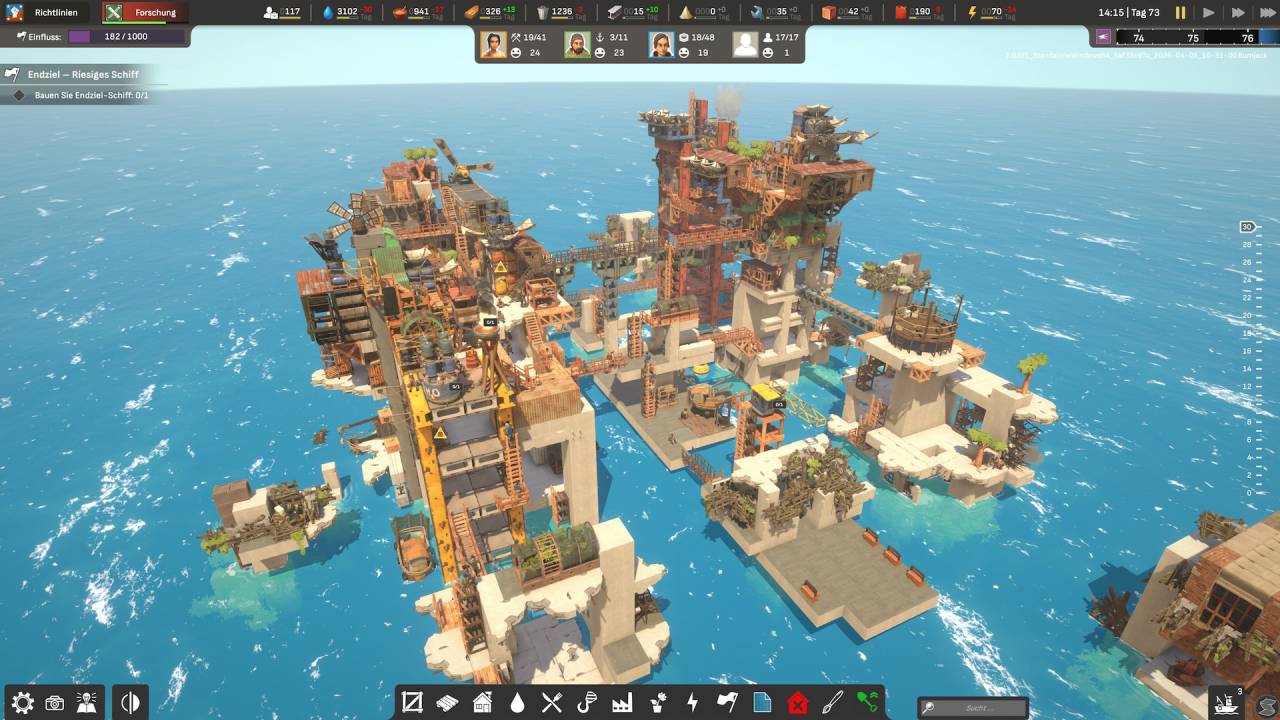
In most games of this type, you are given some land and told to build something useful on it. Give these pieces of a drowned world and tell them you can live in them. The ocean has swallowed society, leaving only pieces of buildings sticking out of the water. That's the start of everything.
There isn't a slow rise to safety. You have to deal with shortages, shaky ground, and a group of survivors who aren't sure about the choices you make right from the start. You are expected to change by the game; it doesn't ease you in. A little bit of being overwhelmed never really goes away, which is part of its charm.
There aren't any long cutscenes or emotional arcs in this story. It changes based on events. After a storm, a group of survivors crashes into what's left of a city that was flooded. The only goal is to stay alive. That's where everything else starts.
It's interesting how the story builds by making you worry rather than answering your questions.
People who want help are already getting it. There are times when things go badly. Lots of people are unhappy with their homes. Things go wrong little by little until you have to make hard decisions.
Always, you have to pick between what's right and what needs to be done. Things like these don't always go together. Most of the time, there is no clear "right" answer. You just have to live with the results. As time goes on, these parts start to feel less like game mechanics and more like events that happened because of the choices you made.
The main goal of the game is to keep a fragile machine from breaking down. People always want things like food, water, wood, and scrap metal, but there's never quite enough to go around. You set up production, build shelters, grow your settlement, and try to keep everything going.
It's interesting how the problems keep adding on top of each other. Almost every time you fix a problem, you find another one. Once the water source is fixed, there won't be enough homes. Your building might not be strong enough to hold all the people who move in. Things stay interesting without feeling like they've been done before with that loop.
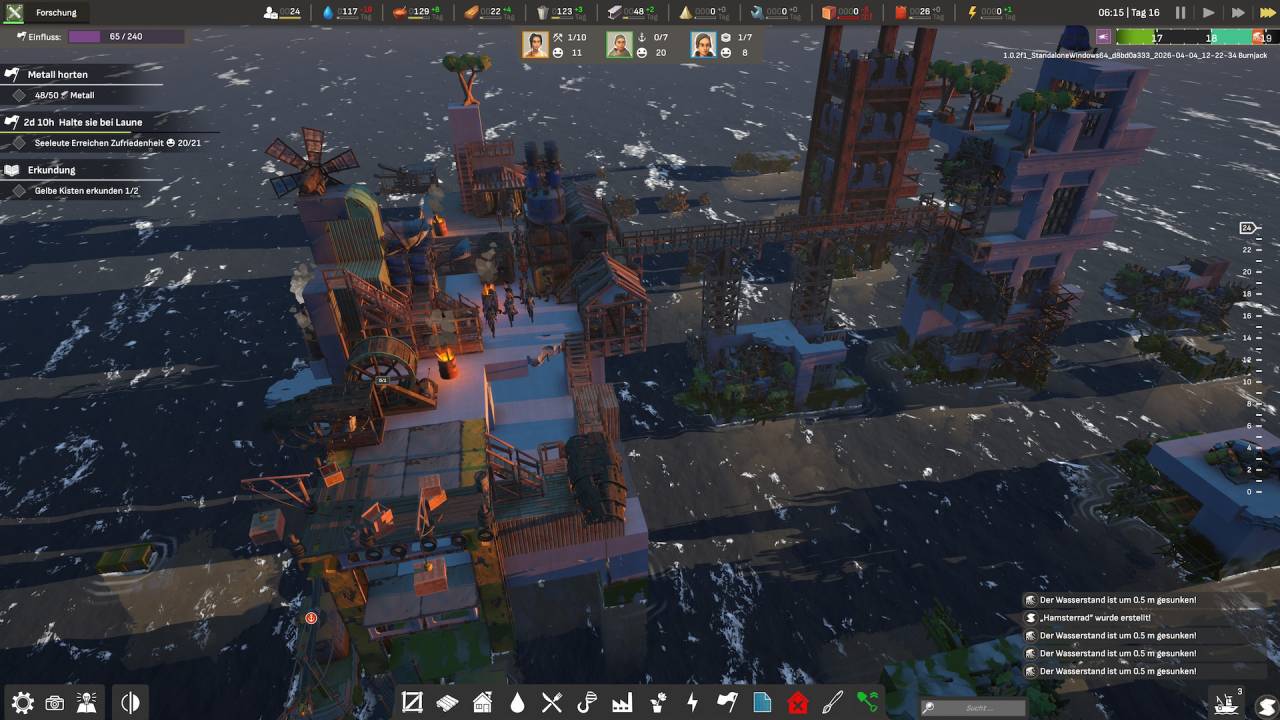
The survivors are split into three groups: workers, sailors, and experts. Each group needs different things to be happy and do its job. Workers do most of the work, sailors do things like fishing and exploring that happen on the water, and engineers study and build new systems. It is important to keep them fair, but it's not always easy.
When you focus too much on one group, you may get more done in the short term, but it usually leads to problems with other groups.
If you ignore a group for too long, it will start to show up in the form of less work getting done or strange events. You are always being pushed to think ahead by this system, even when you have troubles right now.
The physics-based building system in All Will Fall is what makes the game unique and sets it apart from other games in the same genre. Everything has weight to it. Each link is important. Something doesn't just sit there looking bad if it's not properly supported; it falls down.
That turns building into a puzzle instead of just a game of putting things where they fit. You decide not only where things go, but also if they can be there at all. Bridges need to be well held up. All of the platforms must be level. It's important to plan ahead when you're going up because one weak spot can bring the whole thing down.
When you get something right, it feels good. It feels good to work hard on something complicated and see it stay together in a way that most city builders don't quite get. But the method can also be annoying. Sometimes, even if something seems stable, it will still be marked as unstable, causing you to rethink or rebuild.
When buildings do fall down, they don't usually do so slowly. A large area of land can sink into the ocean, taking time and things with it. Things that go wrong hurt and teach you quickly. When you can see problems coming, this way really does work.
A research tree that slowly opens up new buildings and tools lets you move forward. In the beginning, you only have access to simple tools for building homes, fishing, and gathering resources. As the study goes further, more complex systems become available. These include better housing, electricity, and more advanced production chains.
The pace is on purpose here. It can feel like you're not making as much progress as you'd like, especially when you're waiting for your study to finish while taking care of other things at the same time. But the pace also makes the survival part stronger. Not being able to answer everything at once makes you make smarter choices.
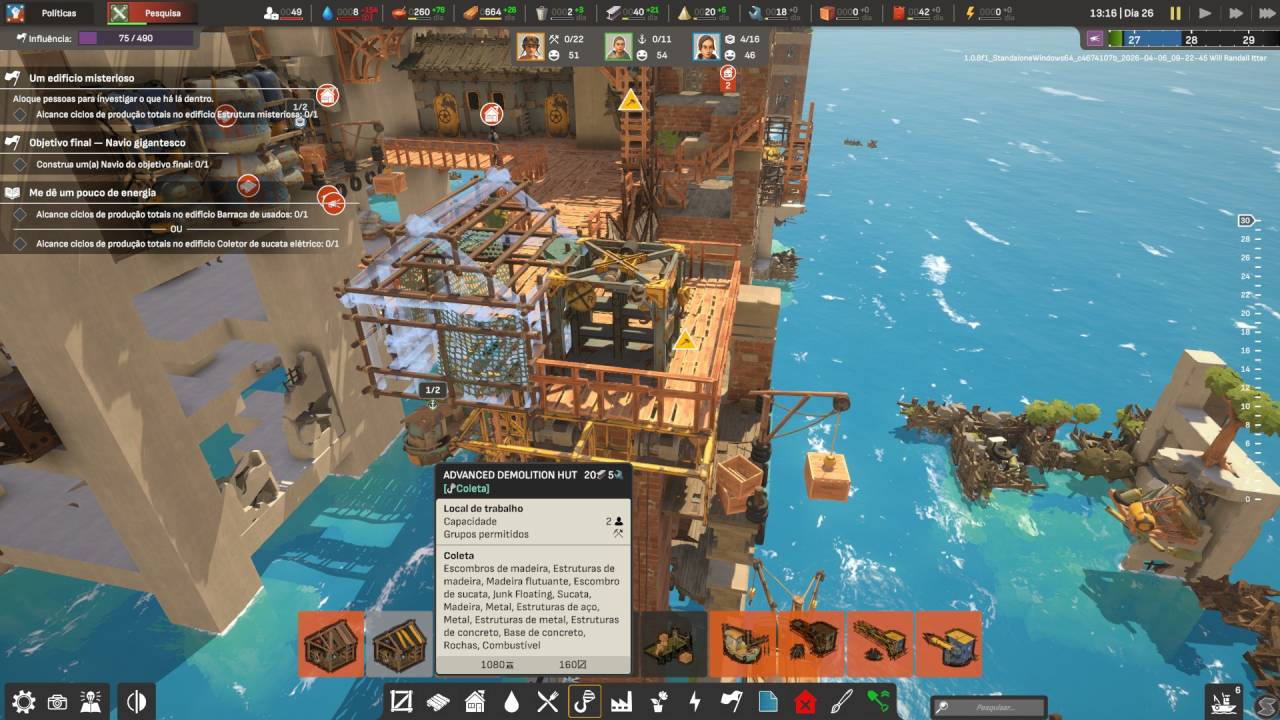
Influence adds another level, letting you use rules to change how your settlement works. It is possible to make a big change by changing how work is done, how resources are shared, or how much is made, but every choice has a cost. You can't always get things right; sometimes there are better ways to handle the same issues.
The setting is important, so it's not as easy as it looks. The water level changes over time, revealing new places and resources before covering them up again. It's time to pay attention. It can be profitable to send workers out when the tide is low, but it can also be dangerous if the water rises before they get back.
Storms and other events make things less predictable. They can cause trouble or give you chances.
Like, a garbage storm could damage things, but also leave behind things that are useful. These parts of the game keep it from becoming boring. What I thought would be easy to get takes more work than I thought. Changing the way roofs are built can help them gather more rainwater.
Another option is to boil salt water, but this pollutes the area around it, which then affects other areas nearby. Logistics are important too, since things need to be moved to storage or building sites.
It seems like everything is linked, and even small choices can have big impacts. The game looks more like a cartoon than a real-life scene, which is in its favor. It's simple to understand what's going on, even as your town gets more complicated, thanks to the clean art style.
There's also an interesting difference between how calm the world seems and how tense it really is.
Systems that are always one mistake away from failing sit next to bright, almost peaceful images. Watching your city grow, layer by layer, gives you a sense of satisfaction that matches the work that goes into building it. One of the things that makes something stand out visually is its verticality. Because there isn't much room, people have to build up.
The result is a town that looks and feels more like a stacked structure than a normal city. As long as it doesn't get in the way of the experience, the music design stays in the background. The calm music makes the gameplay seem out of place. Even when things are going badly, the mood stays steady instead of getting worse.
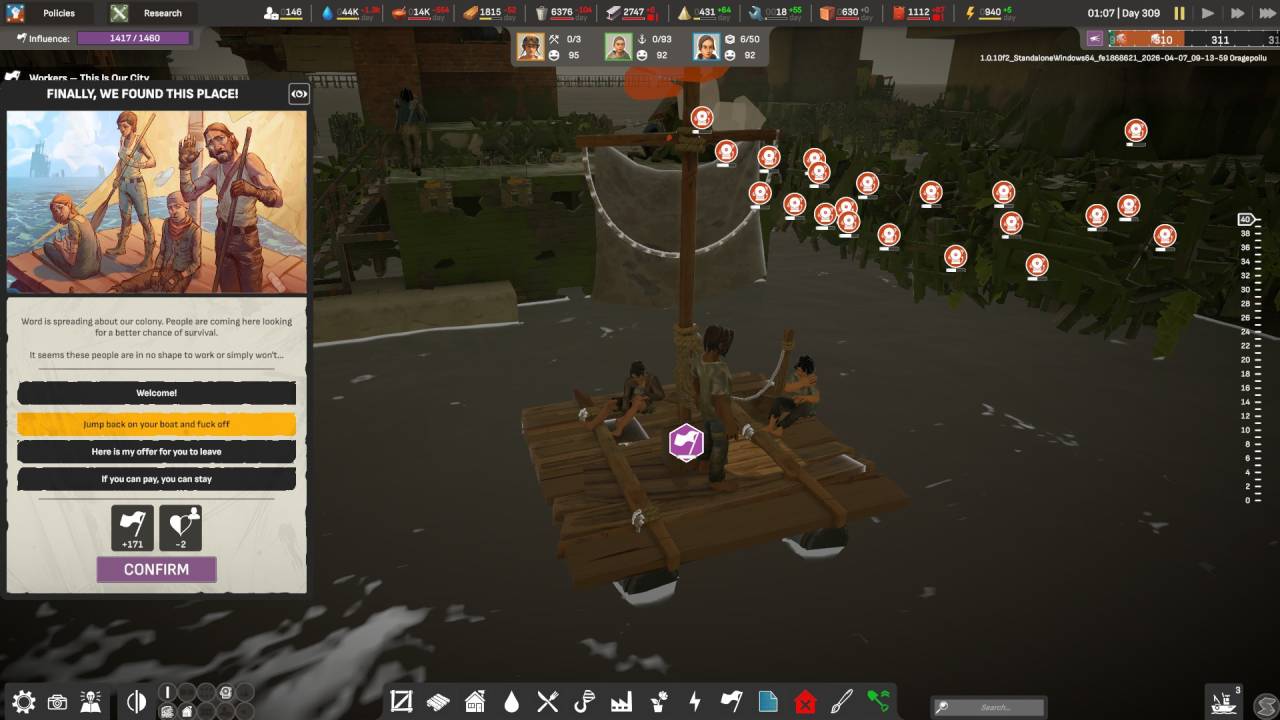
That balance helps you stay on task during long conversations without getting tense. The only bad thing is that some speech parts are used more than once. It can get annoying to hear the same words over and over, especially when you play for a long time.
All Will Fall doesn't try to be acceptable to everyone, which is a good thing. It leans on its processes and wants you to go along with them. It feels unique because of the physics-based building, the steady pressure on resources, and the need to keep different groups in balance.
In the beginning, it can be stressful. It takes a long time to learn, and mistakes are rarely forgiven. But the experience is much more fun once the processes start to make sense. You keep going back to it because of the way it flows: building, fixing, adjusting, and trying again. Making a beautiful city is not the point. To keep going, you have to keep things together for a while.
Contributor, NoobFeed
Verdict
ALL WILL FALL is a hard but fun city-building game where each building is vital. Sometimes frustrating, but once understood, it's very interesting to play. A great choice for survival game fans who like deep, system-driven games.
70
Related News
No Data.