
Kingdom Hearts Collection [I-III] Review
Nintendo Switch 2
Square Enix's Kingdom Hearts collection offers a convenient way to experience the series on Nintendo's latest console. However, uneven performance and a few technical shortcomings keep it from being the definitive version.
Reviewed by Asura Kagawa on Oct 13, 2026
Kingdom Hearts has been around since 2002, when Square Enix, then known as Squaresoft, brought together its own RPG design with characters and worlds from Disney. On paper, the combo sounded weird, but the original game became a long-running franchise with its own characters, complex mythology, and a story that has continued across multiple mainline games and spin-offs.
Twenty-plus years later, one game and on to the sequel is a much larger commitment than tagging along with Sora, Donald, and Goofy on their journey. Kingdom Hearts Collection [I-III] on Nintendo Switch 2 tries to make that journey easier by bringing a substantial portion of the series into one package. Instead of making you track down several separate releases, it gives you access to the main adventures and a selection of games that fill the gaps between them.
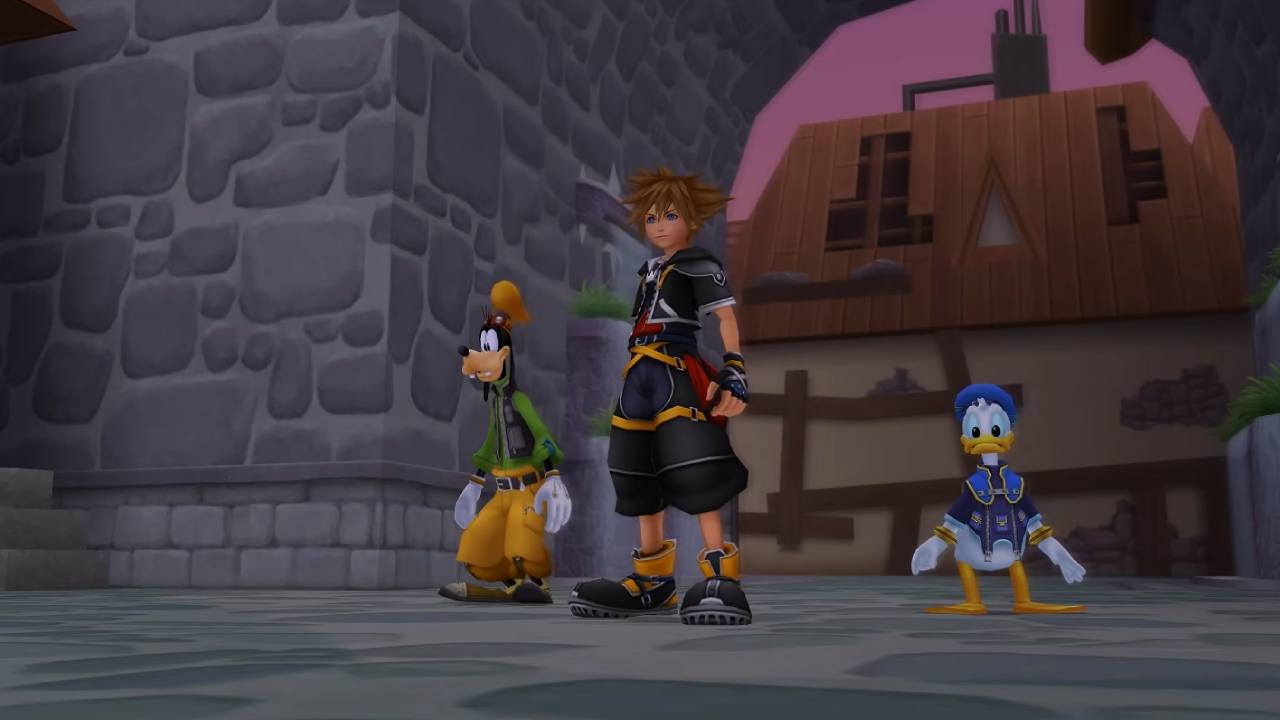
The collection combines Kingdom Hearts HD 1.5 + 2.5 ReMIX, Kingdom Hearts HD 2.8 Final Chapter Prologue, and Kingdom Hearts III with Re Mind. That gives you the first two numbered games, additional playable adventures, cinematic presentations of some handheld entries, and the third mainline installment.
For newcomers, this is a convenient way to catch up on a franchise that can otherwise be difficult to follow.
For longtime fans, it offers another opportunity to revisit familiar worlds on a portable Nintendo system. But the Switch 2 release isn't entirely new content, and it doesn't inherently make the games run better just because you're playing them on newer hardware. While the collection offers plenty of Kingdom Hearts, its technical performance and presentation mean you'll need to weigh convenience against a few compromises.
The series has always been about more than its Disney characters. The story gradually escalates into a bigger conflict of different worlds. Kingdom Hearts follows Sora, a young boy separated from his friends Riku and Kairi when darkness consumes his home. He teams up with Donald Duck and Goofy to travel through various Disney worlds, rescue his friends, and defeat the forces threatening them.
Kingdom Hearts II builds on that foundation by adding a larger conflict, more complex character relationships, and a bigger cast of enemies. It also introduces Roxas as the game progresses. The other entries in the collection help explain what happens between the numbered games, making characters and developments that might otherwise be confusing easier to follow.
Birth by Sleep, Dream Drop Distance, and the other included material all contribute to the wider narrative.
That matters because Kingdom Hearts III assumes a considerable amount of familiarity with the series. If you jump in without understanding the earlier games, you'll encounter characters, references, and conflicts that don't carry the same weight. The collection lets you follow the story more informedly, though the number of releases and their overlapping timelines can still make the overall narrative hard to keep straight.
Kingdom Hearts has never explained every detail in a simple, direct way, and collecting its major entries in one place doesn't change that. The package also isn't a completely playable archive of every Kingdom Hearts release. Some entries are available as full games, while others appear as HD cinematic presentations. Kingdom Hearts 358/2 Days and Re, for example, are presented as films rather than playable adventures.
These presentations let you follow their stories without needing to find the original Nintendo DS versions, but they don't reproduce the gameplay that made those releases distinct. If you expect every included title to offer the same hands-on experience, you'll need to adjust those expectations.
Even with that limitation, having so much of the series available together is one of the collection's strongest selling points.
You can move through the major adventures and explore the stories that connect them without constantly switching between different platforms or searching for older hardware. The catch is that you're getting a curated collection, not a full preservation of everything Kingdom Hearts has ever offered.
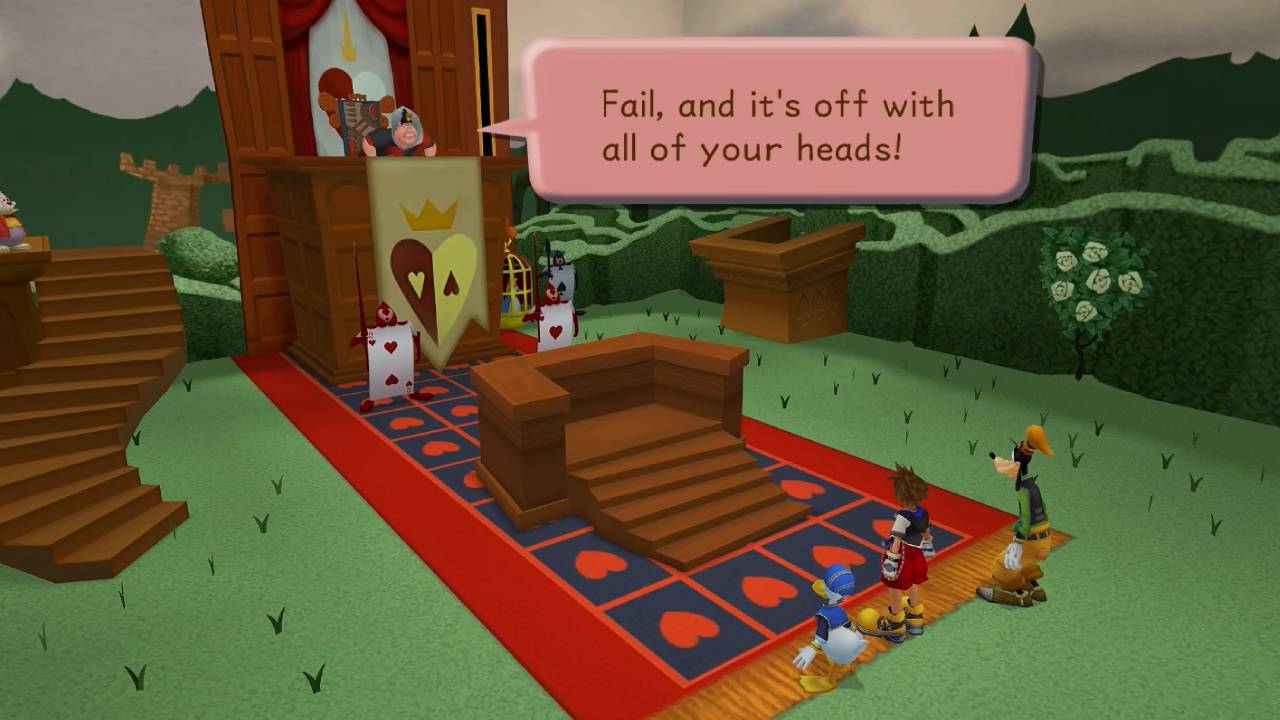
Kingdom Hearts is essentially an Action RPG. It has combat, exploration, character development, and the occasional puzzle-solving. You explore worlds from the original Kingdom Hearts games and classic Disney movies, fight Heartless and other enemies, meet characters, and complete story missions.
Each world offers a different setting and goals, so your experience changes as you progress. You might spend one section exploring a familiar Disney location, then move into a more fantastical environment built around the series' original mythology.
The first game still has a recognizable puzzle-solving foundation, but its age shows in the movement and camera controls.
Combat can feel clunky when enemies drift out of your immediate field of vision, and some encounters require more patience than you'd expect from a modern action RPG. At times, the camera is particularly clunky, making it harder to keep a clear view of the action. These issues don't negate what made the original memorable, but they do mean it takes some adjustment to get back into it.
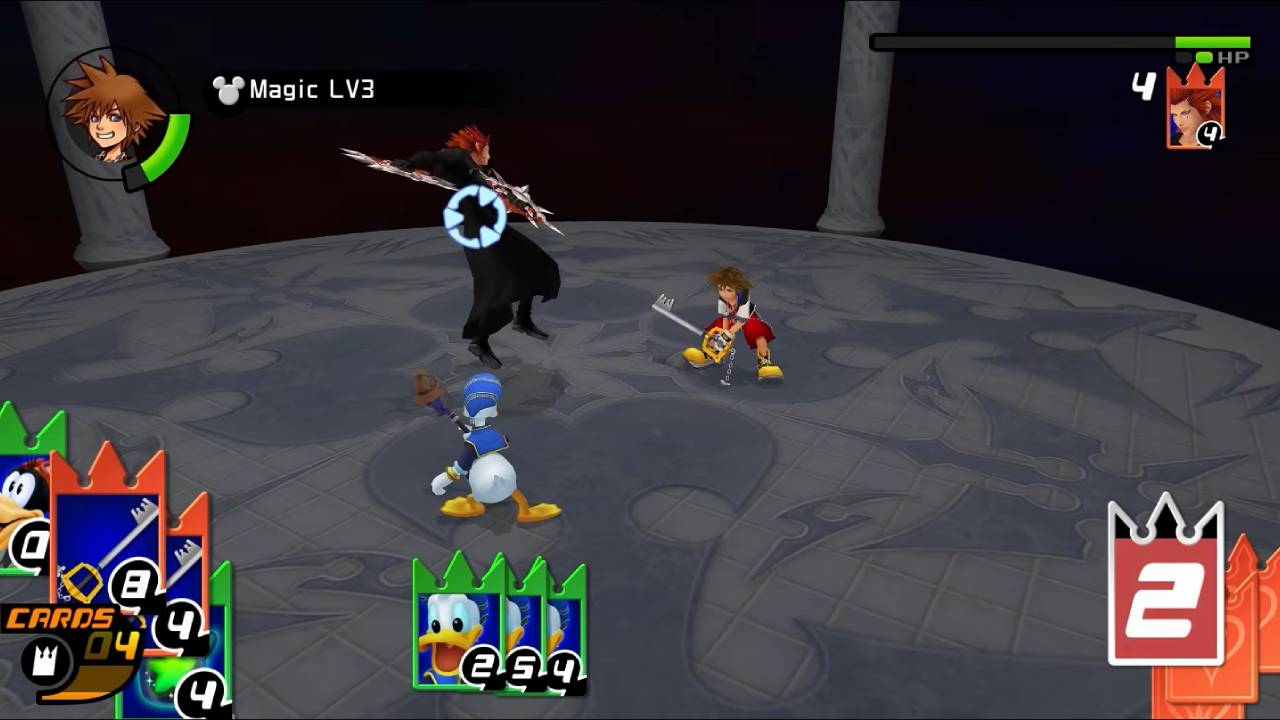
Kingdom Hearts II is a massive improvement in how its combat feels. The Final Mix version included in the collection adds content, enemies, and boss encounters, giving you more reasons to dig into its systems. As the adventure progresses, fights get more dynamic, and Sora gains access to more skills.
You can mix regular attacks with magic, special attacks, and situational abilities to handle different threats, rather than just attacking until an enemy drops. Boss encounters are chances to learn attack patterns and answer with the right mix of movement and offense.
The core combat structure remains, but enough variety keeps you invested through longer adventures. You can adjust your approach as you unlock new abilities and face tougher enemies. Party members also contribute in battle, though Sora remains the center of the action. Donald and Goofy have their own roles, and managing the group becomes part of the experience rather than a purely decorative addition to the Disney crossover.
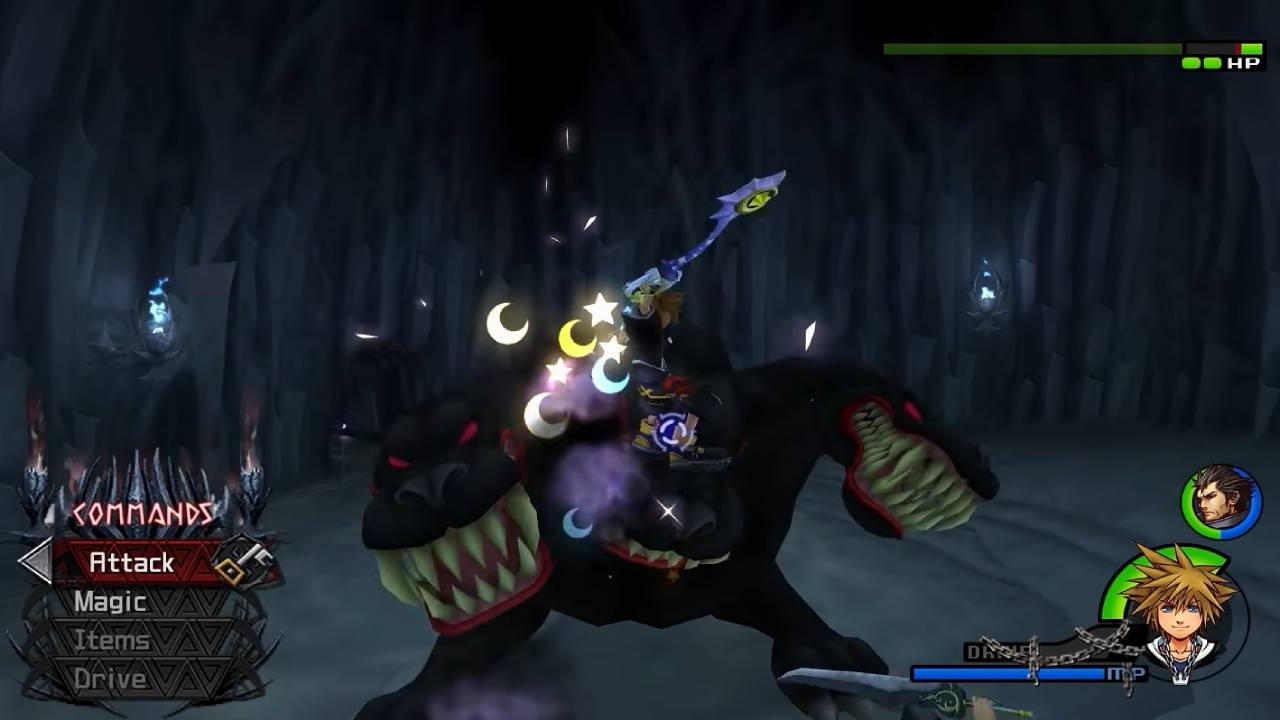
Kingdom Hearts III takes this approach and refines it with more elaborate encounters and a combat system built for spectacle. It attacks with abilities presented with more visual flair, and the party system gives you other ways to approach battles. The game also introduces mechanics that can make encounters feel somewhat different from the earlier entries.
It focuses more on big-scale action, and the improved presentation makes battles feel more energetic.
But not all players will feel the same way about the direction. The third game can lean into dramatic sequences and flashy attacks, which at times can make combat feel less controlled than the more deliberate encounters in Kingdom Hearts II.
The spectacle is entertaining, but it can make it harder to follow everything on screen at once when multiple enemies and effects share the same space. So each entry has its own strengths, with Kingdom Hearts II striking a particularly satisfying balance of action and control, and Kingdom Hearts III offering a more visually elaborate take on the formula.
Puzzle-solving and exploration break up combat, though their importance varies from world to world and from game to game. You move through environments, find paths forward, interact with objects, and complete objectives that advance the story.
These sections add variety, but they aren't necessarily the main reason to play the collection. If you prefer combat and character progression, the games offer plenty of those activities; if you're hoping for a consistently challenging puzzle experience, the series emphasizes something else.
Progression is another key part of the Kingdom Hearts Collection [I-III] formula. Fighting enemies gives Sora experience, which he can use to level up and improve his abilities. As you advance, you will unlock new abilities and be better prepared for tougher encounters.
This process encourages you to fight the enemies you encounter along the way, rather than seeing every battle as an obstacle to avoid. If you're struggling with a boss, gaining a few levels and improving your available abilities can make the fight easier.
Grinding isn't the most exciting part of the experience, though.
You can kill enemies for extra time, which can get repetitive if you're just running through familiar areas to get stronger. The benefit is that progression gives you a straightforward way to prepare for difficult encounters, and the different combat systems offer enough variety to keep the process from feeling identical across every game. Your experience will depend on how much you enjoy the action RPG loop, but leveling up remains an important part of how the adventures unfold.
The Switch 2 version's biggest appeal is that it brings these games to a system that supports both TV and handheld play. Older Kingdom Hearts entries are a natural fit for portable gaming, and continuing the adventure away from your television is convenient.
The collection also benefits from the visual improvements in its existing HD versions, including updated textures and a cleaner presentation than the originals. Some textures appear to have received AI-assisted upscaling, helping older assets look more suitable for modern displays.
Still, sharper textures don't completely modernize games built around older hardware. The original Kingdom Hearts retains its dated camera behavior, and some environments and animations show their age. The collection looks better than the original releases in several respects, but visual upgrades can't resolve every design limitation.
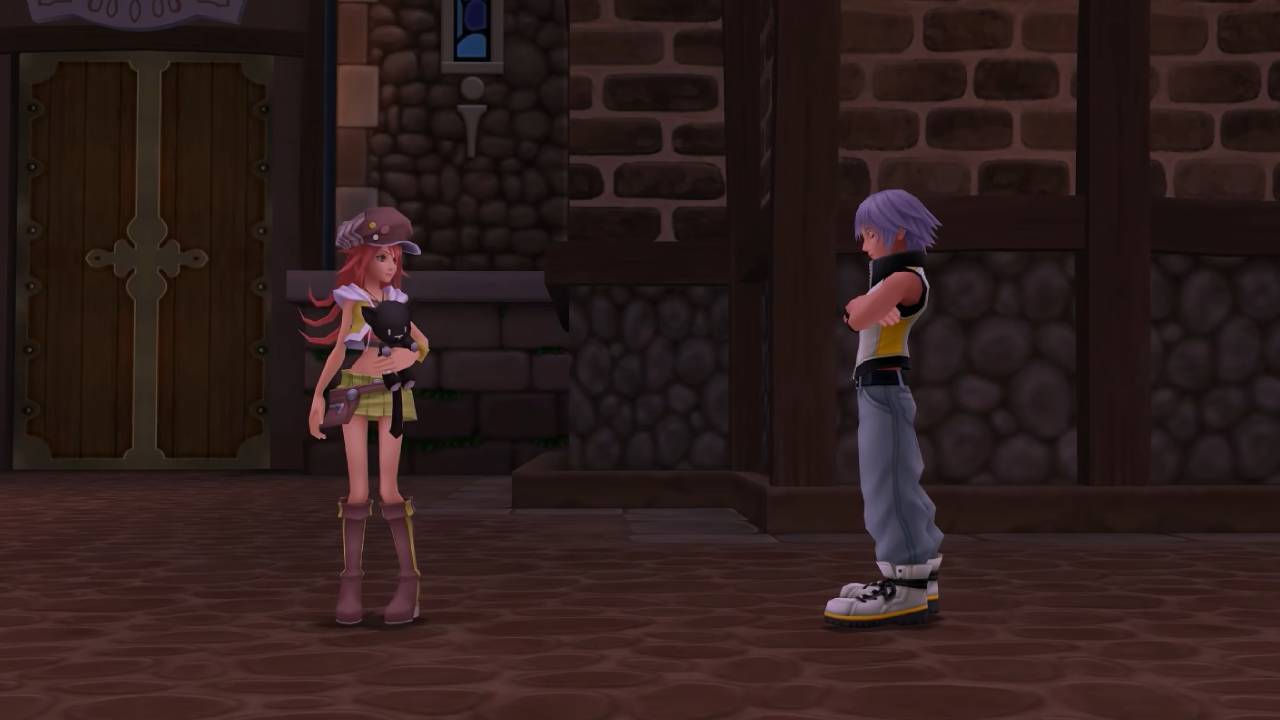
The difference is particularly noticeable when moving from older entries to Kingdom Hearts III, which features a much more detailed presentation and a more modern visual style.
Performance is where the Switch 2 release becomes less straightforward. The older games generally aim for smoother gameplay, targeting up to 60 frames per second and higher resolutions when docked. Kingdom Hearts I and II are among the most comfortable fits for the hardware, and their simpler presentation helps them deliver a better overall experience. Playing them in handheld mode is particularly appealing because they retain their essential feel without demanding the same level of graphical complexity as later installments.
Kingdom Hearts 0.2 Birth by Sleep - A Fragmentary Passage is more demanding. Its performance can fluctuate rather than stay consistent, with reported targets and results varying between handheld and docked play. It aims for around 1080p in handheld mode and 1200p when docked, but performance can range from about 30 to 60 frames per second. Those fluctuations can make the experience less consistent than the older games, especially when the action becomes more demanding.
Kingdom Hearts III is the most technically ambitious entry in the collection and also the one that shows the clearest limitations. It uses dynamic resolution and can run at roughly 30 to 50 frames per second, but it doesn't maintain a completely stable frame rate.
Stutters and uneven performance can interrupt the action, which is disappointing in a game that depends on responsive combat and elaborate visual effects. It remains playable, and its presentation is still a step up from the older entries. Still, the Switch 2 version of Kingdom Hearts Collection [I-III] doesn't deliver the consistently smooth experience you might expect from a newer console.
Some issues extend beyond frame rates.
Camera behavior and draw distance affect how clearly you see the world, and the difference between the older titles and the more demanding games becomes obvious as you move through the collection. The games remain enjoyable, but the experience isn't uniformly polished. If smooth performance is your priority, be aware of the technical compromises in the collection's Kingdom Hearts III.
Audio is central to Kingdom Hearts' identity, and the collection generally delivers the familiar musical and vocal presentation that helps connect its different worlds. The music emphasizes emotional moments and action, and the mix of Disney characters and original cast members gives the series its unique sound. The shift between worlds also shifts the musical styles and moods, helping each place feel distinct from the next.
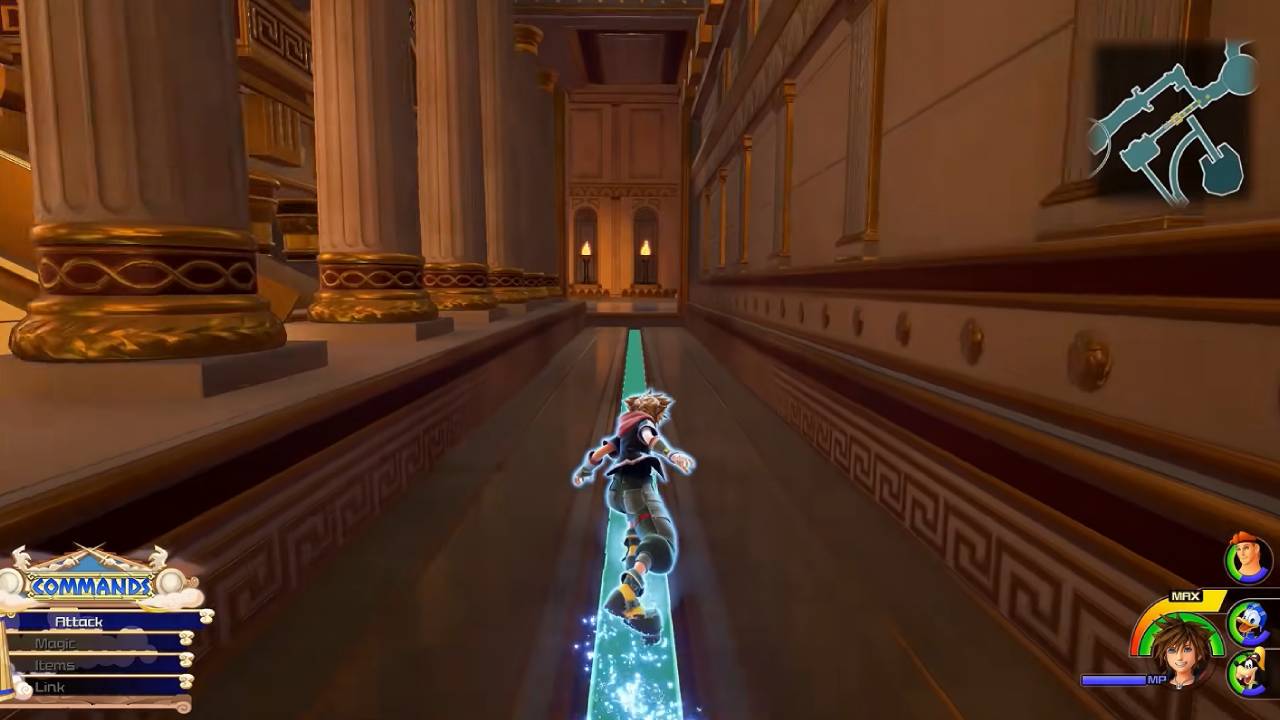
The collection also includes Japanese audio for Kingdom Hearts III, giving you another way to experience the game.
That is a useful addition for players who prefer the Japanese performances, although it doesn't change the underlying content. Overall, the sound remains one of the stronger parts of the experience, helping older adventures retain their character even when their controls and visuals feel dated.
A few practical concerns come up before you buy the collection, especially if you plan to buy a physical copy. The physical release has limitations, with substantial content requiring downloads rather than being available entirely on the cartridge.
Kingdom Hearts Collection [I-III] requires about 127GB of downloads, so you'll need to account for storage space before installing everything. That is a significant consideration on a portable system, particularly if you already have several large games installed.
The collection's packaging and branding can also make it feel like you're buying something entirely new, but much of its content comes from previously released compilations. If you already own earlier Kingdom Hearts collections on another platform, you may not find enough new content in the Switch 2 version to justify buying everything again.
This isn't about changing the games themselves. It's more about making them available on another convenient medium.
There are other omissions worth noting. Melody of Memory isn't included, so this isn't a complete package of every major Kingdom Hearts release. The presentation of 358/2 Days and Re as films also means you won't be playing those adventures in their original forms. These decisions don't make the collection worthless, but they do limit its comprehensiveness for longtime fans who want every part of the series in one place.
The trophy and achievement situation is another detail that may matter to players who enjoy completing everything a game offers. The collection's trophy support isn't consistent across the included titles; Platinum Trophies are available only for Kingdom Hearts I, Kingdom Hearts III, and Dream Drop Distance, not for every entry. If you want separate completion goals for each game, you might be disappointed by that inconsistency.
Ultimately, Kingdom Hearts Collection [I-III] on Switch 2 succeeds at its most basic goal: it gives you access to a substantial portion of Sora's journey on one console.
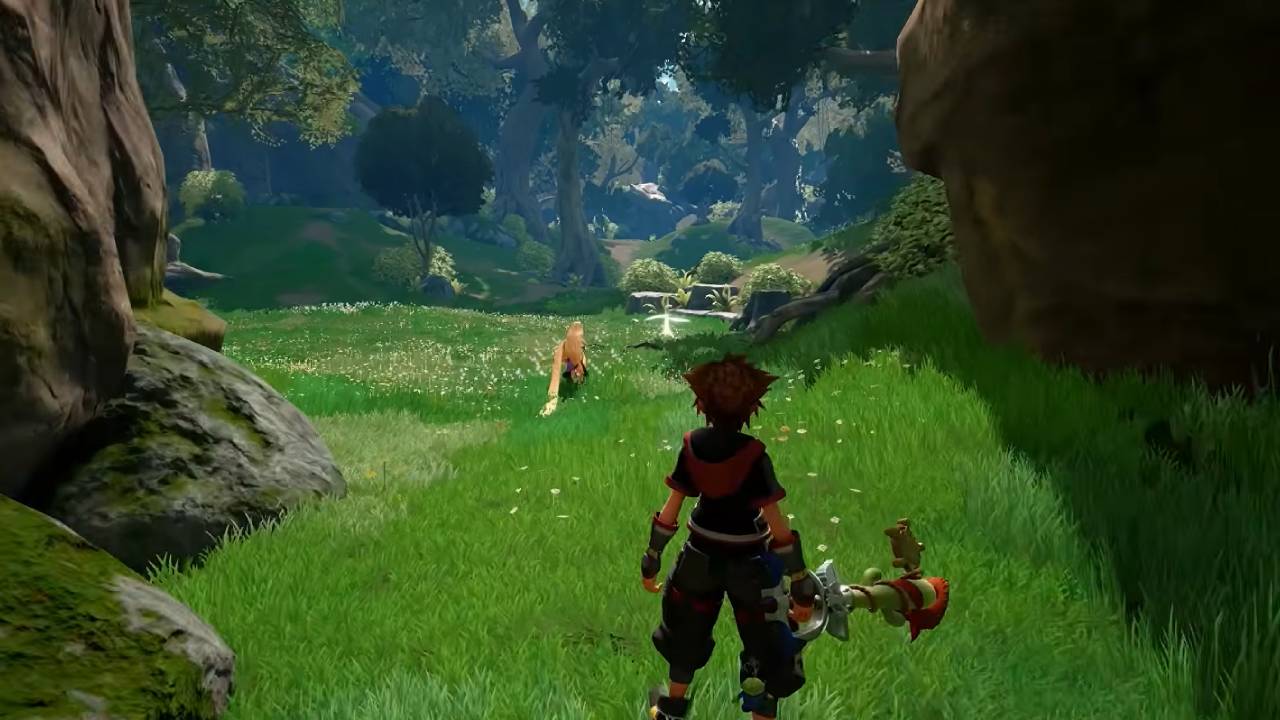
You get several major games, additional story material, and a convenient way to play on the go. The combat remains engaging across the strongest entries, the music still works, and Kingdom Hearts III offers the most modern presentation in the package. For someone discovering the franchise for the first time, having the main adventures collected in one place is a major advantage.
The problems are difficult to ignore, though. Uneven performance in Kingdom Hearts III and 0.2 keeps the collection from feeling consistently polished, while the older games retain some of their original design frustrations. The large download requirement for the physical release and the absence of Melody of Memory also mean the package isn't as complete or convenient as its all-in-one presentation suggests. These are not reasons to dismiss the collection outright, but they are worth keeping in mind.
If you're new to Kingdom Hearts and want to experience its major adventures on a Nintendo system, this collection is an appealing starting point. You get a lot of content, and playing much of it in handheld mode is a real benefit. If you've already bought these compilations elsewhere, however, the Switch 2 version is harder to recommend unless portability is important to you. It's a convenient home for Sora's adventures, but not the definitive technical upgrade the collection could have been.
Staff Writer, NoobFeed
Verdict
Kingdom Hearts Collection [I-III] offers a convenient way to experience Sora's journey on Switch 2, but uneven performance, large downloads, and missing content hold it back. Great for newcomers, less essential for returning fans.
75
Related News
No Data.