
Tabletop Tavern Review
PC
Tabletop Tavern merges RTS combat with addictive roguelike progression.
Reviewed by Elme Dhee on Jul 03, 2026
Tabletop Tavern keeps the experience without the long cinematic cutscenes, complex diplomacy systems, or massive political decision trees. Instead, it embraces player-driven storytelling where the story comes organically from the wins, losses, and improvisations of your custom-built army. Every campaign becomes less about a scripted storyline and more about the unpredictable journey your warband survives through.
The setup itself is intentionally straightforward. Players select a starting hero that defines the opening direction of the run before entering a branching three-act campaign structure. Each act contains a sequence of escalating encounters connected through a node-based map system, eventually culminating in a difficult final boss battle that tests the strength of your evolving army composition. Heroes have a big voice at the start of campaigns.
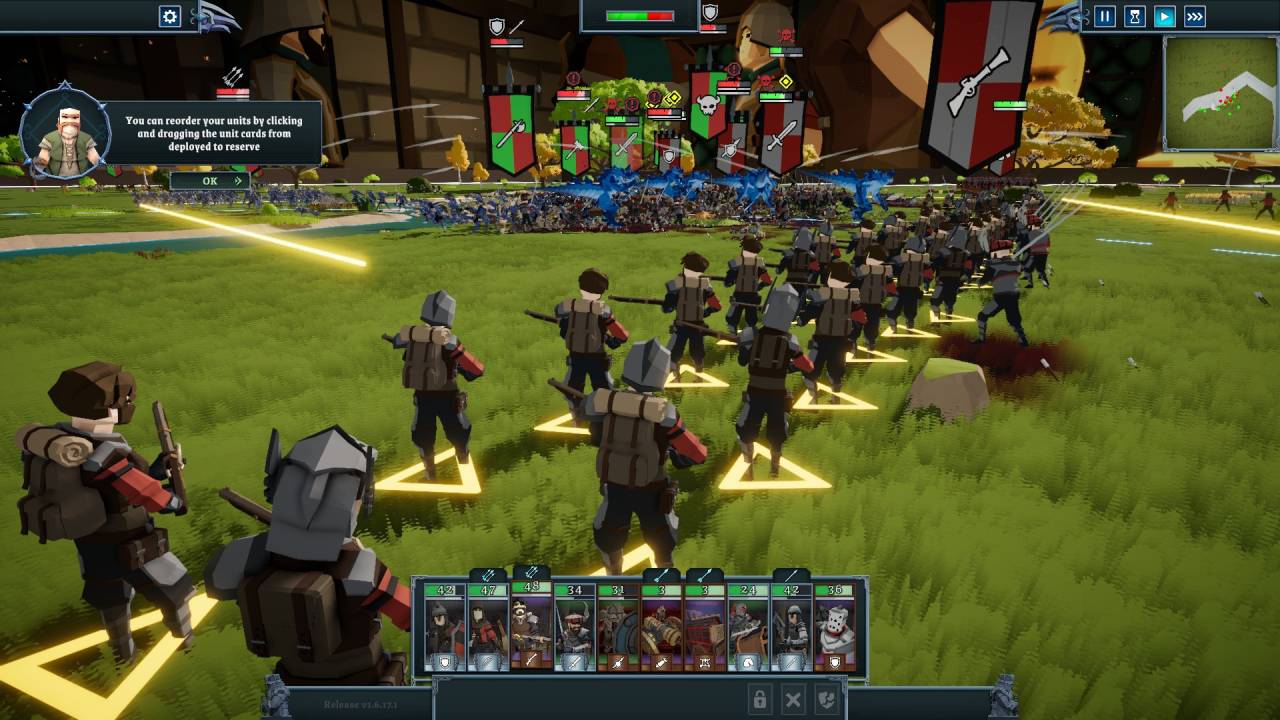
Sir Edric Vale Ward, for example, specializes in rare cavalry and devastating shock attackers, naturally encouraging players to build around aggressive mounted formations and high-impact charges. However, because the game follows a roguelike design philosophy, no strategy remains permanent. Relics, equipment drops, and random rewards frequently redirect campaigns into completely different army archetypes.
Progression between battles forms one of the game’s strongest systems. After each encounter, players move through branching nodes that contain settlements, combat scenarios, and reward opportunities. Settlements create meaningful risk-versus-reward decisions. Players may rest there peacefully to heal wounded troops or raid it for valuable rewards, but doing so will trigger much harder battles against powerful defenders.
It’s a structure that creates tension naturally via player choice rather than scripted drama. Soldiers become valuable resources, legendary loot alters strategies, and each campaign slowly develops its own memorable story.
One run might culminate in an elite cavalry army collapsing in swamp terrain that disables charge attacks, while another becomes a bizarre hybrid force where ghostly cavalry fight alongside massive treants recruited from defeated enemies.
The army building is at the heart of the entire gameplay loop.
The central gameplay mechanic in Tabletop Tavern revolves around building and refining an ever-changing army during the in-between-battle periods. Each standalone run begins with nearly nothing, with players starting with one hero and a handful of green recruits, and then slowly transforming that fragile force into a highly specialized fighting army.
Unlike the traditional RTS games, Tabletop Tavern deliberately avoids the familiar genre mechanics of resource gathering, base construction, economy management, and city building. No settlements to manage, no production chains to optimize. Instead, the whole experience is focused almost entirely on army composition and tactical preparation.
Players can recruit up to 10 active units to their roster, combining soldiers from several distinct factions, each with its own identity and combat philosophy. Vikings focus on elite infantry and aggressive pressure at close range, orcs on giants and overwhelming offensive momentum, elves on swift movement, ranged accuracy, and flanking tactics, humans on a balanced platform that can adapt to almost any approach, and dwarves on resilience and defensive warfare.
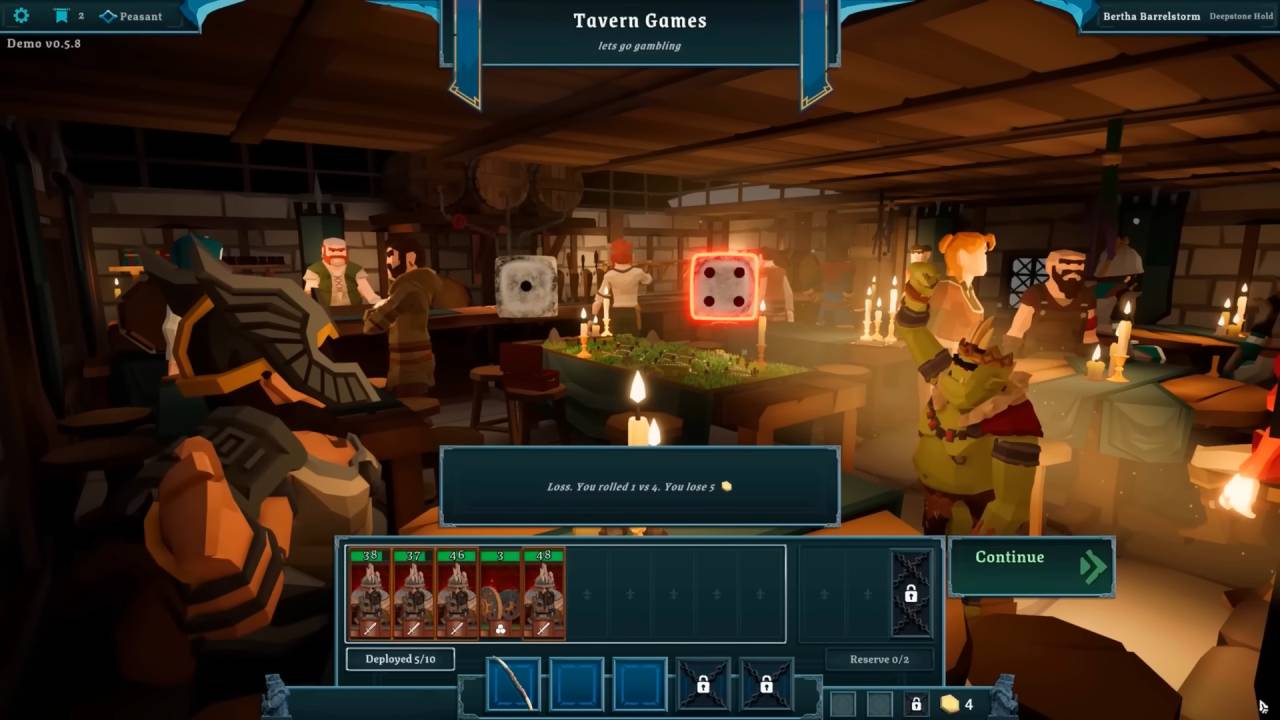
One of the most inventive mechanics in the game is the enemy recruitment system. Defeating enemy factions can sometimes see them join your side, resulting in armies that are chaotic combinations that would never normally exist. Ghostly undead cavalry may fight alongside living treants, while disciplined human infantry may suddenly back up monstrous orc shock troops.
This system breaks traditional faction purity and creates some of the game’s most memorable experimentation opportunities. Army customization is further enhanced through relics, gear, consumables, and passive upgrades discovered during each campaign. One item drop might turn ranged damage into a gamebreaker, necessitating a switch to archers, while another might make cavalry the star of the run.
That unpredictability is what keeps the roguelike structure fun to play, because players are constantly adapting their plans around whatever equipment and opportunities they find along the way.
Real-time combat is terrain, positioning, and tactical counters.
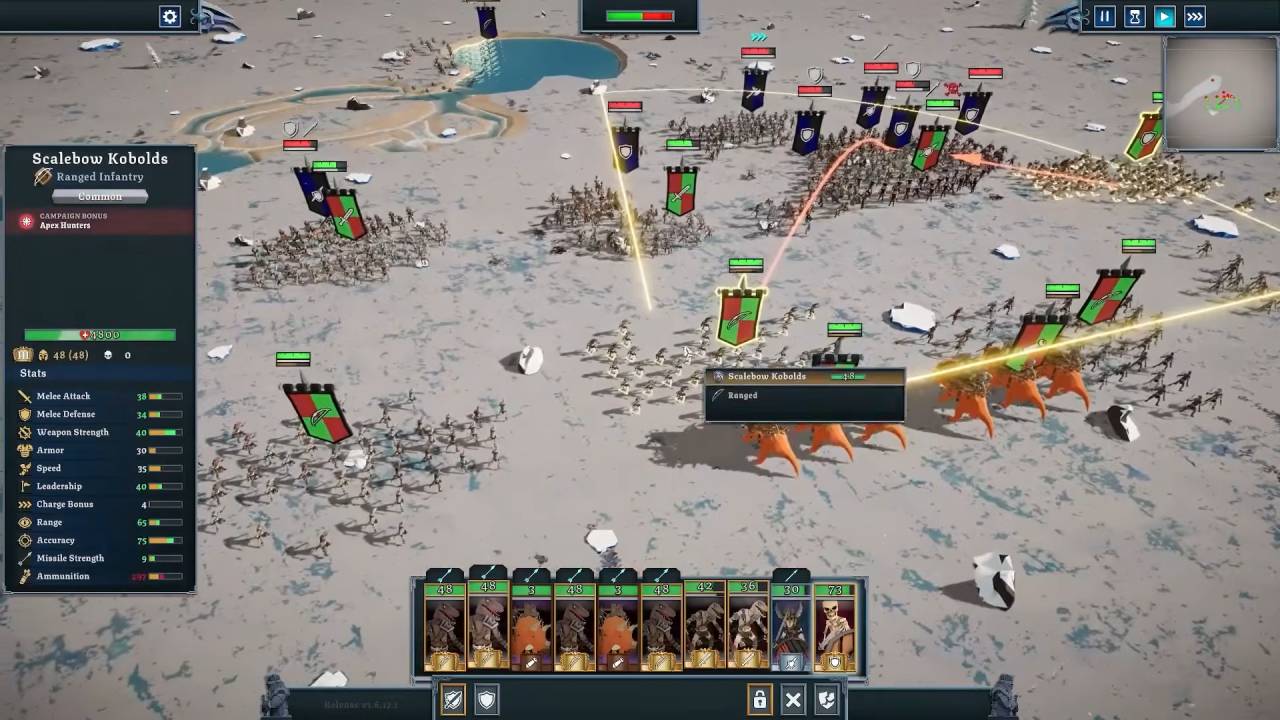
When combat begins, Tabletop Tavern turns into massive real-time battles where positioning, timing, terrain, and unit counters are far more important than numbers. The combat system is a tactical rock-paper-scissors mindset where different troop types naturally counter certain threats.
Infantry formations can hold lines against cavalry, spearmen can punish mounted attackers with anti-large damage bonuses, and archers can devastate exposed targets if properly protected. Success comes from knowing exactly which units should fight which enemies, rather than just throwing overwhelming numbers at your opponents.
Command is by responsive real-time formation controls that allow players to reposition lines, organize flanks, and protect weak ranged troops from ambushes. Timing is also a big factor. Charge attacks can totally collapse enemy formations when executed right, but bad timing or poor terrain can make cavalry almost useless.
Terrain design adds a lot to the tactical layer. Swamps reduce movement speed by around seventy-five percent and completely remove charge mechanics, turning battles with heavy cavalry into slow-moving infantry meat grinders.
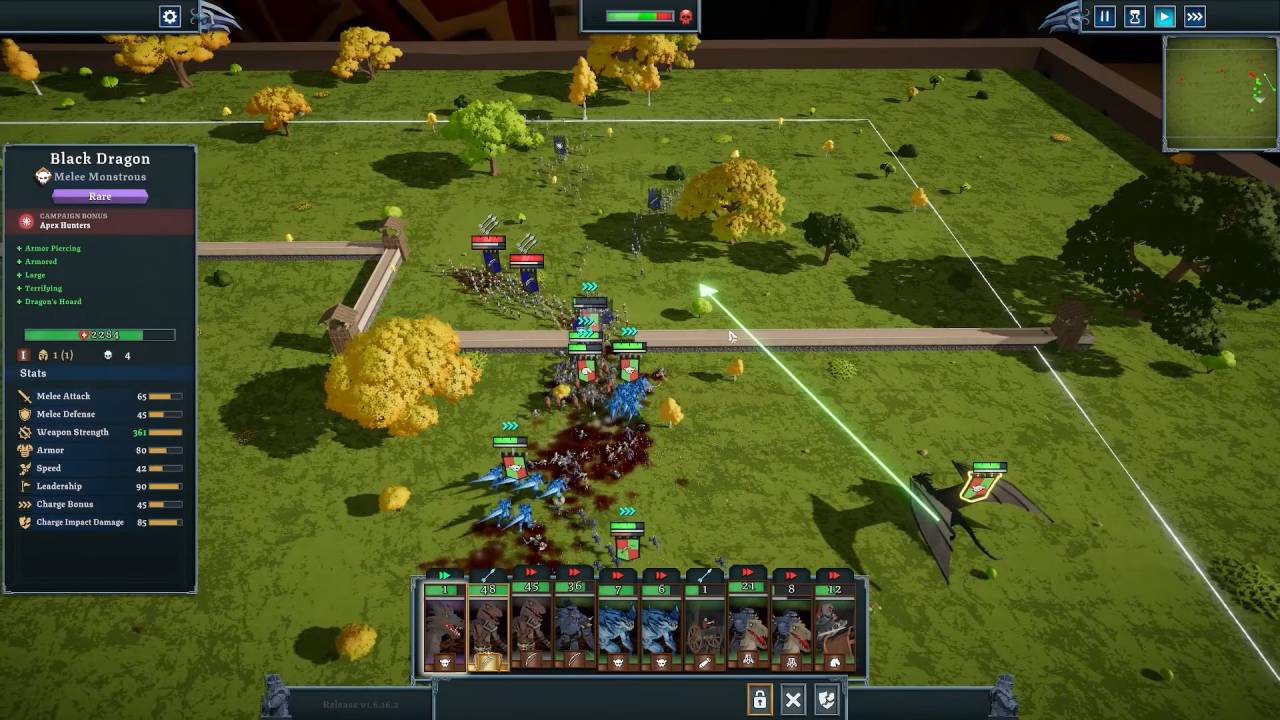
Forests nullify the charge bonus and give resistance to ranged attacks, a perfect place for ambushes and defensive positions. River crossings become deadly bottlenecks, and armies are funneled into narrow passages where discipline of formation is more important than mobility.
The morale system provides another layer of strategy on top of health and damage values. Units can break under pressure, run away after savage cavalry charges, or totally lose their nerve when monstrous creatures charge into battle.
Fights seem chaotic in a good way, especially when the heavy cavalry plows through enemy lines and sends soldiers flying across the battlefield. Massive beasts make combat even more weighty, physically shoving infantry backward by sheer momentum.
The battles can range from small skirmishes to large battles with hundreds of units fighting simultaneously. Combined with the game’s deliberately toy-like miniature aesthetic, the experience often resembles a living tabletop wargame brought to life inside a medieval tavern.
The roguelike structure keeps the experience fast, replayable, and highly addictive.
One of Tabletop Tavern’s greatest strengths is how effectively the roguelike structure complements its real-time strategy combat. Because campaigns remain relatively compact, players spend significantly more time actively fighting battles than managing downtime systems or long stretches of administration.
This creates a highly addictive “one more run” loop similar to games like Slay the Spire or Inscryption, except translated into real-time tactical warfare rather than turn-based card mechanics. Every campaign introduces at least one unusual synergy, strange relic combination, or experimental army setup worth attempting again in future runs.
The compact structure also makes the game feel faster and more approachable than larger-scale strategy franchises. For fans of tactical warfare who find traditional grand strategy games too clunky, Tabletop Tavern gets to its core gameplay loop surprisingly fast. The game never bogs down players in complicated management systems; it just keeps throwing them into fights, experiments, and adjustments.
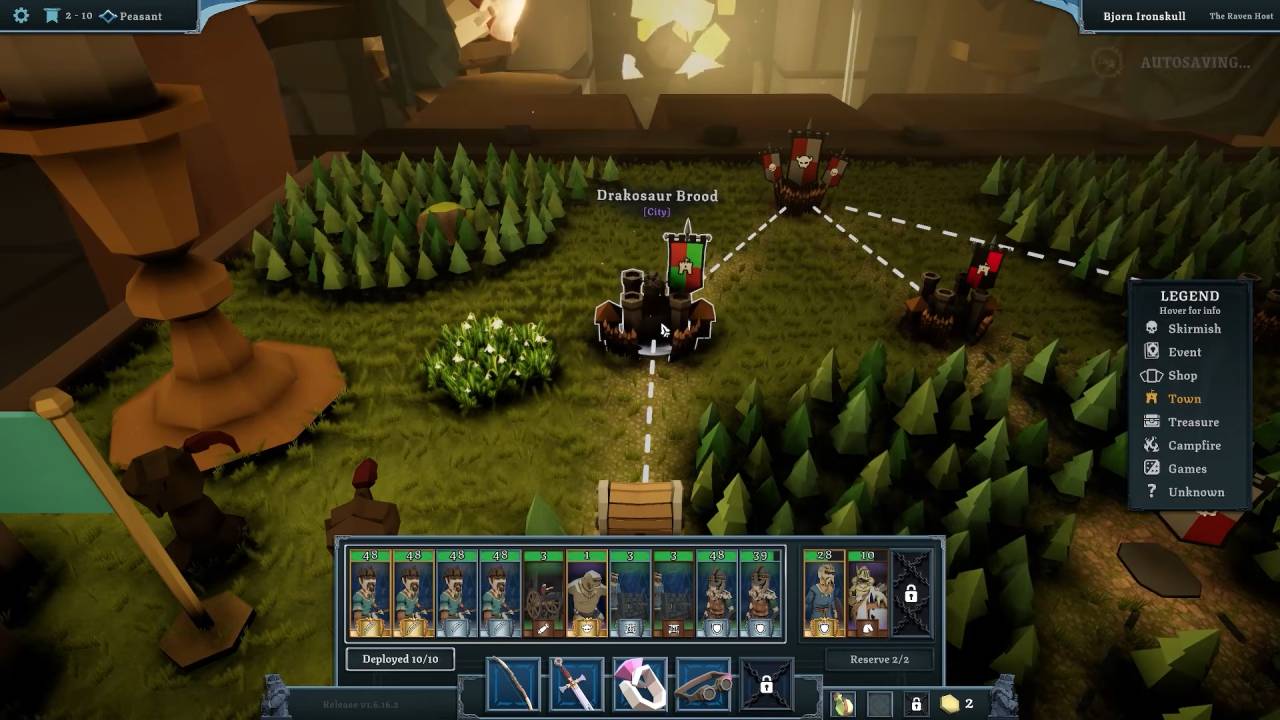
On top of that, the game’s meta-progression system adds to the replayability. If a campaign is lost, the current run is wiped clean, and players must start over with a new army.
However, a permanent meta-currency system ensures that long-term progress is never truly lost. Winning battles and surviving difficult encounters earn players permanent currency that can be spent to unlock new heroes, more factions, passive bonuses, larger relic pools, and scaling difficulty modifiers.
Rather than simply increasing the raw power, these upgrades slowly unlock more strategic options without trivializing the challenge. The progression system gives you more opportunities to experiment and create weird army combos for future campaigns.
Combat depth is compelling, but the game's rough edges are still evident.
Tabletop Tavern is a good game, but if you play it for long enough, you start to notice some of its shortcomings. The tactical combat system is satisfying and has plenty of replay value, but some of the deeper mechanics can feel a little thinner than the presentation initially suggests.
Enemy AI remains one of the game’s most noticeable weaknesses. Opposing armies frequently fixate on single units and struggle to adapt once a strategy has been identified. This predictability can reduce the long-term strategic challenge after enough hours of play. Mechanical limitations also become more visible over time.
Many active abilities common in deeper RTS systems are missing from units, including manual shield walls, advanced stance management, and very specialized commands. Positioning and timing still matter, but maybe not in the way experienced strategy players might expect.
Big engagements can also suffer from visual clutter, which can hamper readability. Dense particles and chaotic battle effects can make it difficult to spot weak points in a fight. Early-game battles can also feel samey until players unlock advanced factions, larger rosters, and more experimental relic combinations.
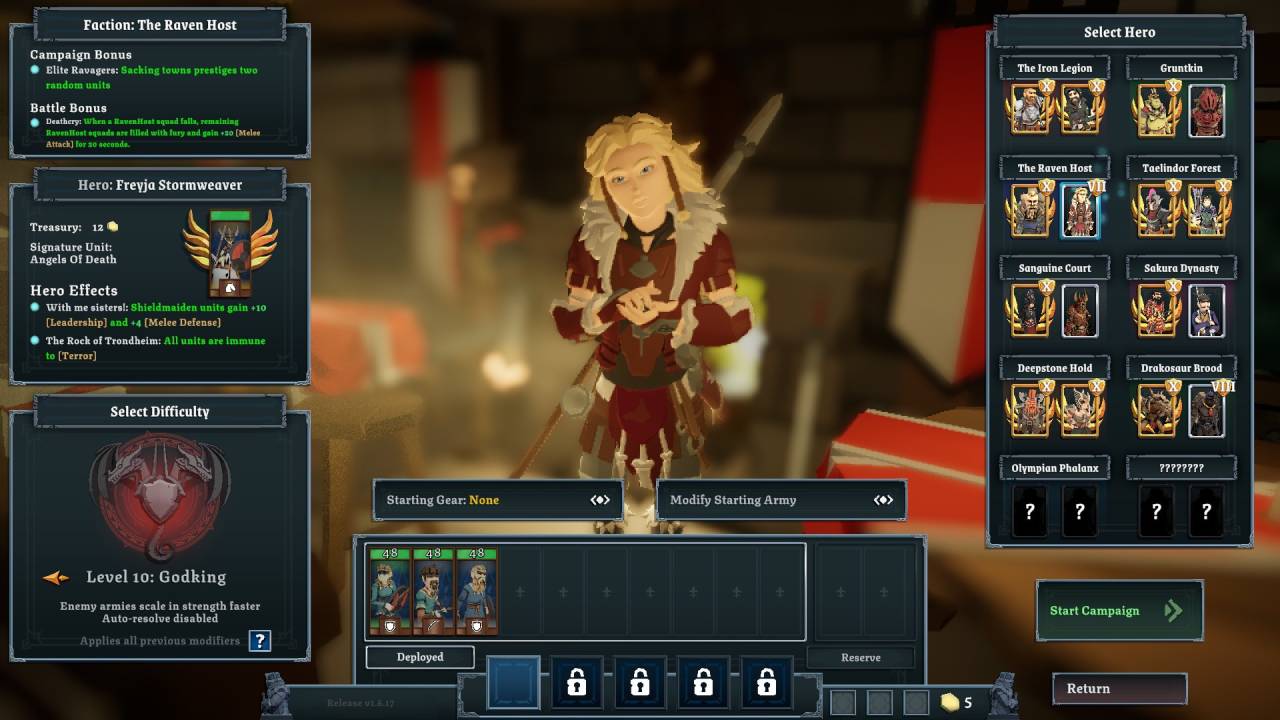
There’s a bit of a friction point in the onboarding process for new players. Tabletop Tavern is very information-heavy, immediately throwing players into large walls of tutorial text instead of smoothly introducing mechanics through gameplay itself. Veterans of the RTS and roguelike genres will probably adapt quickly, but newer players might find the amount of information initially overwhelming.
None of these faults, however, detracts from the core gameplay loop, which is a constant high point. The combination of tactical experimentation, emergent synergies, tight campaign structure, and brisk pacing is enough fun to see the experience through multiple playthroughs.
Long-term potential with meta progression and future updates.
Tabletop Tavern has progression systems that go beyond individual campaigns and feature a larger meta-game structure that rewards long-term investment. Players can unlock dozens of heroes, more factions, more powerful relic pools, and scaling difficulty settings from the beginner-friendly Peasant mode to the brutally punishing Godking difficulty.
Critically, these unlock systems don’t tend to feel overpowered enough to remove the game’s challenge entirely. Instead, they slowly expand strategic flexibility and push players to try out increasingly unusual combinations and tactics.
The solo developer, TJ, has also confirmed that future updates will stay free, with additional content already planned for post-launch support. Upcoming features include spells, mage units, multiplayer functionality, Olympian Phalanx troops, flying units, and entirely new factions chosen through community votes.
At the same time, the developer has openly acknowledged that some planned systems did not make it into the launch release. This openness helps set realistic expectations for the game's current content and points to the project's long-term aspirations.
Tabletop Tavern finds a niche of its own in strategy games.
In the end, Tabletop Tavern works because it finds a niche that few games have ever seriously tackled. It takes the immediacy of real-time strategy combat and marries it with the replayable framework of a roguelike campaign system, resulting in a product that feels different from both genres on their own.
The game is not without its faults. The AI is rudimentary, the onboarding is rocky, some tactical systems feel half-baked, and you can feel the content ceiling after a certain number of hours. Still, the base is impressively solid for an indie strategy game made by just one person.
Its bite-sized battles, shifting army collaborations, branching campaign structure, and endearing tabletop aesthetic create a strategy experience with a real sense of identity and long-term promise. Tabletop Tavern doesn’t have the scope or cinematic spectacle of massive RTS franchises, but it carves out a lane comfortably through creativity, replayability, and tactical experimentation.
Editor, NoobFeed
Verdict
Tabletop Tavern successfully blends RTS combat with roguelike progression into a fast, addictive strategy experience, even if rough edges and limited depth occasionally hold it back.
78
Related News
No Data.