
AMD FSR 4.1 AI Upscaling Pushes Radeon RX 7900 XTX to 50 FPS in Cyberpunk 2077
AMD's AI-powered FSR 4.1 delivers dramatic performance gains while significantly improving image quality in demanding ray-traced gaming workloads.
Hardware by Masaru Hoshino on Jun 28, 2026
For years, NVIDIA's DLSS ecosystem has been the dominant force in the battle over image reconstruction and upscaling technologies. While AMD's FidelityFX Super Resolution has undergone a few modifications, it has been criticized for apparent artifacts, temporal instability, and a lack of dedicated AI-driven reconstruction, leading to Team Red being seen as lagging.
AMD looks ready to change that story at a fundamental level with the reveal of FSR 4.1. FSR 4.1 is not simply another incremental software update, but rather the biggest change to AMD's rendering technique since the very first introduction of FidelityFX Super Resolution.
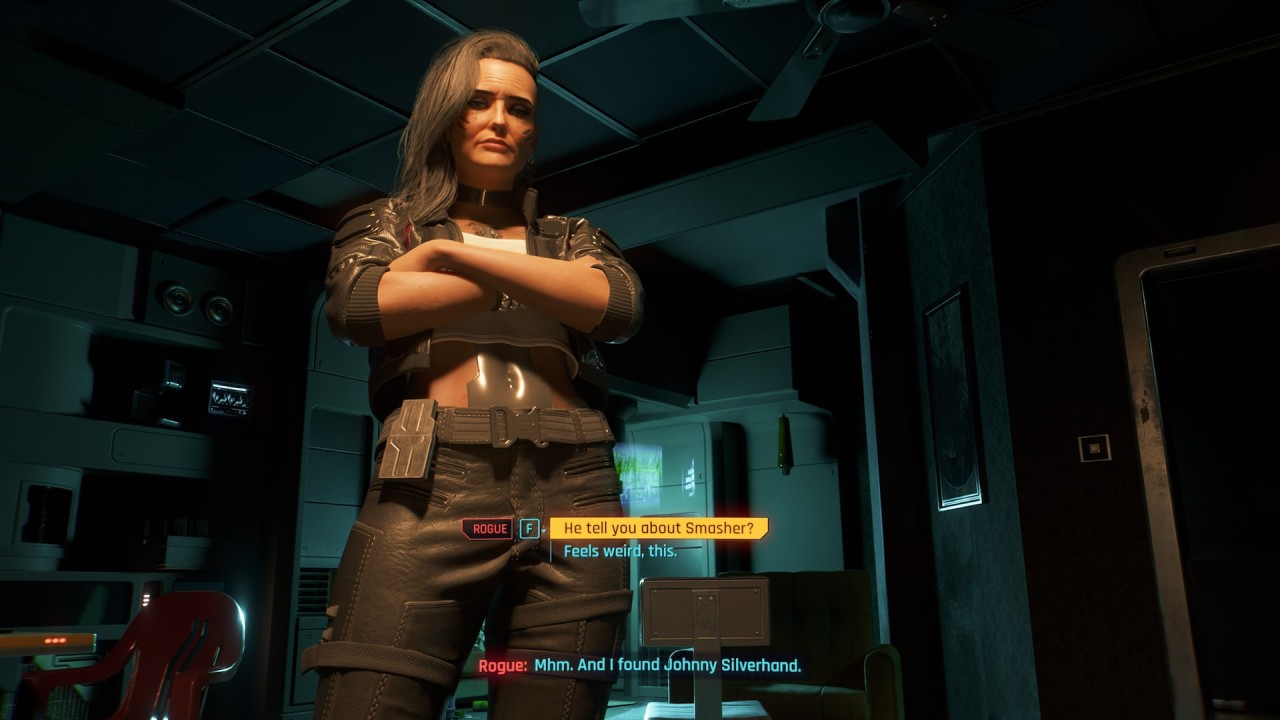
Now, the company is turning to an AI-based upscaling technique that breaks free of the typical heuristic approach to image reconstruction. It's a direct shot at NVIDIA, which has long dominated the machine-learning-augmented graphics space.
Early benchmark data suggests that the transition is already delivering dramatic results across both raw performance and image quality.
Cyberpunk 2077 4K Showdown
Nothing exposes the strengths and weaknesses of modern rendering technology quite like Cyberpunk 2077. CD Projekt RED's flagship RPG remains one of the most demanding games on the market, particularly when ray tracing is enabled, and resolutions climb to native 4K.
That makes AMD's latest demonstration especially noteworthy. The performance change was impressive when tested on the Radeon RX 7900 XTX. The flagship RDNA 3 graphics card only managed 24 FPS in Cyberpunk 2077 at native 4K with heavy visual settings, well below what most gamers would consider playable.
Once FSR 4.1 was enabled, performance jumped to around 50 FPS, effectively tripling overall frame rates. The importance of this jump cannot be emphasized. It is not just a benchmark triumph in terms of percentages, going from 24 FPS to 50 FPS. It represents a transition from a compromised experience plagued by sluggish responsiveness to a substantially smoother, far more practical performance for real-world gameplay.
For owners of high-end Radeon hardware, this demonstrates that substantial untapped performance remains in current-generation GPUs when paired with increasingly sophisticated reconstruction technologies.
Why FSR 4.1 Is Different
Previous generations of FidelityFX Super Resolution relied heavily on advanced algorithms and temporal data analysis rather than machine-learning models. These approaches improved performance but generally struggled to maintain image stability during rapid camera motion, in scenes with many particles, and under difficult lighting conditions.
Changes in FSR 4.1 affect that equation. AMD's newest implementation uses AI-driven frame reconstruction, leveraging machine learning to forecast and reproduce visual detail with far greater precision than prior methods. This permits the rendering pipeline to reproduce visual information that would have been difficult to maintain using heuristic methods alone.
The result is a smarter rendering system that can deliver much higher performance without the visual trade-offs that have sometimes come with past upscaling systems. For AMD, this is a clear acknowledgment that AI is no longer an optional add-on to graphics technology, but is becoming a core part of modern rendering.

Closing the Visual Fidelity Gap
Performance gains are only half the story. Historically, one of the largest criticisms of older FSR implementations concerned image quality consistency. AMD's answer was often identified by ghosting behind moving objects, shimmering across fine geometric detail, and the fluttering of unstable edges, distinguishing it from the competition.
The latest benchmark data shows that FSR 4.1 is designed to address these age-old shortcomings immediately. The reports show large reductions in ghosting artifacts, increased temporal stability, smoother edge reconstruction, and much reduced shimmering in motion. These enhancements are especially essential in ray-traced situations, where the complexity of the lighting often reveals flaws in image reconstruction systems.
With machine-learning-assisted reconstruction, AMD appears to retain greater detail while maintaining stronger frame-to-frame consistency. If these early results are consistent across supported titles, FSR 4.1 could be the closest AMD has come to matching the image quality standards set by DLSS. Performance gains for gamers may not require the same visual sacrifices as in past generations.
Open Technology Remains AMD's Biggest Advantage
One of the best things about FidelityFX is that AMD hasn't abandoned it, and that might be the most compelling part about FSR 4.1. And unlike competitor technologies that rely primarily on proprietary hardware ecosystems, AMD remains committed to an open, accessible approach. FSR 4.1 can exploit dedicated AI acceleration pathways on RDNA hardware, but is not fundamentally dependent on tensor cores. That difference has huge ramifications for the PC gaming ecosystem.
Developers have access to a flexible upscaling solution that might possibly reach a wider audience, while gamers benefit from a technology stack that avoids stringent vendor lock-in. AMD's ongoing focus on cross-vendor compatibility ensures that advanced picture reconstruction remains available across multiple hardware ecosystems.
That openness remains one of Radeon's major competitive advantages as the industry grows, even as it splits into proprietary technology camps.
Editor, NoobFeed
Gaming Hardware Updates
No Data.