
FSR 4 vs. DLSS 4 in 1440p Gaming: Visual Fidelity and Frame-Rate Uplift Analysis
Explore how FSR 4’s hybrid CNN-Transformer AI model delivers sharper textures and reduced blur compared to DLSS 3 and DLSS 4
Hardware by Tanvir Kabbo on Aug 05, 2025
Gamers have been abandoning Radeon for GeForce in recent GPU generations, and a key contributing factor is NVIDIA’s DLSS. NVIDIA has continued to improve DLSS upscaling year-over-year, culminating in the very impressive DLSS 4.
AMD, on the other hand, has slipped further behind—especially at popular resolutions like 1440p—as their FSR 2.2 and FSR 3.1 upscalers have failed to compete with NVIDIA’s AI-driven approach.
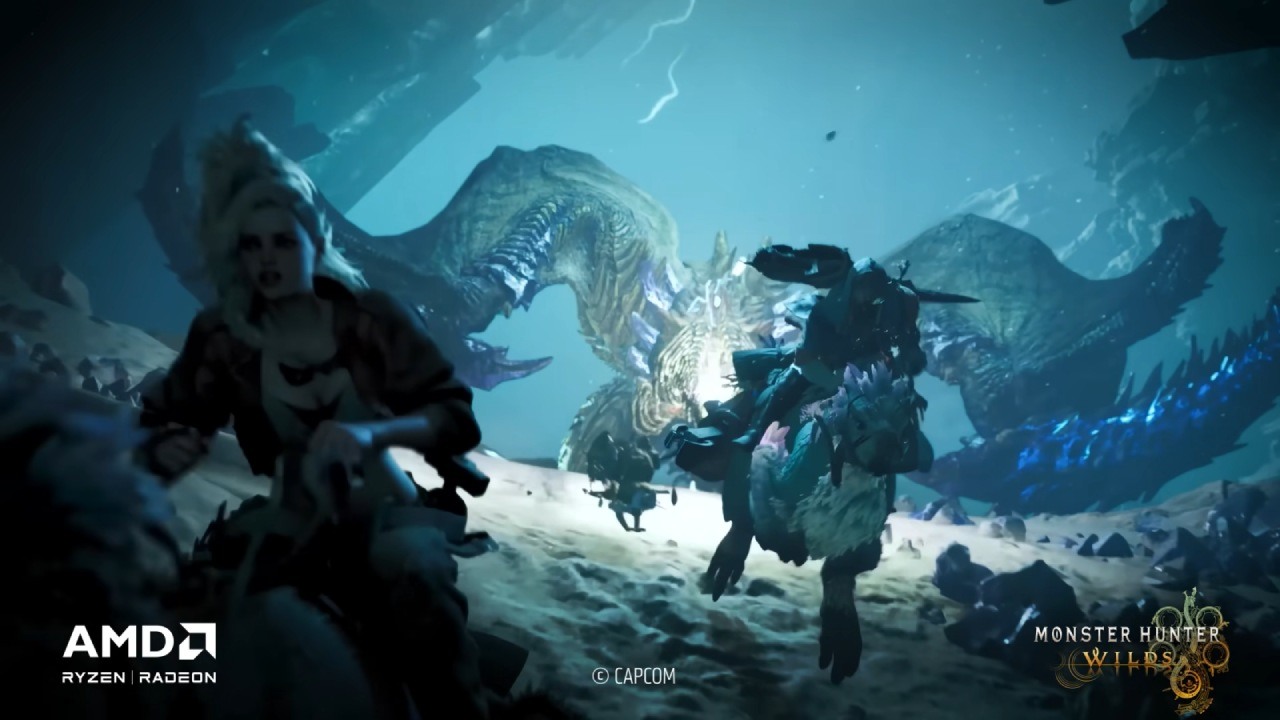
With FSR 4, AMD finally releasing an upscaler built around an AI model—a hybrid of a CNN and Transformer—promising significant improvements in visual quality. The question now is whether FSR 4 can match or even beat DLSS 3, or perhaps approach DLSS 4.
How FSR 4 Works
Unlike previous versions designed for broad GPU compatibility, FSR 4 works only on RDNA 4 graphics cards such as the Radeon RX 9070 XT. This is because it uses FPA processing, which isn’t accelerated on older RDNA GPUs, so FSR 4 won’t be supported on RDNA 3 or earlier hardware.
You access FSR 4 much like NVIDIA’s latest DLSS 4: some games offer native integration—simply enable FSR 4 in the settings—while others can be upgraded from FSR 3.1 to FSR 4 via AMD’s driver override feature.
However, a game must already implement FSR 3.1 to be eligible, and only whitelisted titles support the driver toggle. During our review period, a few FSR 3.1 titles weren’t yet whitelisted, so driver updates will be crucial for broader support.
FSR 3.1 vs FSR 4 at 1440p
We kicked off our analysis at 1440p, a more common resolution than 4K and a known weakness for FSR. All FSR 4 examples were captured at 1440p on the Radeon RX 9070 XT, while DLSS examples ran on the GeForce RTX 5090. Motion blur, grain, vignette, and chromatic aberration were disabled, and sharpness was set to zero unless noted.
We found FSR 4 to be a night-and-day improvement over FSR 3.1. In quality mode, FSR 4 is much less blurry in motion and far more stable in areas with fine detail, such as hair and grass. In performance mode, FSR 4 is usable at 1440p, whereas FSR 3.1 performance at that resolution produced images akin to 360p at best.
Textures and Blur
DLSS 4 nearly eliminates TAA blur in motion, providing crisp images even in performance mode. FSR 4 holds up surprisingly well: in Spider-Man 2, for example, flicking between stationary and mid-motion stills shows FSR 4 preserving far more detail than DLSS 3, though not quite reaching DLSS 4’s level.
In some titles like The Last of Us Part One, FSR 4 came very close to DLSS 4. We set in-game sharpness to zero, and it’s clear that FSR 4’s AI model genuinely handles fine texture detail rather than simply sharpening a blurry image.
Edge Stability
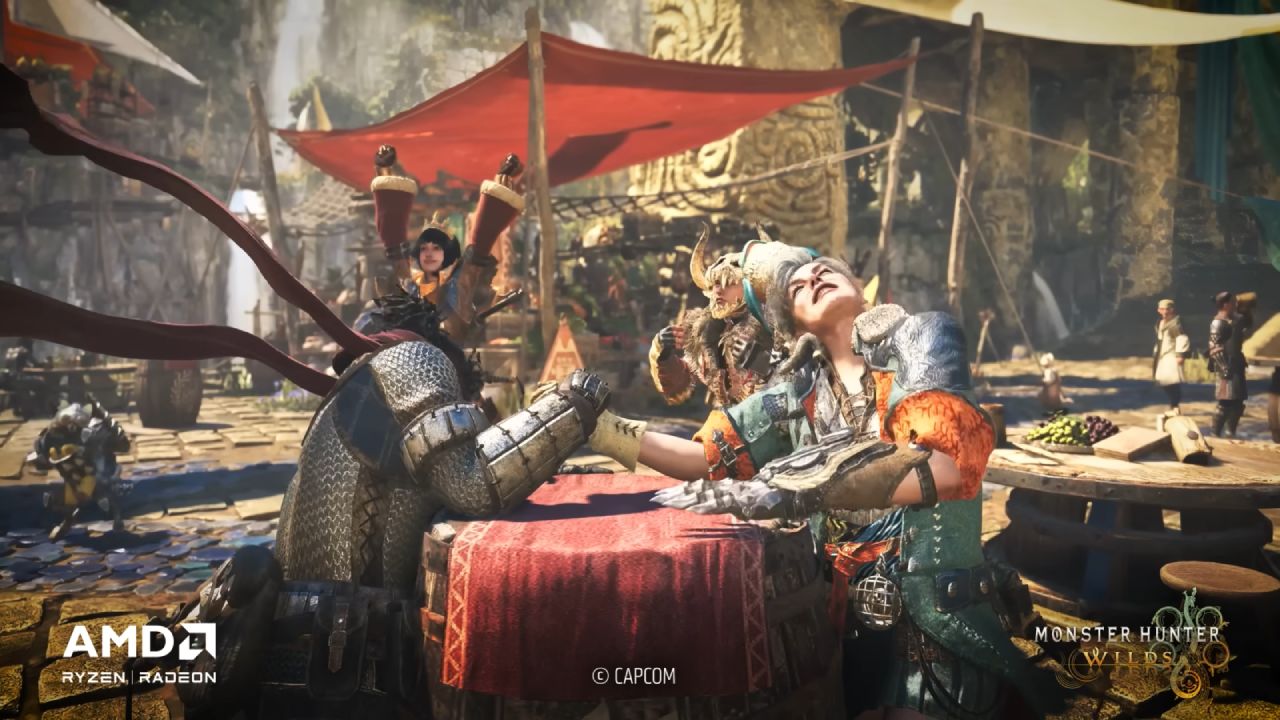
Edge stability remains FSR 4’s biggest weakness compared to DLSS. In Ratchet & Clank Rift Apart and Spider-Man 2, FSR 4 exhibited noticeable aliasing on character edges in motion. However, in Horizon Zero Dawn Remastered and The Last of Us Part One, edge stability was comparable to DLSS 3.
Outside of the worst cases, FSR 4 quality mode often matches DLSS 3 balanced, though DLSS 4 performance still outpaces FSR 4 quality. Interestingly, FSR 4 balanced to be more stable than FSR 4 quality in several scenes, suggesting AMD may have prioritized eliminating blur over preserving stability.
Ghosting
All upscalers can produce ghosting artifacts in extreme scenarios, but FSR 4 is not especially prone to ghosting in most examples. In particle-heavy scenes like confetti in Ratchet & Clank, FSR 4 and DLSS 3 trade blows, while DLSS 4 shows the least ghosting.
Although we couldn’t test FSR 4 in Forza Motorsport, across supported titles, FSR 4 ghosting remains limited and generally on par with DLSS 3.
Disocclusion
FSR 4 often provides the best disocclusion quality at the same modes, surpassing both DLSS 3 and DLSS 4. In The Last of Us Part One, FSR 4 shows fewer sizzling artifacts around characters than DLSS 3, and in Hunt Showdown, FSR 4’s motion reconstruction is cleaner than both DLSS 3 and DLSS 4.
Since disocclusion artifacts typically vanish after a few frames, they’re hard to spot in real-time gameplay—but it’s impressive that AMD went from the worst to the best disoccluder at 1440p.
Hair and Fur
We observed virtually identical hair quality between FSR 4 and DLSS in motion, with no more ugly grain than DLSS. This applies across various games, including dynamic fur in Ratchet & Clank.
The only aliasing we encountered at character edges seems tied to specific engine implementations rather than a broad FSR 4 limitation.
Particle Quality
FSR 4 delivers sharper confetti in Ratchet & Clank than DLSS 3 or DLSS 4, though aliasing can cause some flicker. In The Last of Us Part One’s dense spore clouds, FSR 4 reconstructs more particles than DLSS 3, with DLSS 4 maintaining a slight edge in ghosting control.
Overall, FSR 4 particle quality is generally better than DLSS 3 and approaches DLSS 4 levels.
Transparency and Fine Details
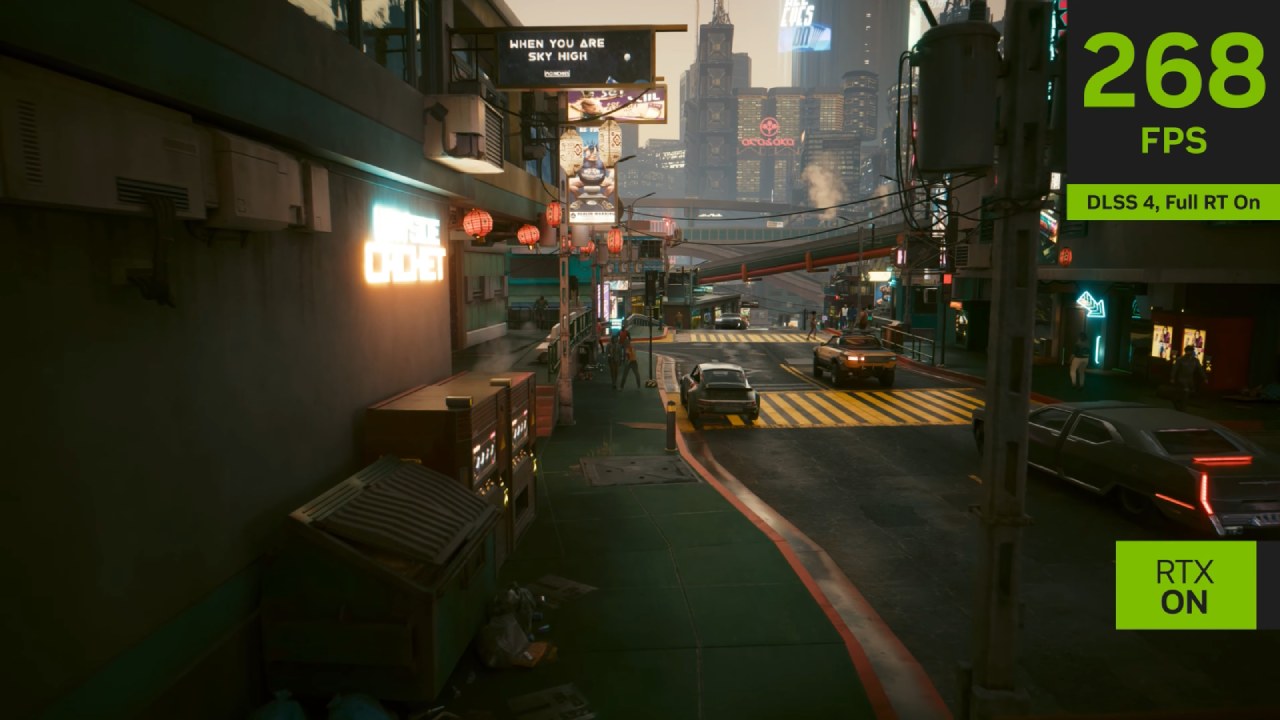
Transparent objects and fire look much better in FSR 4 than in FSR 2 or FSR 3, matching DLSS 3 and nearly DLSS 4 in clarity and stability.
Fine wires and lines remain DLSS 4’s stronghold, but FSR 4 is often close to DLSS 3’s performance. Even in complex scenes like Hunt Showdown, FSR 4 handles fine detail almost as well as DLSS 3.
Trees, Grass, and Fences
FSR 4 handles foliage with sharper detail but slightly less stability than DLSS 3, making it a matter of preference. Grass in Horizon Zero Dawn looks fantastic with FSR 4 quality—beating DLSS 3 in clarity and motion stability, and rivalling DLSS 4.
Fences and repeating patterns are generally DLSS 3-level or better, though thicker, overlapping meshes can exhibit more aliasing in FSR 4. Again, FSR 4 balanced sometimes outperforms FSR 4 quality in stability.
Cloth, Water, and Rain
Cloth animations—such as capes and flags—are upscaled well by FSR 4, with no substantial difference to DLSS. Water surfaces and rain effects have been fixed: FSR 4 matches DLSS 3 closely and trails DLSS 4 only slightly.
Even snow (a form of rain) looks crisp and motion-stable in FSR 4 performance mode, placing it close to DLSS 4 quality.
Performance Analysis
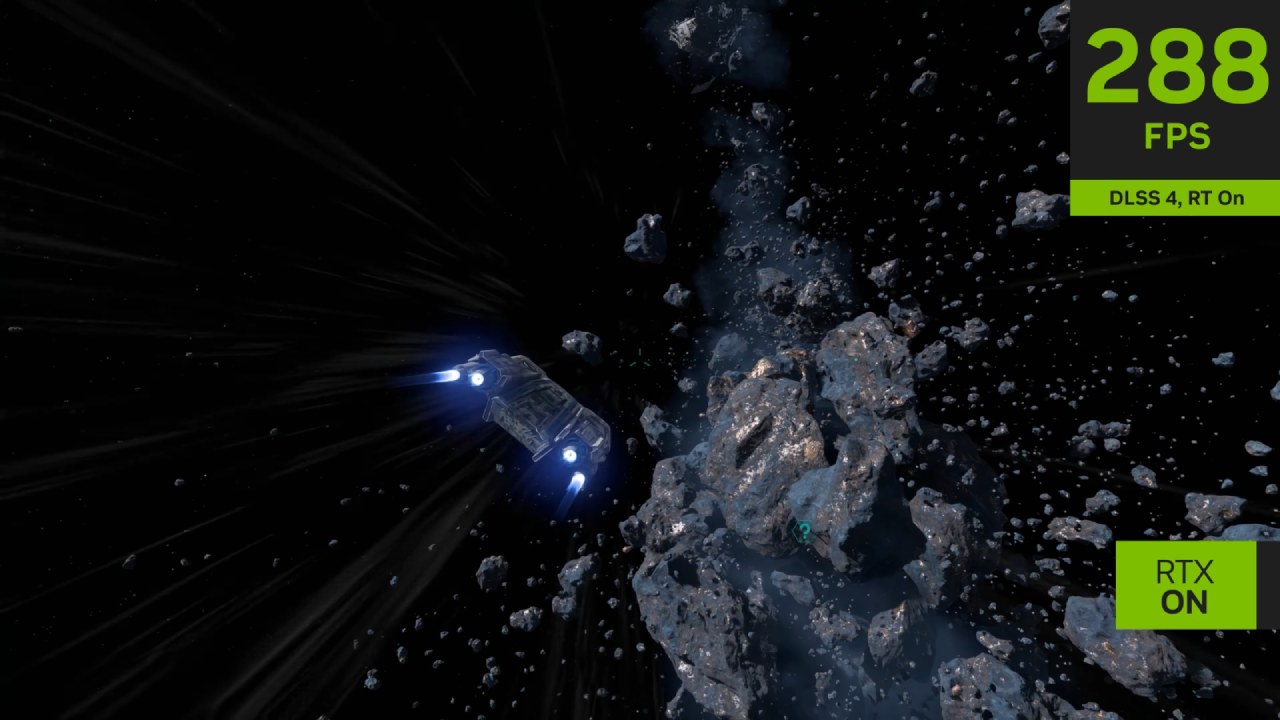
We benchmarked the Radeon RX 9070 XT and GeForce RTX 5070 TI at 1440p using quality, balanced, and performance modes. On average, FSR 4 and DLSS 4 both deliver about a 20% uplift in quality mode and around a 30% uplift in balanced mode compared to native rendering.
FSR 4 performance mode can even outpace DLSS 4 performance by a few points, demonstrating that both upscalers offer similar boosts on similar-class hardware.
Final Thoughts
FSR 4 is a massive step forward for AMD’s upscaling at 1440p. The leap from FSR 3 to FSR 4 is enormous, eliminating the ugly artifacts and blur that plagued previous versions. FSR 4’s image quality generally sits between DLSS 3 and DLSS 4, delivering sharper textures, better disocclusion, grass and rain, at the cost of slightly reduced stability in edges, fine details, trees, and fences.
In most supported titles, FSR 4 quality mode will meet your expectations, and performance gains are on par with DLSS 4.
The biggest challenge remains game support. At launch, far fewer titles support FSR 4 than DLSS 4 via driver override. Until AMD convinces developers to back-port FSR 4 to older games and integrate it into new ones, NVIDIA’s ecosystem will remain stronger. Nevertheless, FSR 4 sets a solid foundation.
If your favourite games support it, you’ll enjoy a compelling upscaling experience on RDNA 4 hardware, and AMD owners will strike gold more often as adoption grows.
Check Our Other Articles:
- GeForce RTX 5090 Unleashed: Is NVIDIA's New Flagship the Ultimate 4K Gaming GPU?
- NVIDIA GeForce RTX 5080 Review (2025): Still A 4K Gaming Powerhouse?
- RTX 5090 Performance Testing In GTA 5 – 1080p, 1440p, and 4K Max Settings Benchmark
- NVIDIA RTX 5070 Review: Mid-Range Muscle or Marketing Hype?
- RTX 5070 Ti Review: Performance, Thermals & Power Efficiency Tested
- ASUS ROG Astral RTX 5090 OC Edition Review: 32GB GDDR7 & 4K Gaming Benchmark
- ASUS GeForce RTX 5090 LC Liquid Cooled GPU Review: Unmatched Silence & Speed
- MSI GeForce RTX 5090 32GB SUPRIM SOC Review: Power Efficiency, Cooling, and Gaming Performance
- INNO3D RTX 5060 Ti 16 GB X2 Review: Gaming Benchmarks, Temps, and Power Efficiency
- HP Omen 45L Review: RTX 5090 Performance, Thermals, and Value Analysis
- ASUS TUF Gaming GeForce RTX 5060 Ti Review: DLSS 4, Power Efficiency, and Gaming
- ASUS Prime RTX 5060 Ti OC 16GB Review: DLSS 4, Ray Tracing, & Thermals Tested
- NVIDIA GeForce RTX 5060 Review: Specs, Gaming, and Cost per Frame
- MSI GeForce RTX 5090 GAMING TRIO OC Review: A Monster Power GPU
Senior Editor, NoobFeed
Latest Articles
No Data.