
Intel Arc A750 Review 2026 Performance Benchmarks and Value Analysis
Budget focused Intel Arc A750 delivers competitive 1080p gaming results with modern APIs and resizable BAR.
Hardware by Nahe Yan on Jan 25, 2026
Intel Arc graphics cards have made a name for themselves in the cheap GPU market by delivering good performance in modern games, as long as users know what the platform can and can't do.
Intel's subsequent releases built on the work of earlier Arc generations. Going back to them helps us determine whether they still make sense for today's systems.
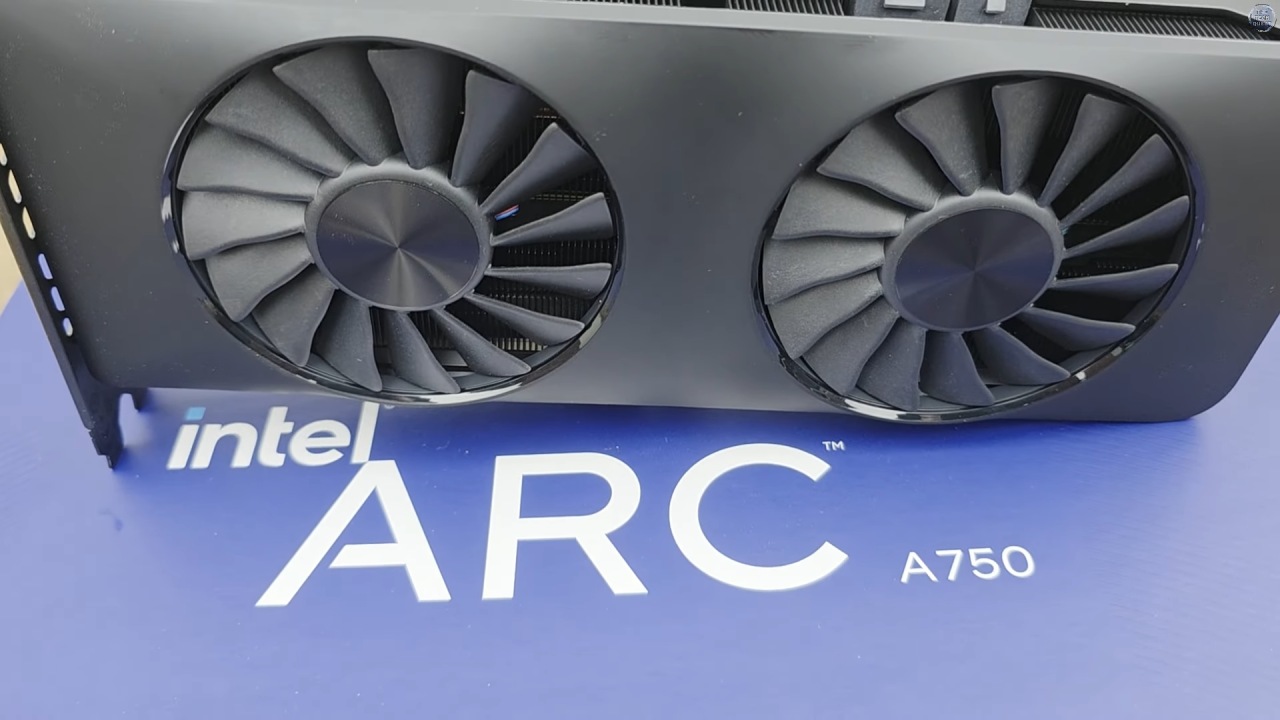
Intel Arc A-Series History
People generally think of the Arc B series as a gaming line that focuses on value. Still, it wasn't Intel's first foray into modern discrete graphics. Intel's Arc A series came out before the A series. Arc A series included low-profile entry-level cards for HTPC-style applications, and the Arc A770 16GB was as good as Nvidia's RTX 2080 in many situations. That level of performance is still important today.
Arc A750 is below the A770; it has a smaller version of the same GPU die. This is what happens when chip binning is done. This is when several identical GPU chips are made and tested. If some cores don't meet the specifications, they are turned off rather than thrown away as usable silicon. This makes a lower-tier product. This means users will get a fully functional card with slightly lower specs and prices adjusted accordingly.
Specifications and Needs
Intel Arc A750 finally came out in October 2022, after being delayed several times. It has one 8-pin and one 6-pin PCIe power connections, and 8GB of GDDR6 memory on a 256-bit bus. Intel says to use a power source with 600W of power. For Arc GPUs to work properly, they need to enable resizable BAR. This may also be called Smart Access Memory on some platforms. Still, you need to enable it to achieve the intended results.
Driver support was hard to find at first, but Intel has consistently improved stability and performance. Arc GPUs function best with DX12 workloads, but they don't always work well with previous APIs, especially DX9. Older games may act strangely depending on the engine and renderer utilized.
Set Up the Test System
A Ryzen 5700X processor, 16GB of Corsair Vengeance Pro RGB memory, and a B550 motherboard were used to test the Arc A750. As for power, an EVGA Supernova 750W portable unit was used. The games were saved on a Gen4 Acer Predator SSD. A different method was used to record gameplay to make sure that the results stayed the same.
How well it Works in Modern Games
We first tried Fallout 4 at 1080p with high settings and extreme textures. Arc A750 had a stable 60 fps average, with 1% lows similar to those of an RTX 3060. Even if the 0.1% lows went down, the general playability stayed the same.
At 1080p, on very high settings, with ray tracing and a 60fps goal, XeSS ensured Spider-Man could move around the city without any problems. The performance was usually in the high 80s FPS range, and it was always low.
Mixed Results and Thoughts on how to Make them Better
It was very rough to play The Last of Us at 1080p high with FSR set to quality. The scores were fine, though. Borderlands 4 at 1080p on medium settings with XeSS set to performance showed inconsistent results. The card struggled to maintain 60 fps, averaging 49. However, performance improved over longer gameplay sessions.
This could damage immersion depending on how much you can handle. Robocop at 1080p high with XeSS balanced averaged around 70 fps, with performance mostly stable except for a few instances when it dropped.
Dying Light 2 had occasional stutters, just like earlier Arc outcomes, even though the averages were typically stable. These actions are specific to Arc rather than to the system as a whole.
Older Titles & Performance from the Past
Left 4 Dead 2, which has had problems with Arc GPUs in the past, ran at 1080p max settings with frame rates in the hundreds. At times, Borderlands 2 also ran at more than 200 fps, but the frame rate fluctuated, even though it remained well above 60.
These results imply that driver upgrades have fixed some of the problems older DX-based games had, but performance can still be inconsistent.

More Game Results
At 1080p, extremely high with ray tracing, GTA5 Enhanced ran smoothly, averaging about 87 fps. Resident Evil 4 at 1080p high with ray tracing ran the whole time smoothly.
Doom Eternal at 1080p high with ray tracing did quite well, averaging over 140 fps with steady lows. The Division 2 at 1080p high with DX12 also ran well, with good average frame rates.
Helldivers 2 at 1080p high, without upscaling, averaged just under 60 fps, but it was still playable. If you want greater frame rates, you can use upscaling.
Final Thoughts
Intel Arc A750 is a good deal for the money, especially for newer games that use DX12. It still needs to be thought over because it relies on a resizable BAR, uses more power than other cards in its class, and doesn't always work well in some older games.
Arc A750 is still a good choice if you have a fresh computer and want a cheap GPU for recent games. It works better than you would anticipate for the price. Arc's platform limitations and occasional incompatibilities make it harder to recommend for older computers or people who only play legacy games.
Also, check our other Intel chips Articles below:
- Intel Core Ultra 9 285K Review And Performance Breakdown (2025)
- Intel Core Ultra 9 285K vs AMD Ryzen 7 9800X3D: In-Depth Gaming Performance and Benchmark Comparison
- Intel Core i5-13400F Gaming Performance: Still Worth It in 2025?
- Intel Core i9‑14900K vs. AMD Ryzen 7 7800X3D: Power Profiles & Gaming Benchmarks
- Intel Core i9 14900K: Specs, Benchmarks, and Competitor Comparison
- Intel Core Ultra 5 245K Review: Gaming, Productivity & Power Efficiency Tested
- Intel Core Ultra 9 285 K's iGPU Gaming: In-Depth Benchmarks & Analysis
- Intel vs. AMD Gaming Laptop: Performance, Thermals & Battery Life Compared
- AMD Ryzen 7 9800X3D vs.7800X3D vs. Intel Core Ultra 7 265K: Gaming, Thermals & Price Analysis
Editor, NoobFeed
Gaming Hardware Updates
No Data.