
Intel Nova Lake Leaks: 52 Cores, 288MB Cache, LGA 1954 and 700W Power Draw
Intel Nova Lake leak reveals a 52-core hybrid design with massive cache expansion and extreme next-generation power scaling targets.
Hardware by Tanvir Kabbo on May 19, 2026
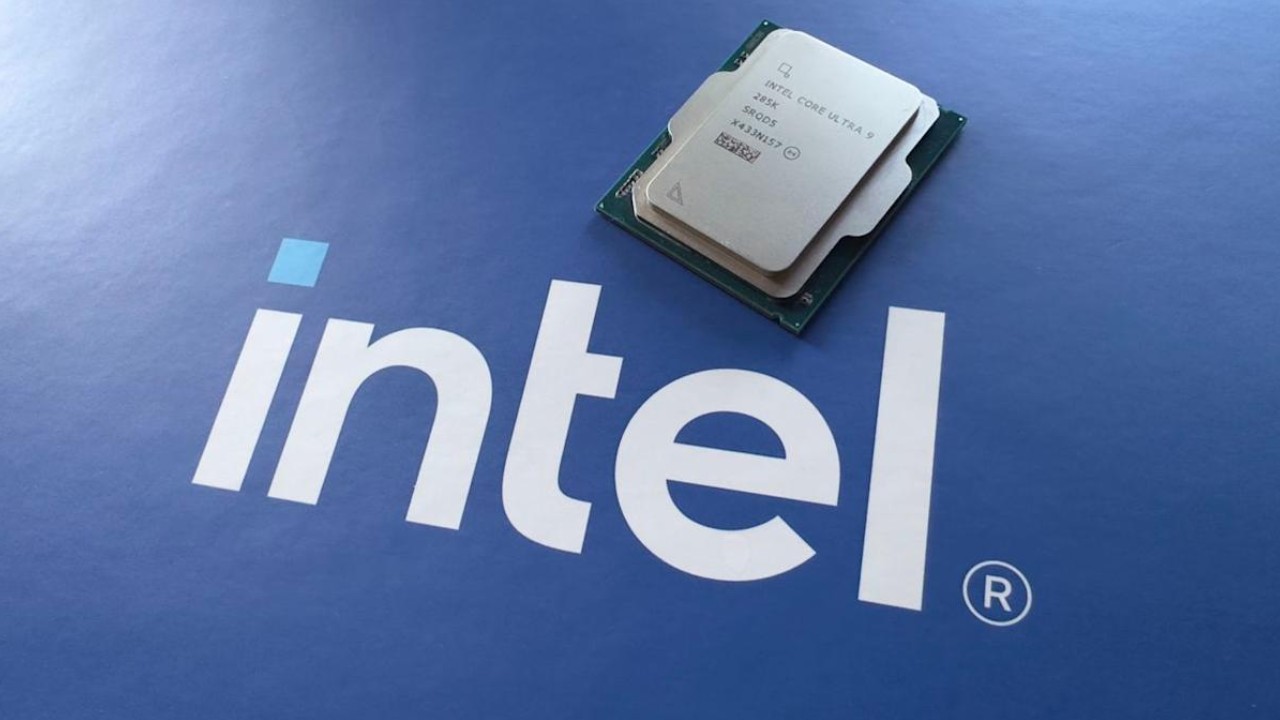
Intel's next-generation desktop architecture is beginning to emerge in the form of engineering samples of Nova Lake that are rumored to be in the hands of its suppliers. Intel hasn't officially announced details, but its leaked design documents reveal a radical shift in architecture and specs, marking one of the most aggressive redos of a desktop CPU in years.
It is Intel's all-or-nothing bet to regain the performance lead in gaming and office applications with its all-new Nova Lake-S, which sits alongside AMD's upcoming Zen 6 lineup.
Under the Hood: A 52-Core Hybrid Behemoth and IPC Push
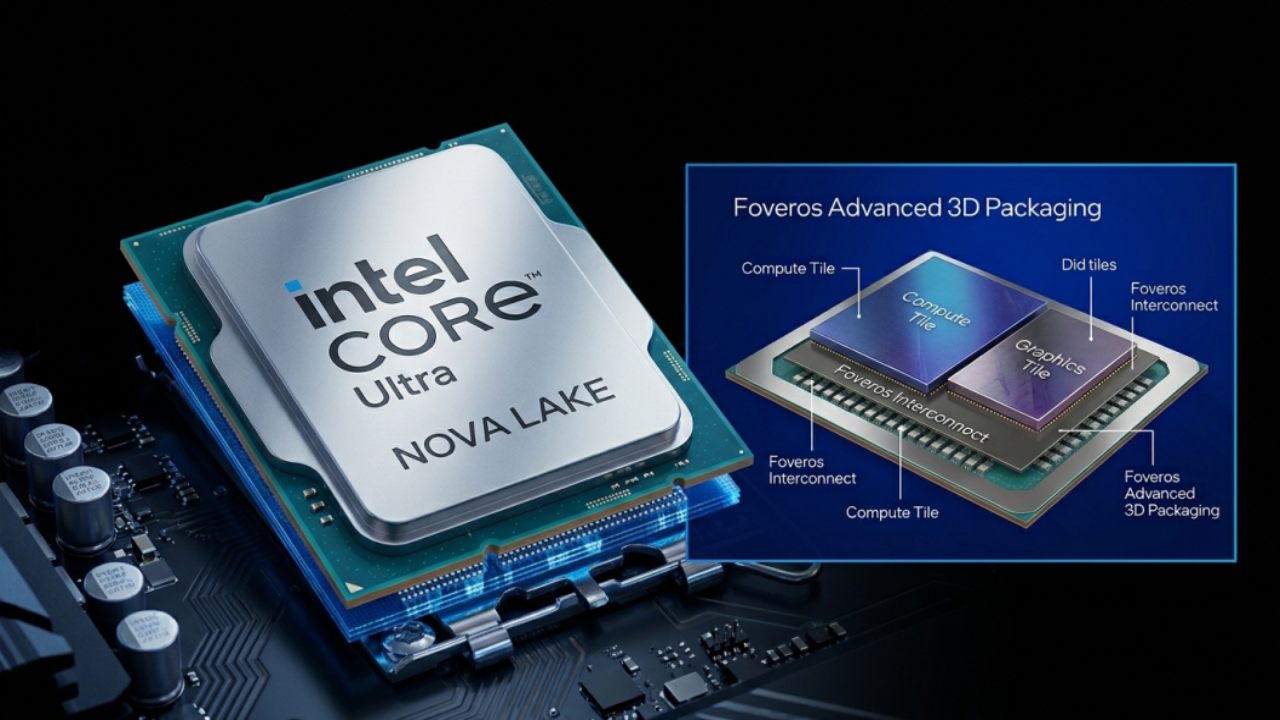
The core of the leak is that Intel's hybrid architecture is being dramatically scaled up. Nova Lake-S is said to support a dual compute tile with up to 52 cores, including 16 Performance cores (based on the new Coyote Cove architecture), 32 Efficiency cores (based on the new Arctic Wolf architecture), and 4 low-power E-cores for background tasks and idle efficiency.
It's also a massive step up from Arrow Lake's 24-cores maximum for the flagship, which is over 2x core density. However, Intel is not just going with brute force. Architectural refinements on both P-core and E-core make up the bulk of the single-core IPC uplift, with estimates in the 20% range.
Where things become even more ambitious is multi-threading. Internal targets reportedly point to a 2x increase in multi-core performance over the previous generation. This usually represents an idealized workload level, but if only 10% of this is achieved, Nova Lake-S would belong to a completely different performance class in highly threaded applications such as rendering, simulation, and AI-aided compilation.
Cache War: Intel's Answer to AMD's X3D Dominance
If AMD's X3D series redefined gaming CPUs through stacked cache, Intel's response appears equally aggressive. Nova Lake-S introduces a massive base-level last-level cache strategy called bLLC (base-level large cache).
Leaked specifications suggest that dual-tile configurations will integrate up to 288MB of bLLC cache, contributing to a total combined cache pool of 160MB to 320MB across the L2 and L3 hierarchies, depending on configuration. This is not just an incremental improvement; it is a structural shift in how Intel is addressing gaming latency.
The goal is clear: reduce memory bottlenecks and feed data-hungry cores faster, directly targeting AMD's Ryzen X3D processors, which have dominated gaming benchmarks through vertical cache stacking. If Intel's implementation delivers consistent latency improvements, Nova Lake-S could mark the first serious challenge to AMD's gaming cache advantage in multiple generations.
Power Supply Nightmare: When 700W CPUs Become Reality
While performance projections are attention-grabbing, the power figures attached to Nova Lake-S are equally striking—and potentially alarming for system builders. The platform reportedly transitions to a new LGA 1954 socket paired with 900-series chipsets such as the Z990 platform.
On paper, TDP remains relatively conservative, ranging from 125W to 175W, depending on SKU. However, leaked power scaling data tells a different story under load. Single compute tile configurations could push up to 350W, while full dual-tile flagship chips may spike to an astonishing 700W under heavy synthetic workloads.
This essentially redefines the design requirements for the builder system. For heavier loads, high-end air cooling seems to be too little for too long, which will drive users towards 360mm or even 420mm liquid cooling solutions. Then the selection of PSU is of major importance, with the real-world recommendations now in the vicinity of 1000W to 1200W for a fully loaded system to provide sufficient headroom for safety.
This level of power density raises important questions about the trade-off between efficiency gains and thermal costs. Even if performance scales accordingly, the trade-off will be heat output that rivals small workstation-class systems rather than typical desktop PCs.
Memory, I/O, and Platform Expansion
Beyond cores and cache, Nova Lake-S also appears to significantly modernize Intel's platform capabilities. Support for 8000 MT/s DDR5 memory, including CUDIMM and CQDIMM configurations, signals a push toward higher bandwidth memory subsystems designed to feed large core clusters more effectively.
PCIe support also continues to grow, with as many as 36 PCIe 5.0 lanes planned for future devices to enable high-speed storage arrays, next-generation GPUs, and dedicated accelerators that bypass the limitations of previous generations. Combined, these changes position LGA 1954 as a high-bandwidth enthusiast and workstation hybrid platform rather than a traditional consumer socket.
If these leaks prove accurate, Nova Lake-S represents one of Intel's most aggressive architectural resets in over a decade.
The combination of 52 cores, massive cache restructuring, and near-unprecedented power scaling suggests a platform designed not just to compete with Zen 6 but to aggressively outclass it in multi-threaded and gaming workloads alike.
However, the trade-offs are equally significant. The potential 700W flagship CPU radically alters the cost of a top-tier PC, driving cooling, PSU, and chassis needs to extreme levels. If you're a fan, it may signal a revival of raw performance escalation or an Achilles' heel in home PCs.
With Computex 2026 expected to showcase early LGA 1954 motherboards and final platform details, Nova Lake-S is shaping up to be one of the most closely watched CPU launches in years. Whether it becomes Intel's comeback story or a cautionary tale about power scaling will depend entirely on how well that rumored performance translates into real-world efficiency.
Senior Editor, NoobFeed
Gaming Hardware Updates
No Data.