
How L3 Cache Capacity Affects Gaming on AMD Zen3 Ryzen CPUs
L3 cache capacity delivers significantly greater gaming performance gains than additional cores in AMD Zen3 Ryzen processors.
Hardware by Tanvir Kabbo on Aug 14, 2025
Discussions on gaming performance in recent years have frequently focused on CPU core count. On the other hand, L3 cache size is just as, if not more, significant in influencing a system's gaming performance.
By comparing processors with varying L3 cache sizes but using the same Zen3 architecture, it becomes possible to isolate the impact of cache on gaming performance.
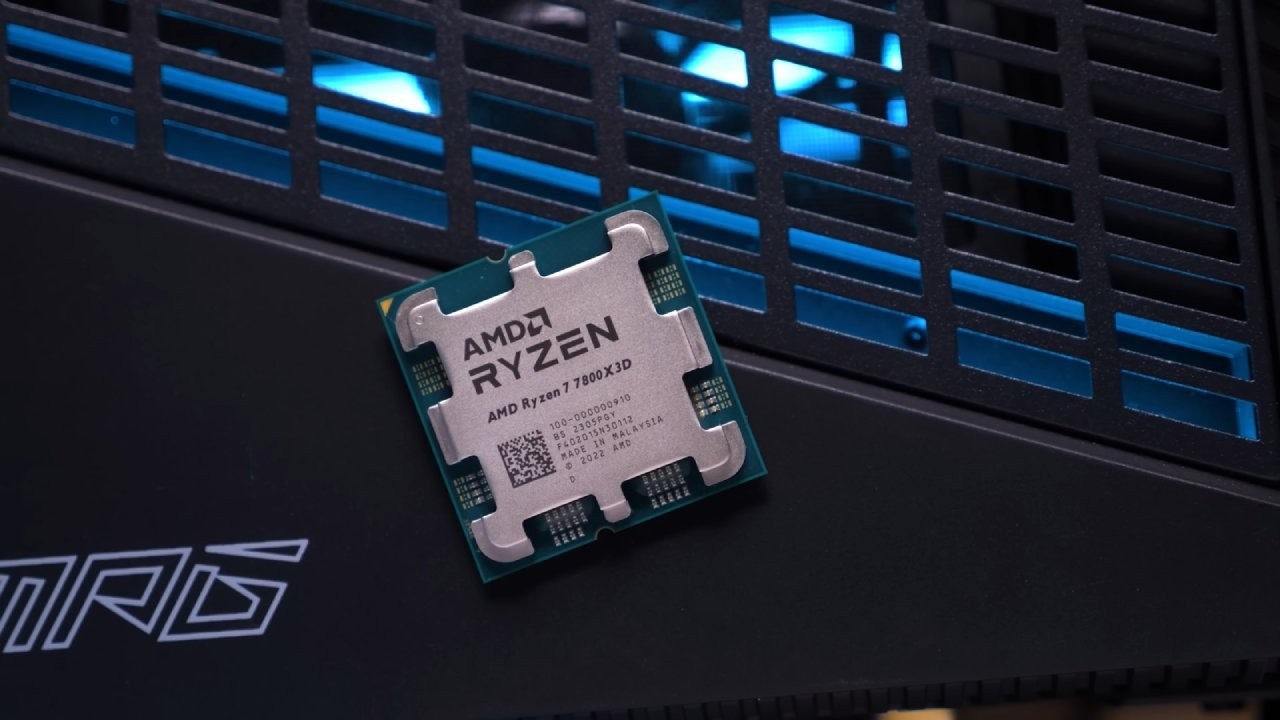
The findings show that, in many cases, L3 cache capacity has a more substantial influence than core count when it comes to gaming.
Revisiting Core Count vs Cache Capacity
A few years ago, we explored how extra cores and extra cache affected gaming performance on Intel's 10th-gen CPUs. That testing revealed that increasing L3 cache size often had a bigger effect on frame rates than simply adding more cores, assuming the architecture was the same.
At that time, L3 cache's importance in gaming was not widely recognized, and many believed performance gains when moving from a 6-core to a 10-core CPU were mainly due to the extra cores.
With the arrival of AMD's 3D V-Cache CPUs, such as Ryzen 7 5800X3D with 96MB of L3 cache, the role of cache in gaming became clear. This prompted us to revisit the topic with a Zen3-based AMD lineup to see just how much of a difference cache makes compared to core count.
Test Setup and Methodology
For testing, we used a GeForce RTX 4090 at 1080p to ensure a CPU bottleneck rather than a GPU limitation. All CPUs were paired with 32GB DDR4-3600 CL14 memory. The comparison was limited to 6-core and 8-core Ryzen CPUs with L3 cache capacities of 16MB, 32MB, and 96MB.
While the CPUs were tested at stock frequencies (ranging from 4.4GHz to 4.7GHz), the small clock speed differences were not significant enough to change the overall conclusions.
Baldur's Gate 3
In Baldur's Gate 3, the core count alone had little impact when the cache size was equal. With 32MB of L3 cache, Ryzen 5 5600X outperformed Ryzen 7 5700G, which had 16MB, by 11%. 5800X3D beat 5800X by 27%, and Ryzen 7 5800X was 17% faster than 5700G.
Cache is king, as demonstrated by the astounding 48% speed increase obtained when switching from 16MB to 96MB of cache.

Cyberpunk 2077: Phantom Liberty
While the disparity dropped as cache size fell, Cyberpunk demonstrated a minor edge on 8-core CPUs. Compared to 5600X3D, 5800X3D was 7% quicker, and 5800X was likewise faster than 5600X.
Cache size increases of 16 MB to 32 MB and 32 MB to 96 MB resulted in a 10% and 25% increase in 6-core performance, respectively. The increase from 16MB to 96MB was 46% for 8-core CPUs.
Hogwarts Legacy
With ray tracing enabled, the game became heavily CPU-limited. Extra cores offered no advantage, but cache capacity continued to matter. The 5800X was 17% faster than the 5700G, and the 5800X3D added another 11% over the 5800X. Moving from 16MB to 96MB of cache improved performance by 30%.
Star Wars Jedi: Survivor
Here, 5700G was 11% faster than 5600G, but gains shrank with larger caches. From 5600G to 5600X, performance rose 19%, and then another 28% to 5600X3D, totaling a 53% gain from 16MB to 96MB with the same 6 cores.
Assetto Corsa Competizione
ACC is lightly threaded and highly cache-sensitive. There was little difference between 6-core and 8-core CPUs at 32MB or 96MB, though the 8-core 16MB model was 8% faster than its 6-core counterpart.
The jump from 5700G to 5800X brought a 23% gain, and from 5800X to 5800X3D added another 38%, totaling a 70% boost from 16MB to 96MB.
Spider-Man Remastered
Core count had almost no impact, but cache size made a huge difference. The 16MB models were significantly slower, with 5800X delivering 44% better 1% lows than 5700G. The 5800X3D was 7% faster than the 5600X3D.

A Plague Tale: Requiem
Performance differences were smaller here. The 5800X was 12% faster than the 5700G, and the 5800X3D added another 12% over the 5800X. Overall, 5800X3D offered a 25% uplift over 5700G.
Assassin's Creed Mirage
Both cache and cores helped here, with 5800X3D 12% faster than 5600X3D, 5800X 9% faster than 5600X, and 5700G 4% faster than 5600G. Still, cache gains outweighed core count gains, with a 19% improvement from 5700G to 5800X and a 33% jump from 5800X to 5800X3D.
Watch Dogs: Legion
Extra cores made no difference, but cache did. Moving from 16MB to 32MB improved performance by 17%, and from 32MB to 96MB added another 32%, totaling a 55% boost.
Hitman 3
Core count again wasn't the deciding factor. Increasing the cache from 16MB to 32MB improved performance by 23%, and from 32MB to 96MB gave an additional 18%, totaling a 46% uplift.
12-Game Average Results
On average, moving from 6 to 8 cores provided just a 3% improvement. Doubling the L3 cache from 16MB to 32MB improved performance by 18%, and increasing it to 96MB gave another 23% boost. From 16MB to 96MB, performance improved by an average of 45% using the same number of Zen3 cores.
.jpg)
Final Thoughts
We have consistently found that L3 cache often matters more for gaming than core count when comparing CPUs of the same architecture. The introduction of AMD's 3D V-Cache CPUs has reinforced this point, showing massive gains purely from increased cache capacity.
While 6-core and 8-core Zen3 CPUs deliver similar performance, the APUs with only 16MB of L3 cache lag considerably behind. This is why we have long recommended CPUs like Ryzen 5 5600X over APUs such as 5700G for discrete GPU gaming.
The core count argument also falls flat when it comes to multitasking in gaming scenarios. Until games can thoroughly saturate a 6-core CPU like 5600X, adding more cores won't help much, and by the time that happens, both 6-core and 8-core models will likely struggle. In most cases, investing in a CPU with a larger L3 cache capacity offers far better gaming value than simply opting for more cores.
Check Our Other AMD articles:
- AMD Ryzen 9 9950X3D Review: Setting The Standard For 2025 Gaming CPU
- AMD Ryzen 7 9800X3D Review: 3D V-Cache Goes God Mode with Stunning Gaming Performance
- AMD RX 9070 Performance Review: Thermals, Clocks, and Real-World FPS
- AMD Ryzen 5 7600 Review: Best Budget Gaming CPU of 2025?
- AMD Radeon RX 7800 XT Review: RDNA 3 Power For Midrange Gaming
- Sapphire NITRO+ AMD Radeon RX 9070 XT Review: The Ultimate 4K Gaming GPU
- AMD Ryzen 7 7800X3D: Delivers Gaming Performance Far Beyond Expectations
- AMD Ryzen 9 7900X Review: Powering the AM5 Era with DDR5 & PCIe 5.0
- ASRock Radeon RX 7800 XT Challenger OC Review: Best Price-to-Performance GPU of 2025
- Intel Core i9‑14900K vs. AMD Ryzen 7 7800X3D: Power Profiles & Gaming Benchmarks
Senior Editor, NoobFeed
Gaming Hardware Updates
No Data.