
Why 8-Core CPUs Struggle in Modern Creative Applications
Evaluating mid-range CPUs in 2025 through productivity benchmarks, power efficiency, and value metrics
Hardware by Naheyan Tahmin on Dec 18, 2025
How many CPU cores creators really require has become a more challenging subject in 2025 than it was before. The 8-core standard that has been around for a long time, up until CPUs like Intel i9-11900K, is no longer the norm. Some people in the community call modern processors "fake cores" since they have both performance and efficiency cores.
Even if this has changed, there are still CPUs with eight cores or fewer, such as Ryzen 7 9700X. As a mid-range alternative for the AM5 socket, it has a good upgrade path, but we need to look more closely at how useful it is as an 8-core CPU for creative tasks today.
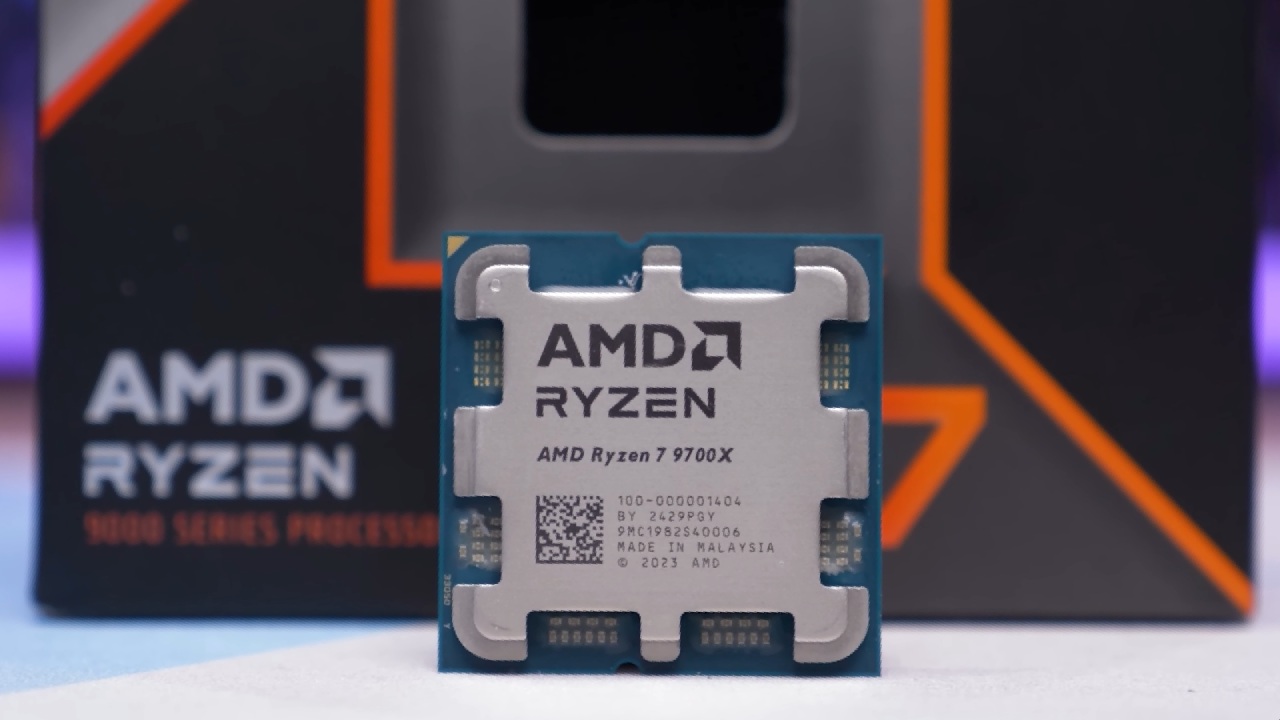
Ryzen 9700X is AMD's idea of a mid-range processor. Still, when you look at the workloads that creators are doing right now, it's evident that it's not meant for as many people as the price might suggest. A fuller picture of where 8-core CPUs fit into modern creative workflows can be seen by examining their specs, benchmarks, power draw, and prices.
Methodology and Test Platform
The test setup is more about the creator's workloads than gameplay. An Asus X870 Pro Creator Wi-Fi motherboard with 64GB of DDR5 memory running at 5600 MT/s was used to test AMD Ryzen 9000-series CPUs. An RTX 4090 and a 360mm AIO cooler handled the graphics. There were two SSDs for storage: one for the OS and one for the project. Both were Samsung 980Pro drives.
Testing on the Intel Core Ultra platform used a Gigabyte Z890 Aero D motherboard with 48GB DDR5 running at 8000MT/s, the same RTX 4090, a 360mm AIO, and the same SSD setup. Instead of manually overclocking, memory speeds were kept at the officially supported levels. This method shows off how stable and capable each platform's built-in memory controller is at greater speeds and capacities.
Different CPU Specs and Architectures
Core Ultra 7 265K has both performance and efficiency cores and is made on a 3nm TSMC N3B node. AMD's Ryzen 9000 series, on the other hand, is made on a 4nm process. Intel now relies on TSMC for production, a major change. A lower node allows for more transistors and better efficiency.
Performance of the Synthetic Benchmark
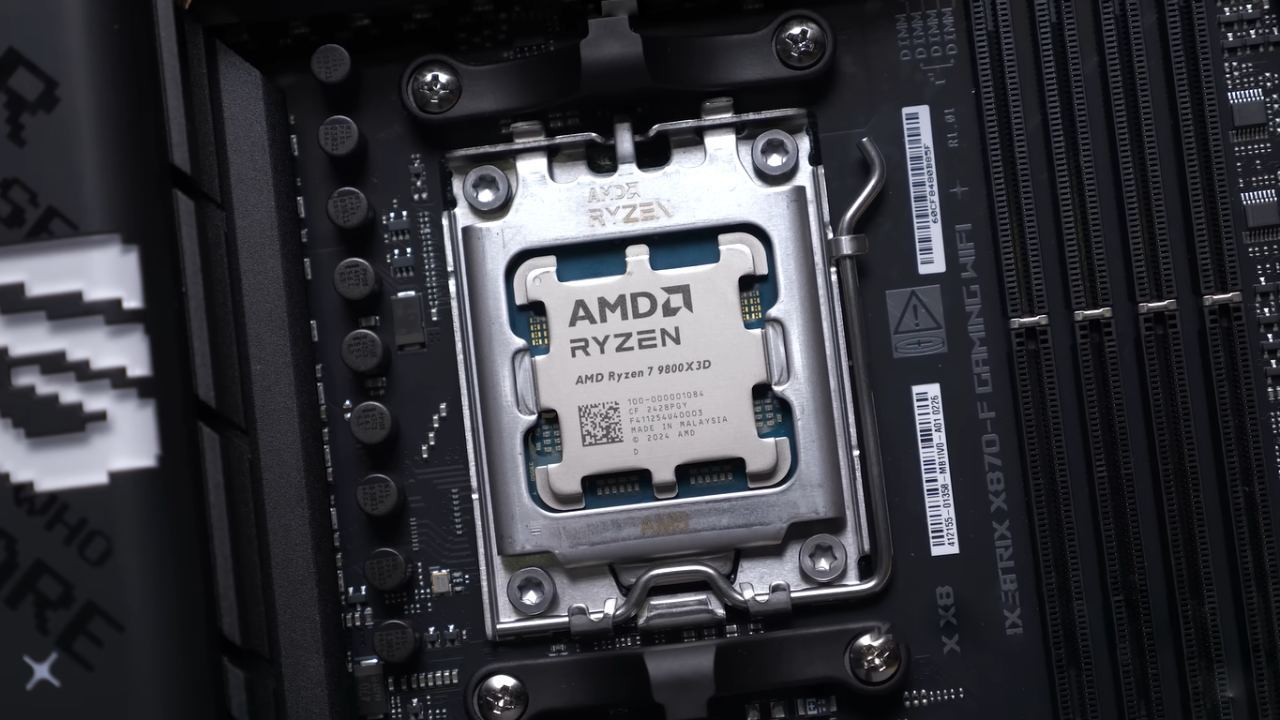
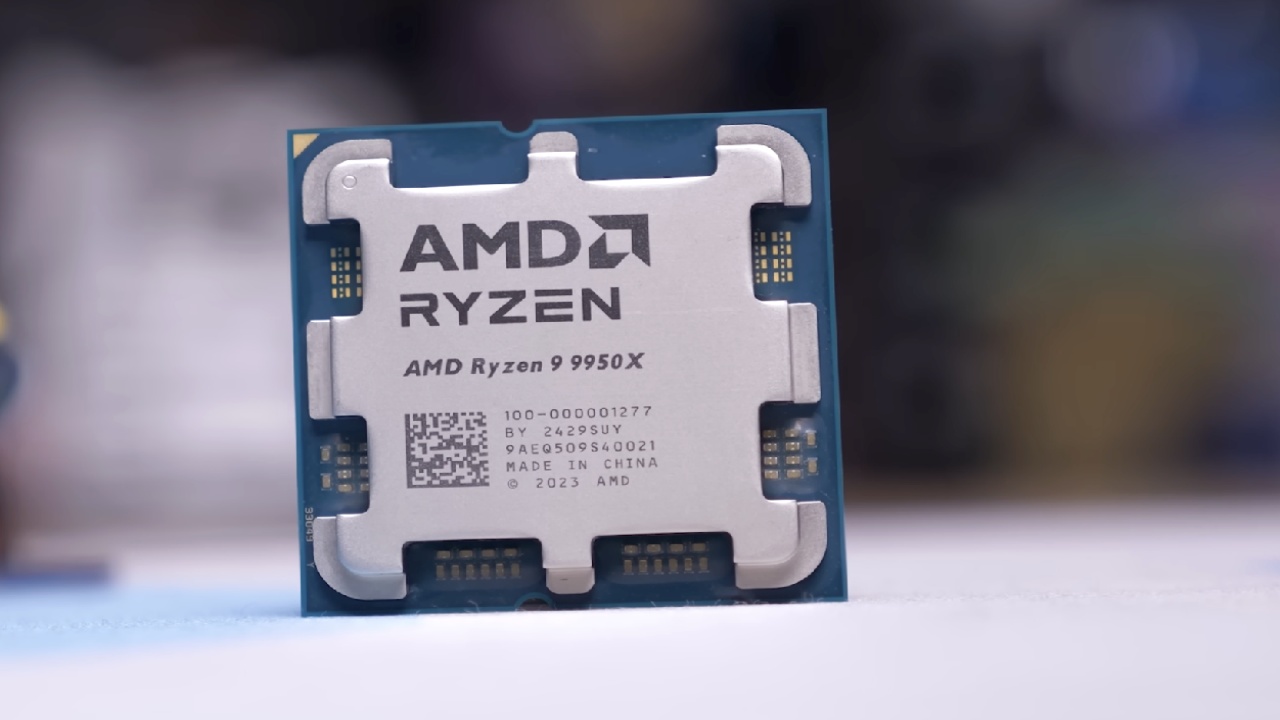
Ryzen 7 9800X3D has about 2%–3% lower single-core performance than the 9700X, but its multi-core performance is about 16.6% greater. Ryzen 9 9950X almost doubles multi-core performance, getting around 97% better than the 9700X, but single-core performance stays about the same.
Core Ultra 7 265K has about a 6% edge in single-core performance and about 86.8% better multi-core performance, which puts it close to the 9950X.
The picture changes a little with Geekbench 6. 9800X3D is around 7% slower in single-core and about 6% faster in multi-core. 9950X improves single-core performance by roughly 2.6% and multi-core performance by 30.8%. Core Ultra 7 265K has somewhat lower single-core results, but it performs better than the rest in multi-core, with a 37.8% increase, even beating the 9950X in this test.
How Well it Edits Photos
There isn't much variation in performance across Photoshop benchmarks. 9800X3D is around 2.2% quicker than the 9950X, and the Core Ultra 7 265K is about 10% slower than the 9800X3D. In this case, the 9700X does a good job of holding its own.
Lightroom Classic tells a different story. 9800X3D is about 42% faster, the 9950X is about 40% faster, and the Core Ultra 7 265K is the fastest, with a 71.6% increase. The 9700X is clearly slower under this task.
Video Editing Performance
Premiere Pro tests an older version to ensure H.265 codecs work with hardware acceleration. 9800X3D exhibits 10% to 11% better overall scores, and interframe performance increases by about 52%, indicating the usefulness of 3D V-Cache. 9950X raises overall scores by about 20%, and intraframe scores by as much as 70%.
Core Ultra 7 265K is the best overall performer in most Premiere Pro criteria, with scores that are about 31% higher for extended overall, 36% higher for standard overall, 54% higher for long GOP, and 79% higher for intraframe performance. GPU effects also improve by about 20.8%, even though the same GPUs are used.
9950X gets about 21.5% better standard scores and 13.1% higher extended scores in After Effects. Core Ultra 7 265K does even better, with about 26.8% more performance in typical workloads and 15.1% more in extended tests.
DaVinci Resolve relies more on the GPU than on the CPU, making the differences between the two less noticeable. 9800X3D only improves slightly, except for intraframe jobs, which get about 10.8% better. 9950X is around 12% faster overall, with bigger benefits in interframe and RAW operations. Core Ultra 7 265K usually has overall scores about 10% higher, interframe results 40% higher, and RAW processing 35% faster. However, the lengthy GOP performance is still not as good.
Performance of 3D Rendering
9800X3D gets a 10% to 17% boost in Blender. 9950X more than doubles performance, showing that performance scales almost linearly with the number of cores. Core Ultra 7 265K can't beat the 9950X, but it still makes big improvements, between 63% and 67% depending on the scene.
V-Ray reveals the same patterns. 9800X3D speeds things up by about 20%, the 9950X by more than 112%, and Core Ultra 7 265K is about 66% faster than the 9700X.
Ryzen 7 9700X is known for its energy efficiency; in Cinebench R23, it draws only about 88W under full load. The 9800X3D uses about 150W, and the 9950X uses about 200W. The Core Ultra 7 265K draws about 210W at its peak.
9700X can be set up to draw more power through PBO, even though higher-end CPUs draw more power when fully loaded. In idle and normal use, Intel CPUs often use less power, which can help keep long-term power costs down.
Analysis of Prices and Value
Ryzen 7 9700X is hard to justify for creators at over $300. The Core Ultra 7 265K is generally available for $260- $280, often with a package that delivers much more performance for your money.
9800X3D costs even more than the Ryzen 9 9950X, which is roughly $600. The Core Ultra 7 265K often matches or beats the 9950X on most creative benchmarks and costs less than half as much.
In addition to CPU prices, the Intel platform frequently has lower motherboard costs and better default specifications. Intel has closed the gap; thus, PCIe lane limits are no longer a problem.
Final Thoughts
Creators no longer get a lot of benefit from 8-core CPUs at the $300 price point. AM5 architecture lets you upgrade to better CPUs. Still, the Ryzen 7 9700X isn't a good value for price-to-performance compared to Intel's current CPUs. Just having more cores isn't enough, but in modern creative workloads, having more cores along with better scheduling and memory support makes a big difference.
For artists who care about efficiency, performance per dollar, and real-world workloads, it's getting harder and harder to advocate for eight cores until the price comes down significantly.
Also, check our other AMD articles below:
- AMD Ryzen 9 9950X3D Review: Setting The Standard For 2025 Gaming CPU
- AMD Ryzen 7 9800X3D Review: 3D V-Cache Goes God Mode with Stunning Gaming Performance
- AMD RX 9070 Performance Review: Thermals, Clocks, and Real-World FPS
- AMD Ryzen 5 7600 Review: Best Budget Gaming CPU of 2025?
- AMD Radeon RX 7800 XT Review: RDNA 3 Power For Midrange Gaming
- Sapphire NITRO+ AMD Radeon RX 9070 XT Review: The Ultimate 4K Gaming GPU
- AMD Ryzen 7 7800X3D: Delivers Gaming Performance Far Beyond Expectations
- AMD Ryzen 9 7900X Review: Powering the AM5 Era with DDR5 & PCIe 5.0
- Intel Core i9‑14900K vs. AMD Ryzen 7 7800X3D: Power Profiles & Gaming Benchmarks
Editor, NoobFeed
Gaming Hardware Updates
No Data.