
AMD CEO Confirms 2nm Technology for Next Gen GPUs to Challenge Nvidia
AMD’s Next Gen GPUs will use 2nm technology, combining RDNA and CDNA architectures to challenge high-end Nvidia graphics cards.
Hardware by Tanvir Kabbo on Oct 21, 2025
Recently, half of the internet fell down, which might have cost hundreds of billions of dollars. This shows how weak our centralized digital infrastructure has become. The problem started with Amazon Web Services (AWS), which is Amazon's cloud computing business.
Instead of businesses buying servers to host their websites, AWS allows them to rent server space—an efficient model but one that comes with major risks. According to Amazon's service health reports, the issue began late at night, when they began investigating increased error rates and latencies across multiple AWS services.
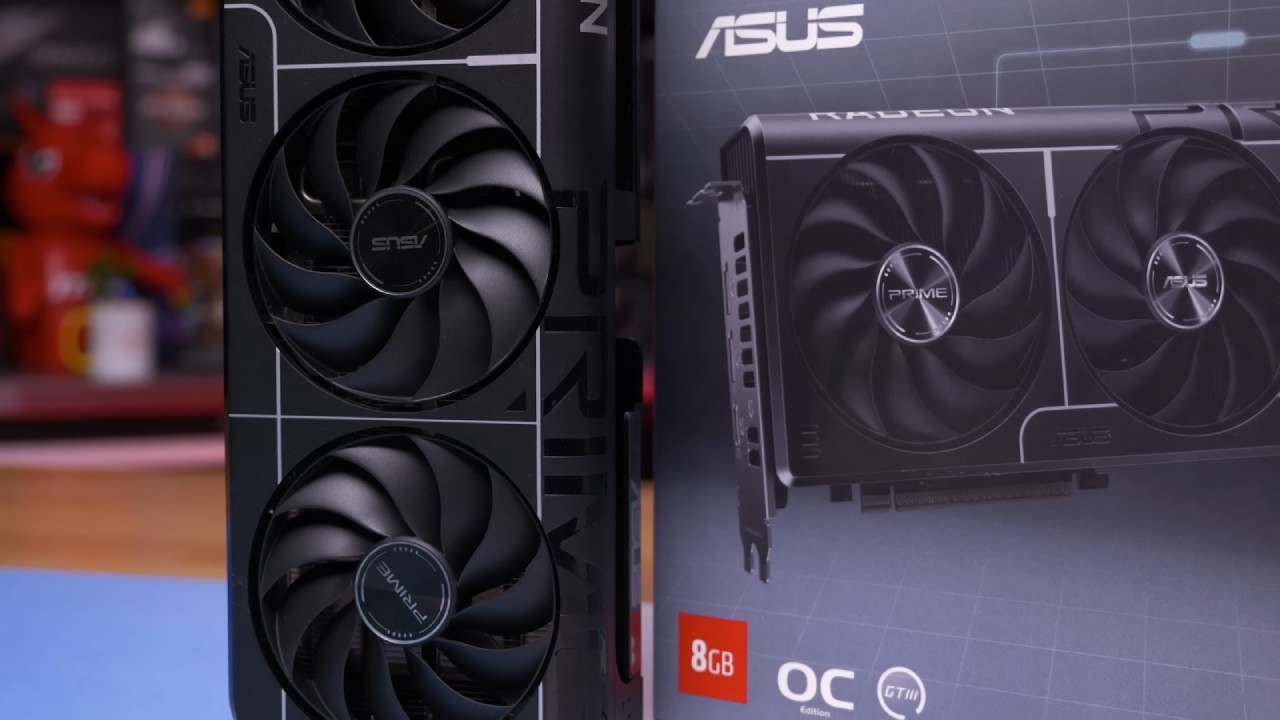
Although there were some signs of recovery after initial mitigations, the problems quickly resurfaced, and even hours later, many services remained offline.
The outage originated in AWS's US East1 region, one of its largest data hubs, which explains why it affected so many companies. Platforms like Snapchat, Venmo, Instacart, Amazon, Roblox, Robinhood, Reddit, Boost Mobile, AT&T, T-Mobile, Zoom, Adobe Cloud, Apple Music, and Navy Federal Credit Union all suffered downtime.
These disruptions underline a critical issue—the growing centralization of the internet. While the internet was originally designed to be decentralized, major services like AWS now dominate. AWS alone accounted for 31% of all cloud infrastructure as of Q3 2024.
Some may see this dominance as monopolistic, but in reality, it's a result of scalability. Only a handful of massive corporations have the resources to support millions of users simultaneously. For a new company expecting large growth, AWS and similar services are attractive due to their scalability and affordability.
Unfortunately, this centralization means that when one major provider falters, huge portions of the internet go offline. According to CatchPoint, a leading internet performance monitoring firm, the financial impact of this outage could reach hundreds of billions of dollars.
Clearly, something must change to prevent this level of disruption in the future.
Microsoft's New Windows Update Causes Major Functionality Issues
Microsoft was once again in the news for pushing a bad update, even while the internet was having huge problems. The most recent Windows 11 22H2 October update has caused major issues by making the mouse and keyboard stop working in the Windows Recovery Environment (WinRE). This means users can't use essential troubleshooting tools such as Startup Repair, Startup Settings, Safe Mode, or the option to uninstall updates—since none of these can be navigated without input devices.
This comes just days after Microsoft broke the Windows Media Creation Tool, a critical utility for system installation and repair, shortly before Windows 10 reached the end of its life cycle. Users can't use recovery options right now because of this new problem.
Microsoft has admitted that there is an issue and said that a remedy is on the way, but they haven't said when it will be available. It's important to keep your Windows 11 installation stable in the meantime, because restoring a malfunctioning system might be almost impossible without working peripherals.
AMD's Next Gen Desktop APUs on the Horizon
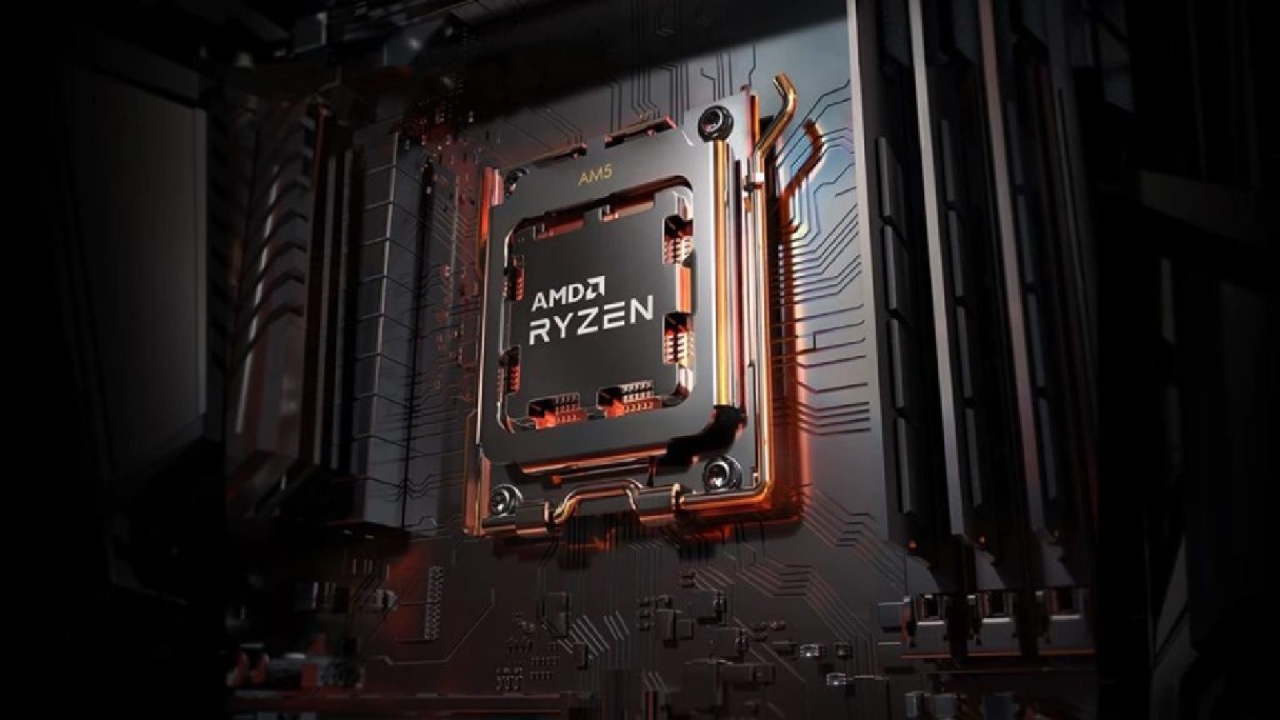
AMD is ready to release its next-generation desktop APUs, even though it has made some mistakes with technology. The most recent AGESA code updates that MSI motherboards have received add support for "Kraken Point" and "Kraken 2."
Although Kraken Point was originally associated with mobile APUs, its inclusion in AM5 motherboards strongly suggests that desktop versions—likely the Ryzen 9000G series—are coming soon.
Kraken Point features up to 8 CPU cores and 8 RDNA 3.5 compute units for its integrated GPU. In contrast, the current Ryzen 8000G series offers up to 12 RDNA 3.0 compute units. While the number of compute units may seem lower, the RDNA 3.5 architecture should offer improved efficiency and performance.
However, some enthusiasts have expressed concern about this shift. Fortunately, according to hardware leaker HXL, there's still hope for Strix Point APUs, which could deliver even stronger performance. However, they haven't yet appeared in the AGESA code updates.
AMD CEO Confirms Huge Leap for Next Gen GPUs
In even more exciting news, AMD's CEO Lisa Su has confirmed that the company's upcoming NextG GPUs will be based on the same unified architecture as their next-generation MI400 accelerators, combining elements of RDNA and CDNA.
This revelation could give AMD's next Radeon RX 10000 GPUs a serious edge over Nvidia's RTX 6000 series.
Lisa Su said in a recent presentation that the MI450 GPUs will use TSMC's cutting-edge 2nm process, which is a big step forward in technology. Kepler, the leaker, also says that the chip's computing part, called the XCD, will be based on TSMC's N2P node, which is a big step forward over the RX 7900 XT's N4P node.
Meanwhile, Nvidia's upcoming Rubin-based GPUs are expected to use a 3nm process, which may put them at a disadvantage in efficiency and performance.
AMD's internal slides even suggest that its MI400 series server racks can outperform Nvidia's Vera Rubin racks, both of which feature 72 GPUs. The AMD configuration reportedly surpasses Nvidia's in both memory capacity and bandwidth.
If these reports are genuine, AMD might finally be able to compete with Nvidia in the high-end GPU market. Nvidia may, of course, reply aggressively by introducing a GeForce RTX 6090 Ti or a similar model to take back the performance championship.
Either way, AMD is clearly stepping up its game. With its NextG GPUs leveraging 2nm technology and a unified architecture, we might finally see AMD close the gap—or even surpass Nvidia—at the top of the graphics world.
Final Thoughts
From massive internet outages to Windows update blunders and AMD's promising new hardware, the tech landscape is in flux. We're witnessing both the fragility of centralized systems and the rapid innovation driving hardware performance forward.
Whether AMD's Next Gen lineup truly surpasses Nvidia's offerings remains to be seen, but one thing's certain—the competition in the GPU market is about to heat up like never before.
Also, check our other articles below:
- GeForce RTX 5090 Unleashed: Is NVIDIA's New Flagship the Ultimate 4K Gaming GPU?
- NVIDIA GeForce RTX 5080 Review (2025): Still A 4K Gaming Powerhouse?
- RTX 5090 Performance Testing In GTA 5 – 1080p, 1440p, and 4K Max Settings Benchmark
- NVIDIA RTX 5070 Review: Mid-Range Muscle or Marketing Hype?
- RTX 5070 Ti Review: Performance, Thermals & Power Efficiency Tested
- ASUS GeForce RTX 5090 LC Liquid Cooled GPU Review: Unmatched Silence & Speed
- MSI GeForce RTX 5090 32GB SUPRIM SOC Review: Power Efficiency, Cooling, and Gaming Performance
- INNO3D RTX 5060 Ti 16 GB X2 Review: Gaming Benchmarks, Temps, and Power Efficiency
- HP Omen 45L Review: RTX 5090 Performance, Thermals, and Value Analysis
- ASUS TUF Gaming GeForce RTX 5060 Ti Review: DLSS 4, Power Efficiency, and Gaming
- ASUS Prime RTX 5060 Ti OC 16GB Review: DLSS 4, Ray Tracing, & Thermals Tested
- NVIDIA GeForce RTX 5060 Review: Specs, Gaming, and Cost per Frame
- MSI GeForce RTX 5090 GAMING TRIO OC Review: A Monster Power GPU
- AMD Ryzen 9 9950X3D Review: Setting The Standard For 2025 Gaming CPU
- AMD Ryzen 7 9800X3D Review: 3D V-Cache Goes God Mode with Stunning Gaming Performance
- AMD RX 9070 Performance Review: Thermals, Clocks, and Real-World FPS
- AMD Ryzen 5 7600 Review: Best Budget Gaming CPU of 2025?
- AMD Radeon RX 7800 XT Review: RDNA 3 Power For Midrange Gaming
- Sapphire NITRO+ AMD Radeon RX 9070 XT Review: The Ultimate 4K Gaming GPU
- AMD Ryzen 7 7800X3D: Delivers Gaming Performance Far Beyond Expectations
- AMD Ryzen 9 7900X Review: Powering the AM5 Era with DDR5 & PCIe 5.0
- ASRock Radeon RX 7800 XT Challenger OC Review: Best Price-to-Performance GPU of 2025
- Intel Core i9‑14900K vs. AMD Ryzen 7 7800X3D: Power Profiles & Gaming Benchmarks
Senior Editor, NoobFeed
Gaming Hardware Updates
No Data.