
AMD EPYC Venice 2nm 256-Core Zen 6 Server CPUs Enter Production as Intel Falls Behind
AMD’s 2nm EPYC Venice processors establish a new benchmark for hyperscale computing performance and server efficiency.
Hardware by Masaru Hoshino on May 24, 2026
AMD has officially crossed one of the most important thresholds in modern semiconductor history, beginning the production ramp of its 6th Gen EPYC processors, codenamed Venice, on TSMC's advanced N2 (2nm-class) process.
This isn't just another node transition—it marks the first time a high-performance computing (HPC) chip has entered production on 2nm silicon, placing AMD ahead of the broader industry curve, including even Apple's next-generation silicon roadmap.
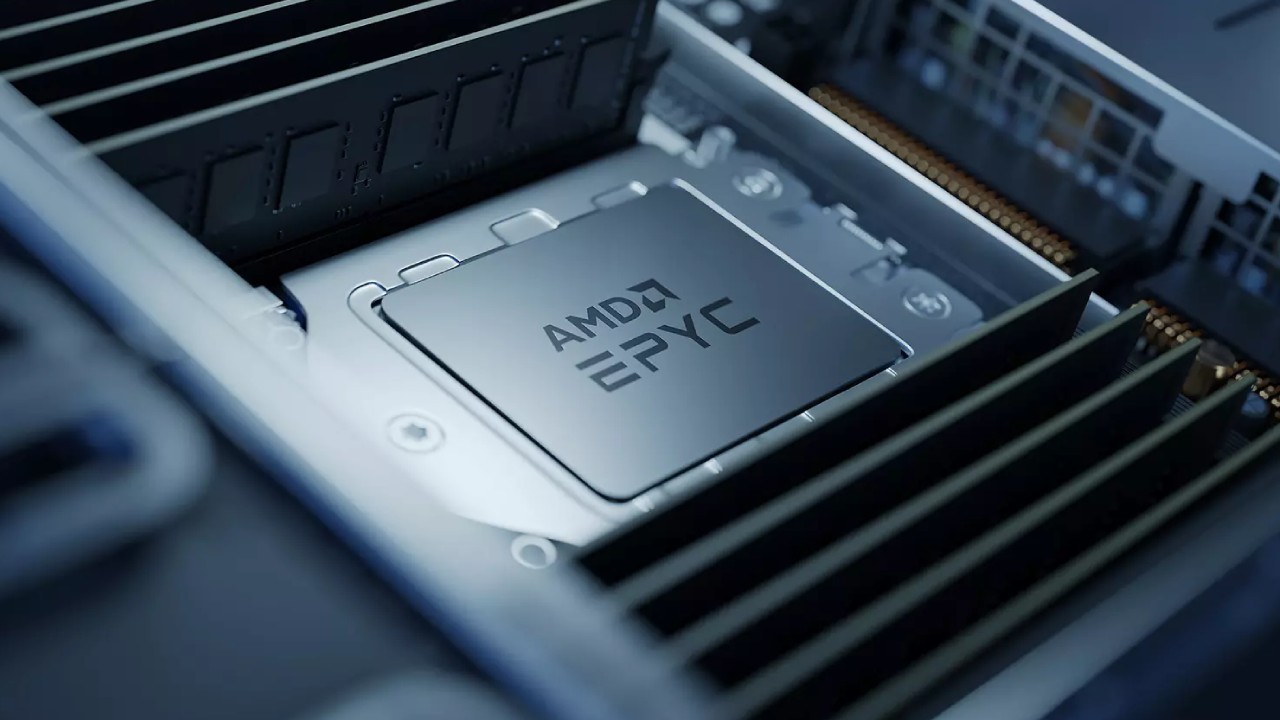
The significance here goes beyond bragging rights. By securing early access and execution success on TSMC's most advanced node, AMD is effectively defining the performance ceiling for the next wave of data center, AI, and cloud infrastructure deployments. In a market where every watt, core, and memory channel translates directly into revenue efficiency, Venice is positioned as a strategic reset point for server computing.
The 256-Core Behemoth Built on Zen 6 and SP7
At the center of this leap is an architecture that pushes scaling to extremes without breaking efficiency economics. Venice is built on AMD's upcoming Zen 6 core design and scales up to an extraordinary 256 Zen 6 cores, a figure that redefines what a single-socket server CPU can realistically deliver in dense compute environments.
This massive core configuration is paired with the new SP7 socket, a platform designed explicitly for extreme-scale server workloads. SP7 isn't just a pin increase—it represents a full platform redesign to accommodate higher power envelopes, expanded I/O density, and next-generation memory subsystems.
Memory bandwidth is another area where Venice separates itself from anything currently deployed. With up to 16 memory channels, AMD is pushing per-socket throughput to an estimated 1.6 TB/s bandwidth, a critical advantage for AI training workloads, in-memory databases, and hyperscale virtualization.
On the interconnect side, AMD is also doubling CPU-to-GPU bandwidth compared to its current generation. While not officially confirmed, this strongly suggests that PCIe 6.0-class signaling is part of the platform strategy, ensuring that Venice can feed next-gen accelerators without bottlenecking high-throughput AI pipelines.
A Generational Leap: The Claimed 70% Performance Jump
AMD is calling Venice a major generational milestone and claims up to 70% higher compute performance compared to its existing EPYC Turin family. Even by modern server CPU standards, this is an unusually large uplift for a single architectural generation.
If these figures hold in real-world deployments, the implications are immediate: fewer servers required per workload, lower total power consumption per data center rack, and significantly improved AI training efficiency at scale. In an industry where infrastructure costs are increasingly dictated by power and cooling constraints rather than raw silicon cost, this kind of leap can reshape procurement decisions across hyperscalers.
Capitalizing on Intel's Server Delay Window
Perhaps just as important as AMD's technological progress is the timing of its competition. Intel's roadmap in the server space is currently fragmented, with its next major P-core Xeon competitor, Diamond Rapids (Xeon 7), now widely expected to slip into mid-2027. That delay leaves Intel's 2026 server portfolio leaning heavily on E-core-based Clearwater Forest, which is not positioned to directly counter high-end Zen 6 EPYC deployments.
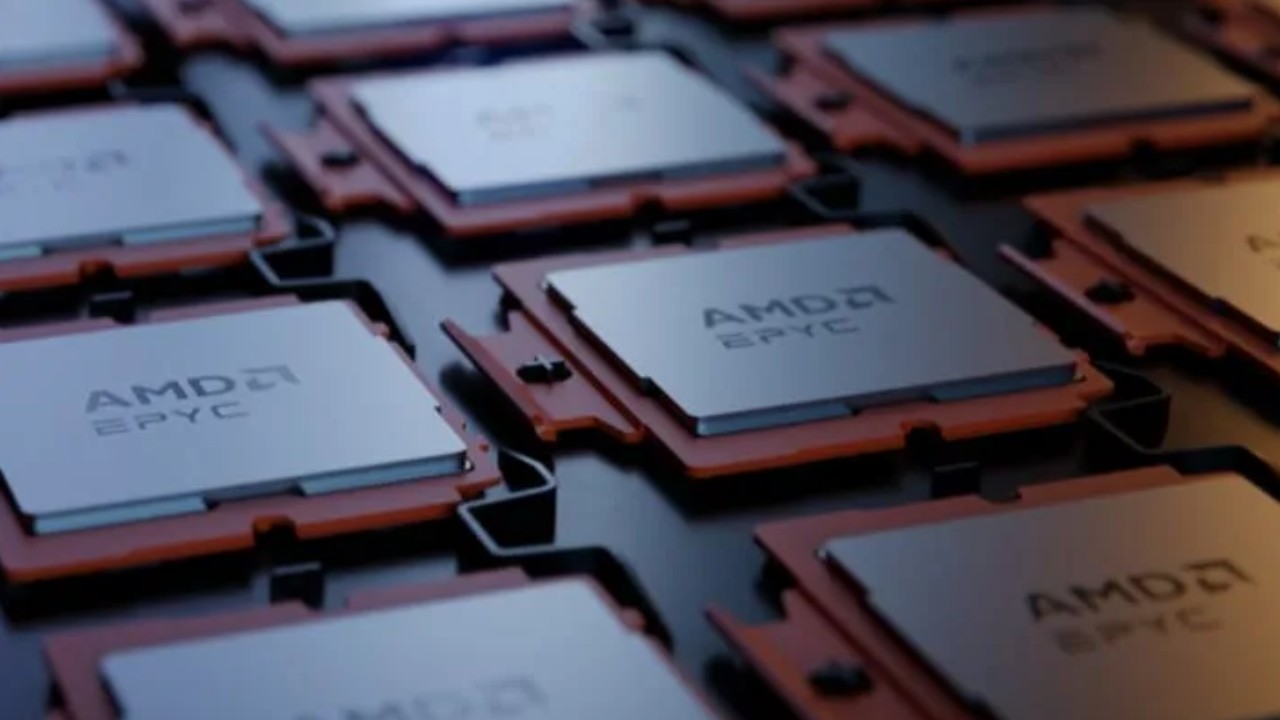
This creates an unusually wide competitive runway for AMD. With Venice entering production on leading-edge 2nm silicon while Intel's direct counter is delayed, AMD has a clear opportunity to consolidate its momentum in the server market through 2026 and beyond.
That momentum is already visible in the numbers. AMD captured a record 46% share of server CPU revenue in Q1 2026, a figure that would have been unthinkable during the early EPYC generations. If Venice delivers even close to its projected efficiency and density gains, AMD could push beyond parity into outright leadership in key hyperscale segments.
Broader Platform Strategy: "Verano" and Efficiency Economics
AMD isn't stopping at raw performance scaling. In addition to Venice, the company has also announced a second generation of the 6th Gen EPYC, codenamed Verano, which is optimized for performance-per-dollar-per-watt.
Though details are sparse, it is evident that Verano is being targeted at hyperscalers and enterprise customers who seek to maximize operational efficiency over periods of time rather than peak throughput. This dual-track strategy—extreme compute density with Venice and efficiency-optimized scaling with Verano—signals a mature server roadmap designed to dominate multiple tiers of the data center stack simultaneously.
Why Server Wins Decide the Entire PC Industry
AMD's push into 2nm HPC leadership is not an isolated server milestone—it is a cascading event that will influence every layer of the computing ecosystem.
Server dominance directly feeds AMD's ability to fund and refine future Ryzen consumer architectures. It strengthens its leverage with TSMC for advanced-node allocation and reinforces its position in AI compute infrastructure, where the CPU and GPU ecosystems increasingly overlap.
More importantly, AMD's 256-core Zen 6, 70% performance uplift, and 1.6 TB/s memory bandwidth roadmap signals a long-term structural advantage at a time when Intel's server cadence is under pressure from delays and architectural transitions.
If Venice delivers in real-world deployments as expected, AMD will not just be competing with Intel in the server space—it will be defining the baseline for modern high-performance computing heading into the late 2020s.
Editor, NoobFeed
Gaming Hardware Updates
No Data.