
AMD FSR Redstone Analysis: ML Upgrades, GPU Limits, and Real-World Testing
FSR Redstone launches with ML upgrades but suffers from significant frame pacing issues that limit practical gameplay benefits.
Hardware by Shinji Okazaki on Dec 11, 2025
It's a little disappointing that FSR Redstone is coming out today. AMD says this is the start of a new era of gaming innovation, yet the frame generation feature doesn't work right, and all the new capabilities are only available on RDNA 4 GPUs.
The significant point here is the frame generation part. People who were hoping for a big change that would bring AMD's technology up to par with Nvidia's may not be happy with what they hear.
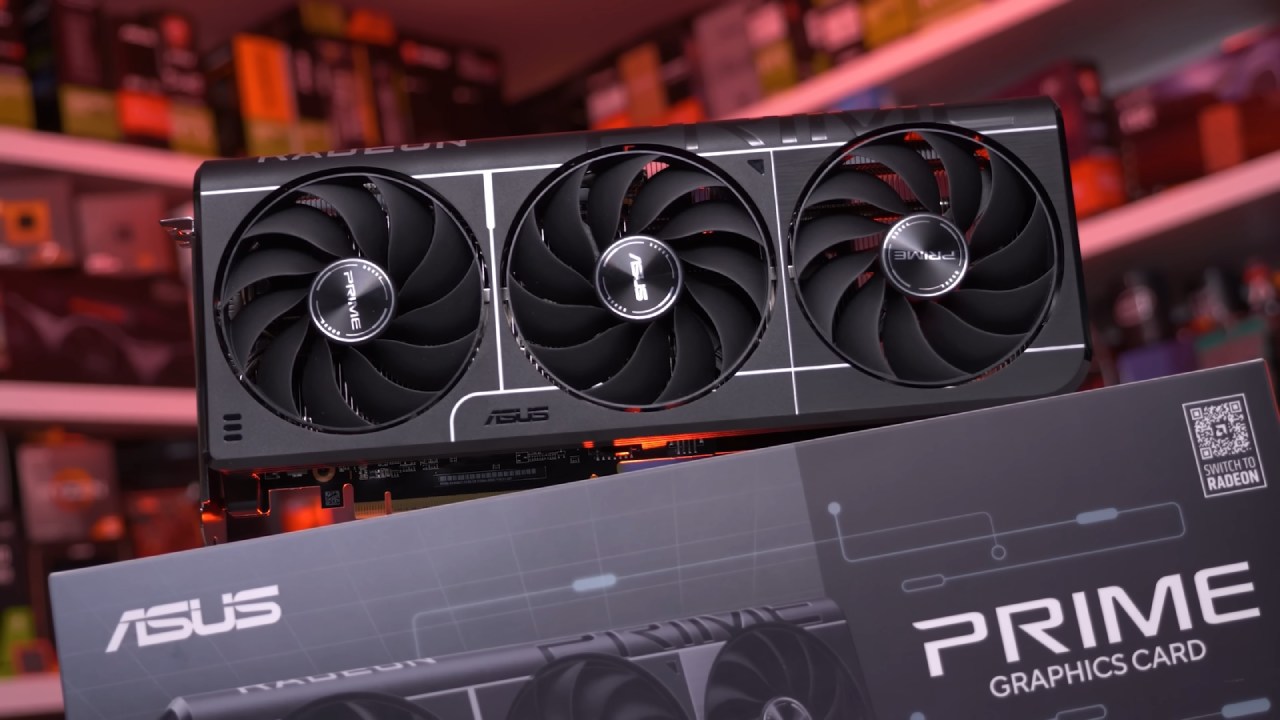
A breakdown of the Redstone feature
FSR Redstone is a set of AMD features and technologies released under the FSR name. There are no new features in FSR 4 upscaling, which was released earlier this year. It is now called FSR upscaling.
The new features are FSR frame generation, which uses AI and machine learning to improve visuals; FSR ray regeneration, a neural network denoiser for ray tracing; and FSR radiance caching, which uses a neural network to adjust lighting for faster ray tracing.
RX 9000 series and RDNA4 architecture are the only ones that include all the key Redstone technologies. Older GPUs don't support AI-powered FSR upscaling or frame creation. For older architectures, there is a backup method that still uses the same analytical FSR3 technology. Older GPUs don't support FSR radiance caching or ray regeneration.
It's important to note that FSR4 INT8 support is missing. There is an INT8 version that works well on RDNA3 and RDNA2. It can be used as a backup when FP8 instructions are unavailable. But AMD isn't offering it as part of Redstone just now.
Availability and Machine Learning Technologies
Ray regeneration has already started and is accessible in Call of Duty Black Ops 7's multiplayer mode. There will be no more upgrades at release. FSR radiance caching isn't available now, but it is planned for 2026. The most widely used version of FSR frame generation is the new ML-based one, accessible via a driver toggle that updates FSR to 3.1.4. This strategy will let you play about 30 supported games upon launch.
Problems with Frame Pacing
FSR Redstone frame generation has many issues with frame pacing. This is most obvious when we compare real-world output recorded with a slow-motion camera. Frames are always in sync without having to create frames. When Redstone frame creation is enabled, the output becomes choppy, with frames arriving at different times, some short and others long.
DLSS frame creation, on the other hand, produces smooth, evenly spaced frames. Many games, such as God of War Ragnarok, Hogwarts Legacy, GTA5 Enhanced Edition, F125, and Cyberpunk 2077, have frame rate issues. Some games, such as Mafia: The Old Country and Blackmyth Wukong, do better, but they are the only ones.
We tested on a second system with an RX 9060 XT and a different display, and encountered the same problems, ruling out hardware-specific concerns.
The main cause of pacing problems
It looks like the problem is with how delays are handled between rendered and produced frames. For instance, if a system renders at 100 fps and outputs at 200 fps after frame generation, it should spread frames 5 milliseconds apart. If the delay is incorrect or missing, frames will appear quickly, then there will be longer waits before the next frame is produced, which makes the video choppy.
Adaptive sync exacerbates this problem by displaying frames as soon as they are ready. Displays with a high refresh rate make the pacing mismatch easier to see. No matter the VSYNC parameters, the problem persists.
Analysis of Image Quality
Even though the timing is off, the gains in image quality in Redstone are clear. Redstone cuts down on flicker in shadows a lot more than FSR 3.1 in Mafia: The Old Country, and it gets close to DLSS quality. With FSR Redstone, tree rendering looks more consistent, but grass appears blurrier and remains the same from frame to frame.
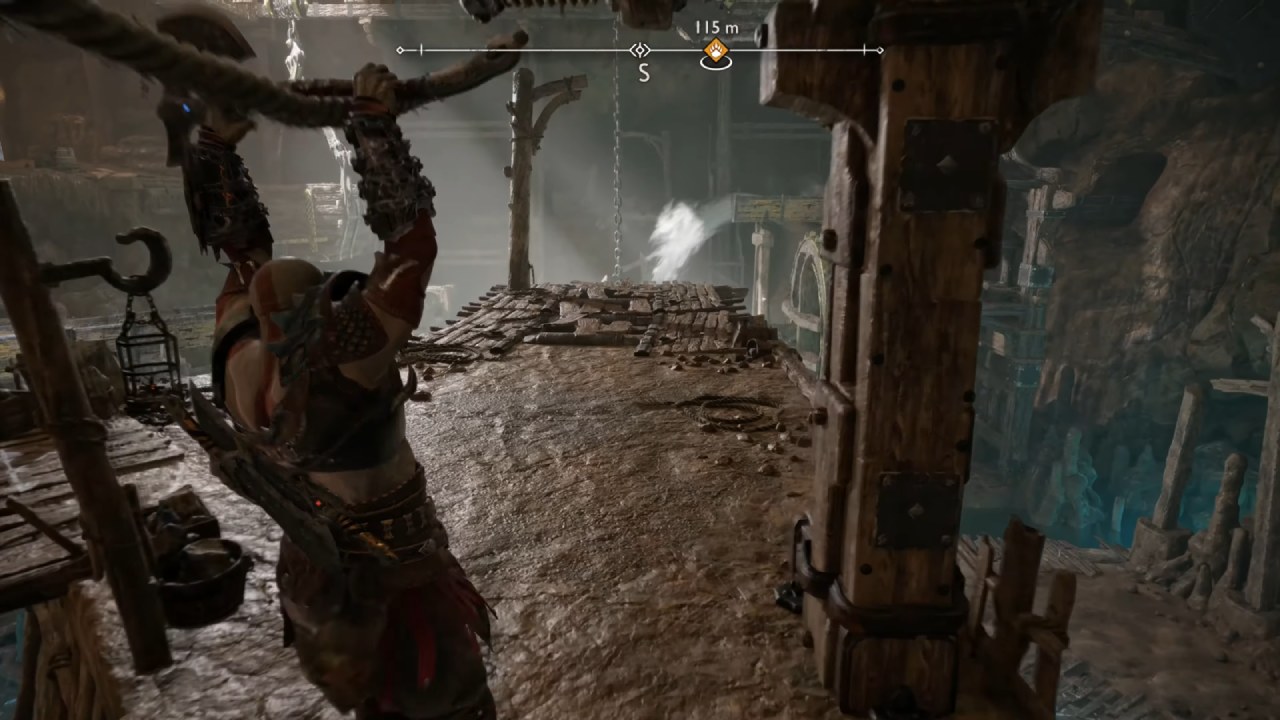
Redstone and DLSS have different strengths and limitations in God of War Ragnarok and F125. DLSS usually keeps ground textures better, whereas Redstone handles some little details more consistently. In Hogwarts Legacy, particle and motion artifacts appear in different frames across technologies. FSR 3.1 has the greatest problems.
Redstone doesn't work well in Cyberpunk 2077, though it does in other games.
Characteristics of Performance
The overhead for FSR Redstone frame creation is about the same as for FSR 3.1. It is a little faster in some games. It also has a little less overhead than DLSS frame creation on other systems. Using Redstone can boost performance by 69% in Mafia: The Old Country and 72% in God of War Ragnarok, for example.
Final Thoughts
FSR Redstone frame generation improves image quality, but it has issues with frame pacing. This makes frame generation less useful, which is supposed to make things smoother. There are still frame-pacing issues from the initial FSR 3 release, affecting many different PCs and monitors.
DLSS frame generation works well with the same games and makes the experience more dependable. Nvidia's capabilities continue to grow with features like multi-frame generation, whereas AMD still doesn't have anything like it. If AMD can fix frame-pacing problems across all its games, Redstone frame generation could be a good option.
A GeForce GPU is the better choice if you want to prioritize frame generation. Redstone has made some improvements, but it doesn't work as well because pacing issues remain. Radiance caching and other features may improve the ecosystem in the future. Still, when Redstone launches, it adds only a few features, mostly for RDNA 4 users who want to learn more about machine learning.
Also, check our other AMD articles below:
- AMD Ryzen 9 9950X3D Review: Setting The Standard For 2025 Gaming CPU
- AMD Ryzen 7 9800X3D Review: 3D V-Cache Goes God Mode with Stunning Gaming Performance
- AMD RX 9070 Performance Review: Thermals, Clocks, and Real-World FPS
- AMD Ryzen 5 7600 Review: Best Budget Gaming CPU of 2025?
- AMD Radeon RX 7800 XT Review: RDNA 3 Power For Midrange Gaming
- Sapphire NITRO+ AMD Radeon RX 9070 XT Review: The Ultimate 4K Gaming GPU
- AMD Ryzen 7 7800X3D: Delivers Gaming Performance Far Beyond Expectations
- AMD Ryzen 9 7900X Review: Powering the AM5 Era with DDR5 & PCIe 5.0
- Intel Core i9‑14900K vs. AMD Ryzen 7 7800X3D: Power Profiles & Gaming Benchmarks
Editor, NoobFeed
Gaming Hardware Updates
No Data.