
AMD RDNA 5 GPUs: Next-Gen Power That Could Rival Nvidia’s RTX 5090
Radiance cores mark a significant leap in AMD’s ray tracing technology, closing the gap with Nvidia’s advancements.
Hardware by Tanvir Kabbo on Oct 14, 2025
AMD's next-generation GPUs are going to be some of the most intriguing new hardware to come out in a long time. The next RDNA 5 range appears like it will be able to compete with Nvidia's dominance in the GPU field thanks to a number of architectural enhancements, big advances in efficiency, and a renewed focus on ray tracing.
Let's talk about everything we know so far about AMD's RDNA 5 series, namely its new design, specs, and performance expectations.
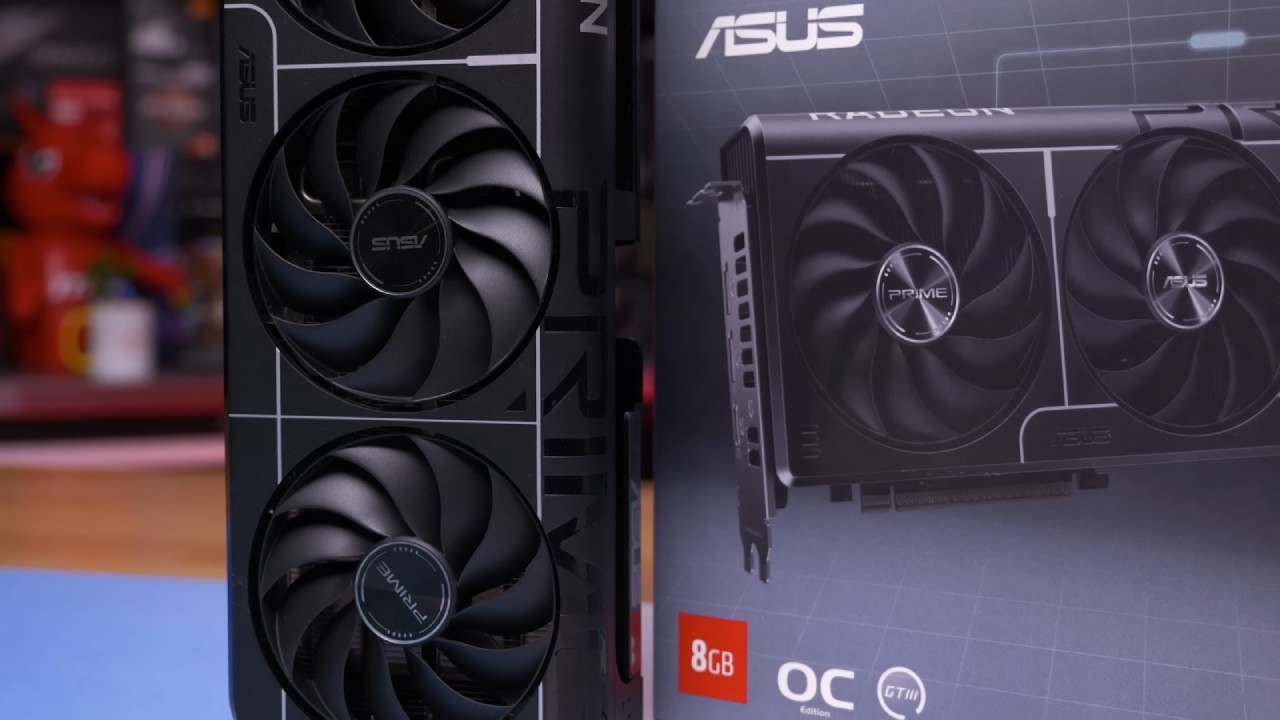
New Neural Array Architecture
The addition of a new neural array is one of the most exciting things about AMD's next GPU design. This architecture is meant to help computing units talk to each other more quickly and effectively.
Essentially, it's a major redesign in how shader arrays interact internally, leading to better overall performance.
The key focus here appears to be boosting ray tracing and AI-powered upscaling capabilities, which have traditionally been AMD's weak spots compared to Nvidia. The new neural array could be a big step toward making these capabilities stronger and more useful while yet keeping good rasterization performance for regular gaming tasks.
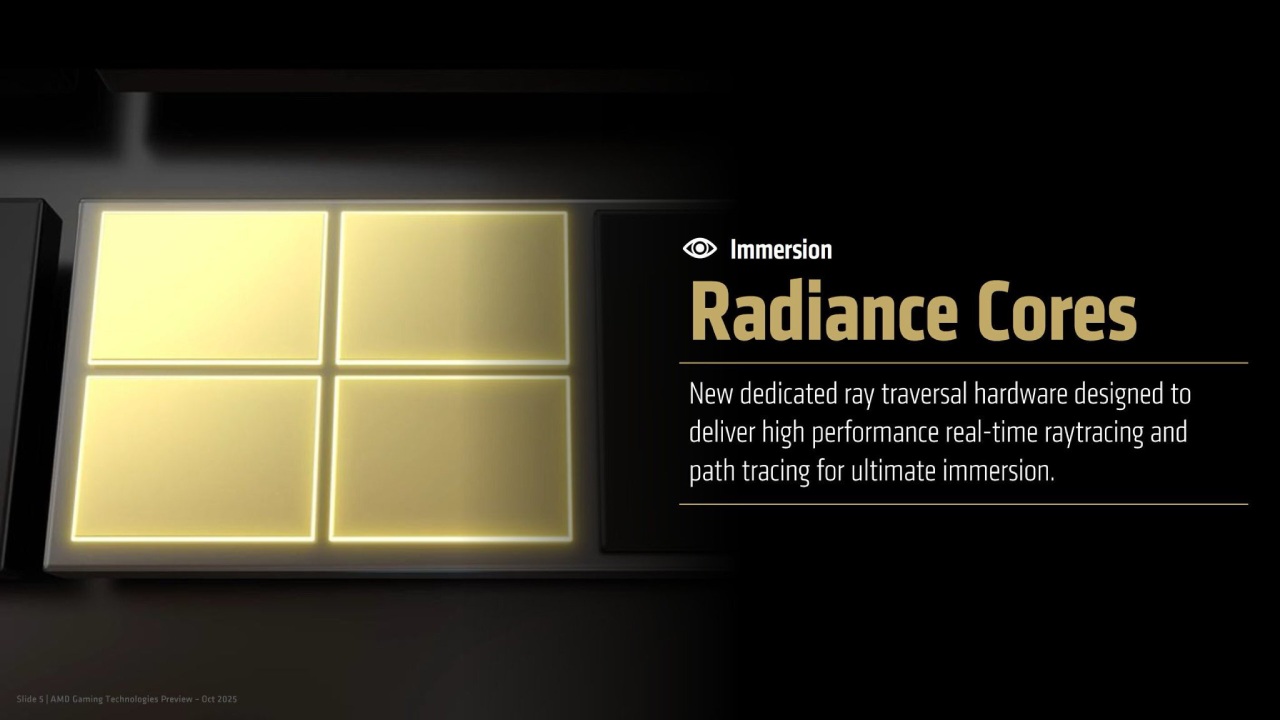
Radiance Cores: A Ray Tracing Revolution
Radiance cores are another big upgrade. They are a new design of AMD's current ray tracing cores. This change is huge, as AMD's ray tracing performance has historically lagged behind Nvidia's RTX series.
AMD seems determined to change that narrative. Based on early reports, these radiance cores are expected to deliver a significant leap in ray tracing performance—potentially rivaling Nvidia's latest-generation ray tracing cores.
While we're skeptical they'll actually surpass Nvidia, we do expect at least a 30% uplift in ray tracing performance over RDNA 4.
Ray tracing is quickly becoming a core part of modern game rendering, with many new titles incorporating it either partially or fully. A substantial improvement here means AMD GPUs could soon handle the most visually demanding games with ease.
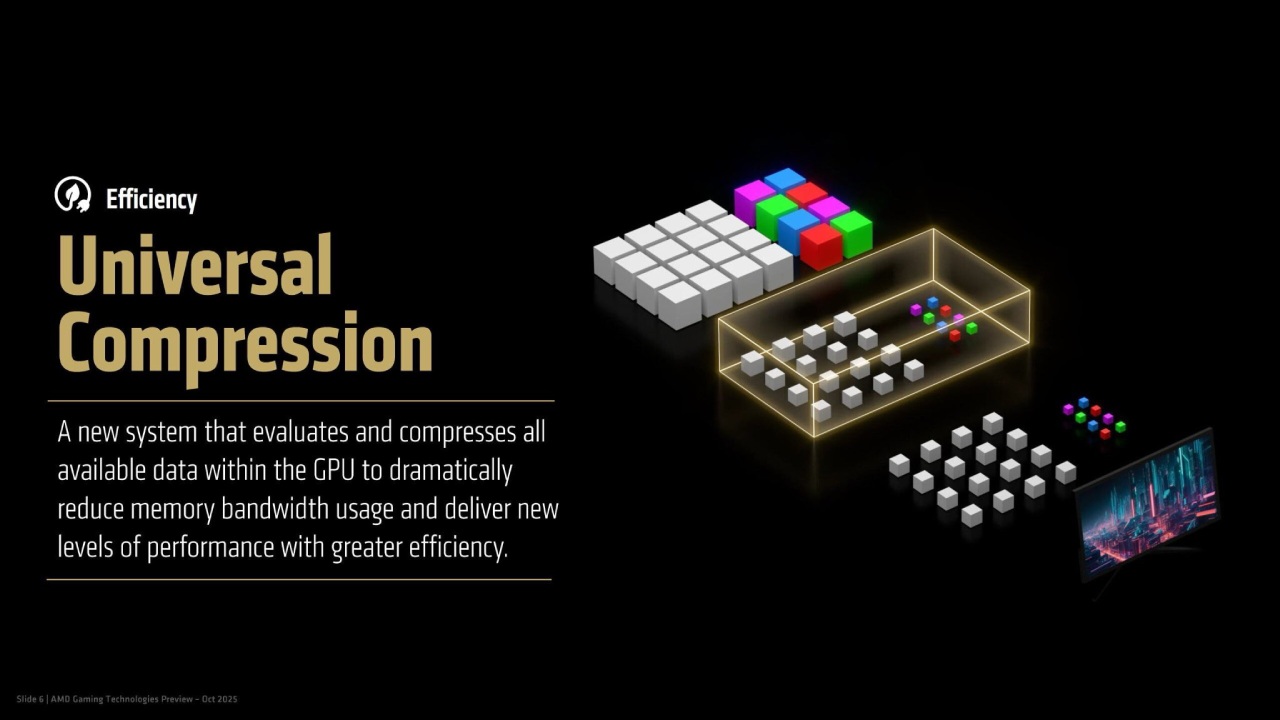
Universal Compression for Efficiency
The third major innovation coming with RDNA 5 is universal compression. In simple terms, AMD is looking to compress everything that travels across the GPU and out to memory. This move will help conserve bandwidth and improve overall efficiency.
Combined with improved cache design and faster GDDR7 memory, this compression system will help ensure that the GPU maintains high throughput without requiring an unnecessarily large memory bus. This means better performance and potentially lower power draw.
Flagship RDNA 5 GPU: The RX 1080 XT
When we look at the potential flagship model—the RX 1080 XT—the specs start to get very exciting. Rumors suggest this GPU will feature 96 compute units (CUs), a 50% increase over the RX 9070 XT's 64 CUs.
Alongside this increase, we expect a notable IPC uplift and higher clock speeds. The RX 9070 XT already runs near 3GHz, but the RX 1080 XT could push into the mid-3GHz range. This combination of more cores, higher clock speeds, and architectural improvements could deliver close to 1.9x the performance of the RX 9070 XT.
Memory and Bandwidth Improvements
One of the more interesting aspects of the RDNA 5 flagship is its potential use of GDDR7 memory. While early rumors suggested a 512-bit memory bus, that now seems unlikely. Given the compression and efficiency improvements, a 384-bit bus paired with 24GB of VRAM running at 28Gbits/s is far more realistic.
This setup would yield a total memory bandwidth of 1344 GB/s, more than double the 640 GB/s of the RX 9070 XT. This should provide you great performance for 4K gaming thanks to more cache and better data compression. The RX 1080 XT is a powerhouse for high-resolution applications.
Expected Performance vs. Nvidia
If the numbers hold true, the RX 1080 XT could rival Nvidia's RTX 5090 in rasterization performance. Based on internal calculations combining core count, IPC uplift, and clock speed improvements, performance could reach roughly 1.8x that of the RX 9070 XT—putting it right on par with the RTX 5090 in traditional rendering tasks.
However, where things get especially interesting is ray tracing. When factoring in the expected 1.3x per CU uplift in ray tracing performance, the RX 1080 XT could be 2.34x faster than the RX 9070 XT in ray tracing-heavy titles.
That would allow it to match or even exceed the RTX 5090's ray tracing performance—potentially at half the price.
Manufacturing Process and Power Consumption
The RDNA 5 series will likely use a mix of 3nm and 4nm process nodes from TSMC, rather than a straight 4nm process like the RX 9070 XT. This hybrid approach could improve performance per watt and thermal efficiency.
The flagship RX 1080 XT is expected to have a TDP of around 450W, balancing its raw power with reasonable power draw for a high-end GPU.
Release Date Expectations
The RDNA 5 GPUs are likely to be out in early 2027, perhaps in the first quarter of that year, based on how AMD has released products in the past. A release in late 2026 (Q4) isn't out of the question, but early 2027 seems like the more likely time frame.
If AMD can keep its claims about performance, the RX 1080 XT may easily become one of the best high-end GPUs on the market, giving you RTX 5090-level performance for a lot less money.
Final Thoughts
We're incredibly excited about what RDNA 5 represents. AMD seems to be refining every aspect of its GPU architecture—from efficiency and compression to ray tracing and raw compute power. If the RX 1080 XT really does give you RTX 5090 performance for about half the price, it might change the high-end GPU industry.
What do you think? Is it possible that AMD's flagship GPU will finally be better than Nvidia's in terms of performance and value? Or will Nvidia's next generation lineup hit back even harder? We'll have to wait and see, but one thing is certain: the GPU battles are going to get extremely fascinating.
Check Our Other AMD articles:
- AMD Ryzen 9 9950X3D Review: Setting The Standard For 2025 Gaming CPU
- AMD Ryzen 7 9800X3D Review: 3D V-Cache Goes God Mode with Stunning Gaming Performance
- AMD RX 9070 Performance Review: Thermals, Clocks, and Real-World FPS
- AMD Ryzen 5 7600 Review: Best Budget Gaming CPU of 2025?
- AMD Radeon RX 7800 XT Review: RDNA 3 Power For Midrange Gaming
- Sapphire NITRO+ AMD Radeon RX 9070 XT Review: The Ultimate 4K Gaming GPU
- AMD Ryzen 7 7800X3D: Delivers Gaming Performance Far Beyond Expectations
- AMD Ryzen 9 7900X Review: Powering the AM5 Era with DDR5 & PCIe 5.0
- ASRock Radeon RX 7800 XT Challenger OC Review: Best Price-to-Performance GPU of 2025
- Intel Core i9‑14900K vs. AMD Ryzen 7 7800X3D: Power Profiles & Gaming Benchmarks
Senior Editor, NoobFeed
Gaming Hardware Updates
No Data.