
AMD Ryzen AI Max Plus 395 Performance in Handhelds
Ryzen AI Max Plus 395 demonstrates competitive results across demanding titles, showcasing potential in future handheld devices.
Hardware by Tanvir Kabbo on Sep 01, 2025
It's no secret that handhelds powered by AMD Ryzen AI Max Plus 395 are right around the corner. This chip is absolutely impressive, featuring the most powerful iGPU on the market right now, the Radeon 860S.
GPD is preparing to launch its Win 5 using this chip with an external battery pack to compensate for its power demands. Ryzen AI Max Plus 395 is not designed as a low-wattage gaming chip, but with some wattage adjustments, it is possible to get solid performance.

Testing the Max Plus 395 at Lower Wattage
Most manufacturers run this chip at 45W to 65W, while GPD showcased it running close to 35W. It doesn't have a static 25W TDP but instead allows for some boosting.
Another device, the 1X Player SuperX, is more akin to a tablet than a handheld, similar to the Asus Flow Z13, and supports up to a 120W TDP.
To balance performance and battery life in handheld devices, a 25W TDP seems like a reasonable target, especially considering the 16 cores and 32 threads this CPU offers.
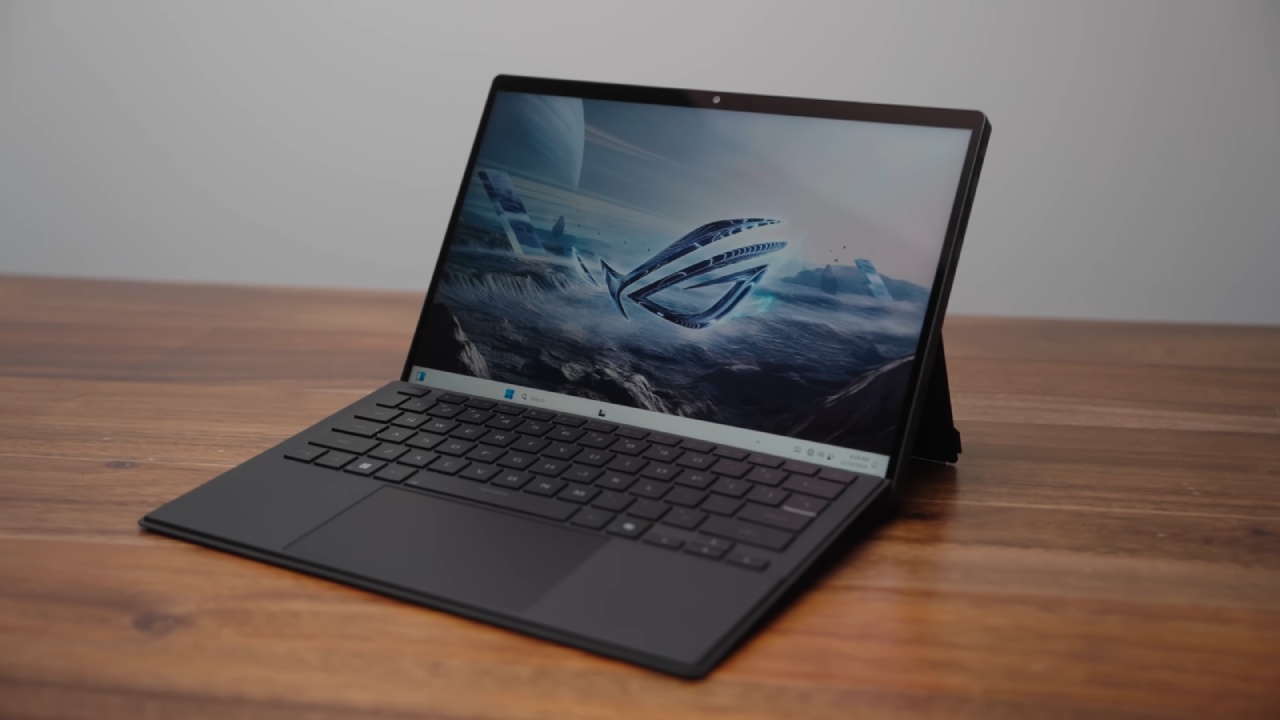
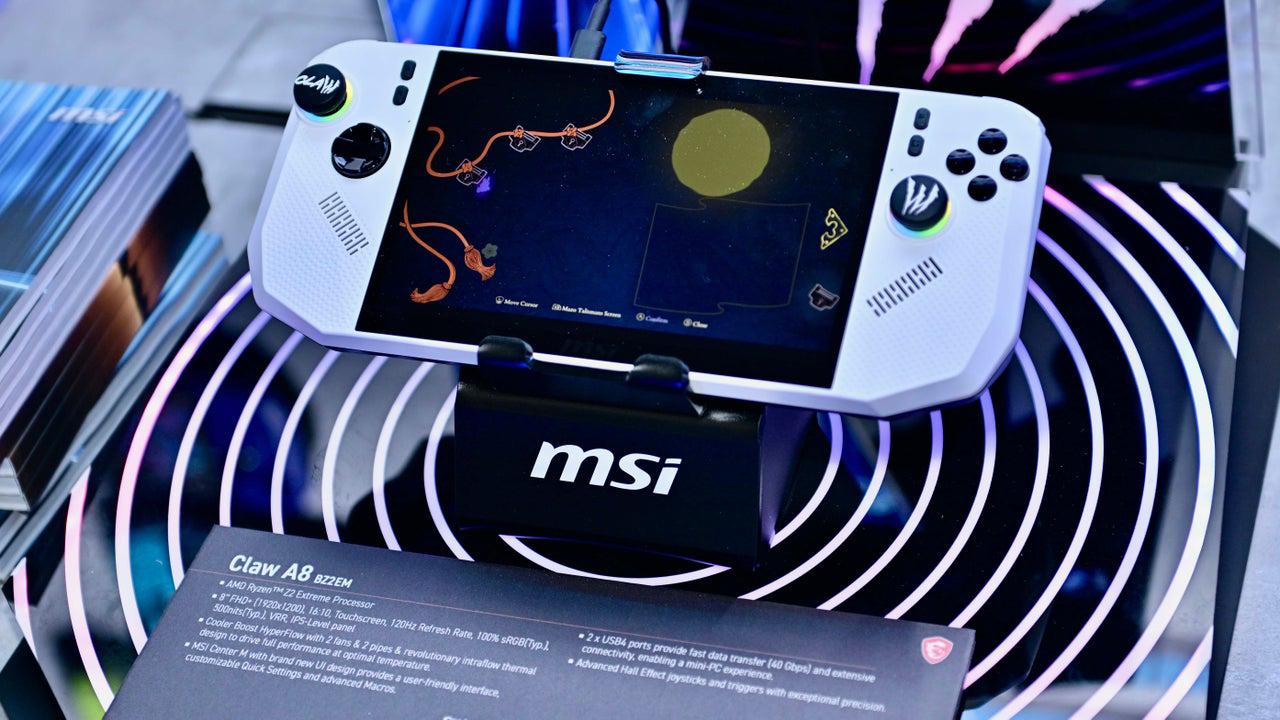
We wanted to see how well Max Plus 395 performs at that wattage compared to Ryzen Z1 Extreme and Ryzen Z2 Extreme, tested on the ROG Ally and MSI Claw A8, respectively. For Max Plus 395, we used ROG Flow Z13.
Benchmark Results
Running Geekbench 6 at 25W TDP, Max Plus 395 achieved a single-core score of 2783 and a multi-core score of 13,318. This was ahead of both Z1 Extreme and Z2 Extreme, but not by a massive margin at such low wattage.
At 80W TDP, however, Max Plus 395 scaled much higher with a single-core score of 2975 and a multi-core score of 19,452.
For GPU performance using Geekbench's OpenCL benchmark at 25W, Z1 Extreme with 12 RDNA3 compute units scored 27,887. Z2 Extreme, with 16 compute units based on RDNA3.5, scored 33,488. Max Plus 395, equipped with 40 compute units of RDNA3.5, scored a massive 49,527.
In 3DMark Steel Nomad, Z1 Extreme scored 485 with 4.86 fps, Z2 Extreme reached 560 with 5.61 fps, while Max Plus scored 395 994 with 9.94 fps.
On 3DMark Time Spy, Z1 scored 3,271, Z2 scored 3,495, and Max Plus managed 4,679. At 80W TDP, Max Plus achieved 11,251, rivaling an RTX 4060 laptop GPU.
Gaming Comparisons
Horizon Zero Dawn Remastered
At 1080p low settings and 25W TDP, Z1 Extreme managed 30 fps, Z2 Extreme 31 fps, and Max Plus 395 delivered 38 fps. Increasing the wattage to 30W unlocked a bit more, but all three struggled at this setting.
Shadow of the Tomb Raider
At 1080p low settings, the Z1 Extreme reached 59 fps, the Z2 Extreme 64 fps, and the Max Plus 395 significantly outpaced them at 82 fps.
Black Myth Wukong
Running at 1080p low with 60% resolution scale and FSR enabled, Z1 achieved 44 fps, Z2 49 fps, and Max Plus 395 delivered 70 fps.
Dedicated Gameplay Testing
Performance in Cyberpunk 2077 at 1080p medium with FSR balanced at 25W TDP was approximately 60 fps, but it dropped when there were numerous particle effects. Smoother gameplay was preserved by lowering the resolution to 900p.
Performance increased to over 90 fps while conserving battery life when FSR frame creation was enabled at 20 watts.
In God of War Ragnarok at 1080p medium with FSR balanced, 25W caused occasional hiccups, but at 26W, performance stabilized at 75fps.
Forza Horizon 5 proved to be much easier to run, maintaining great performance even at a 15W TDP. At 20W, it averaged well over 100 fps, making it ideal for battery conservation on an 80Wh battery.
In Marvel Rivals, 1080p medium with FSR balanced kept performance mostly above 60 fps at 25W.
Finally, Doom: The Dark Ages pushed the chip to its limits. At 900p low settings and 25W TDP, the CPU and GPU were clearly competing for wattage, leaving the iGPU stuck at just 800MHz instead of its 2900MHz potential. Performance fell short of a consistent 60 fps.
Battery Life Considerations
At 25W TDP, with a device running on an 80Wh battery, you can expect roughly 2.5 hours of runtime. However, this can be shorter depending on system design and background processes.
While Max Plus 395 shines at higher wattages, running at 45W or more will drain a battery extremely quickly, making it impractical for handheld use.
Final Thoughts
There's no question that AMD Ryzen AI Max Plus 395 is a great handheld gaming machine. It works well at 25w, however, lowering the resolution to 900p can make the game run much more smoothly while keeping battery life in check. When the wattage is higher, it competes with dedicated GPUs like the RTX 4060 laptop, but the battery life is a big problem.
It would be exciting to see AMD launch a version of this chip with the same Radeon 860S iGPU but fewer cores, such as 8 cores and 16 threads. That design would free up more power for the CPU and GPU, delivering higher clocks and more consistent performance even at lower wattages like 25W.
For now, Max Plus 395 proves handhelds can deliver powerful gaming performance with careful tuning of wattage and settings.
Check our Other Handheld Articles :
- ASUS ROG Ally X Handheld Review: Double the Battery, Double the Comfort
- Nintendo Switch 2 Vs. Original Switch 1: A Full Comparison
- How To Connect A Camera And Join Voice Chat With Nintendo Switch 2
- Nintendo Switch 2 Review: Handheld Performance, Features & Value Breakdown
- ROG Xbox Ally X Vs. ROG Ally X: Display, Battery & Controls
- ASUS ROG Ally X vs. Steam Deck OLED: Display, Battery & Gaming Benchmarks
- MSI Claw 8 AI+ Review: Display, Controls & Gaming
- Nintendo Switch 2 vs. Steam Deck OLED: Gaming, Performance, Battery, Display and Value
- PlayStation Portal Review: Remote Play, Cloud Streaming & Travel Gaming
- PlayStation Portal vs. Lenovo Legion Go: Best Portable Gameplay
- Cyberpunk 2077 Patch 2.3 FPS Test on MSI Claw 8 AI+
Senior Editor, NoobFeed
Gaming Hardware Updates
No Data.