
AMD Zen 5 Review: Why the Ryzen 9600X and 9700X Disappoint Gamers
Real-world performance shows Ryzen 9600X and 9700X deliver marginal improvements over Zen 4 with similar power consumption.
Hardware by Masaru Hoshino on Aug 28, 2025
AMD's Zen 5 architecture arrived with promises of groundbreaking performance and efficiency improvements, raising expectations across the gaming community. Ryzen 5 9600X and Ryzen 7 9700X were seen as major improvements, with AMD making audacious promises of double-digit increases in productivity and gaming.
However, the reality was much less impressive after real-world benchmarks emerged. Many gamers are questioning AMD's intentions because Zen 5 feels more like a modest refresh than a generational leap.
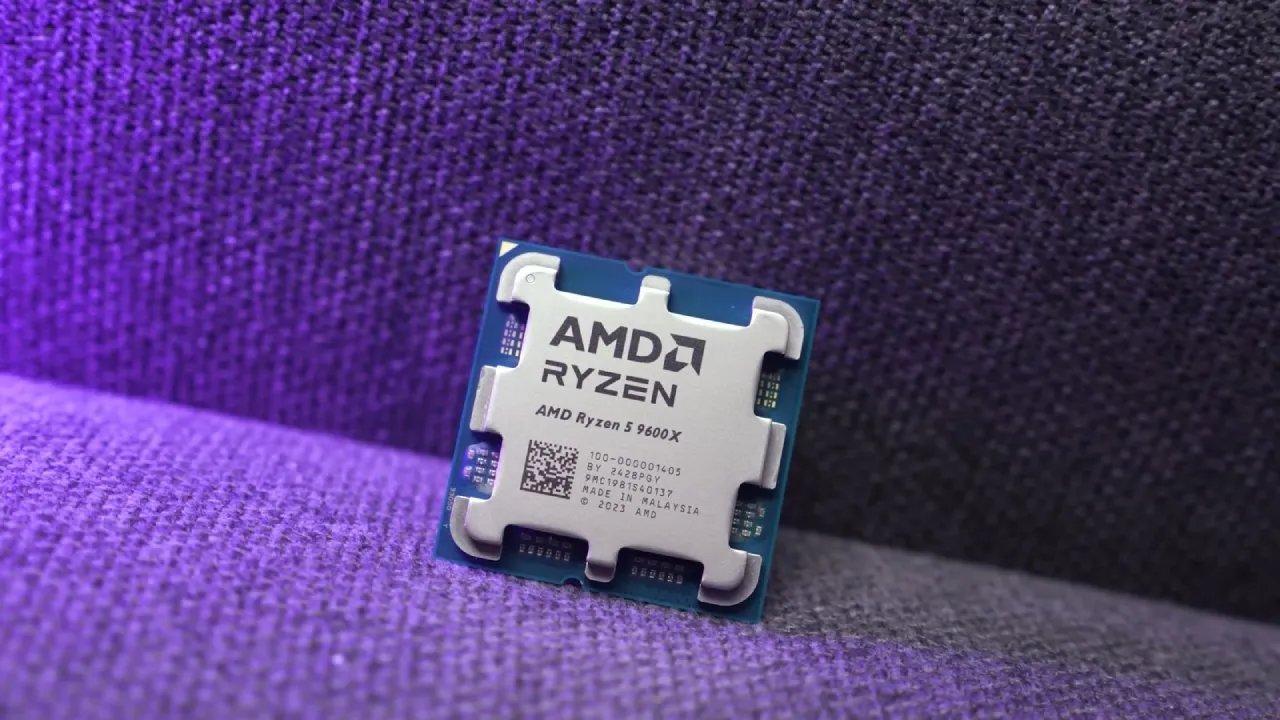
Marketing Hype vs. Performance in the Real World
With advertising presentations claiming up to 133% quicker gameplay in some titles than Intel's i7-14700K, AMD positioned the Zen 5 as the next big stride in desktop CPU performance. Equal emphasis was placed on productivity benchmarks; AMD claimed advantages of up to 42% in typical applications.
However, independent testing shows that these claims do not reflect the average user experience. In gaming, Zen 5 offers just 3-5% better performance over Zen 4, and in certain cases, it even falls behind its predecessor. The disconnect between marketing and reality has become the central point of criticism.
Architecture Built for Servers, Not Gamers
The design philosophy of Zen 5 is at the heart of the issue. AMD's EPYC server CPUs, which are targeted for applications like AI, rendering, and high-density cloud computing, were the main focus of the architecture's development.
This server-first approach brings clear benefits for enterprise and professional productivity tasks, but it does not translate into meaningful improvements for gamers. For gamers who anticipated a significant increase in frame rates, the Zen 5 is a suboptimal upgrade option due to its limited optimization for gaming workloads.
Gaming Performance
In a variety of tested titles, Zen 5 struggles to differentiate itself from Zen 4. It just slightly improves gaming performance by 3% on average. Popular and demanding titles, such as Starfield and Horizon Forbidden West, even show regression, with the older Zen 4 CPUs outperforming the Zen 5 in several tests.
Though this turned out to be an anomaly rather than a trend, Assetto Corsa Competizione was the lone noteworthy exception, with Zen 5 offering an astounding 18% boost. This inconsistency adds to the players' disappointment because the update is not worth the money.
.jpg)
Efficiency Promises Fall Flat
Efficiency was another major selling point for the Zen 5, particularly with Ryzen 7 9700X, marketed as a 65-watt champion of performance per watt. However, practical testing reveals that it does not meet this promise. When compared directly to Zen 4's 65-watt chips, such as Ryzen 7 7700 and Ryzen 5 7600, Zen 5 often delivers worse frames per watt.
The issue is further highlighted by the fact that enabling Precision Boost Overdrive yields only a minuscule 1% improvement in gaming performance, while also increasing power consumption by up to 80% in certain circumstances. This disparity highlights the inefficiency of the Zen 5 for the gaming industry.
Productivity: The Silver Lining
Where Zen 5 does manage to deliver is in productivity. Applications like Blender, Photoshop, Premiere, and Cinebench see seven to 15% better performance compared to Zen 4. Certain rendering workloads, such as Corona, exhibit even larger gains, albeit accompanied by significant increases in power consumption.
For content creators and professionals working with CPU-intensive applications, Zen 5 has meaningful value. Unfortunately, this strength does little to help the gaming market, where the improvements are minimal at best.
Pricing and Value Concerns
Compounding the performance disappointment is the issue of pricing. When Zen 4 launched, the Ryzen 7 7700 was priced at $330 and included a bundled cooler. By contrast, Ryzen 7 9700X enters the market at $360 without a cooler in the box.
Considering that the two chips offer virtually identical gaming performance, the price hike feels unjustified. Consumers are being asked to pay more for less, which further erodes the appeal of Zen 5 to gamers.

Final Thoughts
Zen 5 is not a failure as a piece of silicon—it simply misses the mark for the intended audience. For gamers, Ryzen 9600X and 9700X represent poor value, offering no real improvement in performance or efficiency over Zen 4 while carrying a higher price tag.
For productivity-focused users, Zen 5 provides modest gains, but even here, the advances are incremental rather than revolutionary. AMD's mistake was overselling Zen 5 as a gaming breakthrough, when in truth it is more suited to server and enterprise workloads.
AMD's Zen 5 generation illustrates the risks of mismatched expectations. While the architecture is strong in certain areas, the lack of meaningful progress in gaming undermines its appeal to the broader consumer market.
For now, Zen 4 remains the smarter choice for gamers, while professionals may find limited but useful value in the productivity gains of Zen 5.
With Intel's Arrow Lake processors on the horizon, AMD may soon face a battle to regain the trust of gamers who feel let down by this release.
Check Our Other AMD articles:
- AMD Ryzen 9 9950X3D Review: Setting The Standard For 2025 Gaming CPU
- AMD Ryzen 7 9800X3D Review: 3D V-Cache Goes God Mode with Stunning Gaming Performance
- AMD RX 9070 Performance Review: Thermals, Clocks, and Real-World FPS
- AMD Ryzen 5 7600 Review: Best Budget Gaming CPU of 2025?
- AMD Radeon RX 7800 XT Review: RDNA 3 Power For Midrange Gaming
- Sapphire NITRO+ AMD Radeon RX 9070 XT Review: The Ultimate 4K Gaming GPU
- AMD Ryzen 7 7800X3D: Delivers Gaming Performance Far Beyond Expectations
- AMD Ryzen 9 7900X Review: Powering the AM5 Era with DDR5 & PCIe 5.0
- ASRock Radeon RX 7800 XT Challenger OC Review: Best Price-to-Performance GPU of 2025
- Intel Core i9‑14900K vs. AMD Ryzen 7 7800X3D: Power Profiles & Gaming Benchmarks
Editor, NoobFeed
Gaming Hardware Updates
No Data.