
AMD Zen 6 10950X3D: A 24-Core CPU Powerhouse Unveiled
AMD’s Zen 6 10950X3D delivers 24 cores, massive X3D cache, and enhanced memory architecture for substantial performance improvements.
Hardware by Tanvir Kabbo on Nov 17, 2025
AMD is preparing to release what could be one of the best CPUs ever made, marking a significant step forward for desktop processors. Numerous leaks hint at significant upgrades in architecture, higher frequencies, a larger cache, and a substantial increase in the number of cores.
With manufacturing enhancements and broader platform updates, the upcoming architecture is positioned to deliver monumental gains in both gaming and multi-core workloads.
.jpg)
Rising Expectations Around Zen 6
We begin by examining Zen 6, specifically the largest model in development, the 24-core variant featuring X3D cache. As we review the available information so far, we can piece together what the CPU is shaping up to look like in terms of specs and overall performance targets.
We delve into these details because the leaks have progressed to the point where we can begin forming a realistic picture of what to expect.
Architecture and Node Advancements
We have been seeing information suggesting these processors may be produced on a far more advanced node, with the possibility of an N2 process being used. Suppose you aren't familiar with what that implies. In that case, it essentially allows AMD to pack in more cores, push higher frequencies, and enable higher IPC, resulting in greater power efficiency and throughput for heavy workloads.
The model discussed, the 10950X3D, is expected to feature two updated core clusters. Each cluster appears to be moving from 8 cores to 12 cores, marking a 50% increase. When both clusters are combined, you're not looking at a 12-core processor, but a 24-core, 48-thread CPU.
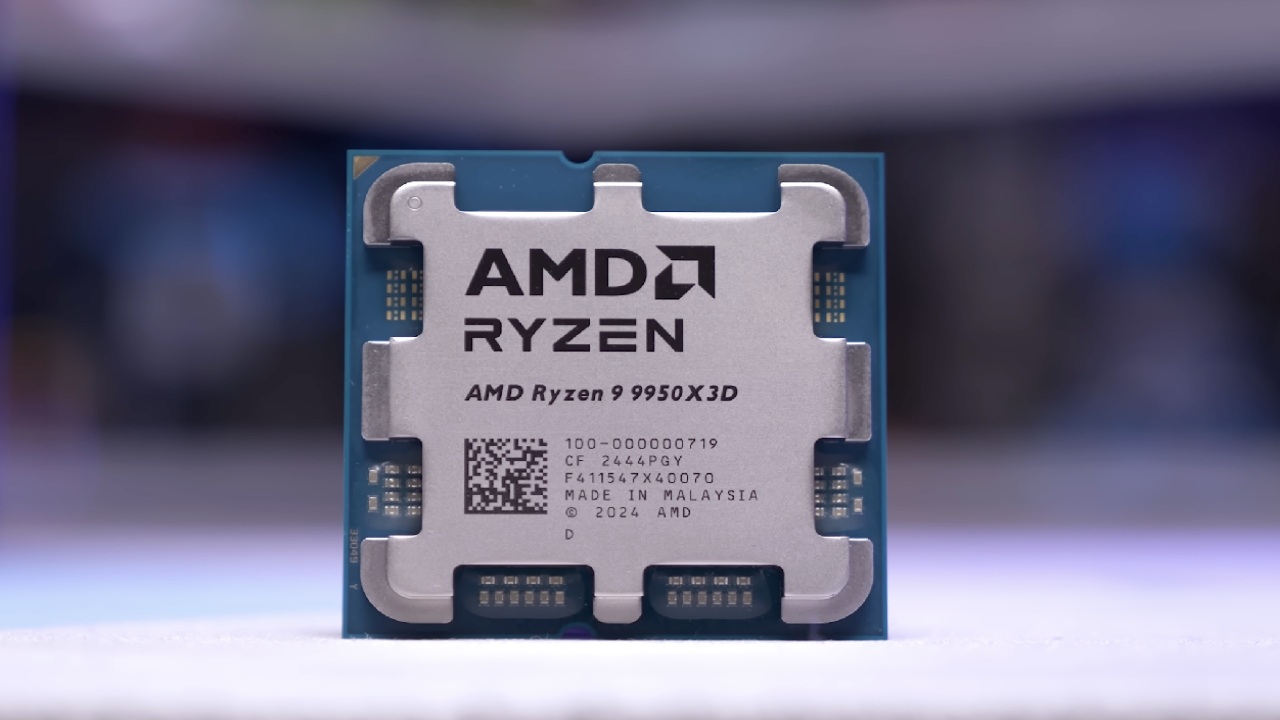
Frequency, IPC, and Cache Configuration
With the newer node, we expect the chip to target close to a 6GHz boost clock on at least one core cluster. Combined with an expected 10% IPC lift, this generation brings meaningful generational gains. We also examine the cache configuration, which may include 96+96MB or possibly a full 192MB of stacked cache.
If AMD finally provides X3D cache on both CCDs, the total may reach a massive 288MB. While AMD historically limited X3D to one CCD to reduce costs, community feedback across multiple generations suggests that they may finally enable both.
If both CCDs include X3D cache, it eliminates scenarios where a game is scheduled on the "wrong" CCD, ensuring consistent peak performance. It could also benefit certain applications, even if most do not scale with that much cache. Either way, a jump from 192MB to 288MB is a significant increase in available cache.
Platform Improvements and Memory Capabilities
We also hear discussions about updated Infinity Fabric performance and advanced memory controllers supporting 8000MT/s DDR5 right out of the box.
This represents a significant increase from the typical 6,000 MT/s limit of today. If memory and fabric latency continue to improve, both gaming and productivity performance could see significant boosts.
Expected Performance Gains
We examine what you can expect from a 24-core, 48-thread CPU operating at 6GHz. Prior coverage of the 10800X3D and 10850X3D already suggested substantial gains thanks to higher IPC, better cache, and clock increases. But this time we're comparing 24 cores to 16 cores on the 9950X3D, and the impact is significantly larger.
If the memory controller and fabric have been improved as suggested, core-to-core latency between CCDs will be reduced. This is especially important for multi-CCD CPUs like this one, as it enables more efficient communication across clusters.
We think that gaming performance could be about 25% better than the 9950X3D. This value takes into account the IPC jump, higher frequencies, more cache, better memory fabric, and faster DDR5 speeds. Conservative outcomes could be around 20%, while optimistic ones could be as high as 30%.
In multi-core workloads, we expect a 74% uplift due to the increased number of cores, higher clock speeds, and improved IPC. This level of performance pushes into near-overkill territory, even for users who handle heavy rendering or content creation in addition to gaming.
Pricing Expectations
We believe AMD will increase pricing for this model. Whether both CCDs receive X3D cache or only one, the jump in core count and performance gives AMD the confidence to raise the cost, especially with limited competition from Intel at the moment.
We expect the price to move from $699 to around $799 at launch. It may drop later, but for early adopters, this is likely where pricing will land.
.jpg)
Predicted Release Window
Based on historical release patterns, we anticipate a launch in Q3 2026. This timeline can shift depending on the progress of development. Still, it appears to be roughly one year away at the moment.
Final Thoughts
We review all the information surrounding Zen 6 and the 10950X3D, as the upcoming architecture is shaping up to be an absolute monster. With the possibility of X3D cache on both CCDs, dramatically increased core counts, higher frequencies, improved IPC, and far better memory performance, everything points toward a landmark release.
The question now is whether the final product achieves the projected 24 cores, 48 threads, and 25% gaming performance uplift or falls short.
Also, check our other AMD articles:
- AMD Ryzen 9 9950X3D Review: Setting The Standard For 2025 Gaming CPU
- AMD Ryzen 7 9800X3D Review: 3D V-Cache Goes God Mode with Stunning Gaming Performance
- AMD RX 9070 Performance Review: Thermals, Clocks, and Real-World FPS
- AMD Ryzen 5 7600 Review: Best Budget Gaming CPU of 2025?
- AMD Radeon RX 7800 XT Review: RDNA 3 Power For Midrange Gaming
- Sapphire NITRO+ AMD Radeon RX 9070 XT Review: The Ultimate 4K Gaming GPU
- AMD Ryzen 7 7800X3D: Delivers Gaming Performance Far Beyond Expectations
- AMD Ryzen 9 7900X Review: Powering the AM5 Era with DDR5 & PCIe 5.0
- ASRock Radeon RX 7800 XT Challenger OC Review: Best Price-to-Performance GPU of 2025
- Intel Core i9‑14900K vs. AMD Ryzen 7 7800X3D: Power Profiles & Gaming Benchmarks
Senior Editor, NoobFeed
Gaming Hardware Updates
No Data.