
ASUS RTX 5090 Matrix Review: Most Exclusive 800W GPU Ever Built
Exceptional cooling and innovative design allow the Asus RTX 5090 Matrix to deliver high performance with minimal noise levels.
Hardware by Tanvir Kabbo on Nov 25, 2025
Asus RTX 5090 Matrix stands as one of the most exclusive and special graphics cards currently available—if it's even possible to buy one. With pricing around €4,000, a production limited to a small number of units, and unique engineering choices like liquid metal on the GPU, a massive air cooler, dual power inputs, and an 800W TDP, it immediately positions itself as a highly specialized piece of hardware.
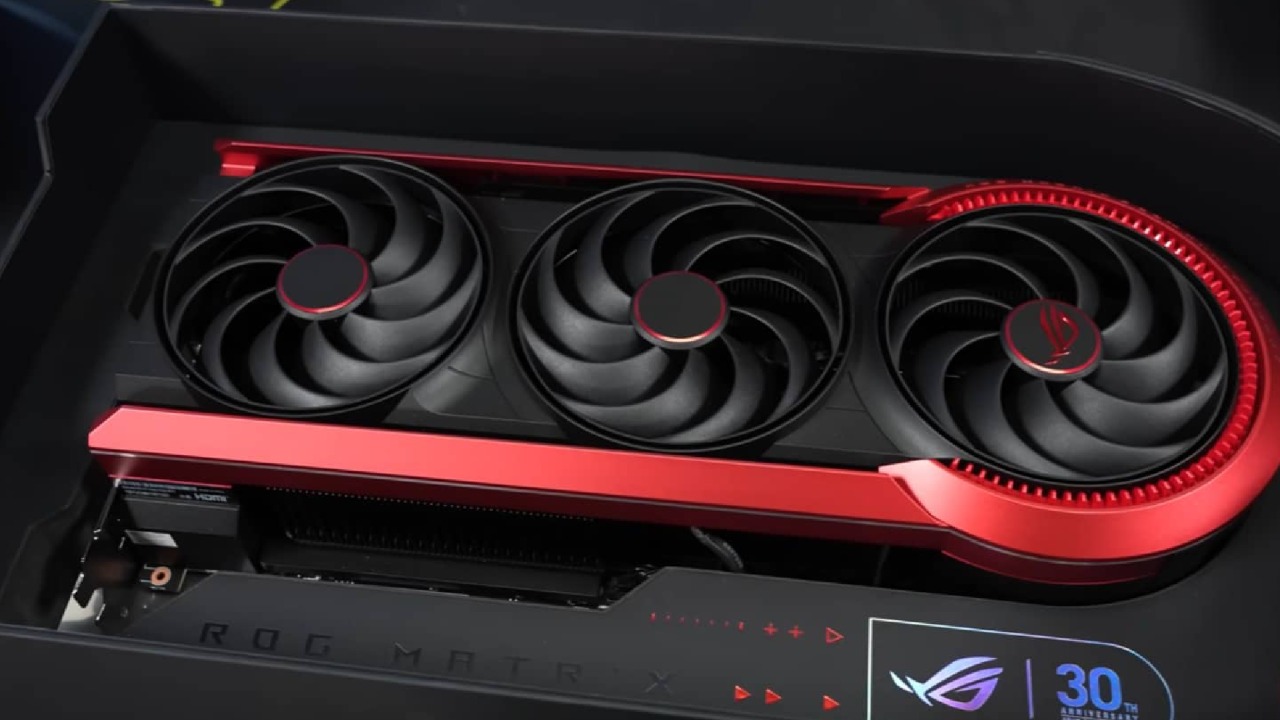
The design is meant to combine the old-school style of the 9800 GT Matrix with the newer style of the 5090 Astral. It does this by bringing out a more polished look that honors 30 years of GPU innovation.
First Impressions
You can see that the design is definitely based on older Matrix models, but it also has a modern twist. Strong magnets on the side allow the box to slide open smoothly, showcasing the card in full view. The black and red styling ensures a bold visual identity, complemented by three front fans and a fourth positioned on the back.
Inside the box, the accessories include a GPU stand, a collectible card game, and an extra power connector, which is crucial for users with BTF motherboards. The adapter attaches to the bottom of the GPU to supply an additional 200W. While you can use only the top 12VHPWR connector, full capability requires a BTF-compatible board. Conversely, you can also run solely from the BTF connector at a 600W limit.
The attention to detail is evident, even in small touches like a protective cap for the unused 12VHPWR plug. The overall craftsmanship—infinity mirror accents, smooth LED transitions, and a sturdy aluminum frame—cements the premium feel.
Cooling Design and Improvements
While the 5080 and 5090 Astral fan designs were previously criticized for excessive noise, the Matrix features an entirely new blade geometry. The changes appear to solve earlier acoustic issues. Another notable design choice is the slightly open front shroud, which reveals portions of the heatsink. This allows some airflow to escape forward—not a major difference, but an interesting deviation from conventional cooling design.
Though early prototypes featured full copper fins, the retail model uses aluminum, as copper offers only marginal performance gains at significantly higher cost and weight. As expected, the cooler includes multiple contact points for VRMs and memory modules, a BIOS switch, and support for external case fans directly on the card.

Power Delivery and BIOS Behavior
The card's BIOS has previously been posted online, and some people have tried flashing it onto other GPUs. It might work on some models, such as the AORUS Master, but not on the Astral. Asus and Nvidia both have a stake in stopping illicit TDP unlocking; thus, the limits are probably purposeful. The RTX 5090 Matrix's allowance for 800W operation is the result of negotiated terms, which explains why they restrict BIOS compatibility.
Running the card shows coil whine present, but minimal. After one hour of full load, the GPU frequency consistently stays above 3000MHz thanks to the more permissive power limit. Power draw typically ranges between 680W and 730W. PCB sensors report slightly lower memory temperatures than software like GPU-Z, which is expected due to sensor placement.
Noise Levels and Operating Modes
Acoustic performance is one of the most impressive improvements. In Performance (P) mode at roughly 720W draw, the card reaches only about 46dB—6dB quieter than the 5090 Astral, despite consuming 120W more. In Quiet (Q) mode, power is limited to 600W, and noise is reduced to a near-silent 36dB. But Q mode lowers core clock speeds by roughly 150–200 MHz and makes the fans spin at about 1400 RPM.
Even still, Q mode might be a good choice for people who want their devices to run quietly.
Performance Benchmarks
The RTX 5090 Matrix is already about 4FPS faster than the 5090 Founders Edition in Q mode. More surprisingly, in P mode, the Matrix edges out the RTX Pro 6000 by 0.5FPS, making it the fastest consumer GPU available, even though the Pro 6000 isn't traditionally classified as a consumer card.
Overclocking unlocks further gains. Speedway scores go up from 158FPS to about 163FPS when you max out the GPU voltage to 100%, set a consistent +160MHz GPU boost offset, and push the RAM to its boundaries.
In gaming, the Pro 6000's performance is different. For instance:
Star Wars Outlaws: 98 fps on average, a little slower, and 16% more power used.
Assassin's Creed Mirage: 150FPS average, slightly faster, but with 18% higher power consumption.
Compared to the 5090 Founders Edition, the Matrix used around 26% more power for only about 10% higher performance—an efficiency trade-off expected from a highly tuned, high-TDP card.
Internal Differences and Liquid Metal Application
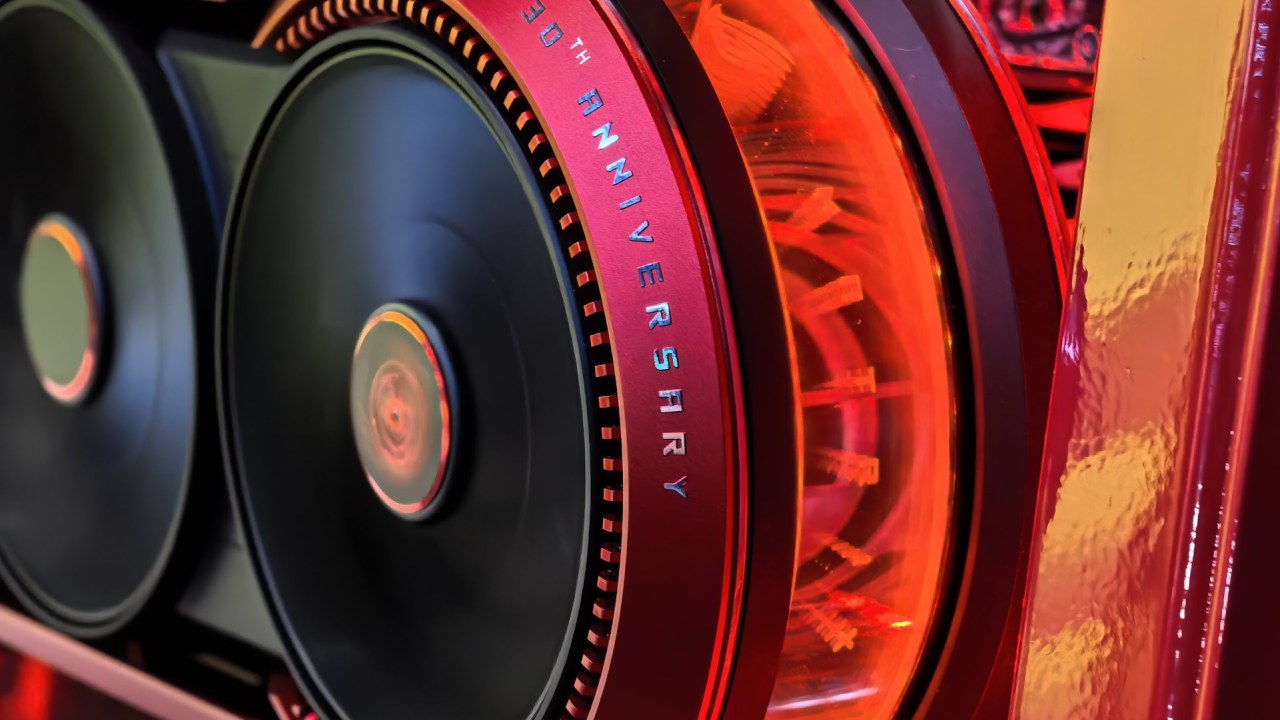
The retail Matrix changes from the Gamescom prototypes: the fans now have 9 blades instead of 7, and the back-blade design has been completely changed. Curious to investigate intrinsic changes, we meticulously disassembled the GPU. The aluminum backplate features specialized thermal pads across the memory, GPU, and 12VHPWR regions.
Upon opening the cooler, the liquid metal application raised questions. Instead of a sealed gummy compound barrier, the Matrix simply uses thermal paste surrounding the GPU as a sealant. Significant amounts of liquid metal were squeezed outward, and unusual patterns appeared on both the GPU and cooler surfaces. Even though the temperatures stayed within acceptable ranges, the application wasn't as polished as it should have been for a fee of €4,000.
We need to conduct further research to determine whether reapplication improves thermals.
Final Thoughts
Objectively, the RTX 5090 Matrix is challenging to recommend. At more than €4,000, it costs at least 60% more than the average RTX 5090, delivers roughly 10% more performance, and draws 30% more power. From a value perspective, it simply doesn't add up.
Subjectively, however, it's a different story. Enthusiasts who appreciate rare, beautifully engineered hardware may still find it irresistible. The design is striking, the build quality is exceptional, the cooling features are advanced, and the card stands as the fastest consumer GPU currently available. Despite flaws in the liquid metal application, the Matrix comes remarkably close to perfection.
A missed opportunity remains: a matching special-edition motherboard to fully complement the Matrix's unique theme, especially given reliance on BTF. A vertical-mount-compatible, color-matched board would have been an exciting addition.
Even so, the RTX 5090 Matrix delivers an undeniably special experience. Further testing—including liquid metal reapplication and exploring ways to bypass BTF mounting requirements—will provide more insight.
Also, check our other NVIDIA articles:
- GeForce RTX 5090 Unleashed: Is NVIDIA's New Flagship the Ultimate 4K Gaming GPU?
- NVIDIA GeForce RTX 5080 Review (2025): Still A 4K Gaming Powerhouse?
- RTX 5090 Performance Testing In GTA 5 – 1080p, 1440p, and 4K Max Settings Benchmark
- RTX 5090 Laptop Vs. M4 Max MacBook Pro: Ultimate Raw Performance Vs. Battery Endurance
- NVIDIA RTX 5070 Review: Mid-Range Muscle or Marketing Hype?
- RTX 5070 Ti Review: Performance, Thermals & Power Efficiency Tested
- Asus ROG RTX 5090 Astral OC Vs. Founders Edition: The 4K Gaming Benchmark
- ASUS GeForce RTX 5090 LC Liquid Cooled GPU Review: Unmatched Silence & Speed
- MSI GeForce RTX 5090 32GB SUPRIM SOC Review: Power Efficiency, Cooling, and Gaming Performance
- INNO3D RTX 5060 Ti 16 GB X2 Review: Gaming Benchmarks, Temps, and Power Efficiency
- HP Omen 45L Review: RTX 5090 Performance, Thermals, and Value Analysis
- ASUS TUF Gaming GeForce RTX 5060 Ti Review: DLSS 4, Power Efficiency, and Gaming
- ASUS Prime RTX 5060 Ti OC 16GB Review: DLSS 4, Ray Tracing, & Thermals Tested
- NVIDIA GeForce RTX 5060 Review: Specs, Gaming, and Cost per Frame
- MSI GeForce RTX 5090 GAMING TRIO OC Review: A Monster Power GPU
Senior Editor, NoobFeed
Gaming Hardware Updates
No Data.