
How CXMT DDR5 Memory Stands Up Against Premium Kits in Gaming Performance
Exploring CXMT as a Small-Scale Memory Manufacturer Offering Viable DDR5 Alternatives to Mainstream Premium Kits.
Hardware by Tanisha Aria on Feb 24, 2026
The DDR5 nightmare is still going strong. Late last year, the price of memory went through the roof, shaking the PC hardware market to its core. In just a few months, the price of consumer-grade DDR5 tripled, leaving builders and upgraders seeking other options.
This huge increase was driven by the aggressive push toward AI infrastructure, which shifted a significant portion of output capacity from standard PC and smartphone memory to server-grade, high-bandwidth memory. As soon as supply ran out, DDR5 kits that had once been the best deal for price and speed became expensive.
.jpg)
Why DDR5 Prices Exploded
The spike in the prices of DRAM was facilitated by the massive AI-based deals that consumed the production capacity of the memory makers of the world. Samsung, SK Hynix, and Micron Technology are the leading companies in the DRAM market of the world. The two of them contribute to a large percentage of the supply of the world, leaving very little to the rest of the producers.
Standard DDR5 supply pretty much stopped when these businesses switched their production lines to HBM to meet the demand for AI. A memory kit that cost $115 a few months ago is now $490, a 4.3x increase in just three months. For builders who want to build balanced systems, especially on new platforms like AMD Zen5, the price change completely changed how they calculate value.
At first, DDR4 seemed like a backup choice, especially for older AMD AM4 and Intel LGA1700 systems that could support it. But the supply of DDR4 had also stopped, which made those prices go up, too. Older systems and cheap builds were no longer safe from the surge.
Rise of CXMT as an Alternative
Since the "big three" were focused on AI-driven demand, other companies became more important. One of these companies is ChangXin Memory Technologies, which is also known as CXMT. With about 5% of the world's DRAM market, CXMT is one of the other three companies that make up the remaining 7%.
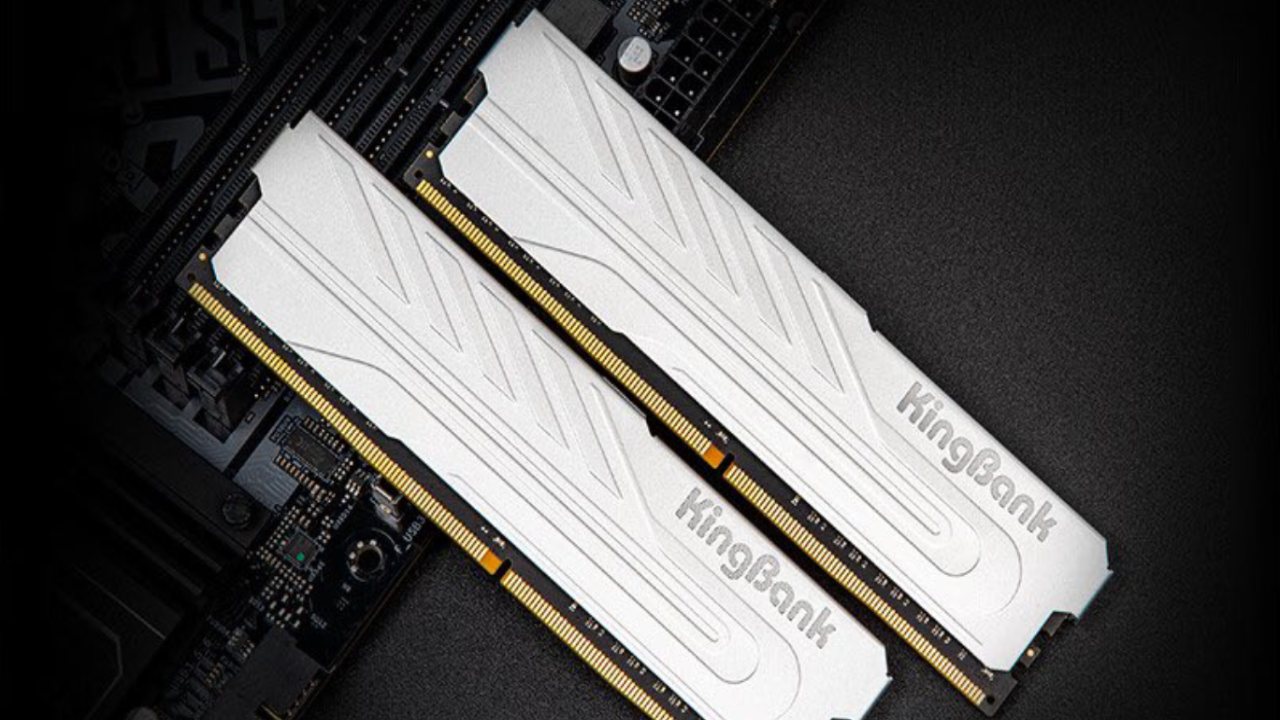
Early reports said that CXMT was selling DRAM at much lower prices than the rest of the market, where similar kits were going for $300 to $400. That led to testing of a KingBank 32GB DDR5 6000 CL36 kit that used CXMT ICs. The clear objective was to determine whether this new alternative could deliver competitive gaming performance.
The tested kit was from the Sawblade line. The main difference between them is the design of the heatsinks. More importantly, it gave us a chance to test memory made in Chinese DRAM that wasn't tied to big AI production orders.
Test Platform and Methodology
We put the CXMT-based memory together with the Ryzen 7 9800X3D and the Ryzen 7 9700X to test its performance. These were put up against high-end DDR5 6000 CL26 memory and basic DDR5 5200 CL40 kits.
AMD's 3D V-Cache technology makes X3D processors much less dependent on memory speed. This means that high-end and mid-range DDR5 kits don't tend to make a big difference in how well they scale. To get a better idea of how memory was affected, data from the 9700X that wasn't X3D was also looked at.
Gaming Performance Results
Rainbow Six Siege
When tried in Rainbow Six Siege at very high frame rates, the CXMT-based kit performed the same as premium low-latency DDR5. Even DDR5, which was just starting out, did well. Even with the 9700X, memory speed wasn't a problem. This shows that DDR5 6000 works the same way for high-FPS esports situations, regardless of brand.
Marvel Rivals
When tried in Marvel Rivals, the CXMT kit matched the performance of high-end DDR5 at all resolutions. The basic DDR5 5200 kit slightly lowered the lows at 1080p, but the CXMT-based memory kept performing at its best. It was about 10% faster with the 9700X than with the base kit.
Horizon Zero Dawn Remastered
When paired with the 9700X, the CXMT kit delivered results about 2% better than those of expensive DDR5 in Horizon Zero Dawn Remastered. In this game, the entry-level kit was 8–10% behind, making memory speed a more visible factor.
Cyberpunk 2077
In some situations, Cyberpunk 2077 showed that DDR5 5200 and DDR5 6000 worked about the same. But the CXMT-based kit always performed as well as high-end memory and, in some tests with the 9700X, was up to 17% faster than entry-level DDR5.
Thermal Performance and Stability
Under normal-case airflow, the CXMT-based modules reached a maximum temperature of 60°C after being loaded with Prime95 for 1 hour. At 55°C, similar high-end units reached their peak. The difference wasn't very big because of the cost change, even though it was a little warmer.
The JEDEC standards say that the device can work reliably up to 95°C. But from what I've seen, stability problems can occur when high-speed DDR5 exceeds 70°C. For peace of mind, keep an eye on temperatures with tools like HWiNFO and try to keep memory at or below 60°C at all times.
Adding a simple dual-fan cooler lowered the maximum temperature from 60°C to 41°C without making any audible noise. People who are worried about stability and longevity in today's price environment can get significant thermal headroom from inexpensive airflow options.
Pricing Reality and Market Constraints
At first, it looked like CXMT was charging high prices, but that window quickly shrank. Because of limited production, drastically undercutting the market would lead to quick sellouts with no long-term financial gain. So, the current prices reflect how the market usually works rather than being disruptive.
Still, CXMT-based kits are a little less expensive than many other popular options. Even though the savings aren't huge, any help is welcome, since the price of DDR5 has risen by 4.3¢ in the past 3 months.
Final Thoughts
AI-driven changes in production continue to have a significant impact on DDR5 prices. Because the big makers are focusing on high-margin HBM and server memory, there isn't as much available for consumers. Even though CXMT is still a small company, it has demonstrated that its DDR5 memory delivers top-tier gaming performance.
CXMT-based DDR5 is a good choice if you are building or updating right now. It performs as well as high-end kits in real-life games, stays within safe temperature ranges, and offers small cost savings in a limited market. It might not be enough to solve the world's DRAM shortages on its own, but it is a useful option in a tough hardware market.
Also, check our other hardware articles:
- AMD Ryzen 9 9950X3D Review: Setting The Standard For 2025 Gaming CPU
- Amazon Luna 2025 Review: Is Prime Gaming's Cloud Service Your Go-To For Casual Fun?
- AMD RX 9070 XT Review: AMD's RDNA 4 Champion for 1440p Gaming
- GeForce Now Ultimate: Ditching Your Gaming PC For Cloud RTX 4080 Power?
- NVIDIA GeForce RTX 5080 Review (2025): Still A 4K Gaming Powerhouse?
- Intel Core Ultra 9 285K Review And Performance Breakdown (2025)
- AMD Ryzen 7 9800X3D Review: 3D V-Cache Goes God Mode with Stunning Gaming Performance
- Intel Core Ultra 9 285K vs AMD Ryzen 7 9800X3D: In-Depth Gaming Performance and Benchmark Comparison
- NVIDIA GeForce RTX 5080 Super Performance In Cyberpunk 2077: Path Tracing & DLSS 4.0 Tested
- AMD Radeon RX 9070 XT In Cyberpunk 2077: Ray Tracing & FSR 4.0 Tested
- Intel Arc B580 Review: The $250 GPU Revolutionizing 1440p Gaming
- Intel Arc B570 Vs. B580: Value, Specs, And Real-World Gaming Performance
- RTX 5090 Laptop Vs. M4 Max MacBook Pro: Ultimate Raw Performance Vs. Battery Endurance
- Intel Arc b580 Vs. RTX 4060: Game Performance And Value Analysis
- RTX5090 Hell Is Us Demo 4K Ultra Benchmark: DLSS Vs. Native Performance Guide
- NVIDIA RTX 5070 Review: Mid-Range Muscle or Marketing Hype?
- Nintendo Switch 2 Review: Handheld Performance, Features & Value Breakdown
- RTX 5070 Ti Review: Performance, Thermals & Power Efficiency Tested
- Samsung Odyssey OLED G81SF Review 2025: Ultimate 32-Inch QD-OLED Gaming Monitor
- AMD RX 9070 Performance Review: Thermals, Clocks, and Real-World FPS
- AMD Ryzen 5 7600 Review: Best Budget Gaming CPU of 2025?
- AMD Radeon RX 7800 XT Review: RDNA 3 Power For Midrange Gaming
- Asus ROG RTX 5090 Astral OC Vs. Founders Edition: The 4K Gaming Benchmark
Contributor, NoobFeed
Gaming Hardware Updates
No Data.