
DDR5 Memory Kits and SSD Developments at CES2026
Dual EXPO profiles allow flexible DDR5 performance tuning for both latency and transfer speed optimization.
Hardware by Shinji Okazaki on Jan 10, 2026
The current memory market is still struggling, with prices and availability remaining uncertain. Without big improvements in manufacturing capacity or new fabrication facilities, these problems are unlikely to improve.
At CES2026, the focus was on firms in the memory production pipeline. This showed how memory products get to customers through different branding and manufacturing relationships.
Who Really Makes the Memory
Many well-known brands don't make their own memory products. Companies like Bowwin, on the other hand, handle the production process. Bowwin buys uncut memory wafers and cuts, sands, packages, and integrates them into PCBs itself. They also sell memory modules to companies like Acer, which then rebrands and markets them under its own name. This way of making things allows Bowwin more control over how well they work and how they can be changed.
Different Types of Memory on Different Devices
Smartphones, smart glasses, cars, VR headsets, and gaming gadgets all use different types of memory. At CES2026, various memory types were on display, including LPDDR5, DDR4, DDR5, and EMCP4X. Major manufacturers such as Samsung, Micron, and SKH produce these memory chips. Then they are assembled into finished goods such as DIMMs and M.2 SSDs.
DDR5 Memory Kits With a Lot of Space
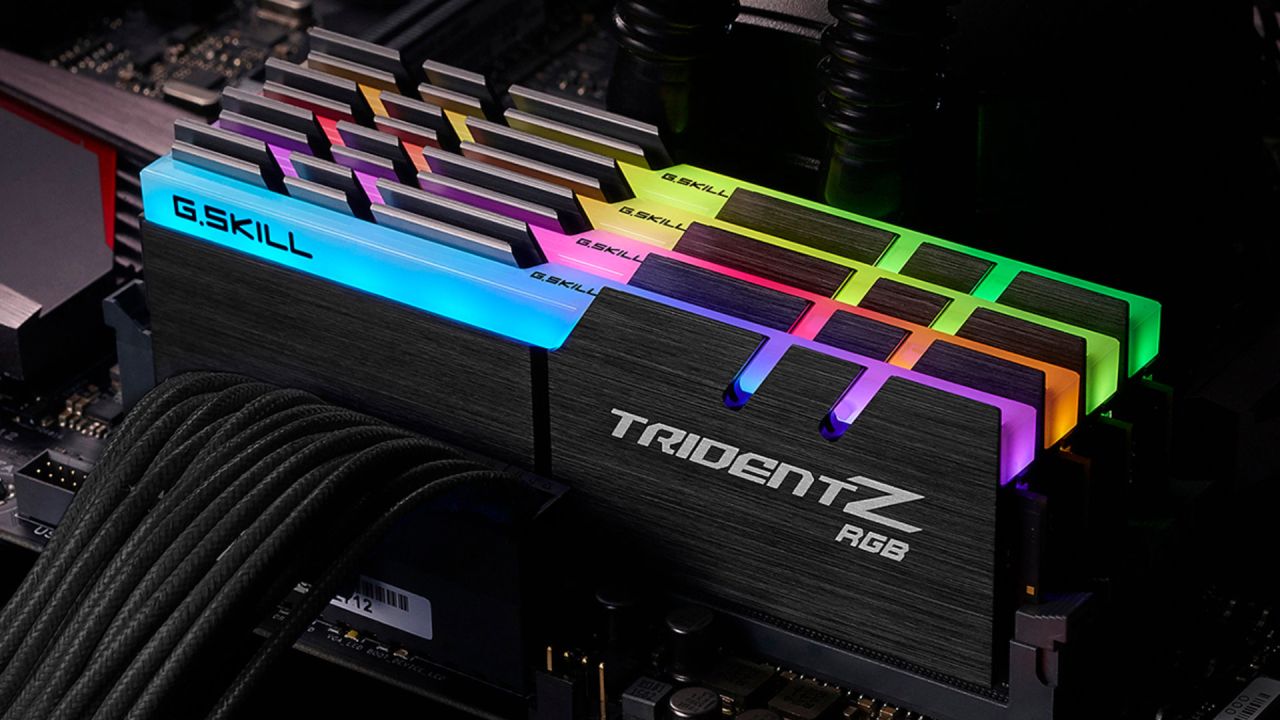
Bowwin's OC-optimized DDR5 kits show what can be achieved with careful binning. One of the highlighted kits included 192GB of memory spread across four 48GB DIMMs running at DDR56000 with CL28 timings. To meet these requirements on four-DIMM setups, especially on AMD platforms, you need to test them very carefully. Before they are sold, each module is hand-binned to ensure it meets performance standards.
Hand-Binning for Performance
Bowwin uses blank test sticks to test memory chips one at a time for OC Optimized models. Only processors that can always attain high speeds are used in high-end kits. This approach lets them create memory with both ample space and fast transfer speeds, which is hard to achieve solely through automated mass production.
Business and Non-RGB Memory Choices
Not all systems need RGB lights. Bowwin also offers business-friendly, low-key designs that don't include heat spreaders or lights. Their Black Opal range includes DDR5 kits that can reach 7200 MT/s with CL28 timings. They can be set up with up to 64GB of memory using two 32GB modules. These choices are more about reliability and compatibility than how they look.
The PCIe5.0 M.2 SSD Lineup
Black Opal brand also makes Gen5 M.2 SSDs for Bowwin. With heat sinks and DRAM cache, models can read up to 14000 MB/s and write up to 13000 MB/s. Pro variants come with DRAM for professional tasks, while non-Pro devices employ SLC cache for gaming and everyday use.
Mini SSD for Compact PCIe4.0
A new proprietary SSD form factor was released. It has LGA pads and comes in 1TB and 2TB sizes, making it very compact. These PCIe 4.0 drives can read 3700 MB/s and write 3400 MB/s in a row. You can use a SIM-style slot to insert them into card readers, handheld gaming devices, and hybrid laptop systems that support them.
Storage that Can be Changed for Gaming Devices
You can switch out storage cards like game cartridges with this new SSD standard. These drives work with handheld gaming systems and hybrid computers, making it easy to switch between game libraries. This makes it easy to keep track of large collections without having to reinstall games repeatedly.
.jpg)
Brand of Origin Code Memory
Bowwin has also launched a new memory brand called Origin Code. These DDR5 kits have a reflective look and cutting-edge specs. The A32GB kit runs at DDR56200 with CL26. Higher-end variants come with 64GB and 96GB kits that have two EXPO profiles. Users can pick between DDR56000 CL30 for tight timings and DDR58000 CL36 for faster transfer speeds.
Cooling the Memory While It's in Use
Some Origin Code kits come with a triple-fan cooler that goes right over the memory modules. The RGB lighting on the cooling system helps maintain consistent performance at high frequencies. The design lets you choose how it looks and how hot it becomes.
Final Thoughts
Even as memory designs and manufacturing methods have advanced, all companies still depend on the same few wafer suppliers. Prices are likely to remain high until supply increases, and market conditions remain unclear. Manufacturers are still working to improve performance, form factors, and customization options. At the same time, they wait for larger developments in the sector.
Also, check our other hardware articles below:
- AMD Ryzen 9 9950X3D Review: Setting The Standard For 2025 Gaming CPU
- Amazon Luna 2025 Review: Is Prime Gaming's Cloud Service Your Go-To For Casual Fun?
- AMD RX 9070 XT Review: AMD's RDNA 4 Champion for 1440p Gaming
- GeForce Now Ultimate: Ditching Your Gaming PC For Cloud RTX 4080 Power?
- NVIDIA GeForce RTX 5080 Review (2025): Still A 4K Gaming Powerhouse?
- Intel Core Ultra 9 285K Review And Performance Breakdown (2025)
- AMD Ryzen 7 9800X3D Review: 3D V-Cache Goes God Mode with Stunning Gaming Performance
- Intel Core Ultra 9 285K vs AMD Ryzen 7 9800X3D: In-Depth Gaming Performance and Benchmark Comparison
- NVIDIA GeForce RTX 5080 Super Performance In Cyberpunk 2077: Path Tracing & DLSS 4.0 Tested
- AMD Radeon RX 9070 XT In Cyberpunk 2077: Ray Tracing & FSR 4.0 Tested
- Intel Arc B580 Review: The $250 GPU Revolutionizing 1440p Gaming
- Intel Arc B570 Vs. B580: Value, Specs, And Real-World Gaming Performance
- RTX 5090 Laptop Vs. M4 Max MacBook Pro: Ultimate Raw Performance Vs. Battery Endurance
- Intel Arc b580 Vs. RTX 4060: Game Performance And Value Analysis
- RTX5090 Hell Is Us Demo 4K Ultra Benchmark: DLSS Vs. Native Performance Guide
- NVIDIA RTX 5070 Review: Mid-Range Muscle or Marketing Hype?
- Nintendo Switch 2 Review: Handheld Performance, Features & Value Breakdown
- RTX 5070 Ti Review: Performance, Thermals & Power Efficiency Tested
- Samsung Odyssey OLED G81SF Review 2025: Ultimate 32-Inch QD-OLED Gaming Monitor
- AMD RX 9070 Performance Review: Thermals, Clocks, and Real-World FPS
- AMD Ryzen 5 7600 Review: Best Budget Gaming CPU of 2025?
- AMD Radeon RX 7800 XT Review: RDNA 3 Power For Midrange Gaming
- Asus ROG RTX 5090 Astral OC Vs. Founders Edition: The 4K Gaming Benchmark
- Intel Core i5-13400F Gaming Performance: Still Worth It in 2025?
- ASUS GeForce RTX 5090 LC Liquid Cooled GPU Review: Unmatched Silence & Speed
- ASUS ROG Ally X Handheld Review: Double the Battery, Double the Comfort
- Lenovo Legion Go S Review: The Ultimate Steam Deck 2 Alternative
- Sapphire NITRO+ AMD Radeon RX 9070 XT Review: The Ultimate 4K Gaming GPU
- Alienware 16 Area 51 Review: The Ultimate 2025 Gaming Laptop
- Alienware Area-51 Review: Unmatched 4K, Thermal, and Acoustic Performance
- AMD Ryzen 7 7800X3D: Delivers Gaming Performance Far Beyond Expectations
- AMD Ryzen 9 7900X Review: Powering the AM5 Era with DDR5 & PCIe 5.0
- Intel Core i9‑14900K vs. AMD Ryzen 7 7800X3D: Power Profiles & Gaming Benchmarks
- Intel Core i9 14900K: Specs, Benchmarks, and Competitor Comparison
- ASRock Radeon RX 7800 XT Challenger OC Review: Best Price-to-Performance GPU of 2025
Editor, NoobFeed
Gaming Hardware Updates
No Data.