
Future of Handheld Gaming: Dual GPU Battery-Powered Performance Breakthrough
Combining internal and external GPUs creates a new level of portable gaming performance powered entirely by battery.
Hardware by Masaru Hoshino on Nov 05, 2025
Gaming on handheld devices with two GPUs and batteries is an interesting step toward making portable devices more powerful. Handheld gaming devices can achieve performance levels previously only attainable with full-sized PCs by creatively combining internal and external GPUs.
Using technologies such as lossless scaling, it's now possible to generate additional frames with the help of an external GPU while maintaining portability and battery operation.
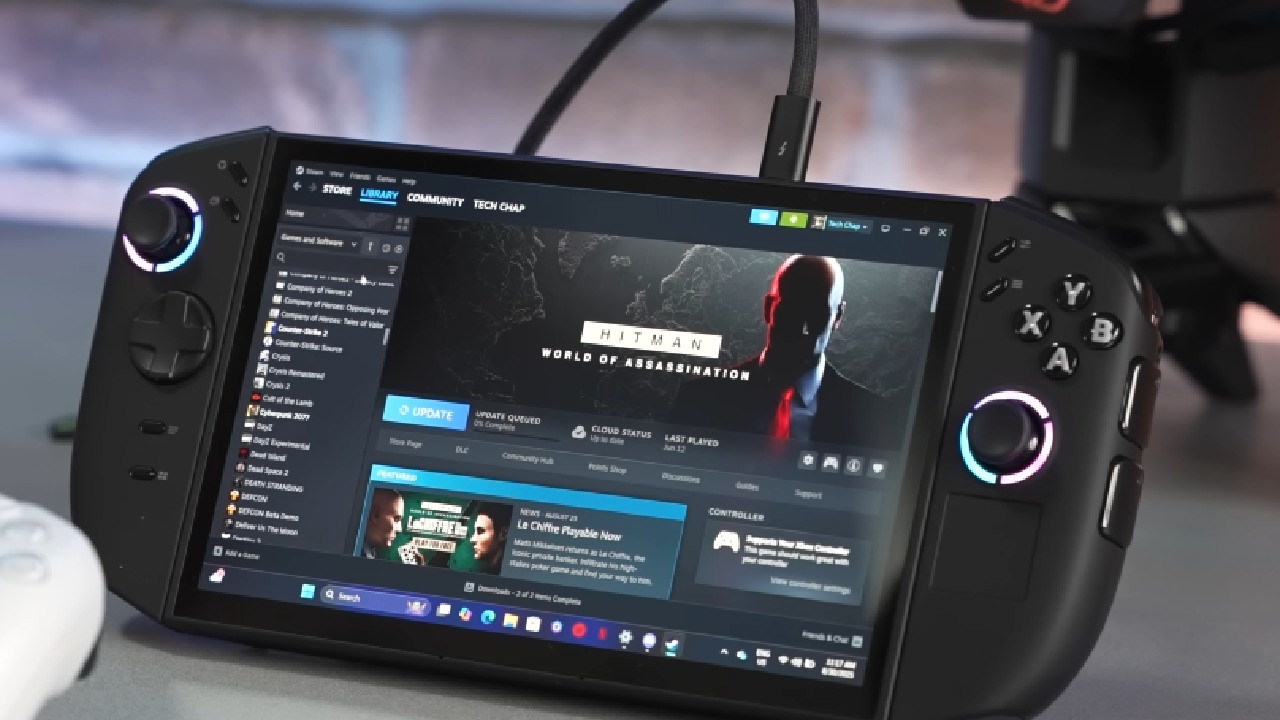
Concept and Setup
The core idea revolves around running a handheld device with its built-in GPU while pairing it with an external GPU for additional frame generation. We used the Lenovo Legion Go 2 handheld with the Ryzen Z2 Extreme APU in this arrangement. The handheld's Radeon 890M iGPU handled most of the rendering.
At the same time, an external Pocket AI device with an embedded RTX A400 GPU performed frame creation using lossless scaling. The RTX A400 runs at up to 25W, features Thunderbolt 4 and a power input, but notably lacks a video output, making it well-suited for use with handheld devices that have built-in displays.
Running God of War Ragnarok at 1200p with high settings and FSR set to quality, the performance gap between the iGPU and the assisted setup was demonstrated. The iGPU alone hovered below 60fps, but once lossless scaling was enabled with the external RTX A500, frame rates averaged over 70fps. Although the lack of video output from the eGPU introduced minor performance limitations due to the need to back-feed generated frames via USB4, the improvement was substantial.
Configuration and Optimization
To properly configure the setup, lossless scaling must be installed through Steam. It costs around $7 and offers great value for frame generation and scaling. After installation, several adjustments within Windows settings ensure the system uses the correct GPU for each task.
From Settings > Gaming > Game Mode > Graphics, users can select which GPU runs a specific game. For God of War Ragnarok, we selected the AMD Radeon 890M to handle the main rendering since it outperforms the RTX A500 for direct gaming tasks. The A500 was then designated as the preferred GPU for lossless scaling in frame generation.
Lossless scaling was configured with the following settings: Frame Generation Type: LSFG3.1, Mode: Performance, and Flow Scale: 60. This downscales the input frame to help the AI model predict motion more efficiently, thereby boosting performance without heavily taxing the eGPU. Adjusting Max Brain Latency to 2 improved responsiveness when using the external GPU feed, as higher values occasionally caused frame drops.
.jpg)
Performance in Games
The Witcher 3
When I first ran The Witcher 3 on the Radeon 890M iGPU at 1080p high settings and FSR set to quality, it achieved a frame rate of nearly 60fps. It consumed approximately 20W of power on the Z2 Extreme. When you turn on lossless scaling with the RTX A500, the frame rates go up by around twice as much, making the experience much smoother.
Although back-feeding frames through USB4 introduced minimal ghosting—especially around dynamic elements like hair—the improvement was impressive given the limitations. Increasing the frame multiplier from 2x to 3x further improved frame rates but also amplified ghosting. For practical use, the 2x multiplier provided the best balance of smoothness and visual clarity.
Cyberpunk 2077
The Legion Go 2 achieved frame rates of approximately 45–48fps, while Cyberpunk 2077 was set to 1080p high with FSR set to balanced. When lossless scaling was enabled, frame rates increased to the 80s.
Scaling by 3x made things less stable, while scaling by 2x worked well. This demonstrated that while not every title benefits equally, the combination of internal rendering and external frame generation offers meaningful improvements in modern demanding games.
Spider-Man 2
Spider-Man 2 posed a greater challenge for the handheld. Running at 1080p medium settings without frame generation, the average frame rate was approximately 41fps. The external RTX A500 enabled lossless scaling, which improved performance; however, there were occasional dips due to the eGPU's limited back-feed bandwidth.
Even though there were some ups and downs, the experience was still smoother and more playable than using native performance alone.
Limitations and Observations
When employing eGPUs without video output on handheld devices, performance is limited by the need to transfer the created frames back to the internal display. This introduces a slight delay and may reduce performance. However, for portable solutions that run on batteries, the trade-off is worthwhile. Both the Legion Go 2 and the external RTX A500 ran entirely on battery power, demonstrating the feasibility of fully mobile dual GPU operation.
Games vary in their effectiveness in leveraging frame generation, and ghosting remains a minor side effect. Nonetheless, on smaller handheld displays, the impact is minimal, and the visual fluidity gained outweighs the artifacts in most scenarios.
Final Thoughts
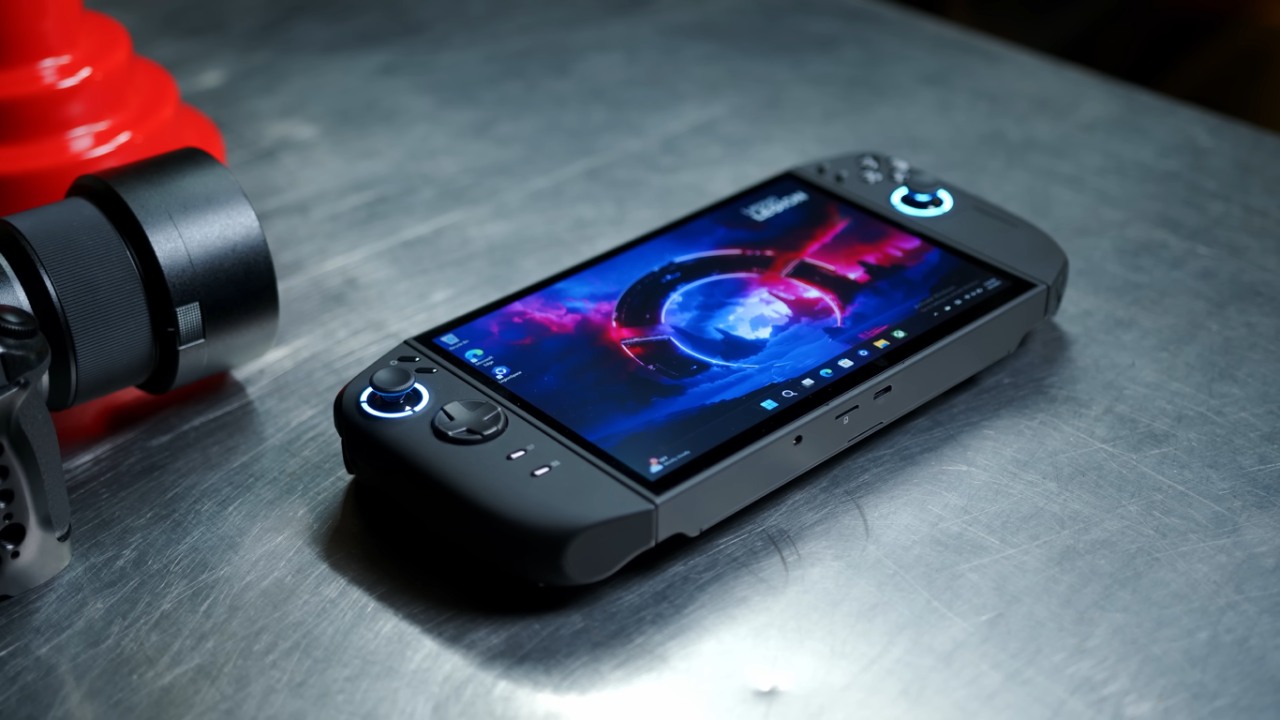
Utilizing battery-powered dual GPUs for gaming unlocks new possibilities for enhanced portable gaming performance. With the Legion Go 2's Ryzen Z2 Extreme APU and an external Pocket AI RTX A500 for lossless frame generation, you can almost double or even triple the frame rates in many games while still being able to take it with you.
There are some limitations due to bandwidth and display routing. Still, this method offers an intriguing glimpse into what handheld gaming can achieve with AI-assisted frame generation across multiple GPUs.
Also, check our other Handheld articles :
- ASUS ROG Ally X Handheld Review: Double the Battery, Double the Comfort
- How To Connect A Camera And Join Voice Chat With Nintendo Switch 2
- Nintendo Switch 2 Review: Handheld Performance, Features & Value Breakdown
- ROG Xbox Ally X Vs. ROG Ally X: Display, Battery & Controls
- Nintendo Switch 2 vs. Steam Deck OLED: Gaming, Performance, Battery, Display and Value
- NVIDIA GeForce Now on Steam Deck: Battery Life, Gameplay, Streaming
- Nintendo Switch 2 Vs. Original Switch 1: A Full Comparison
Editor, NoobFeed
Gaming Hardware Updates
No Data.