
Intel Arc B570 Review: Is Intel's $220 GPU Worth Buying Over RTX 4060?
Intel Arc B570 delivers trimmed specifications compared to the Arc B580 while aiming to provide competitive mid-range gaming performance.
Hardware by Tanvir Kabbo on Aug 29, 2025
Intel's Arc B570 arrives as a trimmed version of the previously released B580. While B580 impressed at launch, availability issues and performance concerns have since surfaced.
B570 enters the market at $220, offering slightly lower specs for a $30 saving compared to B580. However, the question remains whether the trade-offs make it worthwhile.
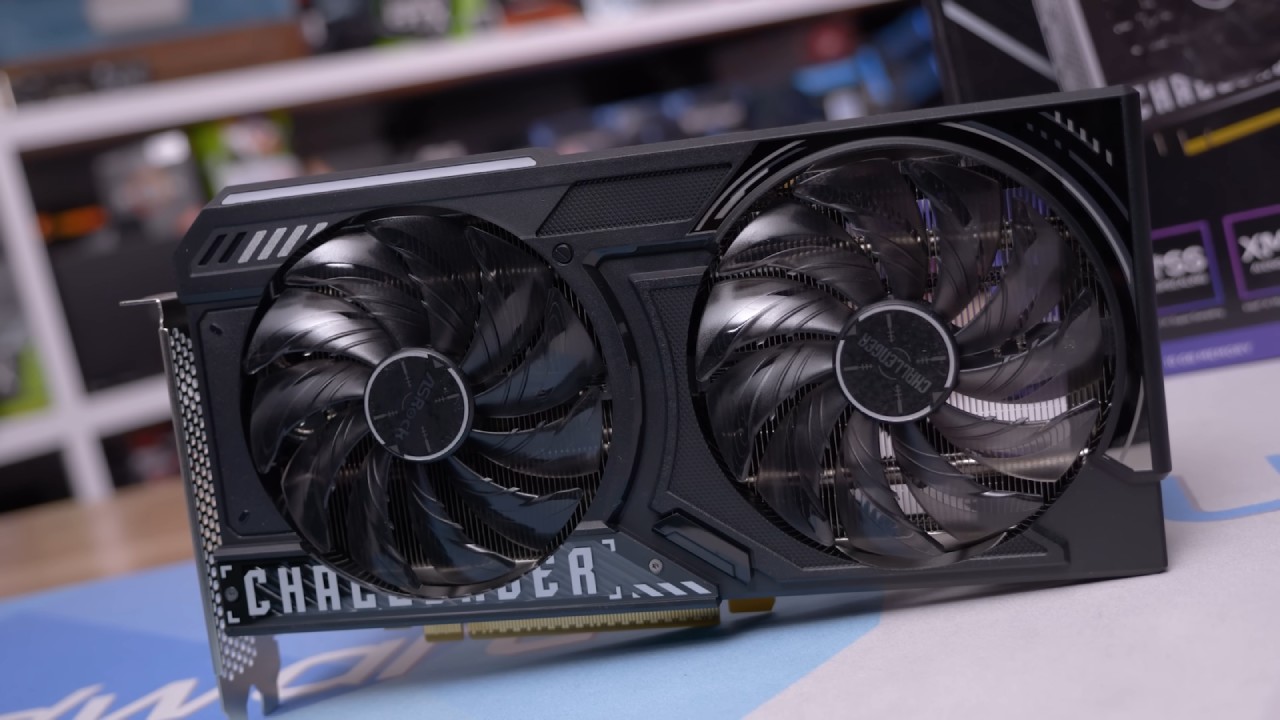
Specifications
B570 is built on the same 272mm die as B580, but introduces several reductions to lower the cost. The XE core count has been reduced by 10%, decreasing from 20 to 18. The maximum core clock has also been lowered by 4%, dropping from 2850MHz to 2750MHz.
The memory system has also undergone a noticeable downgrade, shifting to a 160-bit wide bus with 10GB of VRAM, down from 12GB. Even though the memory still runs at 19Gbps, the narrower bus reduces memory bandwidth by 17%, leaving it at 380GB/s.
In summary, the B570 sacrifices cores, frequency, VRAM, and bandwidth, while offering only a 12% price reduction compared to the B580.
Test System and Game Benchmarks
We tested the Arc B570 across a variety of modern games at 1440p, using both a high-end 9800X3D and a mid-range Ryzen 5 5600 to highlight performance differences. Comparisons were made against B580, RTX 4060, and RX 7600 to understand where B570 fits in.
Marvel Rivals
In Marvel Rivals at 1440p, B570 closely matched the RTX 4060, reaching 60fps. This left it 12% slower than B580 but still 25% ahead of the RX 7600.
When paired with the Ryzen 5 5600, the margins shifted and B570 became 8% slower than the RTX 4060, while its advantage over the RX 7600 shrank to just 10%.
With upscaling enabled, the situation worsened as B570 dropped to last place among the tested GPUs, achieving 88fps, a 7% decrease behind the RX 7600.
Star Wars Jedi Survivor
Star Wars Jedi Survivor at 1440p showed the B570 performing 14% slower than the B580, regardless of whether the 9800X3D or the Ryzen 5 5600 was used. This placed it on par with both the RTX 4060 and RX 7600.
However, once upscaling was enabled, B570 slipped further behind, ending up 9% slower than B580 and 8% slower than the Radeon and GeForce cards.

Marvel's Spider-Man Remastered
Spider-Man Remastered highlighted Intel's ongoing CPU overhead issue. With the 9800X3D, B570 was 12% slower than B580 but still managed to beat both the RTX 4060 and RX 7600, coming in 27% faster than the Radeon.
Switching to the Ryzen 5 5600 completely changed the story, as performance was capped around 80fps due to CPU overhead. This cap left B570 5% slower than the RX 7600, and with upscaling enabled, it ended up 23% slower.
Hogwarts Legacy
In Hogwarts Legacy at 1440p with the 9800X3D, B570 was 16% slower than B580, making it the weakest GPU tested. Using the Ryzen 5 5600 reduced the margin to 9%, allowing B570 to match the RTX 4060.
However, when upscaling was applied, performance dropped sharply, and the B570 trailed nearly 30% behind the RX 7600, despite having a stronger CPU.
Space Marine 2
Performance in Space Marine 2 left little to celebrate. With the 9800X3D, B570 was 18% slower than B580, while with the 5600, the margin dropped slightly to 12%.
Upscaling, however, caused serious issues as Arc GPUs were unable to maintain even 60fps on mid-range CPUs, and the RTX 4060 came out almost 50% faster than B570.
A Plague Tale Requiem
A Plague Tale Requiem was a more positive scenario, as B570 was only 11% slower than B580 at 1440p using either CPU. With upscaling enabled, it performed on par with the RX 7600, delivering solid results.
Cyberpunk 2077
Cyberpunk 2077 showed B570 delivering performance similar to the RTX 4060 and slightly ahead of the RX 7600 when using the 9800X3D.
With the Ryzen 5 5600, results converged around 60fps for all four GPUs. However, upscaling revealed weaker 1% lows for the Arc cards, highlighting ongoing stability concerns.
Dying Light 2
In Dying Light 2, B570 performed very well, nearly matching the RTX 4060 with either CPU. Even with upscaling enabled on the 5600, it remained competitive, coming in just 4% slower than the GeForce GPU.
Starfield
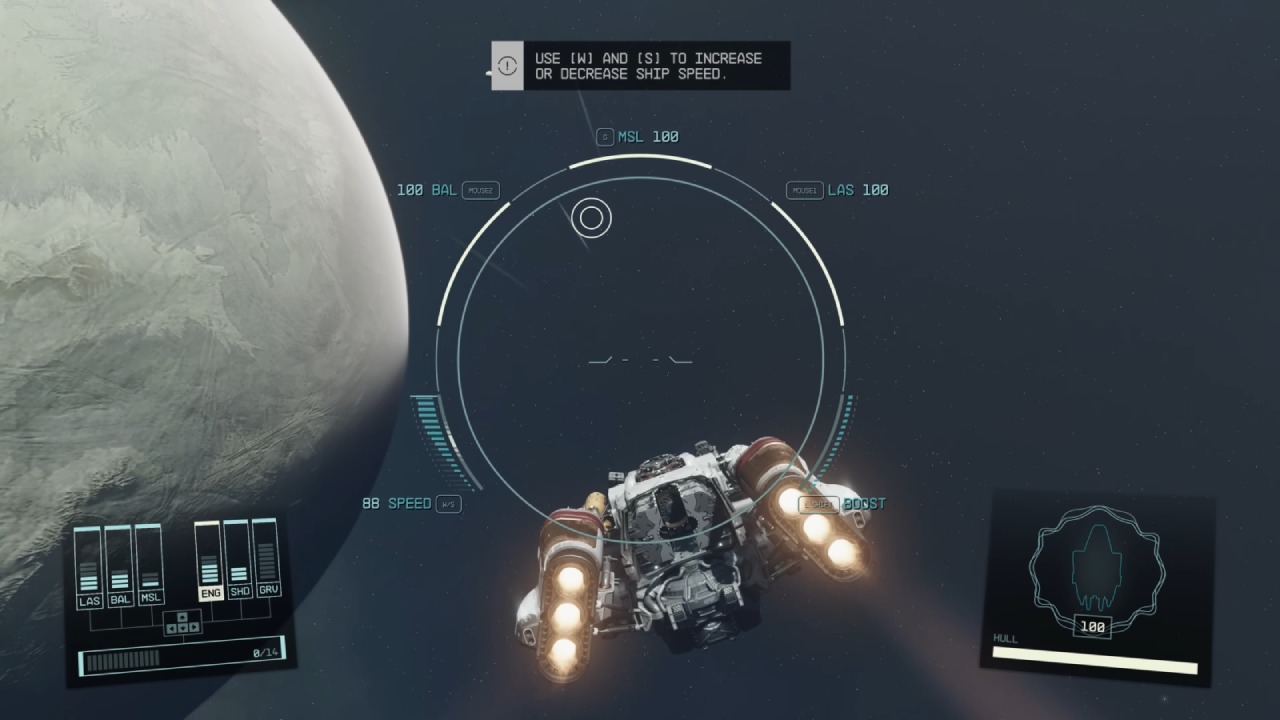
Starfield was another weak result for Intel. At 1440p on medium settings, the B570 only managed 37fps, regardless of the CPU.
Enabling upscaling improved frame rates to around 50fps with the Ryzen 5 5600, but the RTX 4060 surged ahead with 63fps, making it 31% faster than B570.
Dragon Age: The Veilguard
Dragon Age produced unusual results, as both B570 and B580 were capped at 67fps regardless of CPU, matching the RTX 4060. Upscaling enabled all cards to surpass 80fps, but the RTX 4060 maintained a 6% performance advantage.
Star Wars Outlaws
Star Wars Outlaws proved extremely demanding, with B570 achieving just 37fps at 1440p and 53fps when upscaling was enabled.
Interestingly, the Ryzen 5 5600 delivered slightly better results than the 9800X3D, though only by a few frames. At native resolution, B570 matched the RTX 4060, but once upscaling came into play, it fell 13% behind.
War Thunder
War Thunder demonstrated how the choice of API impacts Arc GPUs. In DX11, B570 was 10% faster than the RTX 4060 with the 9800X3D but 20% slower with the 5600 due to CPU capping.
The overhead problem was mostly resolved by switching to DX12, and the B570 now lags the RTX 4060 by only 8%, while maintaining more consistent performance.
The Last of Us Part I
The Last of Us Part I Using either CPU, we observed that B570 matched the RTX 4060 and RX 7600 at 1440p. Overall, the findings were still respectable, even though performance declined somewhat when upscaling was enabled.
Power Consumption
Power efficiency for B570 was decent. It consumed 8–14% less power than the B580 while averaging around 20W higher than the RTX 4060. This makes power usage a non-issue for gamers considering the card.
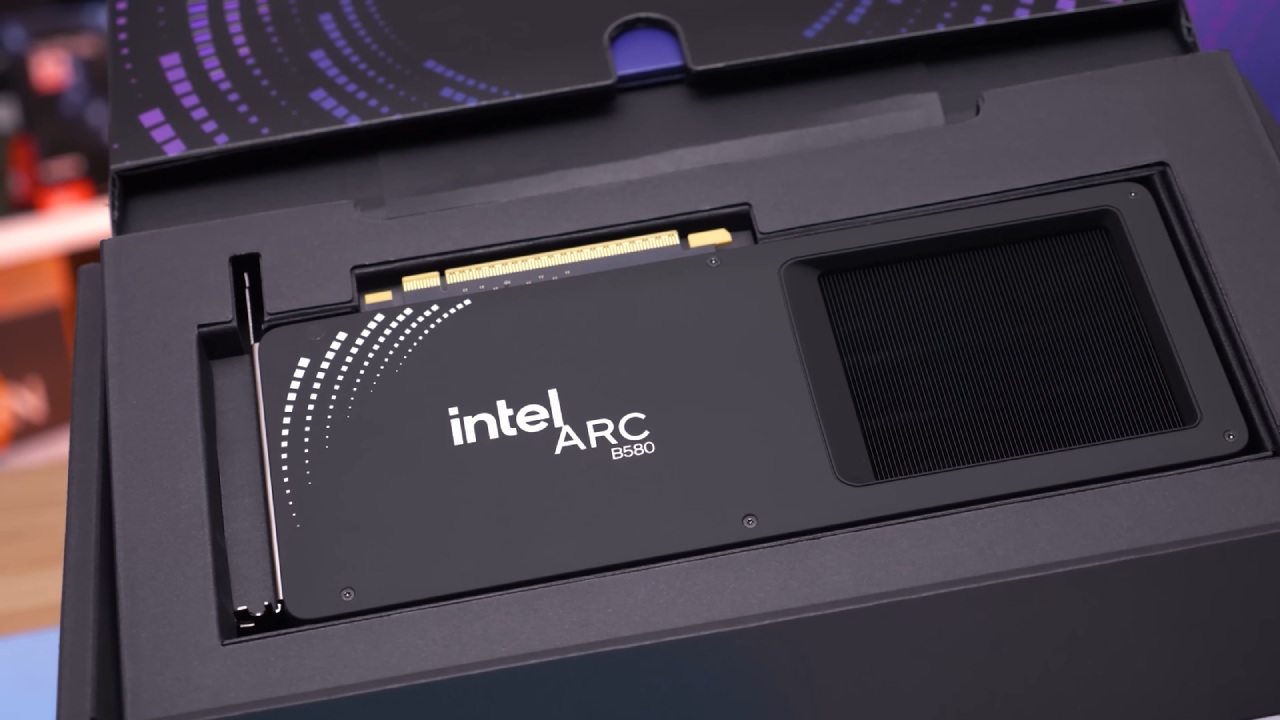
13-Game Average at 1440p
Across 13 games at 1440p with the 9800X3D, the B570 was 13% slower than the B580, placing it in line with the RTX 4060 and RX 7600.
With the Ryzen 5 5600, performance remained competitive, again landing close to the RX 7600 and only slightly behind the B580.
When upscaling was enabled, however, B570 slipped behind both rivals, making it less favorable in situations where upscaling is required for smooth gameplay.
Cost Analysis
From a value standpoint, the B570 at native 1440p with a 9800X3D matched the B580 and provided a 15% better value than the RX 7600 and a 34% better value than the RTX 4060. Using a Ryzen 5 5600, it outperformed the RX 7600 by 12% and the RTX 4060 by 22%.
With upscaling, however, its advantage diminished significantly. On the 9800X3D, it offered only 10% better value than the RX 7600, while with the 5600, it dropped to a mere 8%.
Final Thoughts
Evaluating Arc B570 is not straightforward. With a powerful CPU, it delivers good value and competitive performance, making it a viable option. The majority of gamers who purchase a $220 card, however, are unlikely to utilize it with a high-end processor.
The Arc's overhead problem becomes a significant drawback when paired with CPUs such as the Ryzen 5 5600 or older models. RX 7600 is the safer and more reliable option in those situations, providing better long-term value and fewer performance hiccups.
We believe the B580 is still worth considering at $250, thanks to its 12GB VRAM buffer, which gives it an edge over both the RTX 4060 and RX 7600. B570, however, is difficult to recommend at $220. For this GPU to be worthwhile, it needs to be priced at $200 or less.
At its current price point, the sacrifices in performance and stability outweigh the savings, making it feel like a product that arrives dead on arrival.
Also, check our other hardware articles:
- AMD Ryzen 9 9950X3D Review: Setting The Standard For 2025 Gaming CPU
- Amazon Luna 2025 Review: Is Prime Gaming's Cloud Service Your Go-To For Casual Fun?
- AMD RX 9070 XT Review: AMD's RDNA 4 Champion for 1440p Gaming
- GeForce Now Ultimate: Ditching Your Gaming PC For Cloud RTX 4080 Power?
- GeForce RTX 5090 Unleashed: Is NVIDIA's New Flagship the Ultimate 4K Gaming GPU?
- NVIDIA GeForce RTX 5080 Review (2025): Still A 4K Gaming Powerhouse?
- Intel Core Ultra 9 285K Review And Performance Breakdown (2025)
- AMD Ryzen 7 9800X3D Review: 3D V-Cache Goes God Mode with Stunning Gaming Performance
- Intel Core Ultra 9 285K vs AMD Ryzen 7 9800X3D: In-Depth Gaming Performance and Benchmark Comparison
- NVIDIA GeForce RTX 5080 Super Performance In Cyberpunk 2077: Path Tracing & DLSS 4.0 Tested
- RTX 5090 Performance Testing In GTA 5 – 1080p, 1440p, and 4K Max Settings Benchmark
- AMD Radeon RX 9070 XT In Cyberpunk 2077: Ray Tracing & FSR 4.0 Tested
- Intel Arc B570 Vs. B580: Value, Specs, And Real-World Gaming Performance
- Intel Arc B570 Review: Efficient Xe2 Performance At An Affordable Price
- RTX 5090 Laptop Vs. M4 Max MacBook Pro: Ultimate Raw Performance Vs. Battery Endurance
- Intel Arc b580 Vs. RTX 4060: Game Performance And Value Analysis
- RTX5090 Hell Is Us Demo 4K Ultra Benchmark: DLSS Vs. Native Performance Guide
- NVIDIA RTX 5070 Review: Mid-Range Muscle or Marketing Hype?
- Nintendo Switch 2 Review: Handheld Performance, Features & Value Breakdown
- RTX 5070 Ti Review: Performance, Thermals & Power Efficiency Tested
- Samsung Odyssey OLED G81SF Review 2025: Ultimate 32-Inch QD-OLED Gaming Monitor
- AMD RX 9070 Performance Review: Thermals, Clocks, and Real-World FPS
- AMD Ryzen 5 7600 Review: Best Budget Gaming CPU of 2025?
- AMD Radeon RX 7800 XT Review: RDNA 3 Power For Midrange Gaming
- Asus ROG RTX 5090 Astral OC Vs. Founders Edition: The 4K Gaming Benchmark
- ASUS ROG Astral RTX 5090 OC Edition Review: 32GB GDDR7 & 4K Gaming Benchmark
- Intel Core i5-13400F Gaming Performance: Still Worth It in 2025?
- ASUS GeForce RTX 5090 LC Liquid Cooled GPU Review: Unmatched Silence & Speed
- ASUS ROG Ally X Handheld Review: Double the Battery, Double the Comfort
- Lenovo Legion Go S Review: The Ultimate Steam Deck 2 Alternative
- Sapphire NITRO+ AMD Radeon RX 9070 XT Review: The Ultimate 4K Gaming GPU
- Alienware 16 Area 51 Review: The Ultimate 2025 Gaming Laptop
- Alienware Area-51 Review: Unmatched 4K, Thermal, and Acoustic Performance
- AMD Ryzen 7 7800X3D: Delivers Gaming Performance Far Beyond Expectations
- AMD Ryzen 9 7900X Review: Powering the AM5 Era with DDR5 & PCIe 5.0
- Intel Core i9‑14900K vs. AMD Ryzen 7 7800X3D: Power Profiles & Gaming Benchmarks
- Intel Core i9 14900K: Specs, Benchmarks, and Competitor Comparison
- Sapphire PURE AMD Radeon RX 9070 XT Review: Cooling, Specs & Gaming Benchmarks
- ASRock Radeon RX 7800 XT Challenger OC Review: Best Price-to-Performance GPU of 2025
Senior Editor, NoobFeed
Gaming Hardware Updates
No Data.