
Intel ARC Pro B50 and B70 Challenge NVIDIA and AMD GPU Pricing
Intel Arc Pro GPUs reduce high VRAM workstation costs while increasing pressure on Nvidia and AMD pricing strategies.
Hardware by Nahe Yan on May 17, 2026
In the past, the price of GPUs has been closely correlated with that of VRAM, particularly in the local AI and workstation sectors. Typically, the higher-memory configuration was more expensive, and lower-cost configurations had some limitations in the memory they could offer or the level of software support. That is where Intel's Arc Pro B50 and B70 are stepping in, providing more VRAM for less money.
Intel Arc Pro B50 will sell at approximately $349 with 16GB of VRAM. That puts pressure on the less expensive workstation GPUs from Nvidia, which have 8GB of VRAM but cost less. A logical question for workstation buyers and creators is why pay more for less memory?
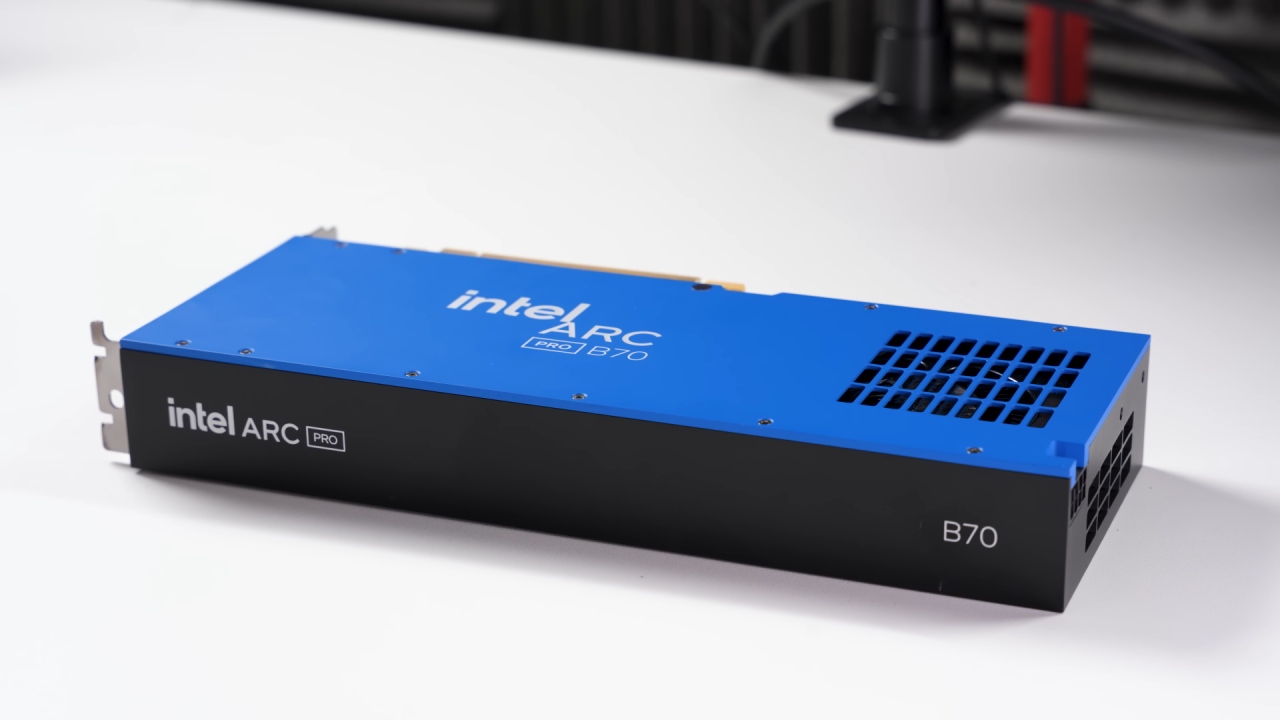
Intel is Focusing on VRAM Pricing
The greater Arc Pro B70 takes the discussion one step further. This $999 introduction of 32GB of VRAM by Intel will shift expectations for those seeking to do some local AI processing, whether as developers, creators, or workstation builders. VRAM defines the workloads that can be effectively processed, particularly in AI applications.
The larger the AI model, the more memory it will use. More context windows lead to higher memory consumption. Not only do image generation workloads require more VRAM, but video workloads do as well. 32 GB of GPU memory has typically been associated with a much higher price bracket up until now. NVIDIA's 32GB cards are generally several times as expensive, and AMD's 32GB cards are still more expensive than Intel's.
It's for this reason that these Arc Pro launches are important. Intel isn't just introducing another line of GPUs. It's aiming at one of the priciest segments of the graphics business: Memory capacity.
Local AI Performance is Doing Pretty Well
In local AI testing, the Arc Pro B70 wasn't flawless, but it performed better than many people expected. In a series of tests, Intel held its own against Nvidia's RTX Pro 4000 Blackwell. At times, the B70 even outperforms the NVIDIA card, despite being more expensive and having less VRAM.
NVIDIA has a huge software edge in CUDA. The majority of AI tools are designed to be optimized for Nvidia hardware, making them easier to set up and more compatible. While Nvidia can achieve better results in specific scenarios, depending on the software stack and AI model, it isn't always the case. But when Intel can do the same job for a fraction of the price, Nvidia's pricing is less attractive for some prospective customers.
AMD is Under Pressure in the Value Segment
AMD has established a significant reputation based on value pricing; in fact, it is directly challenged by Intel. Radeon AI Pro R9 700 also has 32 GB of VRAM and appears competitive on paper. But in some local AI tests, Intel's B70 achieved higher scores.
It doesn't always have to be all about hardware performance. Software support is still significant. While AMD's ROCm platform has grown up, it's not as well-supported as CUDA. The value advantage that AMD has in the local AI and workstation market may erode if Intel continues to maintain its solid performance at lower prices in these segments.
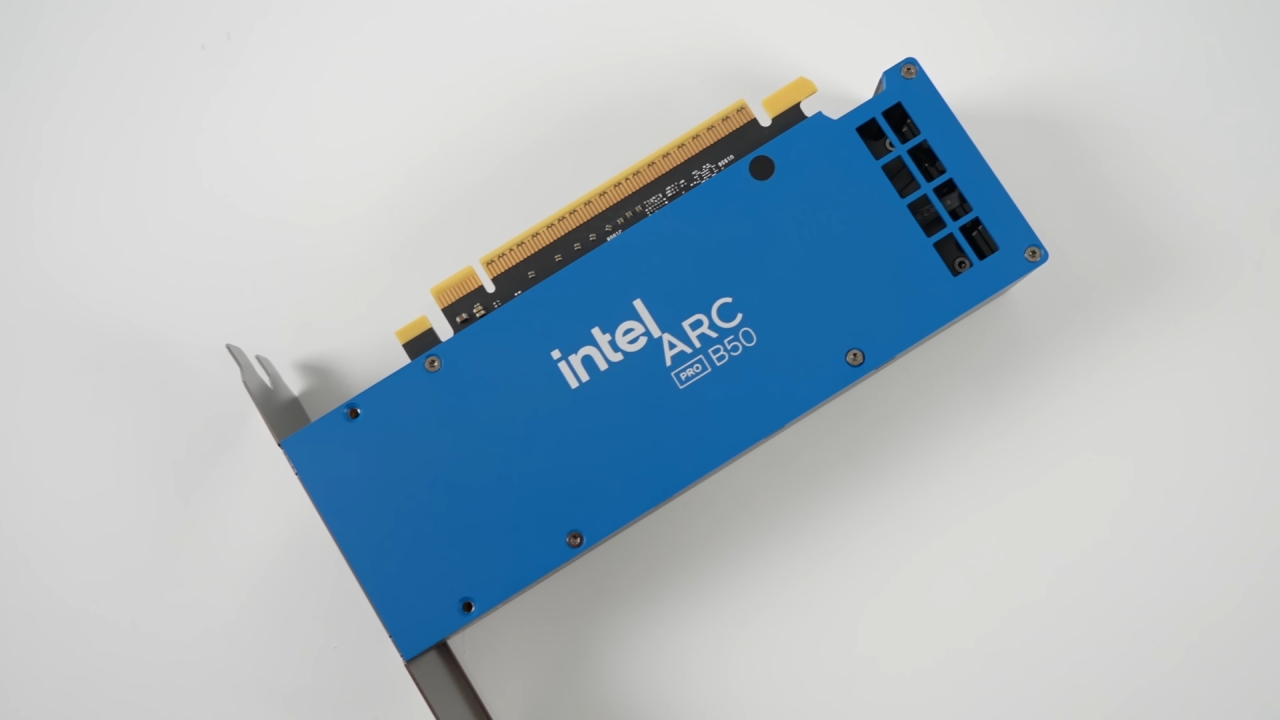
Intel's Strategy focuses on Access
The significance of the Arc Pro B50 and B70 is that Intel doesn't have to win every benchmark. The company instead emphasizes delivering adequate performance, increased VRAM sizes, and reduced prices. B50 delivers a considerable amount of boosted VRAM to budget-conscious workstation owners without the high price tag of stepping into premium GPU ranges. By providing 32GB of VRAM to local AI builders at a price that doesn't require top-tier workstation pricing, the B70 makes it accessible to anyone.
Multi-GPU systems have a bit more fun. Four B70 cards can be used to get a maximum of 128GB of VRAM. This doesn't necessarily indicate that every workload will scale seamlessly with more GPUs, as smaller models may not perform efficiently on multiple GPUs. That amount of memory provides more options for larger AI models, expanded context windows, and heavier local AI workloads; however, it also increases the cost of running AI.
The wider Strategy of Intel seems to be more about accessibility than about being better.
The company is making more VRAM available at lower prices and upgrading lower-priced versions of its GPUs with more pro-end features. Still, Nvidia maintains the best software ecosystem, while AMD competes with solid hardware. For all its price hikes, though, Intel has made one thing clear with the Arc Pro B50 and B70: GPU memory pricing has been too high for too long.
The new Arc Pro GPUs aren't NVIDIA or AMD, but they do put pressure on the pricing models. The fastest GPU was not a requirement for Intel. It did not have to charge a higher price for similar VRAM capacities in competing products; however, it did.
Intel's Arc Pro B50 and B70 GPUs have ushered in a new era of pricing and availability for the GPU market, focusing on memory capacity, accessibility, and local AI workloads.
Editor, NoobFeed
Gaming Hardware Updates
No Data.