
Intel Core i7-9700K Revisited: Is It Still Worth It in 2025?
Exploring how the i7-9700K’s raw power and aging architecture hold up in today’s gaming landscape.
Hardware by Nahe Yan on Nov 03, 2025
The Intel Core i7-9700K is one of those well-known processors that defined its time, along with the Q6600, i7-2600K, 4790K, and 8700K. The 9700K was the first i7 processor for consumers to feature an 8-core Skylake-based architecture, making it quite powerful.
It was the first i7 to not have hyper-threading, yet it was still quite popular for making content and playing games.
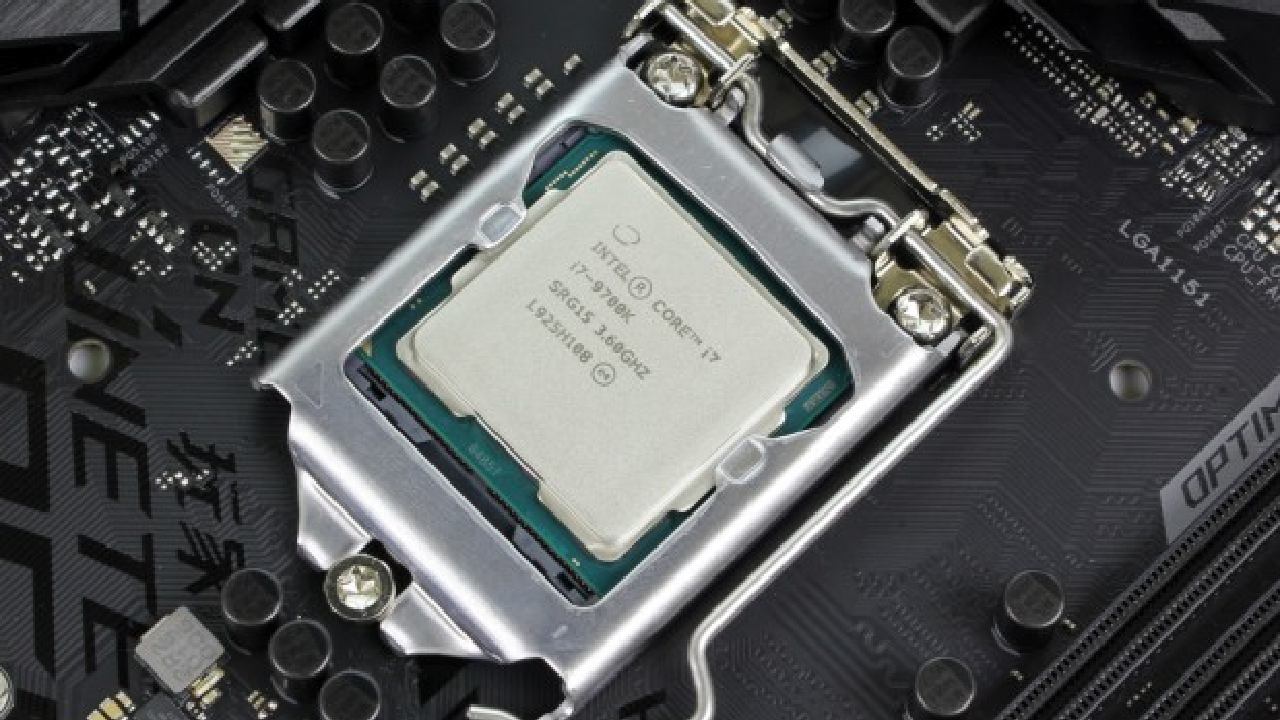
Setting Up the Test and Its Requirements
We installed the i7-9700K in an Asus Prime Z370-A (LGA1151 V2) motherboard to test its performance. The BIOS on this board was already up to date because it had already run a 9700K. We also have Z370-PRO and Z390-PRO boards for sale; however, the Z370-A offers more power and an additional M.2 NVMe port, providing you with more options.
The Z370-A handled our system with 32GB of DDR4 memory running at 3200 MT/s perfectly. The MSI options, in contrast, did not perform as well.
The 9700K can sometimes exceed 200W due to its more powerful VRM design. To keep the temperature down, it needed a 280mm Corsair AIO cooler.
The CPU often reached the mid-80s and occasionally the low-90s on several cores at 5 GHz. These temperatures aren't great for long-term use, but they stayed constant during testing.
We utilized a Gigabyte Windforce OC RTX 4070 for the graphics. It's not the best GPU on the market, but it's strong enough to push the 9700K to its boundaries at 1080p and 1440p. We tested both old and new games on this setup to see how well the 9700K works today.
How well it plays games
The 9700K averaged 199 fps and 119 fps at 1% lows in Battlefront 2 (2017) when tested in DirectX 12 at the low preset and 1080p. The Frostbite engine in the game is quite demanding in terms of graphics. Still, it doesn't need much CPU power, and the gameplay was entirely fluid with no stuttering.
Call of Duty: Black Ops 6 ran quite well on the modified IW 8.0 engine at the basic setting with DLSS set to 1080p, averaging 176 fps and 127 fps 1% lows.
The game felt smooth and responsive, as one would expect from hardware with 8 cores, similar to previous consoles. But if you're creating a new system from scratch, a newer i5-12400 would certainly beat the 9700K while still being compatible with DDR4.
In Fortnite (Unreal Engine 5), the 9700K averaged 230 fps with 74 fps at 1% lows at 1080p using the lowest preset and DLSS balanced. The game was quite fun to play, but on TVs with high refresh rates, the 1% lows could be obvious.
The chip is still good for competitive players, but hyper-threaded CPUs tend to give steadier frame pacing.
The GTA V Enhanced Edition** used the high RT preset and ran at 1080p. It achieved an average of 124 frames per second and 70 frames per second at 1% low frame rates.
The 4070 wasn't fully used, and some cores on the 9700K were maxed out, so the CPU wasn't as efficient. DLSS Balanced mode didn't improve performance; therefore, the CPU is to blame.
When we tested Helldivers 2 at low settings with balanced upscaling, we got average frame rates of 181 and 130 for the lowest 1%. GPU scaling helped the game, and once the graphics card stopped being the bottleneck, the CPU ran smoothly with no visible stuttering.
Another Unreal Engine 5 game, Marvel Rivals, averaged 177 frames per second and dropped to 123 at low 1080p settings. Even though not all cores were fully utilized, many were close to 100%, indicating the limitations of single-threaded throughput. Even if they are still smooth, newer CPUs would get greater averages with the same GPU.
Minecraft Java Edition (v1.21.5) averaged 469 fps when tested with 16 render chunks and 8 simulation chunks. However, it dipped to 44 fps at 1% lows, perhaps due to chunk loading and the Java engine's overhead. You can play it, but the way the game makes new terrain limits it.
Finally, Splitgate 2 did really well. The 9700K averaged 262 frames per second (fps) and 160 fps at 1% lows with low settings and DLSS balanced.
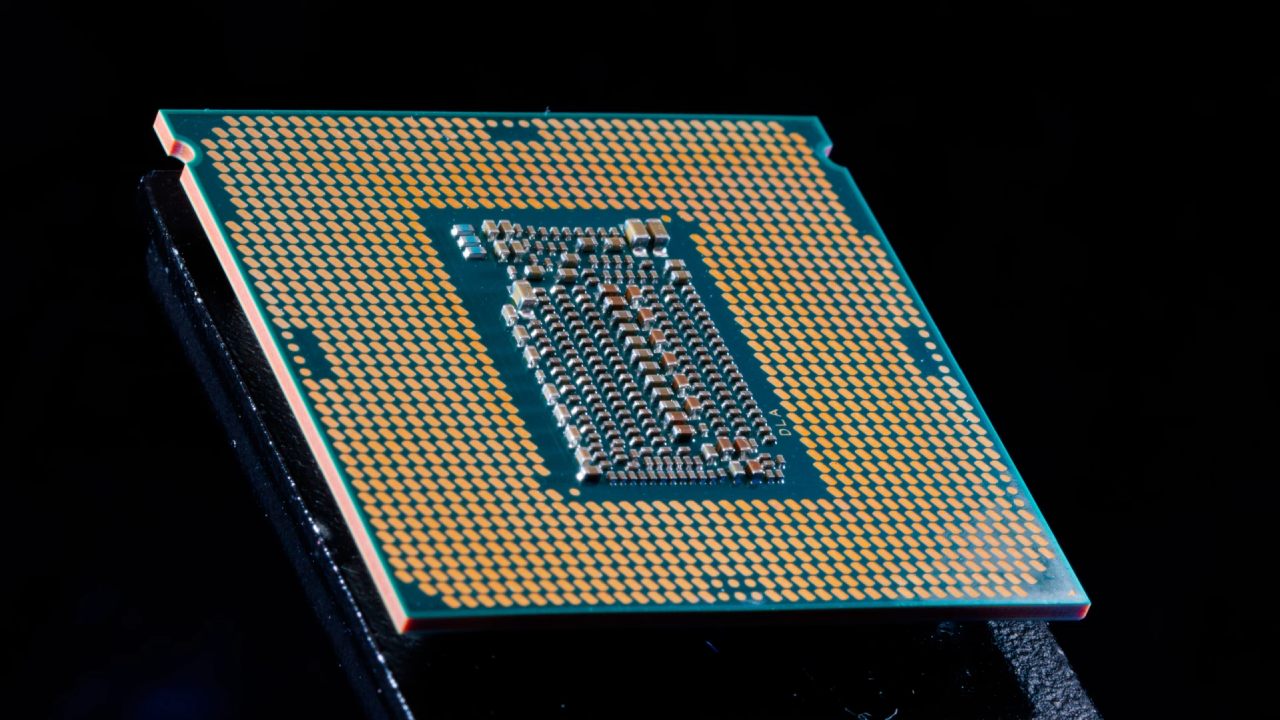
Features and Architecture
The Coffee Lake-R lineup took the place of the original Coffee Lake series. It made changes that altered how Intel divided its products. The i7-9700 K had 8 cores but no hyper-threading. The i9 tier became the fully unlocked flagship.
The L3 cache arrangement of the 9700K is unusual because some cores are partially disabled. Yet, it still has the same overall cache as the i7-8700K.
It has 8 physical cores and higher overall L1 and L2 cache. Without hyper-threading, single-threaded performance remains the same under load. However, as more and more current workloads and games utilize higher thread counts, the lack of SMT becomes increasingly apparent.
The 9700K still works nicely with games designed for the Xbox One, and it also performs well with games made for the PS4 and Xbox One, which feature 8-core architectures.
But because it only has 8 threads, it's not as good for multitasking or handling production workloads as modern 16-thread CPUs. It can do light picture and video processing, but heavier 4K workloads will fill it up rapidly.
Compatibility with Motherboards and Platforms
Any LGA1151 V2 socket board, including those with Z370 or Z390 chipsets, can be used with the 9700K. To access all of the 9th generation's capabilities, you might need to update the BIOS on Z370 and B360 boards.
The CPU and chipset are connected by a 4-lane DMI Gen 3 interface. This link is fast enough for two NVMe SSDs; however, it may not be able to handle intensive use simultaneously.
Most motherboards only connect one M.2 slot directly to the CPU; the others go through the chipset. It's very important to examine the specifications of your motherboard, as some early boards even used SATA to connect additional slots.
All supported boards are limited to PCIe Gen 3, which is still fast but lacks features like Resizable BAR and Gen 4 support.
Power and Heat Properties
The 9700K's TDP is 95W, but with turbo boost, it may reach 125W for brief bursts. This limits its long-term performance by default, but you can adjust the BIOS settings to maximize its capabilities.
We set the chip up so that it could draw up to 255W forever. The highest power level seen while gaming was 202W, which is reasonable but rather hot. We later limited the power to 175W to maintain stability. This maintained temperatures below 84°C under load while keeping frequencies between 4.9 and 5.0 GHz.
Voltage tweaking was needed to prevent the system from overheating. Maintaining a voltage of around 1.325V, stabilized, without compromising performance. The basic clock frequency for all cores is 3.6 GHz; however, with Multi-Core Enhancement, all cores can run simultaneously at 4.9–5.0 GHz.
The built-in UHD 630 graphics aren't ideal for gaming, but they're sufficient for troubleshooting and displaying content on the screen.

Final Thoughts
The Intel Core i7-9700K remains a wonderful blend of old and new. Because it was manufactured using Intel's sophisticated 14nm++ process and produced in large quantities, you can easily find one now for about $140 on the used market.
But contemporary CPUs like the i5-12400 offer higher efficiency, performance, and platform features for the same price.
The 9700K still performs well in games and remains a great choice for budget or used builds. Its power consumption and lack of hyper-threading make it less scalable, but for many people, especially those upgrading from previous 4-core CPUs, it delivers a significant performance boost.
If you already have one, you should definitely keep using it. But you're putting together a new rig. In that case, current CPUs are the better long-term choice because they have more cores, consume less energy, and support newer technologies.
Also, check our other Intel articles below:
- Intel Core Ultra 9 285K Review And Performance Breakdown (2025)
- Intel Core Ultra 9 285K vs AMD Ryzen 7 9800X3D: In-Depth Gaming Performance and Benchmark Comparison
- Intel Core i5-13400F Gaming Performance: Still Worth It in 2025?
- Intel Core i9‑14900K vs. AMD Ryzen 7 7800X3D: Power Profiles & Gaming Benchmarks
- Intel Core i9 14900K: Specs, Benchmarks, and Competitor Comparison
- Intel Core Ultra 5 245K Review: Gaming, Productivity & Power Efficiency Tested
- Intel Core Ultra 9 285 K's iGPU Gaming: In-Depth Benchmarks & Analysis
- Intel vs. AMD Gaming Laptop: Performance, Thermals & Battery Life Compared
- AMD Ryzen 7 9800X3D vs.7800X3D vs. Intel Core Ultra 7 265K: Gaming, Thermals & Price Analysis
Editor, NoobFeed
Gaming Hardware Updates
No Data.