
Intel’s 2026 Nova Lake CPUs Could Outperform AMD’s X3D Chips
Intel’s Nova Lake architecture introduces a major overhaul with massive cache expansion and significantly increased core counts for enhanced performance.
Hardware by Tanvir Kabbo on Dec 06, 2025
Intel's upcoming Nova Lake architecture is shaping up to be one of its most dramatic redesigns in years, largely because the company needs a strong answer to AMD's dominant 3D V-Cache chips.
AMD has held a comfortable gaming lead thanks to its massive on-chip cache, something Intel's previous architectures lacked. After Intel increased latency in its recent designs, it became clear that a new approach was necessary. That new direction appears to be a huge last-level cache upgrade, potentially redefining how Intel CPUs handle gaming workloads.
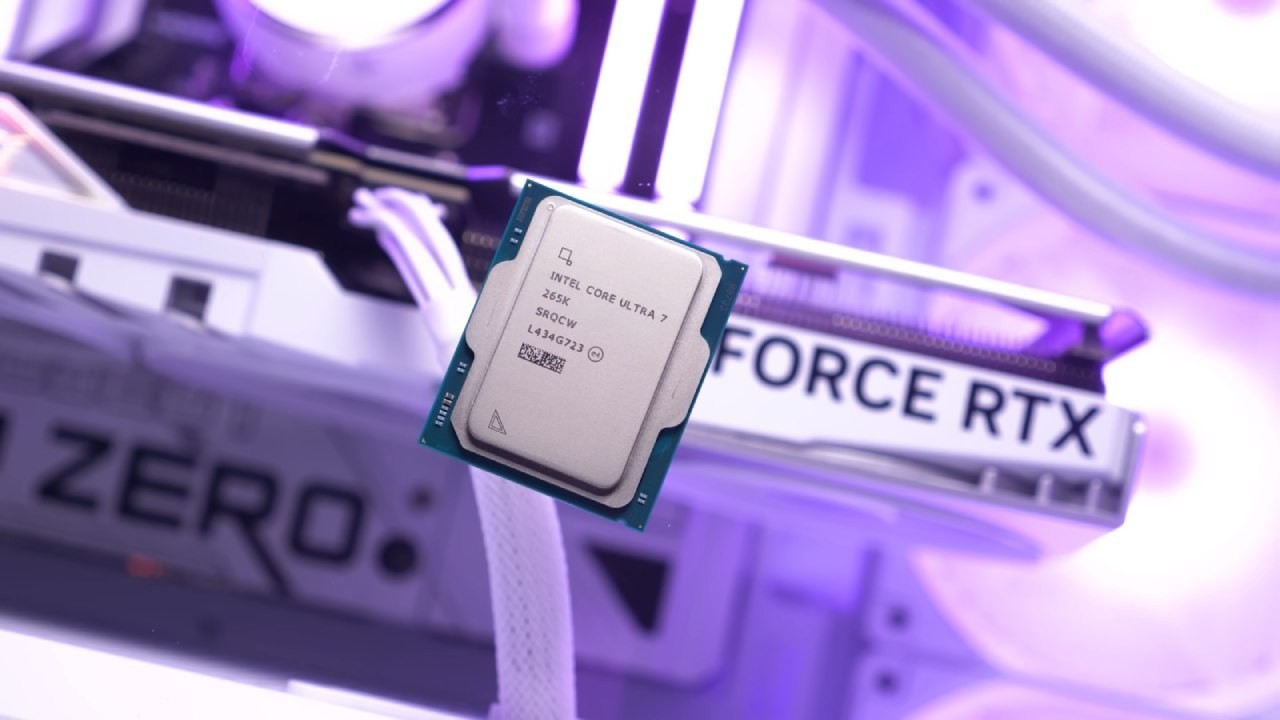
Push for a Big Last-Level Cache
Some leaks say that Nova Lake would add a "big last-level cache" (BLC). Early reports imply that it could be roughly 144 MB on some compute tiles, especially on K-series CPUs that are not locked. Most Intel CPUs on the market currently only need a small part of that.
A jump this big might change the way games access data in a big way, making memory bottlenecks less of a problem and making frames more consistent. Even the most cautious projections say that the potential rise is about 20%. Still, given how cache-sensitive many modern games are, the real-world gain could be considerably higher.
Core Expansion and Move Toward 52 Cores
Intel might also add more performance cores, efficiency cores, and possibly more low-power cores to the IO tile, enabling systems with up to 52 total cores. This would be one of the biggest leaps in the number of desktop cores.
While not all games can take advantage of extremely high core numbers, this configuration could shine in multitasking, streaming, creation workloads, and background processes, freeing up P-cores to focus on gaming performance.
Reinforcing Performance with Faster Memory
It is also possible that Nova Lake and its Arrow lake update siblings will support DDR5-7200 memory natively. This would boost bandwidth and lower latency compared to older generations. Faster memory is very important for game performance, especially when used with large caches.
With tighter timings and higher throughput, memory-sensitive engines like Unreal and simulation-heavy titles could see gains far above average expectations.

Can Intel Really Hit 30 to 40% Gains?
Based on current tuning results, many Intel Core Ultra chips already see improvements of 25-30%% in certain games when optimized memory settings are applied. Adding better architecture, larger cache layers, faster interconnect fabrics, and higher clocks could increase Nova Lake's gaming performance by 30 to 40%.
Some engines may show much larger changes, especially if they are prone to memory stalls or require large working sets.
Road to 2026 and What It Means for Gaming
If Intel does everything right and releases Nova Lake on time in 2026 or early 2027, it might change the gaming CPU market in a big way. Suppose a CPU has large cache pools, high frequencies, better core designs, faster memory support, and a strong interconnect.
In that case, it might compete with, or even beat, AMD's Zen 6 series. It will depend on Intel's ability to manage latency, frequency, and cache use whether average increases will exceed 30%, but the potential is obviously there.
Final Thoughts
Given the size of the alleged upgrades, it is not unreasonable to expect a 30% boost in gaming performance from Nova Lake. But it all depends on Intel being able to add all of these functions without creating any new bottlenecks.
If done well, Nova Lake might be one of the most important CPU releases in years and set a new standard for high-end desktop performance for the following generation.
Also, check our other Intel articles below:
- Intel Core Ultra 9 285K Review And Performance Breakdown (2025)
- Intel Core Ultra 9 285K vs AMD Ryzen 7 9800X3D: In-Depth Gaming Performance and Benchmark Comparison
- Intel Core i5-13400F Gaming Performance: Still Worth It in 2025?
- Intel Core i9‑14900K vs. AMD Ryzen 7 7800X3D: Power Profiles & Gaming Benchmarks
- Intel Core i9 14900K: Specs, Benchmarks, and Competitor Comparison
- Intel Core Ultra 5 245K Review: Gaming, Productivity & Power Efficiency Tested
- Intel Core Ultra 9 285 K's iGPU Gaming: In-Depth Benchmarks & Analysis
- Intel vs. AMD Gaming Laptop: Performance, Thermals & Battery Life Compared
- AMD Ryzen 7 9800X3D vs.7800X3D vs. Intel Core Ultra 7 265K: Gaming, Thermals & Price Analysis
Senior Editor, NoobFeed
Gaming Hardware Updates
No Data.