
Intel Prepares Panther Lake Handheld CPUs With Full Xe3 Graphics and Scalable Power
Intel’s Panther Lake handheld variants bring full Xe3 graphics, scalable 25W to 80W power, and advanced efficiency improvements.
Hardware by Masaru Hoshino on May 05, 2026
There are credible rumors that Intel is planning to follow up its Panther Lake laptop processors with dedicated handheld-oriented variants, or possibly optimized versions of the same silicon tailored for small handheld gaming devices. Initial evidence suggests these chips will retain much of the full GPU architecture of standard Panther Lake systems, representing a substantial leap forward for integrated graphics in handheld systems.
Complete Panther Lake setup in a handheld form Factor
It appears you'll get what was in the full Panther Lake chip, which is a big plus. It appears that there will be two variants, one with 10Xe3 cores and another with 12Xe3 cores. It also seems that the configuration is relatively unchanged, with two performance CPU cores, eight efficiency cores, and four low-power cores. That is why it is a very powerful installation in a handheld device.
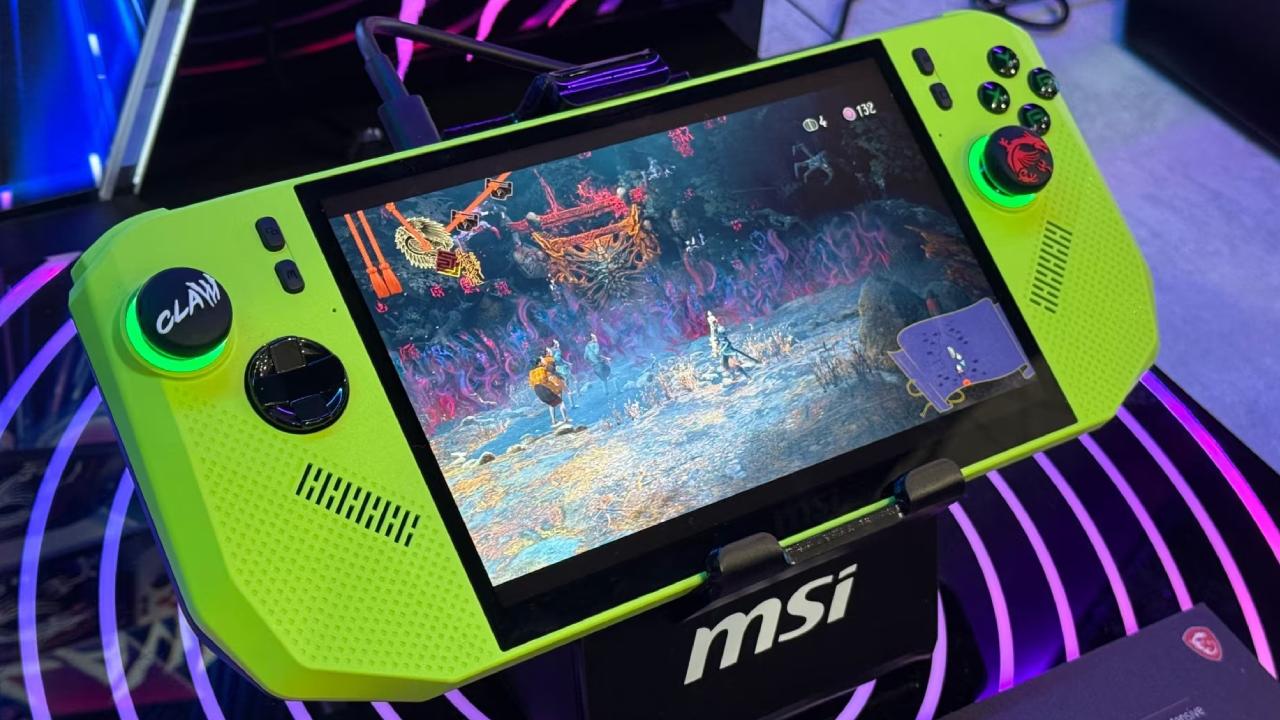
The most noticeable aspect is the 25W base TDP. It can also be scaled up to 65W, or even 80W on the more extreme of the two versions, with the full core configuration of 12Xe3. Such a scale of performance opens a broad range of performance not seen in handheld gaming systems.
Performance Expectations and Feature Set
In current laptop applications, the chips are likely to hit the limit at about 30W. Performance even at that level has been impressive. It has been shown that games like Alan Wake 2 can be played on an integrated graphics card at Series S resolution with PS5-quality settings and achieve better performance than the Series S, which emphasizes the amount of horsepower available despite the use of an integrated graphics card.
The feature set is also a significant strength, along with raw performance. The support for technologies like XeSS, frame generation, and multi-frame generation functionality provides a future-oriented platform well-suited to current gaming needs.
Low-Power Cores and Battery Efficiency Potential
The use of four low-powered cores is one of the architecture's more interesting aspects. In less demanding applications, e.g.,, running older games or emulators, such cores can handle the workload on their own. At the same time, the rest of the chip goes offline. This opens up the possibility of much better battery life without having to manually tune or create a performance profile.
In practice, this may enable lightweight 60Hz titles to be converted to 120Hz without compromising efficiency. This may make the experience much more streamlined than with current handheld devices, where it is often necessary to manually adjust settings to optimize battery consumption.
Scalability of Power and Competition with AMD
Of particular interest is the scalability of the power consumption. It is also in a similar wattage range to AMD's Strix Halo, with configurations potentially reaching up to 80W. Nonetheless, this architecture seems to maintain a greater share of its performance at lower wattages than larger silicon designs, which are optimally operated within a narrow power window.
This is particularly concerning for handheld systems, where power efficiency is critical. Although high-power settings can deliver impressive results, it is not feasible to sustain 50W or higher in portable devices. An efficient scaling curve offers a better balance between performance and usability.
Display, Design Expectations, and Market Impact
With increasing expectations, functionalities such as VRR displays are becoming increasingly important for handheld gaming devices. An OLED VRR panel with high quality would be a significant improvement to the experience, as it would smooth the performance variation inherent in low-power hardware.
Pricing is a factor, as broader market trends, such as rising memory and SSD costs and the difficulty of developing advanced chips like Panther Lake, influence pricing. These aspects imply that future products might not be positioned as affordable devices.
Nonetheless, the greater effect is obvious. The mobile personal computer gaming environment has been gradually developing, and tougher competition is long overdue. As these developments unfold, the landscape is poised to become much more competitive, introducing new levels of performance and efficiency to portable gaming.
Editor, NoobFeed
Gaming Hardware Updates
No Data.