
Legion Go 2 Price Surge Makes Xbox Ally X the Better Value
Legion Go 2 BIOS update arrives amid growing market pricing pressure.
Hardware by Nahe Yan on Feb 13, 2026
Lenovo Legion Go 2 has gotten some bad news, while the Xbox Ally X has gotten some good news at the same time. There are also updates for Resident Evil 4 Remake and new price information for high-end portable hardware.
Changes in DRM, BIOS updates, and big price hikes are all affecting the current handheld market.
Changes to Resident Evil 4 Remake DRM Affect Performance
There is no longer Denuvo DRM in Resident Evil 4 Remake. Instead, there is Enigma DRM. Reports say that PCs lose between 10% and 50% of their performance. That drop is big, especially for people who use phones and tablets. The game has already been hacked, so fake copies that don't have DRM work better than real ones right now.
Denuvo used to be known for slowing down performance, even though other people said it didn't. Now, Enigma adds an even larger range of deterioration. As a result, genuine consumers are experiencing lower performance, whereas pirated copies don't incur DRM-related costs.
There are other questions about Resident Evil Requiem. It is likely to come with DRM, Denuvo at first. A Reddit member says Denuvo is still pricey to maintain as a service. Publishers often take it down later, when most people who might want to buy the game have already done so. At that time, paying for Denuvo becomes a net loss. Instead of leaving the game without DRM, Capcom replaced it with Enigma, which is either a one-time-use option or a cheaper alternative.
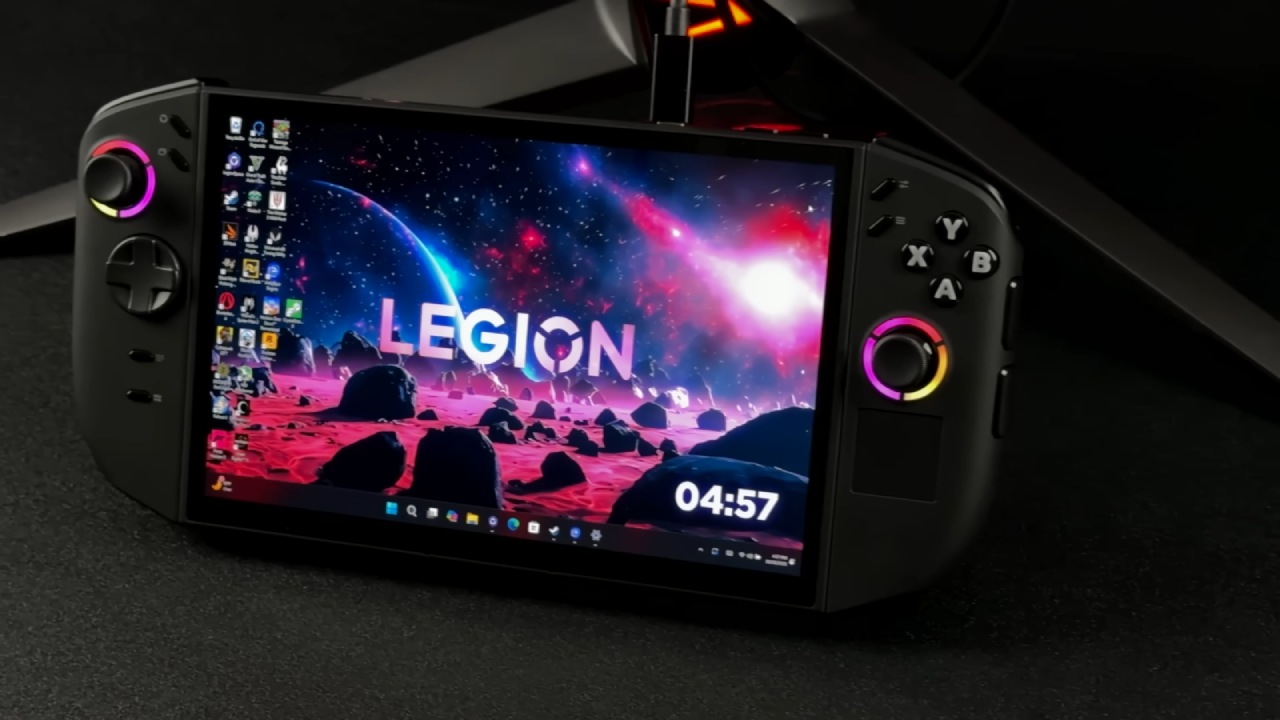
We are slowly making progress through Resident Evil 4 Remake, aiming to finish it before Requiem comes out. But with the DRM modification, the Legion Go 2's performance has clearly gotten worse. That change affects the overall mobile experience.
The Price of a Neo Next 2 Has Been Revealed
A Neo Next 2 is an OLED handheld powered by AMD's AI Max Plus APUs. It now has prices in the West. The device has a 9-inch OLED screen, a 116Wh battery, up to 128GB of RAM, TMR joysticks, and high-performance silicon. However, the price puts it squarely in the ultra-premium category.
The base model of the AI Max Plus 385, which has 32GB of RAM and 1TB of NVMe storage, costs $1999 at retail and $1799 for early birds. The price of the higher-tier AI Max Plus 395 models has increased significantly. The price for the 64GB RAM and 1TB configuration is $2699, down from $2300 at first. The model with 128GB of RAM and 1TB of storage costs $4299 at retail, although it was available for $3499 early.
The 385 configuration might be the best choice overall. It performs better than many contemporary processors and consumes less power than the 395. The 395 uses much more power, which can shorten the battery's life, even with a 116Wh unit. The 385 may be a better choice if you want to balance battery life with performance.
Update to the Legion Go 2 BIOS
Legion Go 2 Z2 Extreme model now has a fresh BIOS update. You can't get the update through Legion Space; you have to go to Lenovo's support page and install it yourself. When you download and run the installer, the machine will shut down and do the update. It is best to keep the device plugged in and not turn it off for 10 to 15 minutes.
The update doesn't make any major changes you can see, but it does offer small enhancements for people who want to stay up to date.

Price Hikes for Legion Go 2
Due to high demand for AI, VRAM, and storage space, prices for handhelds were expected to rise. You can now see such increases.
The price of the Z2 non-Extreme 512GB variant has gone up from $900 at launch to $1427. The 1TB version now costs about $1560. The price of the Z2 Extreme 1TB variant went up from $1099 at launch to about $1768. The 2TB Z2 Extreme variant now costs about $2040.
There is now a pricing difference of around 87.5% between the Legion Go 2 1TB Z2 Extreme and the Xbox Ally X. The hardware on both devices is mostly the same. Legion Go 2 has an 8.8-inch VRR OLED screen, 8GB of VRAM, and detachable controllers. Xbox Ally X, on the other hand, has the same processor and costs $799.
Consider whether the extra 8GB of VRAM and an OLED VRR panel are worth paying about 90% more. For current owners who bought at launch prices, the value is still high. But at the current prices, it's hard to suggest the Legion Go 2.
Final Thoughts
If the prices stay the same, the Xbox Ally X is the better choice for people who want to save money. The margin may shrink again if Ally X's prices rise as well. A Neo Next 2 with the AI Max Plus 385 becomes more competitive at increasing prices for the Legion Go 2, especially close to $2000. It doesn't have VRR, but the extra processing power keeps frame rates stable at 60 or 120 fps without relying too much on variable refresh.
Prices for handhelds are going up in line with past expectations of big jumps. Buyers who got their devices before these price hikes paid less at the start. People who buy things now need to think about whether the price changes for better display quality, VRR compatibility, and more VRAM are worth it in a market that is changing quickly.
Also, check our other hardware articles below:
- AMD Ryzen 9 9950X3D Review: Setting The Standard For 2025 Gaming CPU
- Amazon Luna 2025 Review: Is Prime Gaming's Cloud Service Your Go-To For Casual Fun?
- AMD RX 9070 XT Review: AMD's RDNA 4 Champion for 1440p Gaming
- GeForce Now Ultimate: Ditching Your Gaming PC For Cloud RTX 4080 Power?
- NVIDIA GeForce RTX 5080 Review (2025): Still A 4K Gaming Powerhouse?
- Intel Core Ultra 9 285K Review And Performance Breakdown (2025)
- AMD Ryzen 7 9800X3D Review: 3D V-Cache Goes God Mode with Stunning Gaming Performance
- Intel Core Ultra 9 285K vs AMD Ryzen 7 9800X3D: In-Depth Gaming Performance and Benchmark Comparison
- NVIDIA GeForce RTX 5080 Super Performance In Cyberpunk 2077: Path Tracing & DLSS 4.0 Tested
- AMD Radeon RX 9070 XT In Cyberpunk 2077: Ray Tracing & FSR 4.0 Tested
- Intel Arc B580 Review: The $250 GPU Revolutionizing 1440p Gaming
- Intel Arc B570 Vs. B580: Value, Specs, And Real-World Gaming Performance
- RTX 5090 Laptop Vs. M4 Max MacBook Pro: Ultimate Raw Performance Vs. Battery Endurance
- Intel Arc b580 Vs. RTX 4060: Game Performance And Value Analysis
- RTX5090 Hell Is Us Demo 4K Ultra Benchmark: DLSS Vs. Native Performance Guide
- NVIDIA RTX 5070 Review: Mid-Range Muscle or Marketing Hype?
- Nintendo Switch 2 Review: Handheld Performance, Features & Value Breakdown
- RTX 5070 Ti Review: Performance, Thermals & Power Efficiency Tested
- Samsung Odyssey OLED G81SF Review 2025: Ultimate 32-Inch QD-OLED Gaming Monitor
- AMD RX 9070 Performance Review: Thermals, Clocks, and Real-World FPS
- AMD Ryzen 5 7600 Review: Best Budget Gaming CPU of 2025?
- AMD Radeon RX 7800 XT Review: RDNA 3 Power For Midrange Gaming
- Asus ROG RTX 5090 Astral OC Vs. Founders Edition: The 4K Gaming Benchmark
- Intel Core i5-13400F Gaming Performance: Still Worth It in 2025?
- ASUS GeForce RTX 5090 LC Liquid Cooled GPU Review: Unmatched Silence & Speed
- ASUS ROG Ally X Handheld Review: Double the Battery, Double the Comfort
- Lenovo Legion Go S Review: The Ultimate Steam Deck 2 Alternative
- Sapphire NITRO+ AMD Radeon RX 9070 XT Review: The Ultimate 4K Gaming GPU
- Alienware 16 Area 51 Review: The Ultimate 2025 Gaming Laptop
- Alienware Area-51 Review: Unmatched 4K, Thermal, and Acoustic Performance
- AMD Ryzen 7 7800X3D: Delivers Gaming Performance Far Beyond Expectations
- AMD Ryzen 9 7900X Review: Powering the AM5 Era with DDR5 & PCIe 5.0
- Intel Core i9‑14900K vs. AMD Ryzen 7 7800X3D: Power Profiles & Gaming Benchmarks
- Intel Core i9 14900K: Specs, Benchmarks, and Competitor Comparison
- ASRock Radeon RX 7800 XT Challenger OC Review: Best Price-to-Performance GPU of 2025
Editor, NoobFeed
Gaming Hardware Updates
No Data.