
Mid-Range CPU Choices for Gaming and Productivity in 2026
Entry-level processor performance varies widely in 2026, with platform longevity becoming a decisive factor for long-term value.
Hardware by Tanvir Kabbo on Dec 25, 2025
In 2026, building or upgrading a PC can be scary, since every new processor claims to be much better than the last. More cores don't always mean a higher frame rate, and some new CPUs aren't worth the money.
Before buying something, you should know how long the platform will last, how well it works in the real world, and whether any hidden costs will arise in the long run.
.jpg)
Entry-Level CPUs: Where Most Mistakes Happen
For a long time, Intel was the best choice for people with small budgets, but that's no longer the case in 2026. Core i5-14600K is a popular model that costs around $200. It is clearly powerful. It does better than other AMD products at efficiency, editing, rendering, and heavy multitasking. In addition, it does very well in games.
Its raw performance isn't the problem. All of its surroundings are problematic. The processor runs hotter, consumes more power, and requires substantial cooling to reach that level of performance. However, its platform is its main downside.
There is no way to update in the future. In the next twelve months or so, we will not be able to modernize. In all likelihood, we'd have to swap out the RAM, processor, and motherboard. At that point, the term "cheap" no longer applies.
You should expect to pay about the same for AMD and Ryzen 5 9600X. Almost everything about their performance is comparable in gaming. However, the AMD choice is more advantageous because it uses less power, runs cooler, and is part of the AM5 platform, which will continue to receive new CPUs.
Ryzen 5 7500F, however, is the true shining star of the budget range. We can construct a powerful gaming PC without breaking the bank thanks to this processor. In terms of gaming performance, it can hold its own against far more expensive CPUs thanks to its low power consumption, reliability, and future upgrade compatibility. In 2026, for inexpensive central processing units (CPUs), the Ryzen 5 7500F is far and away the best option for gamers and thrifty shoppers.
Mid-Range CPUs Around $250
This part is intriguing because it shows that spending more money does not necessarily lead to better results. Here we have Core Ultra 5-245K, an excellent processor—but only if our needs are crystal clear.
In demanding productivity, rendering, editing, and multitasking tasks, it outperforms earlier Intel chips and CPUs designed only for gaming by up to 50%. The same problem persists, though: there is no way to update the platform. While it outperforms the Ryzen 5 9600X in gaming, it's still a hair slower. There is a difference, however, it isn't very large.
In this case, the choice is clear. The Ryzen 5 9600X is our top pick if gaming is your primary use. If we plan to do demanding tasks without worrying about future updates, Core Ultra 5-245K is an excellent pick. Still, AMD is the way to go if we value future updates and would rather not waste money in two years.
The Core Ultra 7-265K is in line with this trend as well. Again, limited by platform support, it is attractively priced, performs well, is more efficient than previous Intel parts, and excels in productivity.
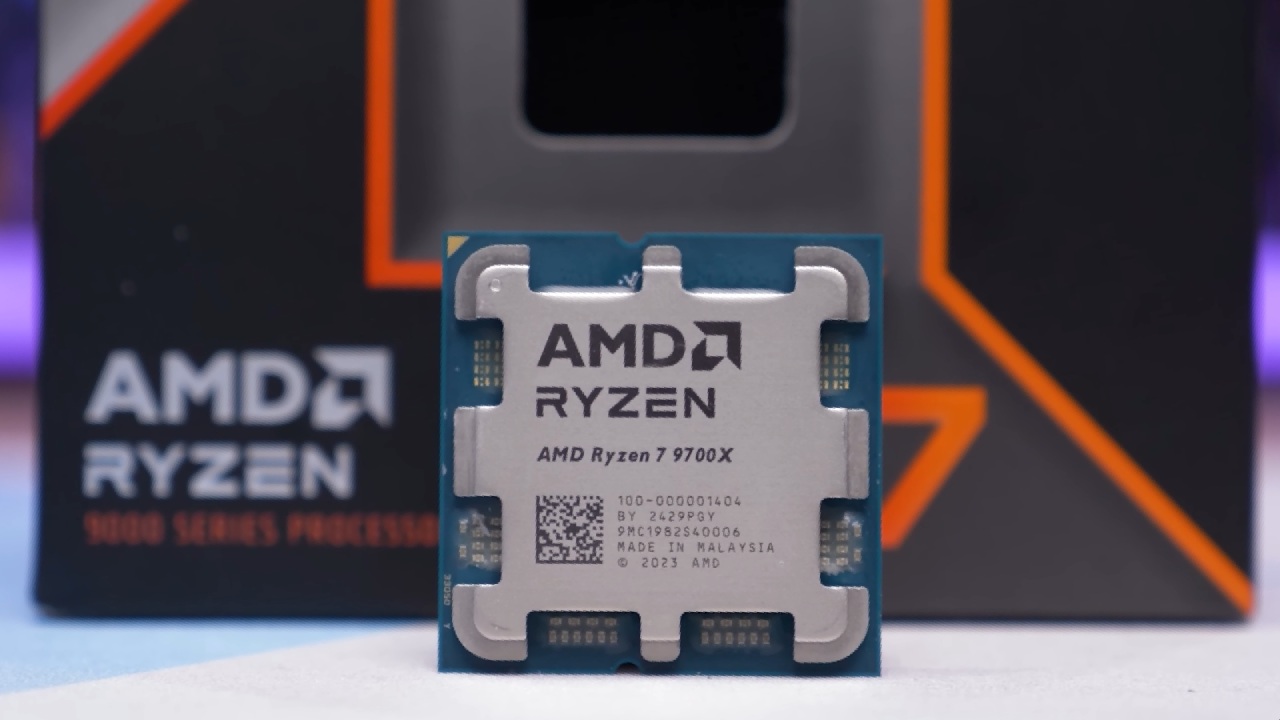
At the same time, Ryzen 7 9700X is the fastest out-of-the-box CPU in its class, more efficient, and quicker in gaming. The change isn't huge, but it becomes apparent when we play frequently.
An unrelated matter makes Ryzen 9 9900X intriguing. Even though it's pricey now, it might save us money in the long run by preventing us from having to replace the entire platform.
Best Gaming CPU of 2026
There isn't much back-and-forth when the topic is gaming alone. For gaming, nothing beats the Ryzen 7 9800X3D. It has the best frame rate, the most stable gameplay, and the best performance in demanding games.
Nevertheless, a crucial aspect is frequently disregarded. Even though it's a lot cheaper, the Ryzen 7 7800X3D is just around 8 percent slower. Unless we're talking about top-tier competitive shooters or niche games where every frame counts, the GPU, and not the CPU, is usually the limiting factor in most modern games.
This is why there is more to a good gaming CPU than simply speed. This one meets performance, affordability, and future-proofing. As a result, the 7800X3D is usually the better choice than the more expensive one.
Workstation CPUs for Heavy Productivity
This all changes if the PC's primary function is to create, edit, and render media. Here you may discover powerful central processing units (CPUs) such as the Core Ultra 9-285K, Ryzen 9 9950X, and Ryzen 9 9950X3D.
Compared to other models, the 9950X3D is both the most powerful and the most expensive. Paying the additional cost isn't always justified if we don't game. At a lower price point, the standard 9950X delivers excellent productivity.
Core Ultra 9-285K is now more affordable and can surpass AMD on some niche jobs. Still, there's no obvious way to update, and limited motherboard support means the platform problem is back. The importance of long-term upgradeability is heightened in productivity, as the PC is seen as an investment.
Because we can keep the current motherboard and update later without replacing the complete system, AMD once again gets the upper hand.

Hidden Problem: DDR5 Costs
A big problem in 2026 is the price of DDR5. Any construction project with a tight budget will be severely limited by the fact that a 32GB kit in the US can easily cost over $500. Since the motherboard, RAM, and upgrade possibilities make up the full platform, not just the CPU, the actual cost can be more in some cases.
In the grand scheme of things, AMD's longer platform lifecycle implies superior long-term value.
Final Thoughts
Now more than ever, AMD is at the forefront of performance, efficiency, and upgradeability. Due to its limited platform compatibility, Intel's value declines over time, even as it continues to excel in specialized productivity workloads.
A CPU that can't be upgraded quickly becomes useless, since upgrading typically means buying a new motherboard, RAM, and CPU. Making the right choice now will save you money in the long run.
Thanks for your support! We hope this guide helped you get a better idea of what you want to do. Good luck with your future builds as you try to avoid costly mistakes.
Also, check our other AMD articles below:
- AMD Ryzen 9 9950X3D Review: Setting The Standard For 2025 Gaming CPU
- AMD Ryzen 7 9800X3D Review: 3D V-Cache Goes God Mode with Stunning Gaming Performance
- AMD RX 9070 Performance Review: Thermals, Clocks, and Real-World FPS
- AMD Ryzen 5 7600 Review: Best Budget Gaming CPU of 2025?
- AMD Radeon RX 7800 XT Review: RDNA 3 Power For Midrange Gaming
- Sapphire NITRO+ AMD Radeon RX 9070 XT Review: The Ultimate 4K Gaming GPU
- AMD Ryzen 7 7800X3D: Delivers Gaming Performance Far Beyond Expectations
- AMD Ryzen 9 7900X Review: Powering the AM5 Era with DDR5 & PCIe 5.0
- Intel Core i9‑14900K vs. AMD Ryzen 7 7800X3D: Power Profiles & Gaming Benchmarks
Senior Editor, NoobFeed
Gaming Hardware Updates
No Data.