
Next-Gen Console Delays and GPU Price Hikes: Why Hardware Buyers Should Be Concerned
Next-generation console timelines shift as manufacturers reconsider launch windows amid ongoing component shortages and rising memory costs.
Hardware by Tanvir Kabbo on Jan 03, 2026
Recently, there have been many worrying headlines about hardware that signal increased instability across numerous important parts of the IT industry. Reports of delayed console generations, rising component prices, and more problems with GPU connectors have made the future less clear.
At the same time, new GPU competitors are emerging, challenging long-established industry leaders.
Potential Delay of Next-Gen Consoles
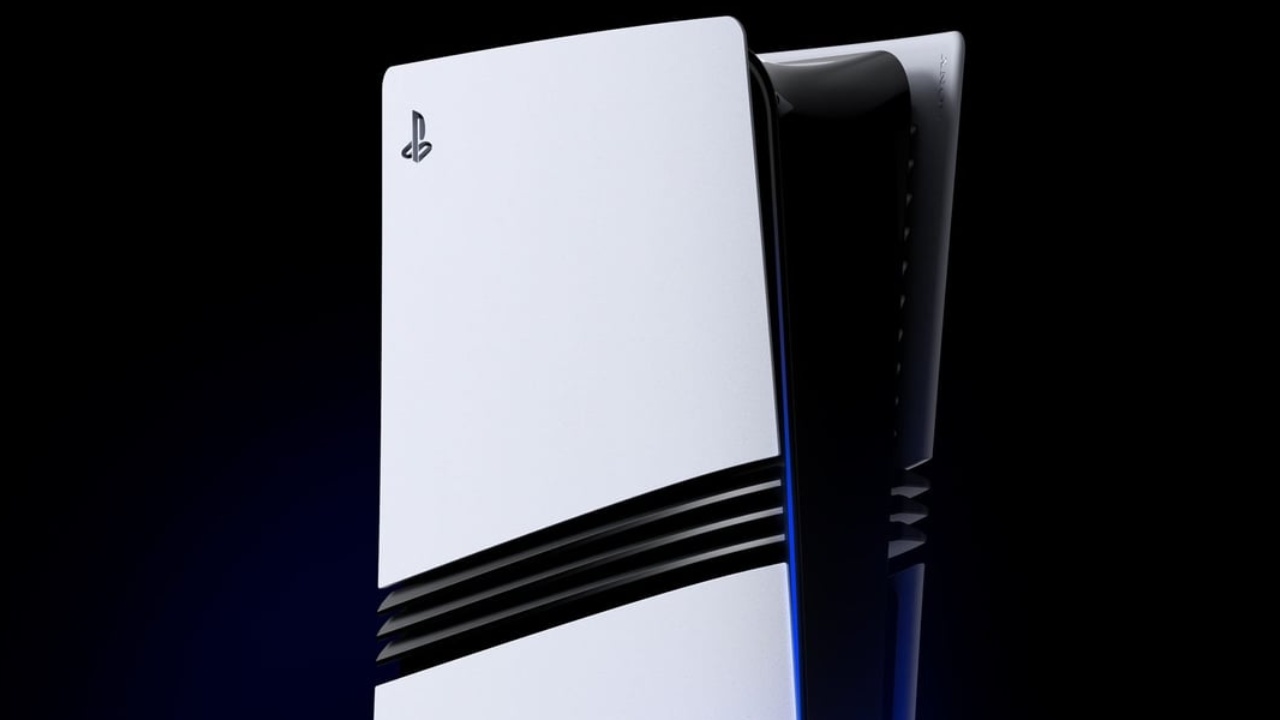
Starting with a new report originally shared by Insider Gaming and later covered by Tech PowerUp, console hardware makers—referring to major US brands—are reportedly in talks to delay the next generation of console hardware. These systems were originally set for release in 2027 and 2028.
According to the report, a revised launch window has not yet been announced, and manufacturers are considering delaying the launch in hopes that RAM prices and availability will stabilize before launch.
Given that timelines were already stretching into the late 2020s, any delay could push new consoles even further out. The ongoing RAM problem, which is likely to persist for a while, appears to be a major factor in the decision.
Component Price Hikes on the Horizon
Sadly, that's not the end of the bad news. ASUS has warned that prices will go up starting on January 5 of next year. We talked about a leak that said AIB partners would go in this direction before. Now the company has confirmed concerns about DRAM, NAND, and SSD components, as well as changes in upstream suppliers' capacities.
While no specific models were named, ASUS referenced product combinations and configurations that almost certainly include anything with memory or storage—GPUs, full PCs, notebooks, and more.
Adding to the problem, an overseas publication claims that both AMD and Nvidia plan to gradually and permanently increase GPU prices over the next several months. While it's unclear whether these statements stem from earlier leaks or new information, the report includes a major detail: Nvidia's RTX 5090 could reach a staggering $5,000 next year.
Prices beyond $3,000 were already a point of contention, so this would make GPUs even less affordable. More and more people are worried about connector failures.
Next, there has been another incident with a 16-pin connector, this time with a Sapphire Nitro Plus 9070 XT that has a new connector. This demonstrates that mid-range GPUs, which do not pull anywhere near the power of a 5090, are still susceptible.
There have been reports of user error, but we have also been told that newer RTX 5000-series cards with the revised 12V-2x6 connector won't have these problems. But many reports still dispute those claims, including those in which GPUs seem to have caught fire, leaving scorch marks on nearby components. We need to know when PCI-SIG, Nvidia, or someone else will fully deal with this.
In the most recent case, a customer saw random black-screen crashes after using the device for almost a year. Updating the BIOS, reinstalling the operating system, and troubleshooting didn't fix the problem. When we took the system apart, the connector had significant damage that fit the pattern we've been seeing over and over again.
Emerging GPU Competitors Enter the Market
Amid all this turmoil, new GPU manufacturers are stepping forward with early products that could challenge AMD and Nvidia. A newly formed company has begun shipping its first self-developed GPUs, including a professional model featuring 24GB GDDR6 with ECC memory and 24TFLOPS of FP32 compute, as well as a consumer-focused model with 12GB GDDR6 and support for DirectX12, Vulkan1.3, and OpenGL4.6.
The company's internal benchmarks show that the consumer card performs about as well as Nvidia's RTX 4060, which is a big boast for a new player in the GPU market. These are first-party data, but anything close to that would be real competition.
Another emerging GPU maker recently announced a gaming GPU said to be 15x faster in rasterization and an extraordinary 50x faster in ray tracing than its previous product. Although the comparison is likely against an earlier, relatively slow model, even that kind of generational uplift would be substantial.
The company recently sent out a driver update for its MTTS series of GPUs that added support for Vulkan1.3. This shows that they are working hard to make their products more compatible and faster.
A Potential Turning Point for the GPU Market
As these things happen, it's becoming evident that new GPU competitors are getting stronger. We might soon see significant pressure on well-known companies.
If these new products can do what they say they can, we might finally see the kind of competition that makes AMD and Nvidia work harder to make their products better, come up with new ideas, and, perhaps, lower prices.
Also, check our other Console articles:
- PS5 Pro vs. PS5 Slim: Frame‑Rate, Graphics & Performance
- PS5 Pro vs. Radeon RX 9060 XT vs RTX 5060 Ti: Ultimate $700 Gaming Showdown
- ASUS ROG Ally PS5 Remote Play | How to do Remote play on PS5 Using Sony's Official Remote Play App
- Stream PS5 Games on Steam Deck OLED: Step-by-Step Installation and Configuration
- AI Upscaling on PS5 Pro: Can PSSR Finally Match DLSS?
- PS5 Pro vs. PS5 Slim vs. PS5 — Design, Storage, Specs, and Gaming
- PS5 Pro vs. Xbox Series X: Specs, Price, Storage, Customization, and Gaming
- PS5 Pro vs. PC Gaming: Comparison of Graphics, Frame Rates, and Price
Senior Editor, NoobFeed
Gaming Hardware Updates
No Data.