
NVIDIA’s DLSS Strategy Could Redefine GPU Performance Standards
DLSS improvements risk shifting GPU value from silicon strength to software dependency.
Hardware by Nahe Yan on Feb 18, 2026
NVIDIA's DLSS is even better than anyone expected. But there is a big problem with it that no one is really talking about. To make the argument, it helps to talk about some of the new things that show how DLSS is nearly magical, then explain why it is a big problem everyone should be worried about, and what can be done about it.
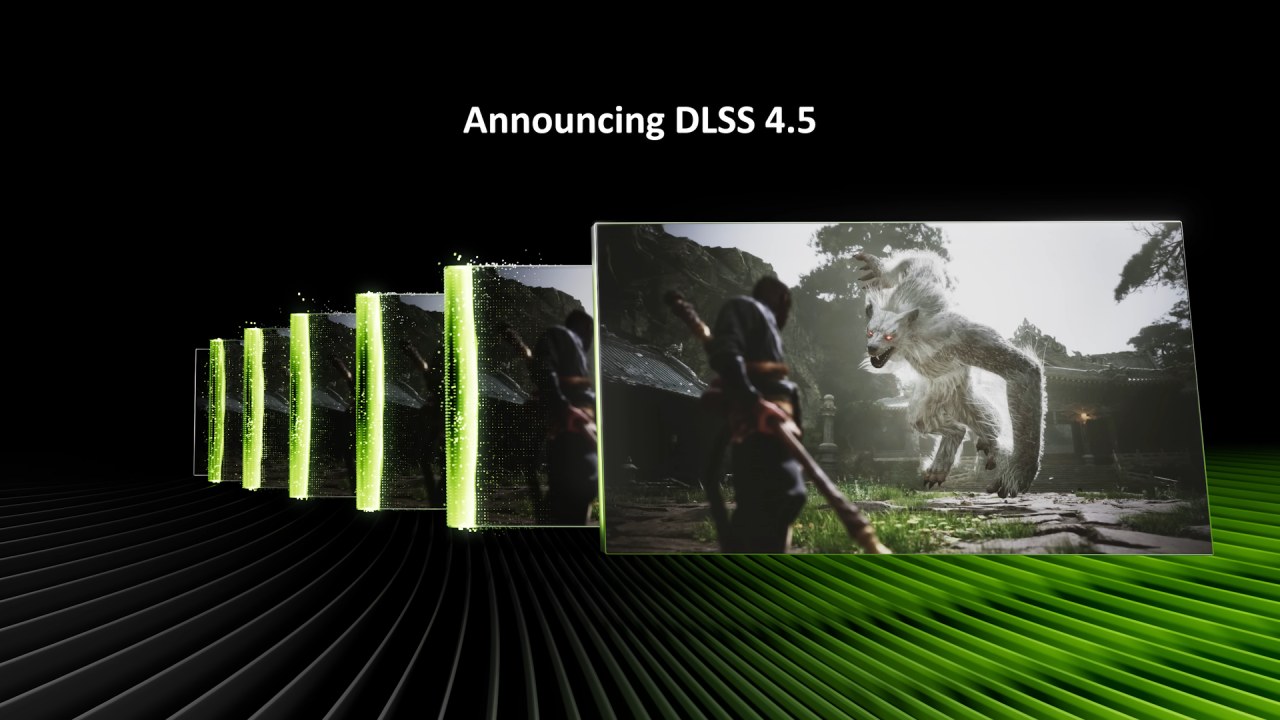
The technology looked great when DLSS 4.5 was first unveiled, featuring a second-generation Transformer model and up to 6x the frame rate. NVIDIA has since released a stable version, and the latest demos illustrate how much progress it has made. One test made games run at very low internal resolutions and then upscaled them to 4K using DLS S4.5 to observe when the image became usable.
The output looks bad at 38x22, which is about 1% of 4K resolution. But the picture gets a lot better at 136x76 than it did at the initial low resolution. It looks playable at 764x430, which is about 20% of 4 K resolution. That's where the worry starts.
The Asterisk and the Performance Claims
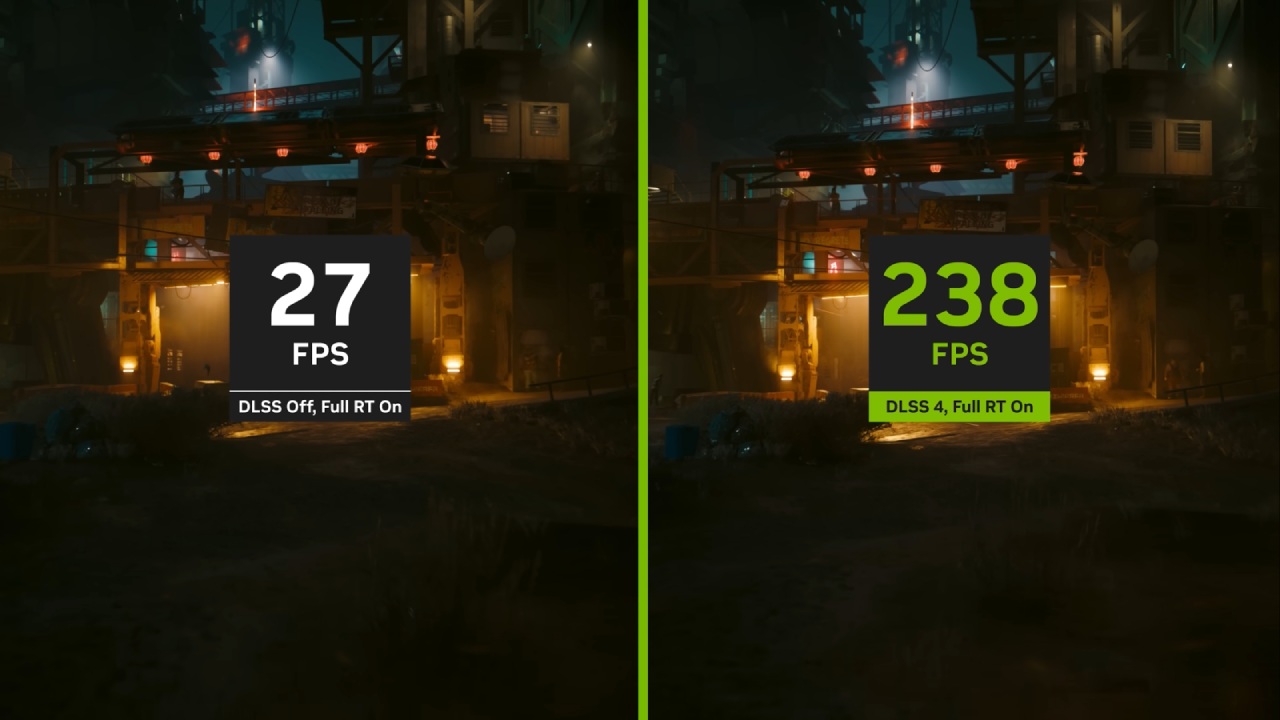
When Nvidia released the RTX 4000 series, the firm made big claims about how well it would perform. It became obvious later that the numbers were based on frame generation. When the RTX 5000 series launched and the 5070 cost $549, people made similar claims, this time about multi-frame generation. At first, many people didn't realize these numbers were based on software characteristics rather than hardware performance.
Now everyone knows that such assertions need to be made clearer. The worry is that Nvidia seems willing to keep doing this, which could cause problems for gamers and hardware development in the long run. We need to understand that upscaling and frame generation are part of the performance equation, but they are not the same as what the hardware can do on its own.
The Hardware Issue
Moore's law isn't giving us the same benefits it used to. It's getting harder and harder to make PC hardware work better. Companies have begun adopting chiplet technology and new packaging methods, such as 3D V-Cache. But to make big performance gains, they still need smaller transistors, and those are getting more expensive. The 2nm node from TSMC is likely to cost more than the 5nm node. Increases in density help, but they don't fully offset rising prices. The cost of tools keeps going up.
Ray tracing is also becoming a common goal for graphics at the same time. Ray tracing mimics how natural light behaves in a scene. At the same time, rasterization uses techniques such as shadow mapping and screen-space reflections to approximate its behavior. Ray tracing is expensive to implement. Because of this, hardware designers face two big problems: GPUs need to get much faster, and it costs more and more to achieve even tiny performance improvements.
DLSS, FSR, and XeSS are useful in that situation. Upscaling and frame generation are two ways to boost performance without buying new hardware.
When Software Becomes the Base
The problem comes up when the solution becomes the base. Developers have already used DLSS to fill in gaps in optimization. If hardware producers also use it to make GPUs look better than they are, the reasons for doing so change. Companies may focus on training better AI models rather than improving hardware. It costs a lot of money and time to make hardware. It is easier to scale software innovations across product lines.
Some people might say that the FPS is what matters, no matter how itis achieved. But what if you paid $1000 for a GPU that works like a 3050 in terms of raw hardware, but it supports a newer version of DLSS that older generations can't use? In that case, the manufacturer's profits rise, but the motivation to improve the core silicon's performance declines.
We shouldn't let the future be one where hardware advancement slows down because software hides the problems.
The Importance of Competition
Competition is really important. Even if you prefer Nvidia, it helps you when AMD does well. If AMD is in charge, Nvidia benefits from having more competition. The same goes for Intel. AMD launched its X3D chips, and Intel responded with CPUs with more cores. Competition pushes organizations to come up with new ideas and offer better deals.
If one business can set prices and performance standards without competition, the quality of its hardware can go down as prices rise. That pattern isn't just true for one brand; it's true for the whole industry.
Final Thoughts
Companies shouldn't be able to make promises about how well their hardware works based mostly on their software's capabilities without being completely transparent about it. Upscaling and frame generation are vital technologies, but hardware promises should be clearly different from software improvements. We need to ask if performance metrics are based on native rendering or frame generation when they are shown.
We should also think carefully about what we buy. Buying a competitor's product only to be mean doesn't always make the market better. Instead, we should reward items that have both strong native performance and useful software capabilities. DLSS should always be a bonus, not the main reason to buy a GPU.
If software becomes the main selling point, hardware may not be needed. This change would change how GPUs are made, sold, and priced. We want to ensure that both hardware and software development move forward together, not at the expense of one another.
Also, check our other hardware articles:
- AMD Ryzen 9 9950X3D Review: Setting The Standard For 2025 Gaming CPU
- Amazon Luna 2025 Review: Is Prime Gaming's Cloud Service Your Go-To For Casual Fun?
- AMD RX 9070 XT Review: AMD's RDNA 4 Champion for 1440p Gaming
- GeForce Now Ultimate: Ditching Your Gaming PC For Cloud RTX 4080 Power?
- NVIDIA GeForce RTX 5080 Review (2025): Still A 4K Gaming Powerhouse?
- Intel Core Ultra 9 285K Review And Performance Breakdown (2025)
- AMD Ryzen 7 9800X3D Review: 3D V-Cache Goes God Mode with Stunning Gaming Performance
- Intel Core Ultra 9 285K vs AMD Ryzen 7 9800X3D: In-Depth Gaming Performance and Benchmark Comparison
- NVIDIA GeForce RTX 5080 Super Performance In Cyberpunk 2077: Path Tracing & DLSS 4.0 Tested
- AMD Radeon RX 9070 XT In Cyberpunk 2077: Ray Tracing & FSR 4.0 Tested
- Intel Arc B580 Review: The $250 GPU Revolutionizing 1440p Gaming
- Intel Arc B570 Vs. B580: Value, Specs, And Real-World Gaming Performance
- RTX 5090 Laptop Vs. M4 Max MacBook Pro: Ultimate Raw Performance Vs. Battery Endurance
- Intel Arc b580 Vs. RTX 4060: Game Performance And Value Analysis
- RTX5090 Hell Is Us Demo 4K Ultra Benchmark: DLSS Vs. Native Performance Guide
- NVIDIA RTX 5070 Review: Mid-Range Muscle or Marketing Hype?
- Nintendo Switch 2 Review: Handheld Performance, Features & Value Breakdown
- RTX 5070 Ti Review: Performance, Thermals & Power Efficiency Tested
- Samsung Odyssey OLED G81SF Review 2025: Ultimate 32-Inch QD-OLED Gaming Monitor
- AMD RX 9070 Performance Review: Thermals, Clocks, and Real-World FPS
- AMD Ryzen 5 7600 Review: Best Budget Gaming CPU of 2025?
- AMD Radeon RX 7800 XT Review: RDNA 3 Power For Midrange Gaming
- Asus ROG RTX 5090 Astral OC Vs. Founders Edition: The 4K Gaming Benchmark
Editor, NoobFeed
Gaming Hardware Updates
No Data.