
NVIDIA GeForce RTX 5070 vs. Radeon RX 9070: The Midrange Battle of 2025
Modern midrange GPUs deliver high frame rates and efficient upscaling for smooth 1080p and 1440p gaming experiences.
Hardware by Tanisha Aria on Oct 26, 2025
The mid-range GPU market is hotter than ever in 2025. As games become more demanding and upscaling technology improves rapidly, both NVIDIA and AMD are working hard to strike the best balance between price, performance, and features.
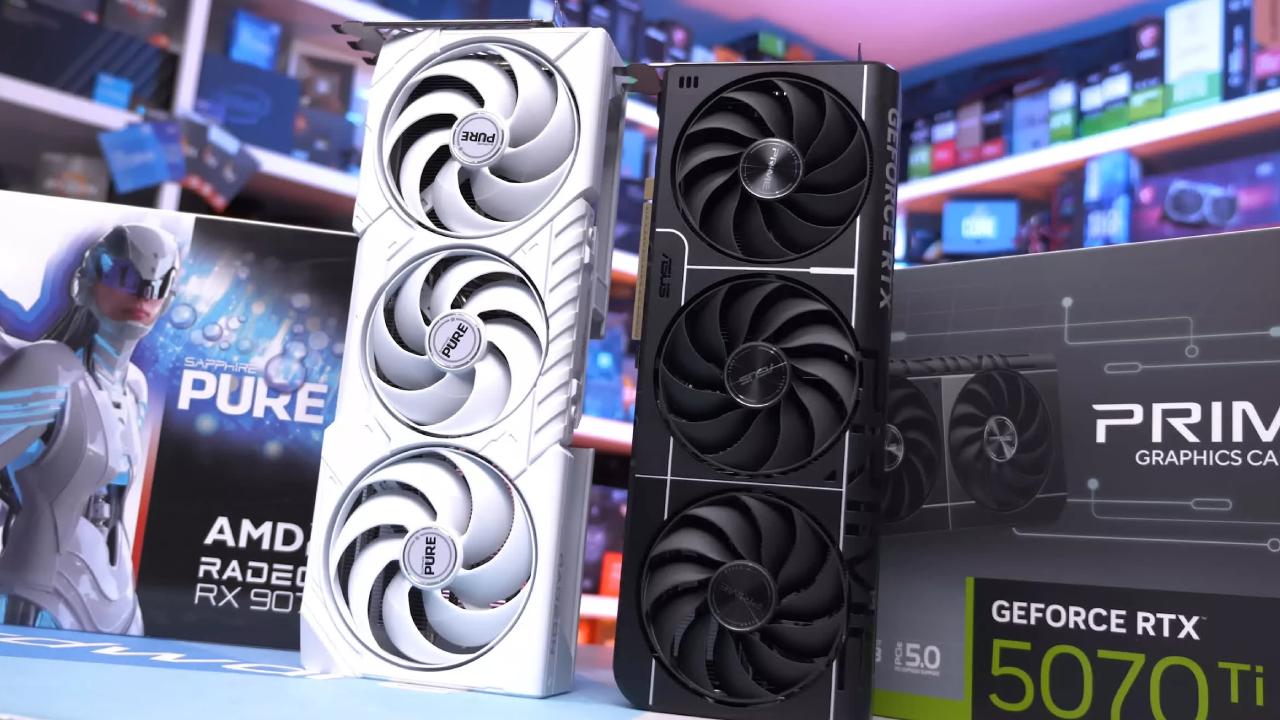
This week, we put the GeForce RTX 5070 and the Radeon RX 9070, two popular mid-range competitors, head-to-head to see which delivers a better gaming experience.
Both cards are aimed at players who want great graphics, smooth frame rates, and next-generation upscaling performance at 1080p and 1440p without spending a lot of money. But after testing a number of modern games, the results weren't as clear-cut as you might think.
Performance Overview
The Radeon RX 9070 was usually better at raw gaming power. When both cards were running in their respective Quality upscaling modes (DLSS 4 for NVIDIA and FSR 4 for AMD), AMD's card averaged about 13% better performance than the RTX 5070 across a dozen modern games, including Cyberpunk 2077, Hogwarts Legacy, Starfield, and Alan Wake 2.
The RX 9070 had a clear edge because it had more headroom, especially when the GPU was the bottleneck at 1440p. AMD's architecture really shone in games that rely heavily on rasterized rendering, like Resident Evil 4 and Baldur's Gate 3.
The RTX 5070, on the other hand, wasn't far behind. In games optimized for DLSS 4 and Reflex, NVIDIA's card had more consistent frame pacing and lower input lag. This made it feel smoother when it moved, even when the average FPS was a little lower.
So, even though the RX 9070 has the highest throughput, the RTX 5070 still feels better in some games. This is a reminder that frame rates aren't everything.
Image Quality and Upscaling
Upscaling is the most important feature of this generation of GPUs, and both DLSS 4 and FSR 4 have made huge strides.
DLSS 4 is still the best way to rebuild images. It gives you sharp textures, stable edges, and great temporal stability, which means less flickering and shimmering when you move. DLSS looked cleaner and more detailed than native resolution in most cases, which is impressive.
But AMD's FSR 4 deserves praise. It's come a long way since the first FSR 2 days, and in 2025, it finally feels like it can compete. FSR 4 works with almost any GPU and has good graphics, especially in slower-paced or cinematic games.
Some FSR 4 implementations looked almost identical to DLSS 4 at 1440p, but they still had ghosting and temporal artifacts when things moved quickly.
To sum up, DLSS 4 makes things clearer, smoother, and less ghostly. On the other hand, FSR 4 supports more features, offers slightly sharper textures, and is a great deal for AMD users.
NVIDIA still has the upper hand among gamers who care about image quality and motion stability. FSR 4 is great for people who just want free performance improvements without worrying about hardware limits.

Power Use and Effectiveness
Efficiency is still one of the biggest differences between these two GPUs.
The RTX 5070, based on NVIDIA's improved Ada architecture, used about 165 watts on average while gaming. The Radeon RX 9070, on the other hand, consumed about 190 watts under the same conditions and was based on AMD's RDNA 4 architecture.
That 25-watt difference doesn't seem like a lot, but it means less heat, quieter fans, and less stress on your PSU during long gaming sessions. NVIDIA also still has an edge in how well its coolers perform. The RTX 5070 stayed at around 68°C, while the RX 9070 stayed closer to 73°C with similar aftermarket coolers.
Neither cards overheat nor slows down, but the RTX 5070 has a more refined, energy-efficient edge because it uses less power and runs more quietly. This makes it great for small or quiet builds.
Cost and Worth
Most gamers always look at the price first, and AMD wins this round, even if only by a little.
As of this writing, the Radeon RX 9070 usually costs $30 to $40 less than the GeForce RTX 5070, depending on the model and availability. When you add that to its 10–15% better performance in traditional rendering, it's clear that AMD gives you more raw frames for your money.
But NVIDIA's RTX 5070 makes up for it with more features. DLSS Frame Generation, Reflex latency optimization, better AV1/NVENC encoding, and AI-assisted scaling make the RTX 5070 a better choice for streamers, content creators, and people who care about ecosystem support outside of gaming.
So it all depends on what you need:
- RX 9070 is better for gaming value.
- The RTX 5070 has more features, better software support, and better performance.
Final Thoughts
After days of testing and comparing things side by side, the answer is pretty clear:
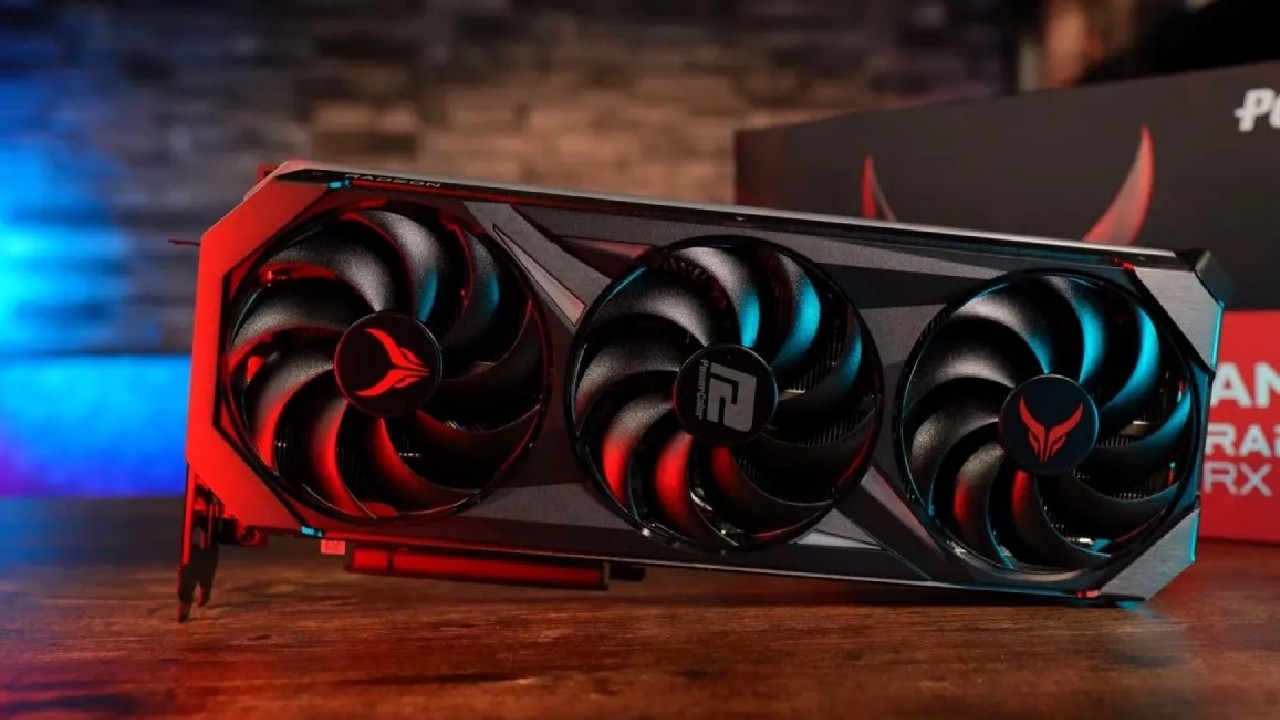
For most gamers, the Radeon RX 9070 is the faster and cheaper GPU. At its price point, it offers a lot of value with higher frame rates, great upscaling performance, and more. AMD's card is the better deal for people who only care about gaming.
Still, you shouldn't underestimate the GeForce RTX 5070. It runs cooler and quieter and works perfectly with NVIDIA's other products, like DLSS Frame Generation, Reflex, and the newest NVENC encoder.
NVIDIA is the way to go if you want smooth, fast gaming with great graphics and features coming in the next generation.
If you want the most for your money and don't mind using a little more power, go with AMD.
Either way, both GPUs show that the midrange market in 2025 is a great place for gamers, and competition keeps pushing both sides to give more for less.
Also, check our other articles below:
- GeForce RTX 5090 Unleashed: Is NVIDIA's New Flagship the Ultimate 4K Gaming GPU?
- NVIDIA GeForce RTX 5080 Review (2025): Still A 4K Gaming Powerhouse?
- RTX 5090 Performance Testing In GTA 5 – 1080p, 1440p, and 4K Max Settings Benchmark
- NVIDIA RTX 5070 Review: Mid-Range Muscle or Marketing Hype?
- RTX 5070 Ti Review: Performance, Thermals & Power Efficiency Tested
- ASUS GeForce RTX 5090 LC Liquid Cooled GPU Review: Unmatched Silence & Speed
- MSI GeForce RTX 5090 32GB SUPRIM SOC Review: Power Efficiency, Cooling, and Gaming Performance
- INNO3D RTX 5060 Ti 16 GB X2 Review: Gaming Benchmarks, Temps, and Power Efficiency
- HP Omen 45L Review: RTX 5090 Performance, Thermals, and Value Analysis
- ASUS TUF Gaming GeForce RTX 5060 Ti Review: DLSS 4, Power Efficiency, and Gaming
- ASUS Prime RTX 5060 Ti OC 16GB Review: DLSS 4, Ray Tracing, & Thermals Tested
- NVIDIA GeForce RTX 5060 Review: Specs, Gaming, and Cost per Frame
- MSI GeForce RTX 5090 GAMING TRIO OC Review: A Monster Power GPU
- AMD Ryzen 9 9950X3D Review: Setting The Standard For 2025 Gaming CPU
- AMD Ryzen 7 9800X3D Review: 3D V-Cache Goes God Mode with Stunning Gaming Performance
- AMD RX 9070 Performance Review: Thermals, Clocks, and Real-World FPS
- AMD Ryzen 5 7600 Review: Best Budget Gaming CPU of 2025?
- AMD Radeon RX 7800 XT Review: RDNA 3 Power For Midrange Gaming
- Sapphire NITRO+ AMD Radeon RX 9070 XT Review: The Ultimate 4K Gaming GPU
- AMD Ryzen 7 7800X3D: Delivers Gaming Performance Far Beyond Expectations
- AMD Ryzen 9 7900X Review: Powering the AM5 Era with DDR5 & PCIe 5.0
- ASRock Radeon RX 7800 XT Challenger OC Review: Best Price-to-Performance GPU of 2025
- Intel Core i9‑14900K vs. AMD Ryzen 7 7800X3D: Power Profiles & Gaming Benchmarks
Contributor, NoobFeed
Gaming Hardware Updates
No Data.