
NVIDIA N1X Laptop SoC Could Challenge RTX 4070 Mobile GPUs
NVIDIA’s N1 and N1X ARM SoCs introduce unified memory and Blackwell GPU architecture for high-performance Windows laptops.
Hardware by Tanvir Kabbo on Apr 16, 2026
People have been talking more and more about Nvidia's lack of a new consumer desktop GPU this year. But that view doesn't fully show where the corporation is going, because a new type of ARM-based system-on-chip (SoC) is coming. These processors are made for Windows laptops and combine CPU and GPU functions with unified memory. This could change what people expect from mobile gaming and computing.
NVIDIA N1 and N1X: A New ARM-Based SoC Approach
There has been a lot said about Nvidia and the lack of a new consumer-level graphics card this year, but that is not strictly true. What is actually expected is an SoC, a laptop-style integrated chip using unified memory. It will be built into Windows laptops and will use ARM cores. The processor itself is called the N1, with a higher-power variant named the N1X.
.jpg)
It was noticed on VideoCardz that an Nvidia N1 laptop motherboard had leaked, and it appears to be a serious piece of hardware. The configuration includes 128GB of LPDDR5X memory.
Having now seen the N1, it appears to be essentially a renamed version of the processor used in the DGX Spark system, which makes sense. The specifications are quite extraordinary, with up to 20 CPU cores in a 10+10 big.LITTLE configuration. This may be lower in the standard N1 than in the N1X.
GPU Performance and Architecture Expectations
The GPU configuration reportedly includes 6,144 CUDA cores, likely based on the Blackwell architecture. Architecturally, it is very similar to the RTX 5070, a GPU that has proven extremely popular. The desktop version is currently one of the most widely used GPUs according to the Steam Hardware Survey.
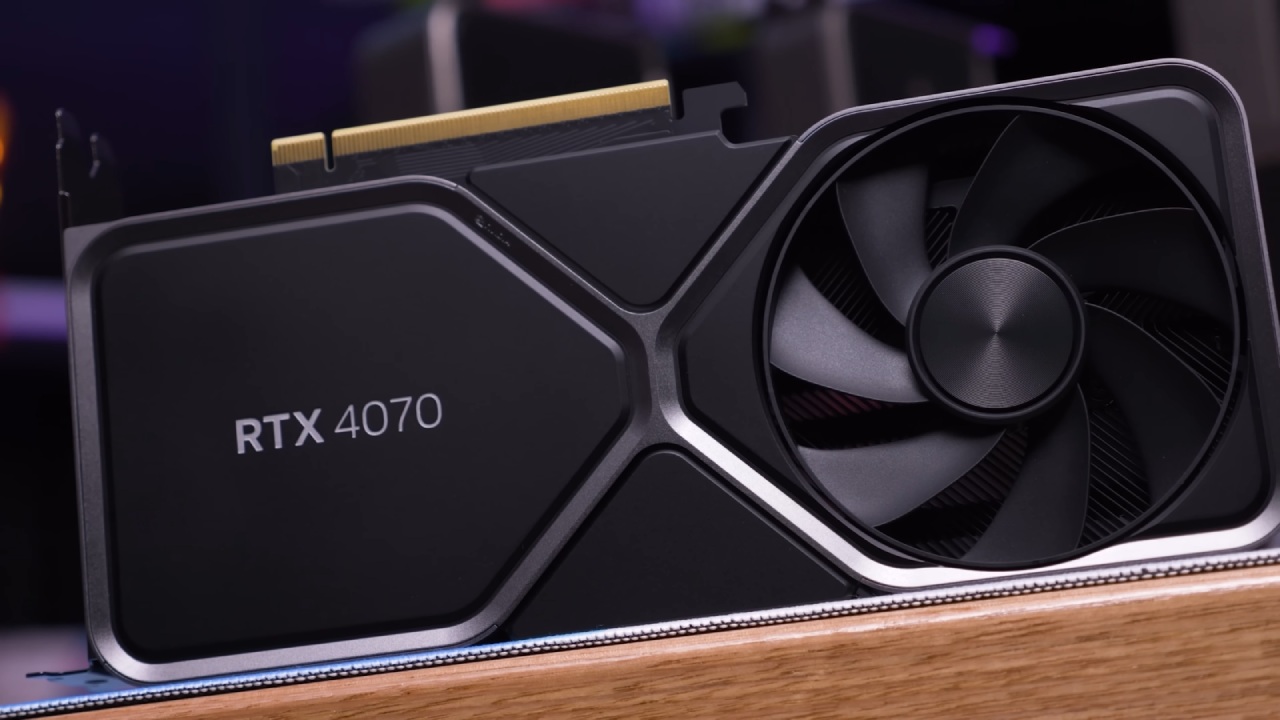
But it won't work the same way because of variations in memory interface, bandwidth limits, and power limits like TDP. Even so, this is a risky move into the Windows-on-ARM laptop market. Some estimates suggest performance may be similar to a high-TGP RTX 4070-class GPU, making it a very powerful mobile option.
Unified Memory Advantage Over Traditional GPUs
The memory setup is one of the most interesting parts. Most people probably don't need 128GB, but even a 32GB arrangement may work, with 16GB going to the GPU and 16GB going to the system. This could do away with some of the problems that lower-end desktop GPUs have, especially those that only have 8GB of VRAM.
The leaked motherboard confirms this is not a DGX Spark system but a laptop platform. It is expected to be announced at Computex, and there is significant anticipation around what it will deliver. Windows on ARM performance has improved compared to earlier implementations, such as initial Snapdragon-based Surface devices, which struggled significantly.
Windows on ARM and Driver Considerations
There were previously issues with GPU performance, including severe stuttering. It was unclear whether those problems stemmed from Windows on ARM itself or from poor driver support. With Nvidia's established driver ecosystem, there is an expectation that these issues could be resolved or significantly reduced.
The possibilities go beyond just laptops. This kind of SoC could make it possible for devices like Steam Machines or perhaps a new generation of Nvidia Shield hardware to work. The Tegra X1 is still in the current Shield, thus an upgrade is long overdue.
Expanding the Mobile and Handheld Market
A lot of people are interested in seeing this technology used on a wider range of devices. Most people don't need a 128GB setup, but smaller ones could be perfect for low-end laptops, portable devices, and small systems.
The thought of additional competition in this area is very intriguing. AMD has mostly controlled the market for portable and mobile SoCs, but new companies could help break the deadlock. New architectures, like Intel's Panther Lake, are also trying to compete in this area, which makes things more interesting.
The quality of the driver is still very important. NVIDIA has always had good driver support, but recent problems show that there is still room for improvement. Still, if the execution goes as planned, this may turn into a very interesting product.
Professional Use Cases and High-End Mobile Computing
Even for users not focused on laptop gaming, this development is significant. High-performance mobile computing is increasingly important for professional workflows, including content creation and game capture. The ability to play games, capture footage, and process it into finished content on a single portable device is highly valuable.
This sort of performance has usually been linked to high-end Apple laptops, which don't support a lot of games. A high-performance ARM-based Windows computer might address that gap by providing both work and play in one place.
Future Potential, Competition, and Efficiency
Another intriguing point of view is efficiency. Seeing what modern low-power devices can do, like next-generation handheld consoles, shows how powerful optimized architectures can be. This SoC is intended to use a 4nm process and the newer Blackwell architecture, while those systems use older designs like Ampere on less advanced process nodes.
This makes me wonder how much performance can go up at lower power levels and how competitive the solution will be. NVIDIA already offers a lot of laptop discrete GPUs, such as the RTX 4060 and RTX 4070, and this SoC technique could be similar to those.
The leaked motherboard appears to represent a full-scale configuration, which may not reflect typical consumer devices. Very few laptops are expected to ship with 128GB of memory, but the existence of such hardware demonstrates the upper limits of the platform.
Looking Ahead to Computex
There has been some talk about possible delays because Windows on ARM isn't ready yet, but it's not clear if those worries have been dealt with. People expect to see it during Computex, and then they will be able to try it out.
The development could be a big change for mobile computing, as it combines unified memory, ARM architecture, and Nvidia-class GPU performance onto one platform. The full effect will be obvious once real devices are available and performance can be tested in real-life situations.
Also, check our other hardware articles:
- AMD Ryzen 9 9950X3D Review: Setting The Standard For 2025 Gaming CPU
- Amazon Luna 2025 Review: Is Prime Gaming's Cloud Service Your Go-To For Casual Fun?
- AMD RX 9070 XT Review: AMD's RDNA 4 Champion for 1440p Gaming
- GeForce Now Ultimate: Ditching Your Gaming PC For Cloud RTX 4080 Power?
- NVIDIA GeForce RTX 5080 Review (2025): Still A 4K Gaming Powerhouse?
- Intel Core Ultra 9 285K Review And Performance Breakdown (2025)
- AMD Ryzen 7 9800X3D Review: 3D V-Cache Goes God Mode with Stunning Gaming Performance
- Intel Core Ultra 9 285K vs AMD Ryzen 7 9800X3D: In-Depth Gaming Performance and Benchmark Comparison
- NVIDIA GeForce RTX 5080 Super Performance In Cyberpunk 2077: Path Tracing & DLSS 4.0 Tested
- AMD Radeon RX 9070 XT In Cyberpunk 2077: Ray Tracing & FSR 4.0 Tested
- Intel Arc B580 Review: The $250 GPU Revolutionizing 1440p Gaming
- Intel Arc B570 Vs. B580: Value, Specs, And Real-World Gaming Performance
- RTX 5090 Laptop Vs. M4 Max MacBook Pro: Ultimate Raw Performance Vs. Battery Endurance
- Intel Arc b580 Vs. RTX 4060: Game Performance And Value Analysis
- RTX5090 Hell Is Us Demo 4K Ultra Benchmark: DLSS Vs. Native Performance Guide
- NVIDIA RTX 5070 Review: Mid-Range Muscle or Marketing Hype?
- Nintendo Switch 2 Review: Handheld Performance, Features & Value Breakdown
- RTX 5070 Ti Review: Performance, Thermals & Power Efficiency Tested
- Samsung Odyssey OLED G81SF Review 2025: Ultimate 32-Inch QD-OLED Gaming Monitor
- AMD RX 9070 Performance Review: Thermals, Clocks, and Real-World FPS
- AMD Ryzen 5 7600 Review: Best Budget Gaming CPU of 2025?
- AMD Radeon RX 7800 XT Review: RDNA 3 Power For Midrange Gaming
- Asus ROG RTX 5090 Astral OC Vs. Founders Edition: The 4K Gaming Benchmark
Senior Editor, NoobFeed
Gaming Hardware Updates
No Data.