
NVIDIA Titan V CEO Edition Review: 32GB FP64 Beast Tested in Modern Games
Rare Titan V CEO Edition hardware delivers FP64 compute capability with expanded memory bandwidth and capacity.
Hardware by Nahe Yan on May 26, 2026
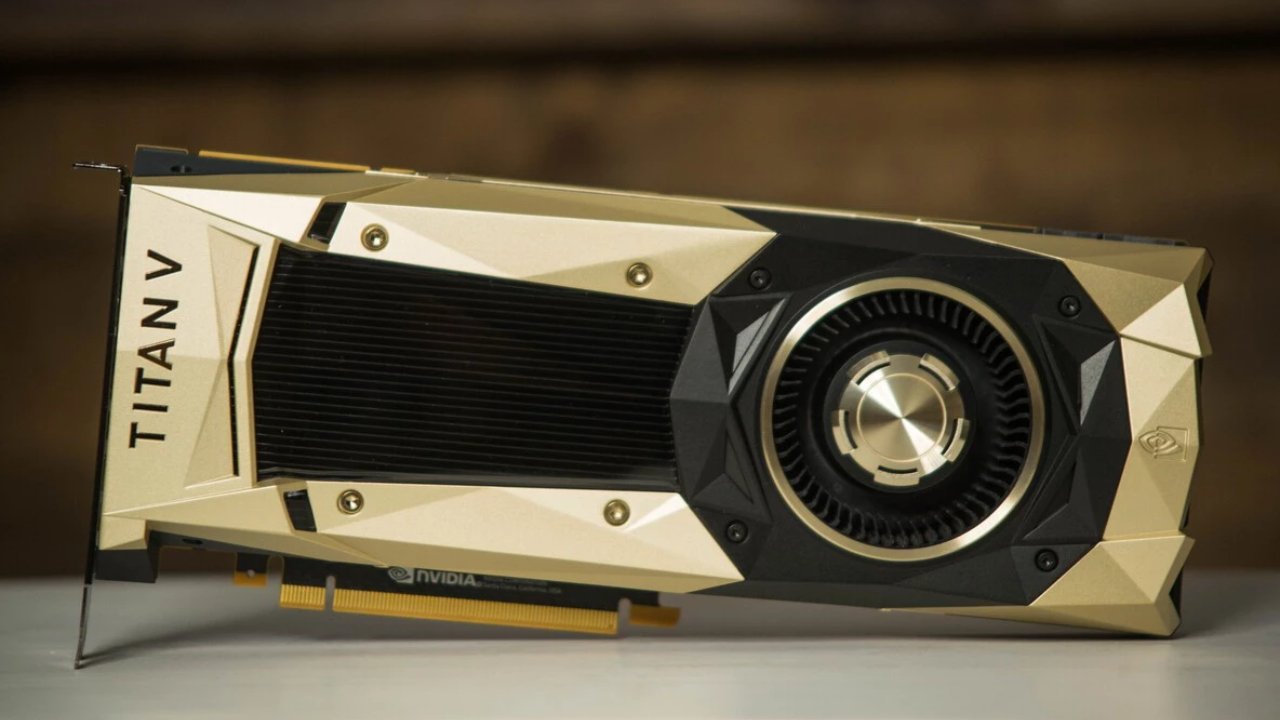
NVIDIA Titan V CEO Edition is a fairly uncommon graphics card that hasn't been much discussed in the mainstream for years. The card's architecture is Volta and features a 32GB pool of HBM 2 memory, with hardware differences that, while not distinguishing it from later architectures, help keep several design elements that set it apart from the rest of the Titan lineup.
Titan V CEO edition has a more skilled footprint than gaming GPUs, yet it's additionally more powerful than expert compute GPUs in FP64, and it's from the data center. NVIDIA Titan V CEO Edition is a rare graphics card, and it's believed that no more than 20 were released to the public market. Given the rarity, we would not aggressively tune or make hardware modifications that would introduce undue risk.
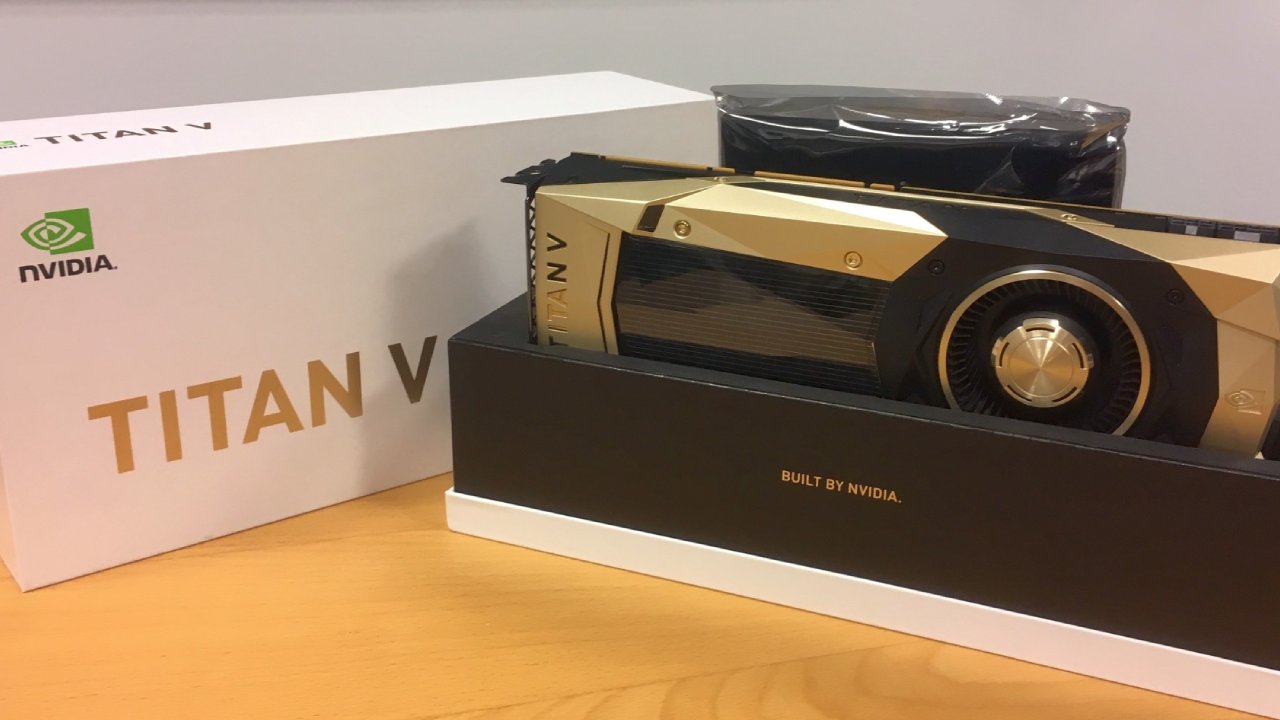
This is a Rare Titan GPU With Limited Availability
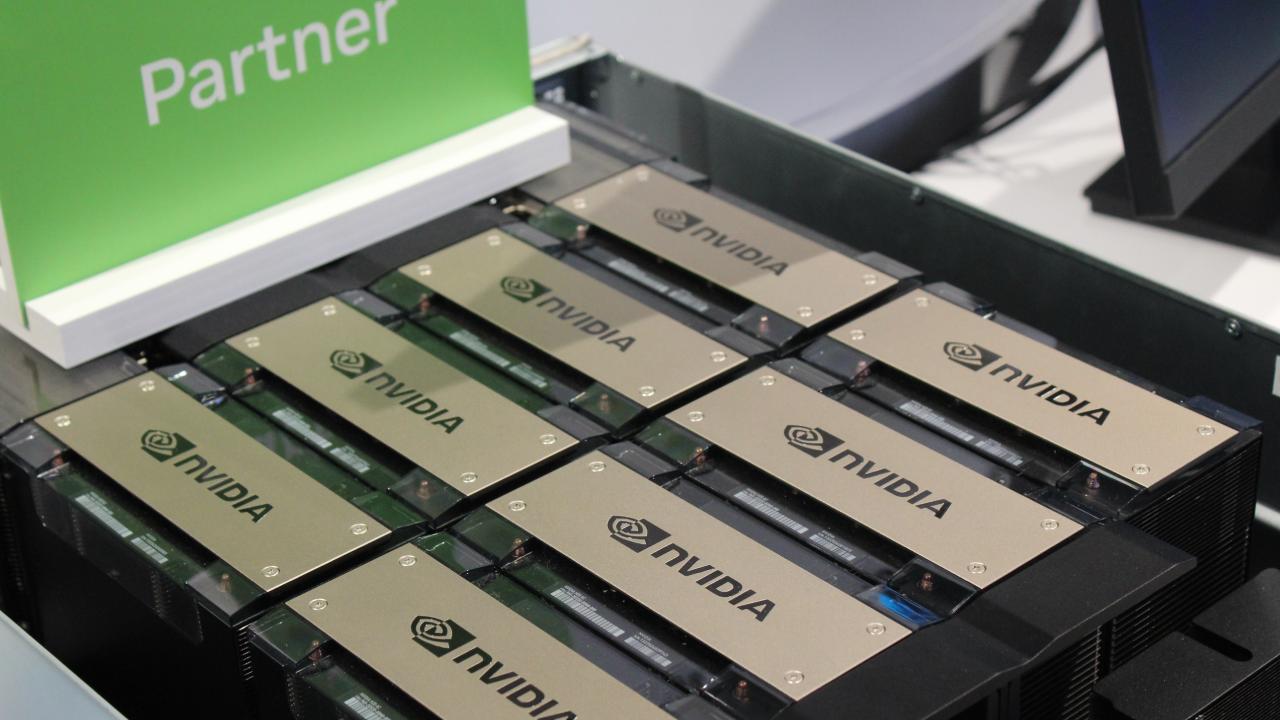
Much of the circuitry used in the Titan V CE is common to that of the Tesla V100, a data center accelerator designed for machine learning and AI workloads. The GPU's core is a stripped-down version of the GV100, with larger HBM 2 memory stacks and additional active controllers, making it distinguishable from the standard Titan V.
The fully unlocked GV100 is equipped with a 4096-bit HBM 2 controller distributed around the die's edge. This is limited to 3072 bits on the standard Titan V, but is unlocked to full on the CEO Edition. We can immediately see the impact on memory capacity and bandwidth.
Titan V CPU Specifications for CPU Edition
The CEO's version of the all-new Titan V doubles memory to 32GB, while the standard version offers 12GB. This is a high amount of VRAM, especially for consumer graphics products at launch in 2018. This GPU rarely encounters memory issues even in today's workloads.
The newer RTX 5090 is based on GDDR7 memory, which offers faster transfer speeds than the older GDDR5, but the Titan V CEO Edition can still be used with a memory configuration that supports workloads that require massive amounts of VRAM.
Select Compute Hardware and Core Configuration.
Click Compute Hardware and Core Configuration. The GV100 die on this card is disabled, but the main work is done in the compute area, not the memory area. The fully unlocked GV100 comes with 84 SMs with 5376 FP32 and INT32 datapaths. The Titan V CEO Edition will feature 80 active SMs and 5120 compute units. With fewer hardware components, it offers more computing power than later Titan offerings, such as the Titan RTX.
The GPU also supports 320 Texture Mapping Units and 128 Raster Operation Pipelines. Packed half-float operations can be performed on each SIMT warp thread, which doubles the throughput for smaller data types.
The card is made on TSMC's 12nm process. Though more advanced than the 16nm process of Pascal GPUs, there isn't much to report in terms of efficiency gains, since most of the process changes were geared toward cache design and layout optimizations rather than architectural changes.
Volta Architecture and Double Precision Performance
In several respects, the structure of the Volta SM is analogous to that of Turing. Support for concurrent execution on integer and floating-point pipelines enables running FP32 and integer instructions concurrently within SIMT warps.
One significant difference is found in FP64 hardware. The Volta SM has many more double-precision units than consumer GPUs. Many consumer graphics architectures have just one FP64 FPU per warp, whereas others have eight per warp. Compute resources and a 32GB memory pool indicate that this card is better suited for number crunching than for gaming-oriented features.
Designing and Implementing Cache Memory Structures
Volta's cache hierarchy is somewhat similar to that of subsequent architectures, but there are some differences. A total of 128 kB of cache memory is available for each SM, which can be configured into two cache memory modes, texture cache mode and data cache mode, by calling the CUDA attribute API. It can be divided into two 64KB blocks, or the entire structure can be dedicated to data cache.
This is important outside of graphics use cases because hardware resources aren't used when they aren't needed for textures. Every SM has 256KB of register file capacity, split into four 64KB sections, each accessible to a single warp, in addition to L1 cache. This gives per warp 16,384 32-bit registers, in practical terms.
Modern x86 processors have far fewer accessible registers per core to put the scale in perspective. In addition to these resources, the chip has a 6MB last-level cache, which makes it more similar to later Turing and Ampere designs.
Tensor Cores and DLSS Limitations
The new Nvidia's first-generation tensor core implementation, as found in the Titan V CEO Edition, comes with some restrictions compared to today's accelerators. FP16, FP8, FP4, INT8, and INT4 workloads are typically supported by modern tensor hardware across Nvidia, Intel, and Google platforms. Unlike Volta, the cores of its CPUs are known as tensor cores.
Volta's tensor hardware supports FP16 operands, FP32 accumulation, and FP32 outputs. It is implemented, however, with limited support for certain data types, so it is not compatible with certain technologies like DLSS.
The tensor cores also don't support sparse execution, so matrix calculations can't optimize for efficiency by skipping “zero value” operations. The Titan V CEO Edition is still delivered with 640 tensor cores, which support nearly 149 TFLOPS of FP16 performance at observed frequencies.
Power Draw and Thermal Behavior
Power behavior is similar to that of Titan X Pascal cards and Titan XP cards. The GPU typically uses between 250W and its maximum TDP during heavy workloads, and lower when it isn't. Playing modern games tends to drive up consumption, but the gameplay is comfortable if you are familiar with Pascal Founders Edition hardware.
Cooling remains a limitation, with significant overclocking potential curtailed. At stock settings, however, extended workloads resulted in temperatures that remained fairly stable around 83 °C.
Gaming Test System
Testing was conducted on an Intel Core i7-14700K system with 64GB of DDR4 memory at 3600 MT/s and a Gigabyte Z690 Aorus Pro AX DDR4 motherboard to evaluate gaming performance.
Onboard storage includes a Western Digital Black SN770 1TB drive and a Timetec Gen4 Premium SSD. In modern titles, asset streaming and chunk loading can cause interruptions due to the large number of assets transferred to the engine. Fast Gen4 storage helps alleviate that.
ARC Raiders Performance
The game ARC Raiders is an Unreal 5 title tested with Epic settings, using static RTXGI set to High and TAA enabled. However, performance was stable at low resolutions and lagged at 4K. At 1080p, the GPU averaged 112 fps with a 1% low of 72 fps. The performance at 1440p dropped to 76 fps on average and 60 fps at the 1% low - playable, but could be improved with settings tuning.
It was 48 fps at 4K, averaging 39 fps with a low of 1%. The absence of DLSS is most obvious in workloads like this, since the Titan V can't use modern upscaling techniques. If there's a trade-off between image quality and performance, we would probably stick with 1440p.
Battlefield 6 Performance
Battlefield 6 was benchmarked with the Ultra preset, overkill textures, and TAA enabled. The average at 1080p was 86 fps, with 1% lows being 65 fps. The resolution was bumped up to 1440p, and the average dropped to 61 fps, with a low of 49 fps.
The average was 40 fps at 4K, with a low of 31 fps. Without DLSS support, performance dips below expectations compared to modern hardware, but lower resolutions are still viable if you're willing to sacrifice some settings.
Black Ops 7 Performance
Black Ops 7 was set to Extreme, variable rate shading on, depth of field off, and ray tracing off. The performance at 1080p averaged 79 fps, with 62 fps at the 1% lows. Averages fell to 58 fps at 1440p, and lows were 44 fps, which will be noticeable on a 60Hz display.
The average dropped to 38 fps at 4K, with lows of 27 fps. The game is quite heavy on older NVIDIA architectures, and you will need to reduce some settings to play smoothly.
Helldivers 2 Performance
With High settings and no upscaling enabled, Helldivers 2 averaged 88 fps and reached lows of 74 fps at 1080p with asynchronous compute enabled. Averages dropped to 70fps at 1440p, and lows dropped to 60fps at 1440p. Performance at 4K averaged 48 fps, with a minimum of 42 fps. If you're looking to maintain a high frame rate, reduce settings to increase consistency.
Oblivion Remastered exhibited inconsistent frame rates across the tested resolutions. With TAA enabled and the hardware lumen set to Medium at High settings, the Titan V averaged 62 fps at 1080p, with a minimum of 38 fps. The performance at 1440p averaged 42 fps, with lows of 30 fps. Performance was now down to an average of 27 fps and lows of 20 fps at 4K. Lower resolutions will remain more realistic for smooth operation.
It's not just the games that make the Titan V CEO Edition so interesting; it's what it's for.
We can still play on the hardware, and sometimes quite reasonably, but gaming does not serve its purpose. The $300 or so used-market price creates greater interest in the GPU among collectors, developers, and compute experimenters. Stronger used options are available at a lower price if you're looking for gaming performance.
Unlike the consumer Titan models, which downplayed FP64 performance in exchange for a higher price tag, the Titan V CEO Edition is back on FP64. The base 12GB Titan V has its memory pool limited to just 12GB, but the 32GB configuration of the CEO Edition remains a top choice for compute-intensive workloads. The pricing is constantly changing, but the Titan V CEO Edition is a working example of a professional computation-focused Titan GPU.
Editor, NoobFeed
Gaming Hardware Updates
No Data.