
PowerColor Red Devil RX 7700 XT vs. Sapphire Nitro+ RX 7700 XT: A Detailed Comparison
Factory clocks on Red Devil RX 7700 XT and Nitro+ RX 7700 XT deliver nearly identical gaming performance levels.
Hardware by Masaru Hoshino on Aug 18, 2025
When it comes to selecting a graphics card in the mid-to-high performance range, enthusiasts are overloaded with high-end aftermarket models that improve AMD's benchmark design. With its balance of performance, efficiency, and cost, RX 7700 XT has swiftly emerged as one of the most well-liked GPUs for 1440p gaming.
Sapphire Nitro+ and PowerColor Red Devil stand out among the other options as flagship substitutes. For gamers that demand more than stock performance, these cards guarantee excellent thermals, silent operation, and premium build.
Yet, while they share the same GPU core and very similar factory clocks, the differences between them lie in cooling philosophy, noise tuning, design elements, and extra features.
Understanding these distinctions is crucial for making the right choice, especially when raw gaming benchmarks reveal slight separation.
Design, Cooling, and Acoustics
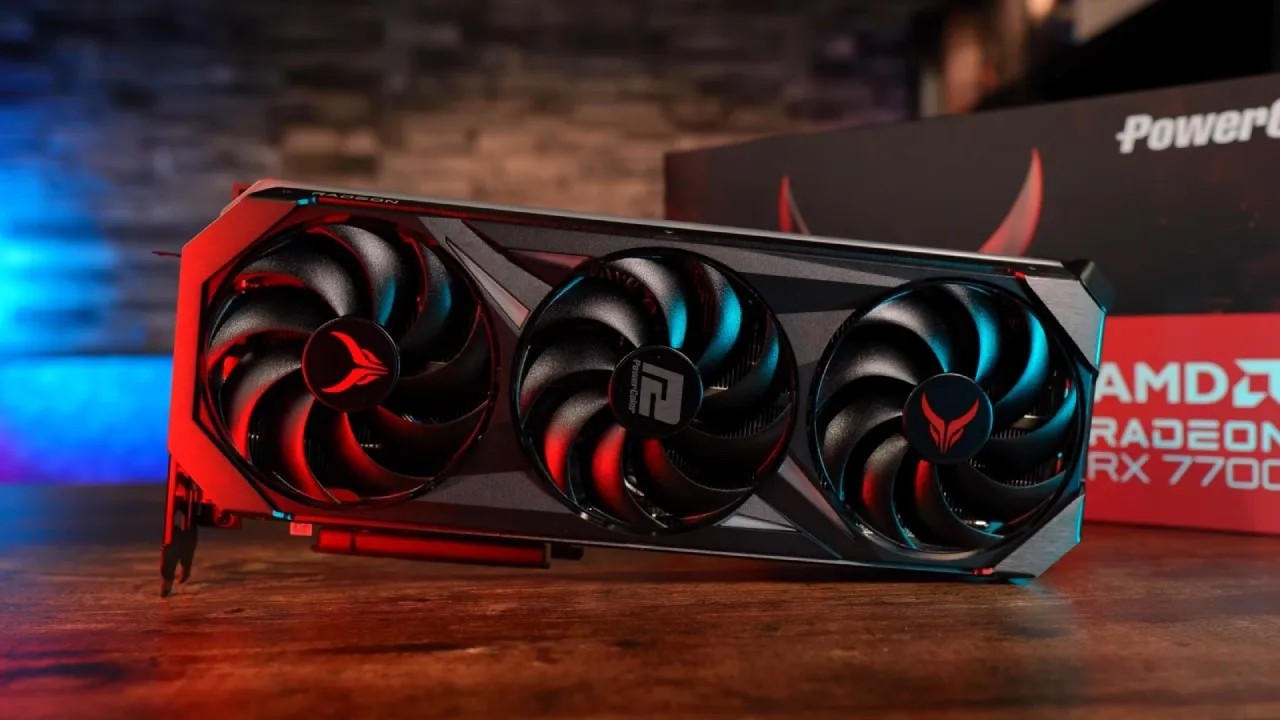
PowerColor Red Devil RX 7700 XT is a striking piece of hardware with its bold shroud design, illuminated accents, and a heavy-duty triple-fan cooler. It is built with a reinforced PCB, dual BIOS profiles, and RGB styling that emphasizes its enthusiast branding.
The cooler itself is engineered for long gaming sessions, ensuring low temperatures even under heavy load. Acoustics are excellent, but PowerColor leans slightly toward visual flair, making this card a favorite among those who want their build to stand out.
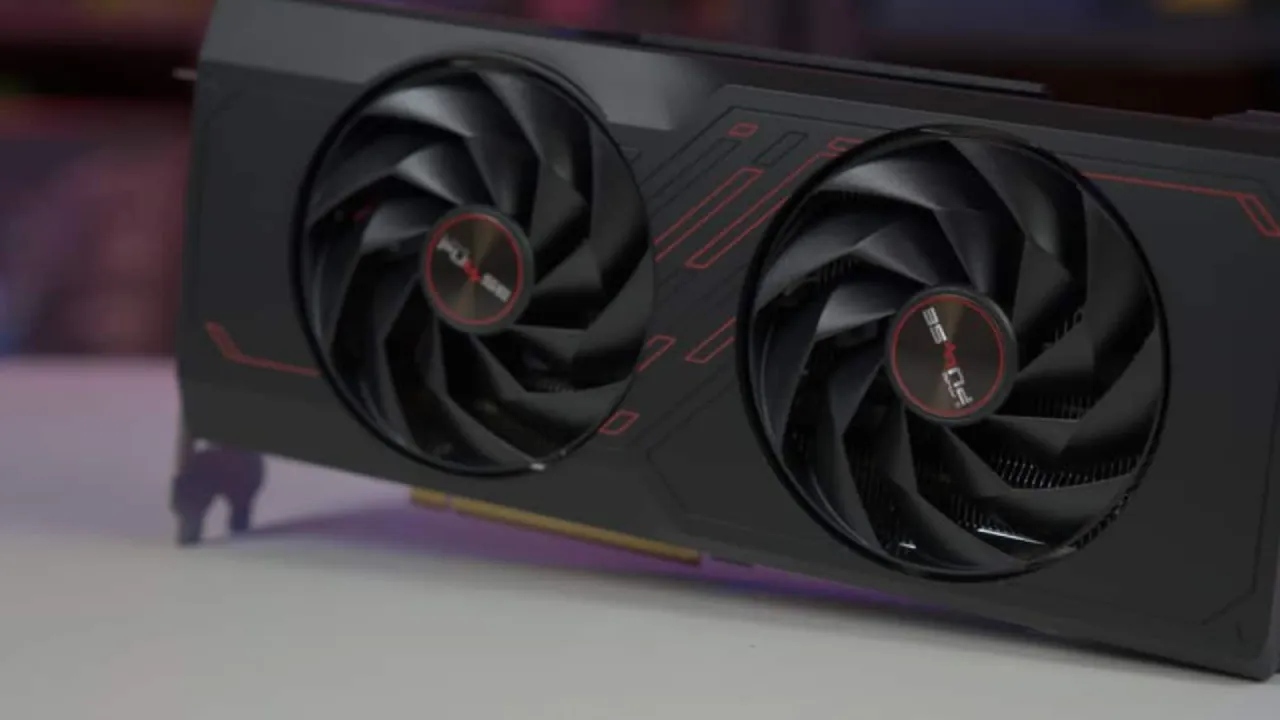
By contrast, Sapphire Nitro+ RX 7700 XT focuses on refinement and practicality. It also employs a triple-fan cooling solution with a large heatsink, but its design philosophy centers on delivering the lowest possible noise levels.
Out-of-the-box testing shows the Nitro+ running at whisper-quiet levels, often around the low 30 dB(A) range under load. In addition, Sapphire includes several user-friendly touches: quick-swap fans, an ARGB sync cable, and even a basic GPU support bracket to ease installation in larger cases.
Nitro+ may not have the flashy styling of the Red Devil, but its cooling execution and noise levels are arguably the best in class.
Clocks, Power, and Performance Behavior
On paper, both cards are nearly identical in terms of clock speeds. Each ships with a game clock of around 2276 MHz and a boost clock reaching up to 2599 MHz. Both also require dual 8-pin connectors and sit in the same 245–252 W power consumption range.
In practice, this means there is virtually no difference in how they perform in games. The robust VRM designs of both models allow the GPU to sustain high boost clocks consistently, but neither offers a meaningful advantage in terms of raw FPS. For gamers, this ensures that whether you choose the Red Devil or Nitro+, your performance expectations will be equally met.
Size, Display Outputs, and Case Fit
Red Devil is a large card that takes up significant space, often occupying more than three slots. It adheres to the standard I/O configuration of three DisplayPort 2.1 outputs and one HDMI 2.1 port. This is perfectly fine for most gamers, but those with more complex display setups may find the Nitro+ more versatile.
Sapphire’s card offers two HDMI 2.1 and two DisplayPort 2.1 outputs, making it more accommodating for users who want to connect both a TV and a high-refresh monitor simultaneously without resorting to adapters. Although a spacious chassis is necessary for both cards, Nitro+ provides a bit more flexibility for multi-display configurations.
Real-World Performance and Gaming Benchmarks
The situation with regard to game performance is simple: there isn't a discernible difference.Across a wide range of benchmarks at 1080p and 1440p, Red Devil and Nitro+ perform within a margin of 0–2%, which is well within normal testing variance. Both cards deliver strong performance in modern AAA titles, especially when paired with FSR 2 or FSR 3 upscaling.
In rasterization-heavy games, RX 7700 XT competes comfortably with NVIDIA’s RTX 4060 Ti and approaches RTX 4070 levels in some cases. Ray tracing, however, remains a relative weakness compared to NVIDIA’s offerings, though both the Red Devil and Nitro+ handle lighter ray-traced effects well.
The key point is that benchmarks do not distinguish the two cards—performance is essentially a tie.
Software and Extra Features
PowerColor emphasizes its passionate flair and Devil-inspired branding. Although the Red Devil has powerful cooling, RGB lighting, and two BIOS modes, it mostly depends on aesthetics and unpolished construction.
In contrast, Sapphire's TriXX software, ARGB sync cable, quick-connect fans, and a straightforward sag-preventing support bracket improve the user experience. Although these might appear to be small frills, many users value the ease and refinement they provide. The Nitro+ has an advantage for people who appreciate thoughtful features and ease of maintenance.

Key Takeaways
In the end, choosing between PowerColor Red Devil RX 7700 XT and Sapphire Nitro+ RX 7700 XT does not come down to performance, because they are essentially identical in raw gaming benchmarks. Both cards excel at 1440p gaming, offering smooth performance, cool operation, and excellent build quality.
Instead, the decision should be based on design philosophy and feature set. The Red Devil appeals to gamers who want bold aesthetics, strong RGB integration, and the classic 3+1 output configuration. The Nitro+ is aimed at those who prioritize ultra-quiet operation, display versatility with dual HDMI, and thoughtful extras that enhance usability.
Ultimately, you cannot go wrong with either card. If you want your GPU to be the visual centerpiece of your system, the Red Devil is the way to go. If you value silence, flexibility, and subtle refinement, the Nitro+ makes a compelling choice.
Both stand as two of the finest implementations of the RX 7700 XT, ensuring that no matter which you choose, your gaming experience will be smooth, efficient, and future-ready.
Check Our Other AMD articles:
- AMD Ryzen 9 9950X3D Review: Setting The Standard For 2025 Gaming CPU
- AMD RX 9070 Performance Review: Thermals, Clocks, and Real-World FPS
- AMD Ryzen 5 7600 Review: Best Budget Gaming CPU of 2025?
- AMD Radeon RX 7800 XT Review: RDNA 3 Power For Midrange Gaming
- Sapphire NITRO+ AMD Radeon RX 9070 XT Review: The Ultimate 4K Gaming GPU
- AMD Ryzen 7 7800X3D: Delivers Gaming Performance Far Beyond Expectations
- AMD Ryzen 9 7900X Review: Powering the AM5 Era with DDR5 & PCIe 5.0
- Intel Core i9‑14900K vs. AMD Ryzen 7 7800X3D: Power Profiles & Gaming Benchmarks
Editor, NoobFeed
Gaming Hardware Updates
No Data.