
PS3 Emulation on PS5 Hits Major CPU Limits While PS6 Zen 6 Promises a Breakthrough
Native PS3 emulation remains heavily constrained by the PS5’s Zen 2 CPU and Cell architecture translation overhead.
Hardware by Tanvir Kabbo on May 25, 2026
For years, PlayStation fans have been asking Sony for one thing above almost everything else: true native PlayStation 3 backward compatibility. Not cloud streaming. Not remasters. Not subscription-based workarounds running on remote servers. Gamers want local, low-latency PS3 emulation running directly on modern PlayStation hardware.
Now, thanks to a recent experiment from tech analysts at Digital Foundry using the RPCS3 emulator on a Linux-loaded PS5, the harsh reality is becoming impossible to ignore. The PlayStation 5 simply does not have the CPU horsepower required to brute-force Sony's notoriously difficult Cell architecture at full speed.
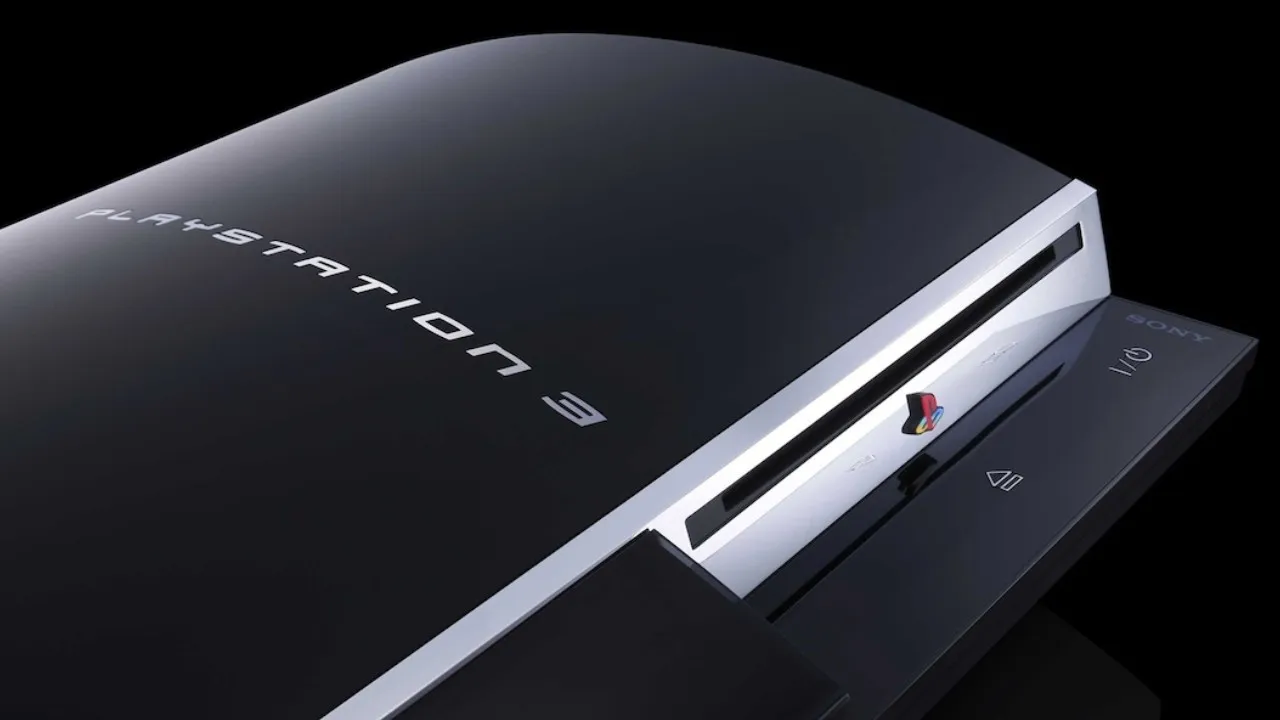
And that revelation is shifting attention toward the PlayStation 6 and AMD's upcoming Zen 6 architecture as the first realistic path toward proper native PS3 emulation.
The PS5's GPU Was Never the Problem
One of the most interesting takeaways from the Digital Foundry experiment is that the PS5's RDNA 2 graphics hardware is not the bottleneck. In fact, rendering PS3-era visuals at higher internal resolutions is relatively easy for modern GPUs. Even mid-range PC hardware can upscale seventh-generation console games far beyond their original image quality. The issue is entirely CPU-side.
RPCS3, widely considered the gold standard for PS3 emulation, was tested on PS5 hardware through a Linux environment. The results exposed a massive processing imbalance. Titles with lighter SPU utilization, such as Ridge Racer 7, performed surprisingly well. The PS5 could push higher resolutions and more stable gameplay because those games rely less aggressively on the Cell processor's unique parallel-compute architecture.
But once the emulator encountered titles deeply tied to the PS3's SPUs, performance collapsed. Games like Grand Theft Auto IV, Metal Gear Solid 4: Guns of the Patriots, and God of War: Ascension exposed exactly why PS3 emulation remains one of the hardest problems in gaming preservation. The PS5's eight-core Zen 2 CPU simply runs out of overhead trying to simulate the Cell processor's bizarre workload distribution model in software.
Cell Processor Still Haunts Modern Hardware
To understand why PS3 emulation remains so punishing, it is important to remember what Sony originally built inside the PS3. The Cell Broadband Engine was not a conventional CPU. Instead of the usual general-purpose cores, Sony and IBM have built a hybrid architecture with a main Power Processing Element and several Synergistic Processing Units (SPUs).
These SPUs behaved as highly specialized co-processors and could handle parallel workloads at an impressive speed for the time. Developers used them for everything from animation systems and physics simulation to post-processing effects and streaming world data. The problem is that developers often wrote highly customized, low-level code that directly exploited the Cell's unusual behavior.
That means modern emulators cannot simply "translate" instructions cleanly, as they often can with older console hardware. Every SPU workload must be reconstructed, synchronized, and simulated via software abstraction layers across entirely different CPU architectures. That becomes especially brutal in games like Metal Gear Solid 4: Guns of the Patriots, which famously pushed the PS3 hardware to its limits with dense simulation systems, heavy streaming pipelines, and advanced post-processing techniques.
Even today, MGS4 remains one of RPCS3's biggest technical stress tests because the game effectively behaves like a custom-built Cell showcase. Similarly, Grand Theft Auto IV leveraged SPUs for open-world streaming and simulation, while God of War: Ascension used SPU acceleration for morphological anti-aliasing and complex rendering.
In all three cases, the emulator workload becomes massively CPU-bound long before the GPU is fully utilized. That is the central irony of PS3 emulation in 2026. Modern GPUs nowadays can brute-force graphics output like it's nothing. But emulating the Cell CPU's logic layer is still insanely resource-intensive, even on modern hardware.
.jpg)
Why Zen 2 Falls Short for Native PS3 Emulation
The PlayStation 5's Zen 2 CPU represented a revolutionary leap over the Jaguar cores used in the PS4 generation. But PS3 emulation demands an entirely different class of performance. RPCS3 scales aggressively with CPU throughput, cache efficiency, branch prediction, and instruction-level parallelism. Raw clocks matter, but architectural efficiency matters even more.
Zen 2 was designed primarily around balanced gaming performance and power efficiency. It was never engineered to emulate one of the strangest consumer processors ever built. That is why the PS5 can handle lightweight PS3 workloads but struggles when SPU-heavy synchronization is introduced. The emulator overhead compounds rapidly, and the CPU becomes saturated.
An official Sony emulator would absolutely perform better than RPCS3 in some scenarios because Sony possesses internal documentation, proprietary profiling tools, and direct hardware knowledge unavailable to emulator developers. Optimization opportunities would certainly exist. But optimization alone cannot completely overcome the brute-force limitations of the PS5's processor.
At this point in the console cycle, building an ultra-specialized low-level PS3 compatibility layer for PS5 hardware would require enormous engineering resources for relatively limited gains. From Sony's perspective, the investment likely makes far more sense in the context of a future platform transition.
PS6 and Zen 6 Could Finally Break the Barrier
This is where the PlayStation 6 enters the conversation. Rumors surrounding Sony's next-generation system increasingly point toward AMD's upcoming Zen 6 CPU architecture. If those reports prove accurate, the leap in CPU throughput could finally create enough overhead for stable, full-speed native PS3 emulation across a much wider library.
Zen 6 is expected to deliver major gains in IPC, cache architecture, thread scheduling, and overall compute density. Those improvements are exactly what PS3 emulation workloads crave. Unlike traditional gaming workloads, which often become GPU-limited, PS3 emulation scales directly with raw CPU performance.
More instruction throughput and stronger parallel execution dramatically improve SPU simulation accuracy and synchronization stability. That means the PS6 may not need miracle-level software engineering tricks to achieve what the PS5 cannot. It may simply possess enough brute-force computing power to overpower the Cell compatibility problem outright.
Senior Editor, NoobFeed
Gaming Hardware Updates
No Data.