
PS5 Pro vs PS6: Is the Pro a Smarter Buy for 60fps Gaming?
PS5 Pro delivers enhanced visuals and resolution but remains limited by PS5 generation CPU constraints.
Hardware by Tanvir Kabbo on Mar 03, 2026
As console gaming changes and cross-generation support cycles get longer, the worth of mid-generation upgrades has become a hot topic.
When new hardware comes out in the same generation, people naturally start to wonder about performance improvements, how long the hardware will last, and whether it would be better to wait for a real next-generation leap.
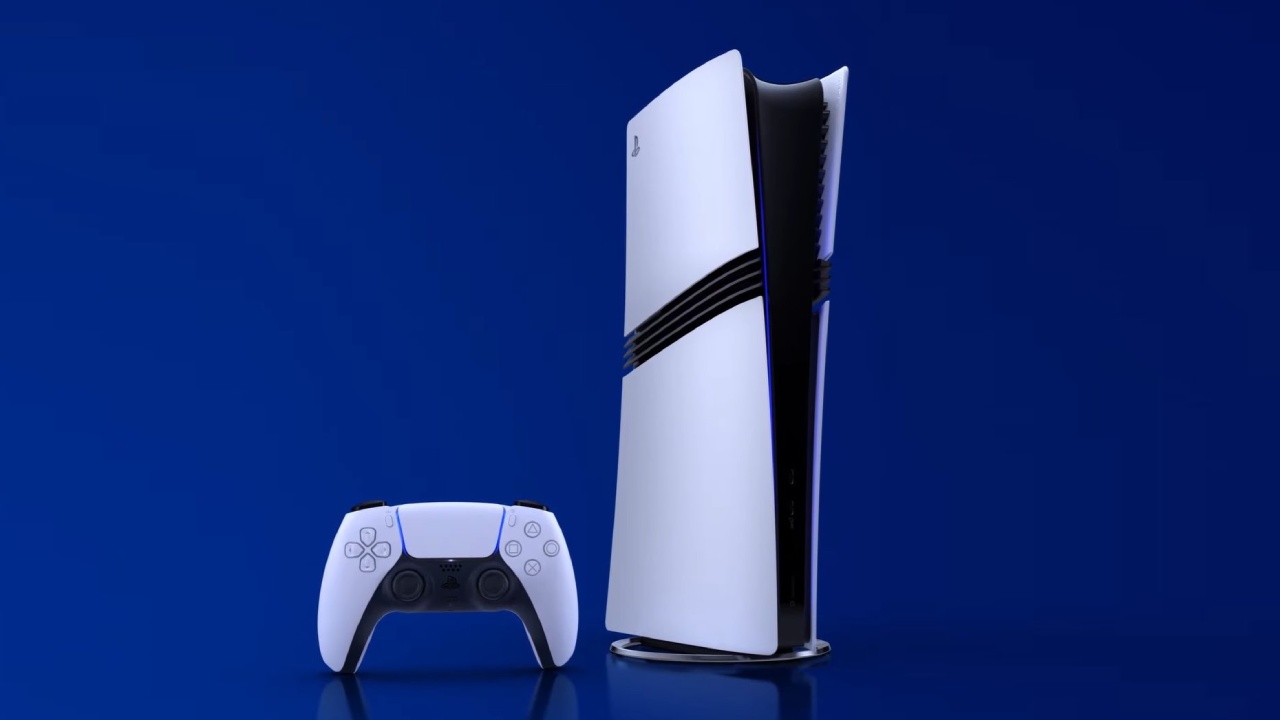
Core Question: 60fps on Pro vs 30fps on Base PS5
When we look at the situation directly, we do not think there will be many cases where a game runs at 30fps on a base PS5 and suddenly becomes a stable 60fps experience on PS5 Pro. Owing to the CPU alone, that scenario is unlikely to become a consistent reality.
You may think that the added GPU power would make everything go more smoothly, but the CPU is still a big problem. If a title is mostly CPU-bound, getting a better GPU won't immediately quadruple the frame rate from 30fps to 60fps. That's not how most game engines and system limits work.
Because of that, buying a PS5 Pro as a cheaper alternative to PS6, specifically to guarantee 60fps performance, is probably not a sound strategy.
Still Part of the Same Generation
The PS5 Pro is still fundamentally part of the PS5 generation. That matters. Even though Sony initially emphasized clear generational boundaries with PS5, we saw a huge number of cross-generation games that stretched well across the cycle. That long cross-gen period showed us how developers prioritize broader install bases.
We have to remember that mid-gen consoles are value-add systems. They are designed to enhance your experience within the same generation, not replace the generational leap itself. If you are buying a Pro, you are buying it to enjoy enhanced visuals, higher resolutions, and possibly improved ray tracing within this generation—not to prepare for the next one.
Buying a mid-gen console in preparation for the next generation is generally a bad strategy. If you want the full next-gen experience, waiting for the actual next-gen hardware makes more sense.
CPU Constraints and Design Reality
The hardware capabilities also create practical limits. The CPU in PS5 Pro is not dramatically better than the base PS5. That means certain games will still have to run based on PS5-level CPU constraints, regardless of how much additional GPU power is available.
It would be a very unusual scenario where a developer says, “We have extra GPU performance, so let’s make the game 60fps on PS5 Pro but leave it at 30fps on base PS5 without adjusting resolution or other settings.” We struggle to think of what type of game design would realistically allow that without compromising parity.
Most developers, if aiming for 60fps, would likely adjust resolution or other graphical settings on the base PS5 rather than completely locking it to 30fps while granting a full 60fps mode exclusively to Pro.
Lessons From Previous Mid-Gen Upgrades
We have seen something similar before. There were cases in past generations where enhanced consoles had clear hardware advantages, yet the actual software support did not always maximize them. Sometimes, developers simply increased resolution while keeping other settings aligned with base versions.
There were also examples where cutbacks made for the lowest common denominator version carried over into enhanced versions. In some cases, the enhanced hardware did not leverage its full potential because development resources were focused elsewhere.
That is the risk with PS5 Pro. Not every developer will go the extra mile to add new GPU-specific features. Often, the upgrade may simply mean higher resolution, improved image reconstruction, or slightly better ray tracing, rather than fundamental gameplay performance changes.
RDNA2 vs RDNA5 and Future Hardware
When we compare custom RDNA2 hardware with extra ray tracing and machine learning enhancements against a future RDNA5-based console, it is difficult to imagine true parity. The architectural leap alone suggests the next generation will be substantially different.
We have already seen how long it can take to adapt and optimize new upscaling technologies and rendering techniques. Even when features are theoretically portable, implementation timelines reveal hardware limitations. That further suggests PS6 will not simply feel like a minor extension of PS5 Pro.
Install Base and Developer Priorities
The size of the audience is also very crucial. Developers pay attention to where they can get the most money back. If the PS5 Pro only has a tiny number of users, it becomes harder to justify making big exclusive improvements around it.
Even if development environments become increasingly similar between generations, studios will still focus on the biggest groups of people. That fact makes it less likely that Pro-specific tweaks will be very helpful.
Practical Takeaway
If you're thinking about getting a PS5 Pro to make sure that future cross-generation games run at 60 frames per second, you should lower your expectations. In most circumstances, the CPU limit alone makes big frame rate divides unlikely.
If you want sharper graphics, better image quality, greater ray tracing, and maybe even more reliable performance in the PS5 generation, though, the Pro is a good upgrade.
Waiting for PS6, on the other hand, means accepting a real architectural leap instead of just a small improvement. In the end, the choice is between getting superior performance now in the same generation or making a clean break into the next one later.
Also, check our other hardware articles:
- AMD Ryzen 9 9950X3D Review: Setting The Standard For 2025 Gaming CPU
- Amazon Luna 2025 Review: Is Prime Gaming's Cloud Service Your Go-To For Casual Fun?
- AMD RX 9070 XT Review: AMD's RDNA 4 Champion for 1440p Gaming
- GeForce Now Ultimate: Ditching Your Gaming PC For Cloud RTX 4080 Power?
- NVIDIA GeForce RTX 5080 Review (2025): Still A 4K Gaming Powerhouse?
- Intel Core Ultra 9 285K Review And Performance Breakdown (2025)
- AMD Ryzen 7 9800X3D Review: 3D V-Cache Goes God Mode with Stunning Gaming Performance
- Intel Core Ultra 9 285K vs AMD Ryzen 7 9800X3D: In-Depth Gaming Performance and Benchmark Comparison
- NVIDIA GeForce RTX 5080 Super Performance In Cyberpunk 2077: Path Tracing & DLSS 4.0 Tested
- AMD Radeon RX 9070 XT In Cyberpunk 2077: Ray Tracing & FSR 4.0 Tested
- Intel Arc B580 Review: The $250 GPU Revolutionizing 1440p Gaming
- Intel Arc B570 Vs. B580: Value, Specs, And Real-World Gaming Performance
- RTX 5090 Laptop Vs. M4 Max MacBook Pro: Ultimate Raw Performance Vs. Battery Endurance
- Intel Arc b580 Vs. RTX 4060: Game Performance And Value Analysis
- RTX5090 Hell Is Us Demo 4K Ultra Benchmark: DLSS Vs. Native Performance Guide
- NVIDIA RTX 5070 Review: Mid-Range Muscle or Marketing Hype?
- Nintendo Switch 2 Review: Handheld Performance, Features & Value Breakdown
- RTX 5070 Ti Review: Performance, Thermals & Power Efficiency Tested
- Samsung Odyssey OLED G81SF Review 2025: Ultimate 32-Inch QD-OLED Gaming Monitor
- AMD RX 9070 Performance Review: Thermals, Clocks, and Real-World FPS
- AMD Ryzen 5 7600 Review: Best Budget Gaming CPU of 2025?
- AMD Radeon RX 7800 XT Review: RDNA 3 Power For Midrange Gaming
- Asus ROG RTX 5090 Astral OC Vs. Founders Edition: The 4K Gaming Benchmark
Senior Editor, NoobFeed
Gaming Hardware Updates
No Data.