
PS5 Pro vs. PS5 Slim: Frame‑Rate, Graphics & Performance
Elevating console gaming with AI-driven upscaling and enhanced performance modes for sharper visuals and smoother frame rates
Hardware by Masaru Hoshino on Jul 10, 2025
An evolutionary step in the ninth generation saw two new PlayStation 5 variants arrive one year apart. The Slim model quietly replaced the original "fat" console with identical internals, while the Pro edition arrived later with spec enhancements and a higher price tag. The PlayStation 5 Pro represents Sony's mid‑generation hardware refresh, designed to deliver notable improvements in both visual fidelity and performance over the base model.
By examining its technical enhancements alongside game‑by‑game comparisons, we can better understand whether investing in the Pro makes sense for you. Both offer refinements on the PS5 experience—but what do those changes mean for your gaming setup, and are they worth chasing?
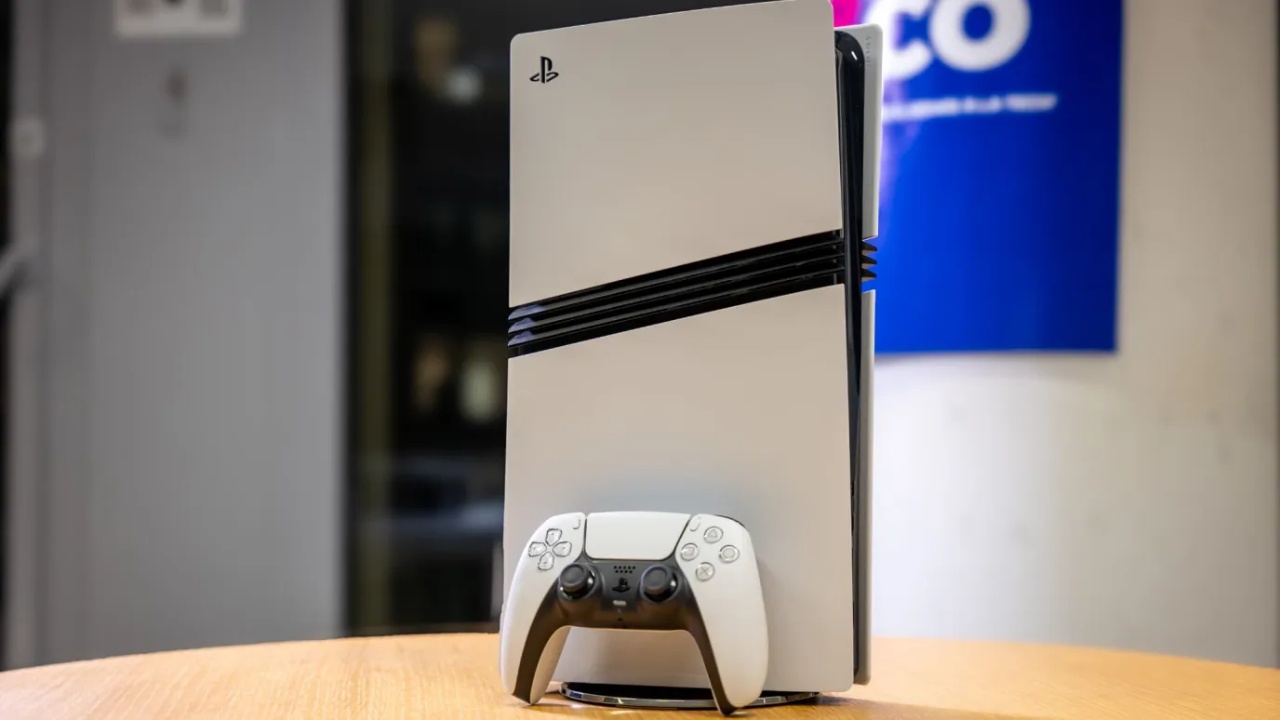
Design of both PS5 and PS5 Pro
Both the PS5 Slim and Pro maintain the PS5's signature black‑and‑white shell and sweeping curves. The iconic light bar now runs the full height of the Pro, shining brighter yet never overpowering a dark room. Both consoles can lie flat or stand upright, but neither includes a vertical stand in the box—only plastic clips for horizontal placement.
For a device that retails at €800, omitting even a simple stand feels stingy, especially when you must buy an external disc drive separately if you want one.
The Pro reintroduces decorative intake ribs along the central spine, echoing the PS4 Pro's triple-layer look, and swaps the PS5 Slim's glossy top panels for a matte finish that complements its enhanced cooling. Although the Pro's height matches that of the PS5, its width and thickness mirror those of the PS5 Slim, giving it a more compact footprint. Side panels from the PS5 Slim fit the Pro's lower half, letting you disguise the missing drive bay if needed.
Overall, the Pro retains the PS5's futuristic ethos while incorporating subtle styling and airflow improvements that we wish had been included in the PS5 Slim.
Hardware
Under the hood, both consoles share an AMD Ryzen Zen 2 CPU with eight cores and 16 threads. The PS5 Slim caps out at a 3.5 GHz boost clock, while the Pro can push to 3.8 GHz—an uptick that promises little for CPU‑bound titles. The real leap is in graphics: the Pro's RDNA 3‑based GPU delivers 16.7 teraflops—nearly 50% more horsepower than the PS5 Slim's RDNA 2 chip—thanks to 60 compute units versus 36.
Storage has grown to 2 TB, nominally with faster RAID performance, although real-world game loads barely shave off a few seconds. You also gain 2GB of extra RAM for the operating system and the new Wi-Fi 7 standard, which noticeably accelerates downloads over Wi-Fi 6.
Beyond the GPU upgrade and networking tweak, the Pro shares the same core hardware, positioning it as a mid‑generation refresh for developers to master PSSR upscaling before the next console generation.

Pros of PS5 Pro
Beneath its slim, disc‑free exterior, the PS5 Pro packs significantly more graphics horsepower, faster memory, and expanded storage. With nearly 70% more graphics cores and a 45% boost in rendering speed, it powers through demanding scenes with greater ease.
The internal SSD doubles to 2TB, reducing the need to juggle installations, while 28% faster RAM and additional system memory help maintain stability during intense gameplay.
On the connectivity side, Wi-Fi 7 support and a faster front-facing USB-C port set the stage for future peripherals and quicker downloads. A modest bump to CPU clocks further tightens load times, and Sony's new Enhanced Image Quality option applies a subtle post‑processing filter to legacy PS4 titles, giving them a sharper, more refined look.
Secret Weapon: PlayStation Spectral Super Resolution (PSSR)
At the heart of many Pro upgrades lies PSSR, Sony's AI‑driven upscaling technology. By intelligently reconstructing lower-resolution frames, PSSR achieves visuals that rival native 4K with fewer jagged edges and shimmering artifacts than older checkerboard or bilinear approaches.
In practice, developers pair PSSR with the PS5 Pro's additional GPU power to unlock higher frame rates or richer graphical modes—much like DLSS or FSR have done for PC gaming.

Game Comparisons and Real‑World Tests
We wanted to see how your favorite titles perform on the PS5 Pro and PS5 Slim, so we put both consoles through the paces across first‑ and third‑party releases. In Final Fantasy VII Rebirth, the new Versatility Pro mode elevates the base console's 30 fps quality setting to a silky smooth 60 fps, with PSSR upscaling preserving clarity and minimizing ghosting.
Demon's Souls receives a similar treatment, doubling its frame rate from 30 fps to a rock‑solid 60 fps while maintaining every ounce of its moody atmosphere.
Alan Wake 2 shines in Pro Quality mode at 4K 30 fps with ray‑traced reflections and cleaner lighting. In contrast, Performance mode locks at 60 fps with a higher internal resolution and richer volumetric shadows.
Marvel Spider‑Man 2 also benefits from two Pro presets: Fidelity Pro at 4K 30 fps full ray tracing, and Performance Pro at 60 fps full RT. Despite the visual enhancements in Fidelity Pro, most players prefer Performance Pro's stability, which—aside from fewer frame drops—looks almost identical to the base console's Performance mode.
F1 24's Quality Pro mode, which runs at 4K 60 fps and features ray-traced track lighting, enhances realism. With Performance Pro, you can achieve a thrilling 120 fps on compatible screens, losing only a little detail for scorching speed.
Horizon Forbidden West arguably sees the most dramatic jump: you can choose a 4K 30 fps Resolution Pro mode, a 4K 60 fps Performance Pro mode, or a Balanced Pro mode targeting 40 fps on 120 Hz displays.
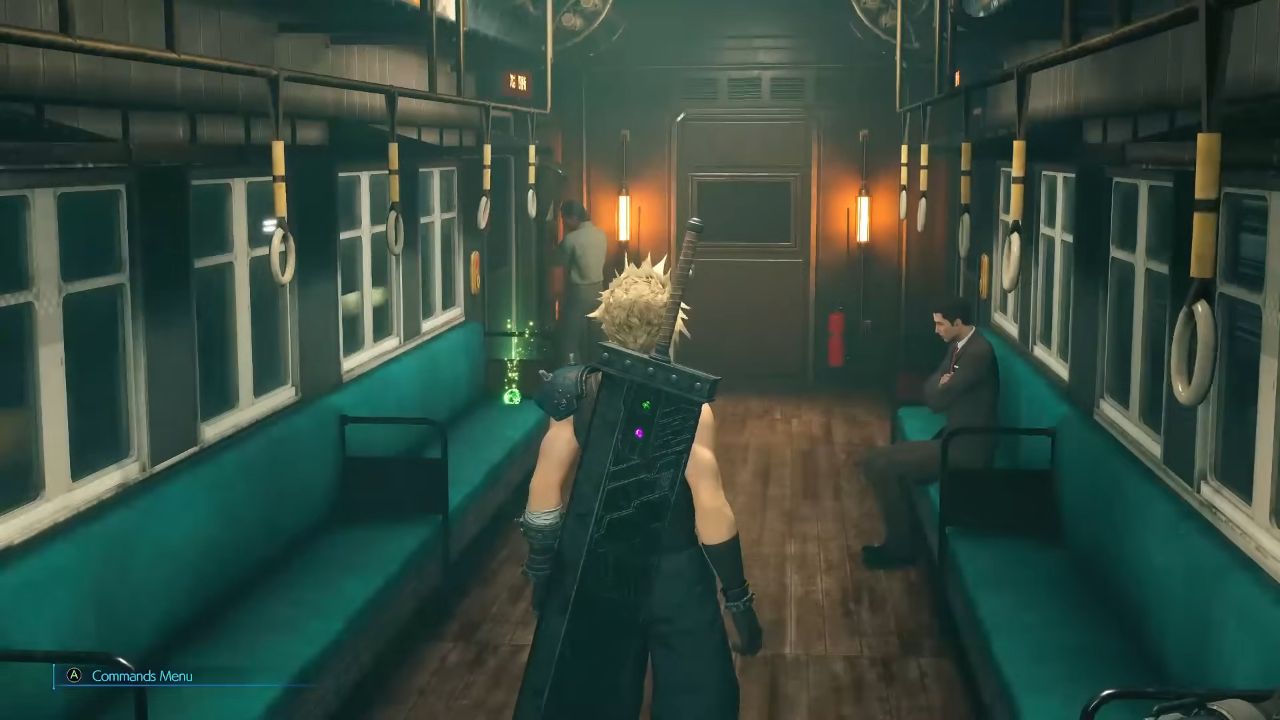
No Man's Sky gains an 8K 30 fps option for those with 8K displays, though most of us will enjoy stable 60 fps on standard 4K sets. Star Wars Jedi: Survivor moves from roughly 1800p on the base console to full 4K 30 fps in Quality mode and rock‑steady 60 fps at 1800p in Performance mode, yielding cleaner textures and steadier pacing.
Ratchet & Clank: Rift Apart's Performance Pro mode uses PSSR to produce a native 4K 60fps image, reducing aliasing and sharpening geometry compared to the base console's near‑1440p output.
Hogwarts Legacy gets a ray‑traced Fidelity Pro mode at 30fps with richer shadows and more realistic lighting, while Performance Pro delivers a higher dynamic resolution along with an unlocked 120fps VRR option for sharper distant detail.
Stellar Blade remains one of the few titles where Pro Quality breaks past 50fps versus the PS5 Slim's 30fps, albeit with occasional stability hitches.
We also tested some early patches on third‑party titles. Silent Hill 2 and Star Wars:Jedi Survivor initially suffered graphical glitches on Pro hardware, underlining that its true purpose is as a developer sandbox for mastering PSSR upscaling before the next generation.
Resident Evil 4 Remake now runs at a stable 60 fps with ray tracing, though from your couch, you might barely notice the difference. Horizon's PSSR upscale pushes 1800p to 4K, yielding crisper scenes only in side‑by‑side comparisons. Last‑gen exclusives like Bloodborne and Elden Ring do enjoy smoother frame pacing and sharper textures, but for most titles—especially those capped at 30 fps—the everyday experience remains much the same.
Each Pro setting delivers crisper textures, reduced motion blur, and visuals approaching high‑end PC levels. In our view, Performance Pro strikes the best balance of smoothness and fidelity, and you'll feel that difference most on action‑ or speed‑focused games.

Is the Pro Worth It?
At $699 for a disc-free unit (with an additional $100 for the optical drive), the PS5 Pro carries a premium compared to its predecessor's sub-$400 launch price.
If you sit close to a large 4K or 8K TV and crave rock‑steady 60 fps—or even the thrill of 120 fps—the Pro delivers. For many, the base PS5 remains an excellent value. But if you want the absolute best console experience available today, the PS5 Pro is a compelling choice.
Final Thoughts
The Pro undeniably offers crisper visuals, smoother performance, and a developer‑friendly PSSR preview. Yet with no exclusive new releases at launch, most titles feel like incremental upgrades. You're effectively buying a high‑end graphics card housed in familiar plastic.
If you crave the utmost fidelity and don't mind paying a premium—or acting as a beta tester for next‑gen upscaling—go for the Pro. Otherwise, the PS5 Slim (or original) delivers plenty of power for 4K gaming until the PS6 era truly begins.
Check Our Other NVIDIA Articles:
- GeForce RTX 5090 Unleashed: Is NVIDIA's New Flagship the Ultimate 4K Gaming GPU?
- NVIDIA GeForce RTX 5080 Review (2025): Still A 4K Gaming Powerhouse?
- NVIDIA GeForce RTX 5080 Super Performance In Cyberpunk 2077: Path Tracing & DLSS 4.0 Tested
- RTX 5090 Performance Testing In GTA 5 – 1080p, 1440p, and 4K Max Settings Benchmark
- RTX 5090 Laptop Vs. M4 Max MacBook Pro: Ultimate Raw Performance Vs. Battery Endurance
- NVIDIA RTX 5070 Review: Mid-Range Muscle or Marketing Hype?
- RTX 5070 Ti Review: Performance, Thermals & Power Efficiency Tested
- Asus ROG RTX 5090 Astral OC Vs. Founders Edition: The 4K Gaming Benchmark
- ASUS ROG Astral RTX 5090 OC Edition Review: 32GB GDDR7 & 4K Gaming Benchmark
- ASUS GeForce RTX 5090 LC Liquid Cooled GPU Review: Unmatched Silence & Speed
Editor, NoobFeed
Gaming Hardware Updates
No Data.