
PSSR 2.0 Patent Reveals Big Visual Upgrade for PS5 Pro
Sony patents enhanced PSSR 2.0 technology targeting sharper image reconstruction and higher frame rate output.
Hardware by Nahe Yan on Mar 02, 2026
There has been a major graphics improvement on the PS5 Pro from Sony, and new discussions are emerging about experimenting with handheld hardware, along with a continuing debate over Xbox's long-term platform strategy.
Recent events show that PlayStation's upscaling technology is improving, that there may be testing related to future hardware, and that major platform holders are changing their positions in the industry.
.jpg)
Resident Evil Requiem Performance and PS5 Pro Graphics Boost
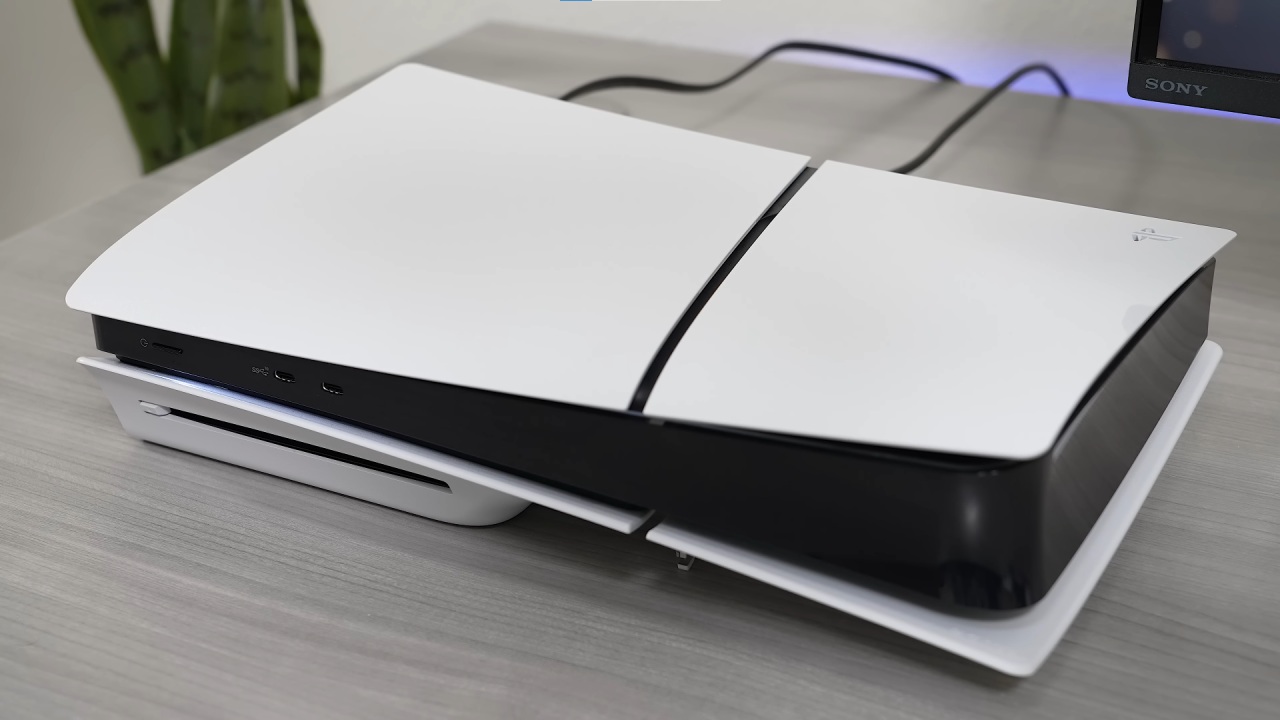
We begin with the graphical upgrades that are coming to the PS5 Pro. Sony has finally provided these with an updated version of PSSR. Resident Evil Requiem is the first game to use the new version, which will be more widely available in March. When you look at screenshots of PSSR1.0 and PSSR2.0 side by side, you can see right away how different they are.
When you look closely at the images, prior versions seemed muddy, with noticeable shimmering and overall blurring. With PSSR2.0, each hair strand is clearly visible, resolving issues with hair technology identified in Resident Evil 4 Remake. The new reconstruction improves the presentation without relying on previous hair cap approaches.
It's harder to tell if the frame rate increases are real because you can't run both versions of the game at the same time on PS5 Pro. Resident Evil Requiem is already well-optimized for all platforms and runs easily on many of them; thus, it isn't as effective as a stress test. Games that strain hardware more, like Metal Gear Solid: The Twin Snakes or Silent Hill 2, will show greater performance gains.
One big change means developers no longer need to make it work. You can turn on better PSSR resolution right from the system settings. Even if games never get special patches, turning on the option lets them get better on their own. If the outcomes are still the same as they are in Resident Evil Requiem, the update could finally make the PS5 Pro hardware upgrade worth it.
In hindsight, Sony should have waited to release the console until this feature was available. The lack of software that fully used the technology made it hard for people to accept it early on. Now that big first-party games are coming out soon, the upgrade comes closer to when the system can really show off its benefits.
Testing for Switch2 and Possible Plans for a PlayStation Handheld
The next step is that reports indicate Sony was able to run Gran Turismo 7 on Switch 2 hardware. The move isn't a sign of a platform release; it seems more like internal testing.
The idea is to see if first-party games can work well on portable devices. If Gran Turismo 7 doesn't perform well on portable devices, it helps Sony figure out which games would be good for a future mobile ecosystem.
You might think that a PC version would come out before a portable version, especially for simulation racing, where dedicated setups are typical. Testing on Switch2 hardware is more about ensuring the technology works than preparing for a commercial launch, since that hasn't happened yet.
Because it is based on the x86 architecture, which is also used to power the PlayStation 5 and Xbox Series, handheld hardware has a limited amount of power. ARM chips, which are utilized in electronic devices like as the Switch2, are more efficient at lower power levels. This means that they operate at a lower temperature and have a longer battery life. According to reports, Sony will continue using x86 for future hardware, though testing different architectures helps determine whether this is possible.
If Sony releases a handheld before the PlayStation 6, it might add to the PS5 ecosystem and compete in the booming portable market. A gadget that could play existing PS5 games would fit nicely with the industry's move toward hybrid gaming experiences.
Debate about AMD's Partnership and Upscaling Technology
Sony's ongoing cooperation with AMD remains a key part of its hardware plans. AMD solutions have worked well on both PS5 and portable PCs, though comparisons with Nvidia technology are ongoing.
DLSS often makes reconstructed photos look better, even on less powerful hardware, thanks to superior AI models. FSR works well; however, there are still some cases where the discrepancies are clear. If picture reconstruction could approach DLSS-level quality, it would greatly improve PlayStation hardware output.
PSSR2.0 wants to fill in these gaps. Sony's patent says that lower internal rendering resolutions and smoother upscaling could make images clearer and increase frame rates. Running games at lower resolutions inside the console while sending out sharper 4K or 1440p graphics might be similar to what PC gamers do.
The problem is still getting people to use it. Some early PS5 Pro releases may seem different from each other because third-party developers don't go back and add updates to previous games. However, future games will likely use PSSR2.0 by default, improving the platform's overall appearance.
The Decima Engine's Effect and Technical Direction
The Decima engine, used in games like Death Stranding and Horizon, appears closely related to Sony's graphics improvements. Even during the PS4 Pro era, its reconstruction methods were better than the usual checkerboard rendering.
It would be good if more PlayStation studios used Decima. When shared technology pipelines make optimization more consistent, you benefit, as performance and visuals become more stable across multiple games.
No matter what people say about the commercial success of some games, Decima keeps showing strong technical achievements on basic hardware. This could mean it will affect Sony's future graphical architecture.
What to Expect from the PSSR2.0 Rollout
Following Sony's original plan for early 2026, the graphical improvements are coming soon. The release timing aligns with the corporation's statements, as patents have been approved, and early implementation is evident.
When the update is widely available, you should expect clearer images, fewer artifacts, and more flexibility with frame rates. If the system-level improvements work as planned, older PS5 Pro games that looked worse than their PS5 counterparts may eventually look better.
Many people have said that the PS5 Pro feels more like a small improvement than a big one. The next update could change that by making clear variations in performance and visuals.
Debate about Xbox Strategy and Platform Growth
The last topic of conversation is what Xbox leaders have said about the platform's future plan. People are wondering whether Xbox will stop making games for PlayStation because of comments suggesting plans might change.
That shouldn't happen financially. For big franchises, Xbox needs to release games across multiple platforms to recoup the development costs. Over the past few years, hardware sales have declined, making it more vital to launch games across multiple platforms.
You can anticipate big franchises like Doom, Elder Scrolls, Fallout, and Call of Duty to stay multi-platform. This is because limiting releases would hurt revenue growth. Making things more available helps offset increased development costs and changes in player behavior.
Sony may have an easier time maintaining its exclusive policies. Still, Xbox faces distinct business realities that push it to expand its platform rather than limit it.
Final Thoughts
PSSR2.0, handheld experimentation, and changing platform strategies all point to a time of change for console gaming. After the introduction, Sony is improving the hardware's capabilities, exploring portable expansion, and laying the foundations for graphics technology.
We're getting close to a day when software, upscaling technologies, and ecosystem strategy are just as important as raw hardware power. As updates and new devices come out, platforms will probably compete based on how flexible and efficient they are, rather than just how big a leap they make in each new generation.
Also, check our other hardware articles:
- AMD Ryzen 9 9950X3D Review: Setting The Standard For 2025 Gaming CPU
- Amazon Luna 2025 Review: Is Prime Gaming's Cloud Service Your Go-To For Casual Fun?
- AMD RX 9070 XT Review: AMD's RDNA 4 Champion for 1440p Gaming
- GeForce Now Ultimate: Ditching Your Gaming PC For Cloud RTX 4080 Power?
- NVIDIA GeForce RTX 5080 Review (2025): Still A 4K Gaming Powerhouse?
- Intel Core Ultra 9 285K Review And Performance Breakdown (2025)
- AMD Ryzen 7 9800X3D Review: 3D V-Cache Goes God Mode with Stunning Gaming Performance
- Intel Core Ultra 9 285K vs AMD Ryzen 7 9800X3D: In-Depth Gaming Performance and Benchmark Comparison
- NVIDIA GeForce RTX 5080 Super Performance In Cyberpunk 2077: Path Tracing & DLSS 4.0 Tested
- AMD Radeon RX 9070 XT In Cyberpunk 2077: Ray Tracing & FSR 4.0 Tested
- Intel Arc B580 Review: The $250 GPU Revolutionizing 1440p Gaming
- Intel Arc B570 Vs. B580: Value, Specs, And Real-World Gaming Performance
- RTX 5090 Laptop Vs. M4 Max MacBook Pro: Ultimate Raw Performance Vs. Battery Endurance
- Intel Arc b580 Vs. RTX 4060: Game Performance And Value Analysis
- RTX5090 Hell Is Us Demo 4K Ultra Benchmark: DLSS Vs. Native Performance Guide
- NVIDIA RTX 5070 Review: Mid-Range Muscle or Marketing Hype?
- Nintendo Switch 2 Review: Handheld Performance, Features & Value Breakdown
- RTX 5070 Ti Review: Performance, Thermals & Power Efficiency Tested
- Samsung Odyssey OLED G81SF Review 2025: Ultimate 32-Inch QD-OLED Gaming Monitor
- AMD RX 9070 Performance Review: Thermals, Clocks, and Real-World FPS
- AMD Ryzen 5 7600 Review: Best Budget Gaming CPU of 2025?
- AMD Radeon RX 7800 XT Review: RDNA 3 Power For Midrange Gaming
- Asus ROG RTX 5090 Astral OC Vs. Founders Edition: The 4K Gaming Benchmark
Editor, NoobFeed
Gaming Hardware Updates
No Data.