
RTX 50 SUPER Release Rumors, RAM Shortages, and Laptop GPU Speculations
How RAM and NAND supply constraints are shaping NVIDIA’s decisions for gaming and AI GPUs.
Hardware by Tanisha Aria on Jan 01, 2026
For months, the RTX 50 Super lineup has been the subject of leaks and reports, with the release dates constantly changing. Every few months, a new date comes out, but it's pushed back in secret each time.
Right now, one of the most popular start-date guesses for the product is the third quarter of 2026. That schedule feels like a far-off promise, maybe even a sign that the product isn't really important to them.
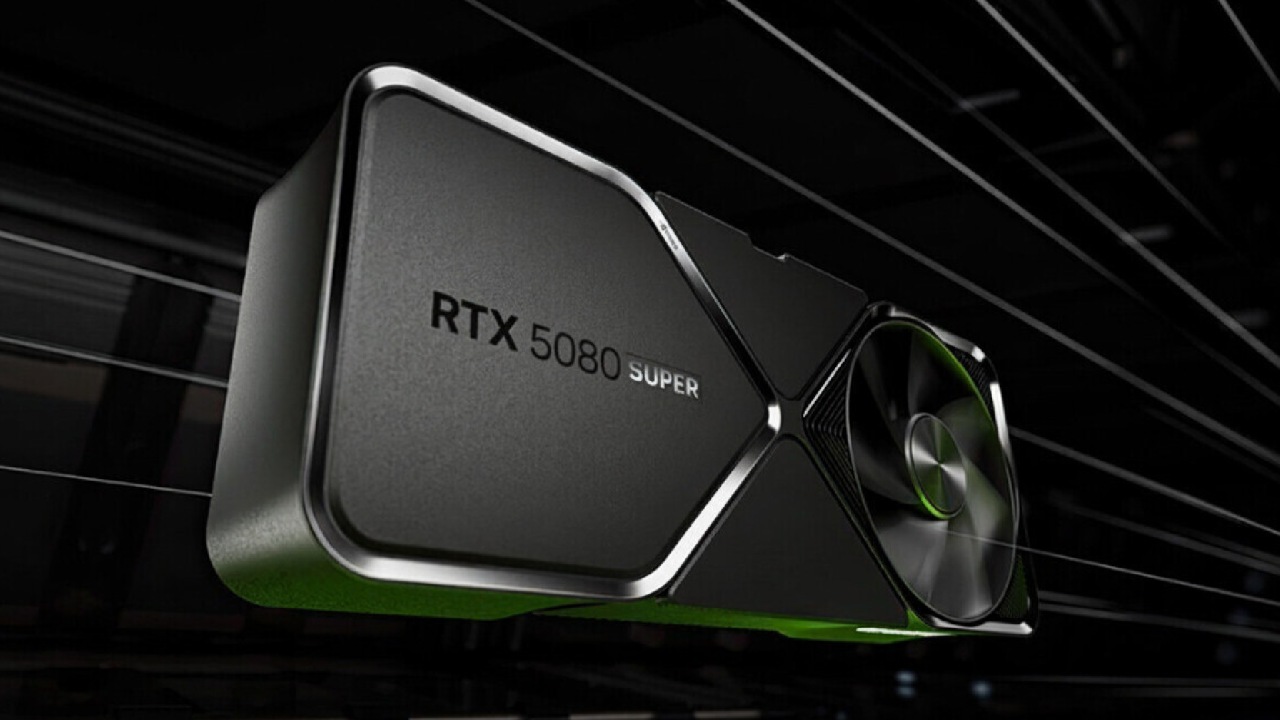
It's only normal to be suspicious of the idea that a refresh could be delayed for almost a year. The long wait feels even stranger when early leaks said that the Super refresh would mainly be about more video memory.
Memory availability is still low, so it doesn't make sense to release graphics cards with bigger VRAM if there aren't enough available. We believe it's becoming increasingly likely that Nvidia is okay with dedicating less production capacity to games, especially as AI and data center demand are generating more revenue.
Early Expectations Versus Reality
At first, there were many different opinions about what the RTX 50 Super would be like. Rumors started coming out in the first part of the year, with some signs pointing to late Q2 or Q4 as the time when it would happen.
The Super reports seemed like a big deal, but Blackwell had just barely started at the time. NVIDIA's early work on a refresh showed that DIY sales might not be as strong as they thought.
Some of us even knew about meetings where Q4 was shown as an internal goal. That date kept getting pushed back. Soon after, the story changed significantly, and reports suggested the Super series might not even come out until the end of 2026, if at all. Because the delays keep happening, it's clear that Nvidia might not even know if the device really fits into its plans.
Memory Supply as the Real Bottleneck
When we take a closer look at the Quarter 3, 2026 placeholder, it appears to be more about predicting memory supply than a real start plan. We've been told by people who work in NAND and RAM manufacturing that the supply situation might start to get better late next year.
NVIDIA might just be lining up possible product launch dates with the earliest time that memory can be more easily obtained.
Samsung, SK Hynix, and Micron are major memory makers that are rapidly expanding their factories. By the end of next year, several new facilities are scheduled to be operational. This could help ease the tight conditions.
Aside from the fact that there will be more factories, there aren't many details suggesting that supply will change much or right away. The general feeling is still that AI demand is using up most of the resources, which is why gaming goods are not as high on the to-do list.
The Shadow of AI and HBM Expansion
Artificial intelligence (AI) still plays the biggest role in the semiconductor industry, as memory distribution shows. From what we can see, makers think they might be able to make their biggest AI customers happy by the end of next year. Only then could they start to make more of other products, like GDDR7 for game GPUs.
There are also rumors that timelines are aligned with larger HBM changes, including the possibility of new joint production efforts focused on HBM4.
If that infrastructure is up and running around the same time, it would give Nvidia even more reasons to think that late 2026 is the soonest possible time to significantly increase the supply of memory for games. Until then, it's clear that other things are more important.
Why Memory Makers Are Still Cautious
Memory makers are still careful not to overcorrect, even though they want to expand. People in the industry still remember the rapid, dramatic changes during the pandemic: shortages drove prices higher, prompting bold efforts to increase capacity.
When demand returned to normal, memory prices dropped sharply. This left businesses with excess inventory and falling stock prices.
Because of that, producers are now very careful. Our tooling is almost fully used, and to get more capacity, we need to build brand new fabs. It usually takes longer than a typical shortage to finish those tasks. Because of this, many leaders think the current problems will improve on their own rather than through excessive construction.
Based on talks with former memory executives from companies like Micron and AMD, who were in charge of many things, the general agreement is that things will get better by the end of next year. Not exactly, but enough so that prices and availability start to look like a more stable market. For example, GPU availability was normal by the end of 2022.
Gaming GPU Supply and Market Pressures
We also can't forget that Nvidia said it would cut its game GPU supply by about 40%. As data center growth eventually slows, that pressure should ease.
This will help keep prices steady across the market. At the same time, a larger question hangs over the AI boom. Either AI adoption goes well and consumer devices follow, or demand falls and prices drop. In both cases, something has to change.
If AI works, businesses will have to make more than just big data center accelerators. They'll have to make tools that people can actually use. If it fails, there will be too much supply in the market, which will lower prices. In the end, both show that the supply of gaming hardware improves, but not right away.
The Case for RTX 50 Super Laptops
It's an interesting idea that RTX 50 Super might come out first or mostly in computers. A Super laptop lineup sounds like a good idea, and a start in Q3 would fit with that back-to-school vibe. At that time, platforms like Panther Lake and possibly even some early Zen 6 computers would be more widely available.
In this light, it makes sense that Nvidia might not put as much focus on DIY PC Super cards and instead focus on high-end laptops with AI brands. It's easier to explain a small upgrade based on extra VRAM in mobile systems, where updates are expected more often. Desktop access might exist in theory, but there may not be enough in practice.
A Strategic Delay, Not a Cancellation
In the end, it feels like Nvidia is still holding on to the Super idea, not that it has given up on it. If the RTX 6000 series is delayed, a 5070 Super-style update could serve as a temporary fix. NVIDIA can quickly change course if market conditions improve, since the changes are relatively small.
Right now, the long wait is mostly due to uncertainty. Here, memory quantity, AI demand, and platform timing all come together. It's not really about leaks or rumors if the RTX 50 Super comes out in 2026 or just disappears. It's about what happens in the next year with those bigger issues.
Also, check our other NVIDIA articles below:
- NVIDIA GeForce RTX 5080 Review (2025): Still A 4K Gaming Powerhouse?
- NVIDIA RTX 5070 Review: Mid-Range Muscle or Marketing Hype?
- RTX 5070 Ti Review: Performance, Thermals & Power Efficiency Tested
- ASUS GeForce RTX 5090 LC Liquid Cooled GPU Review: Unmatched Silence & Speed
- MSI GeForce RTX 5090 32GB SUPRIM SOC Review: Power Efficiency, Cooling, and Gaming Performance
- INNO3D RTX 5060 Ti 16 GB X2 Review: Gaming Benchmarks, Temps, and Power Efficiency
- HP Omen 45L Review: RTX 5090 Performance, Thermals, and Value Analysis
- ASUS TUF Gaming GeForce RTX 5060 Ti Review: DLSS 4, Power Efficiency, and Gaming
- ASUS Prime RTX 5060 Ti OC 16GB Review: DLSS 4, Ray Tracing, & Thermals Tested
- NVIDIA GeForce RTX 5060 Review: Specs, Gaming, and Cost per Frame
- MSI GeForce RTX 5090 GAMING TRIO OC Review: A Monster Power GPU
Contributor, NoobFeed
Gaming Hardware Updates
No Data.