
RTX 5080 Overclocked Performance Gains Rival the RTX 4090 at a Lower Price Point
4K benchmark testing across multiple modern titles highlights impressive GPU scaling and consistent gains over stock configurations.
Hardware by Tanisha Aria on Nov 19, 2025
A lot of people were looking forward to the RTX 5080, but early reviews were mixed because it wasn't much better than the RTX 4080 Super and cost the same. It had a slightly better price-to-performance ratio than the original 4080.
It cost $200 less, but it wasn't as exciting as I'd expected a new-generation GPU to be. But more testing has shown surprising headroom that changes its competitive situation in a big way, especially when compared to the RTX 4090, which costs a lot more.
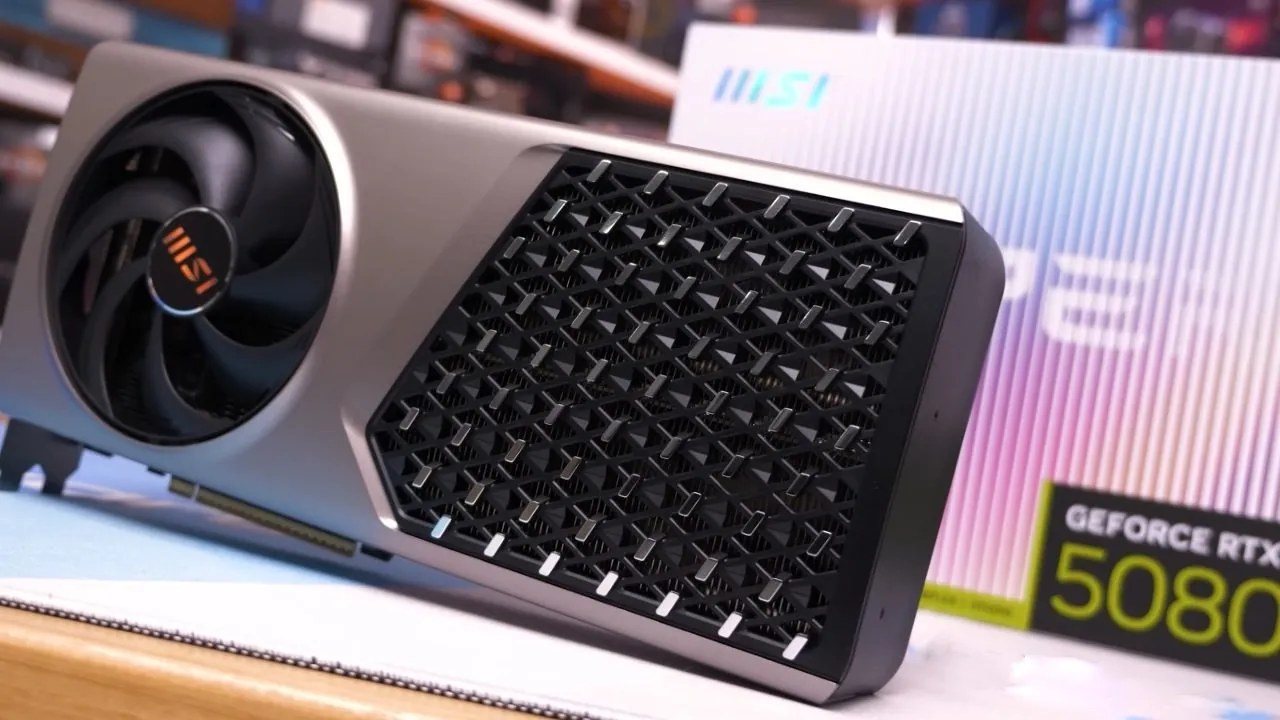
Overclocking Headroom and Hardware Behavior
We found that the RTX 5080 overclocks with ample headroom during testing. We increased the core's speed by 450 MHz and simultaneously removed power and voltage limits.
The memory was overclocked by an extra 6GB/s, increasing the total memory bandwidth to 1152GB/s and making it faster than the RTX 4090, even though it had a bigger bus. As much as 3.3GHz was reached at high boost speeds, which is a very high number for contemporary GPUs.
This level of frequency scaling suggests that Nvidia left ample room for growth, likely keeping the product line divided into different categories.
The power draw did not increase much because of these improvements. At full overclock, the Founders Edition used just over 400W, but at normal settings, it used in the high 300W range. Given how the OC behaved, Nvidia could have shipped the card with higher clocks, which would have completely changed its market position.
Test Environment and Game Selection
For our tests, we used a machine with DDR5 memory and a Ryzen 9800X3D processor. All the games ran at native 4K resolution. The test set includes remasters, ray-traced workloads, open-world games, competitive shooters, and new AAA releases.
Game-by-Game Scaling
Black Myth: Wukong (4K Cinematic)
Compared to stock, the RTX 5080 OC gave about a 13% boost. It was much faster than the 4080 Super, but not quite as fast as the RTX 4090, which still had a slight edge in average FPS.
Counter-Strike 2
A bigger change was an increase of about 15%. The overclocked 5080 had the same or higher average FPS as the RTX 4090. The 4090 had better 1% lows, but the difference was small. The results of the Founders Edition show that AIB cards could go even further.
Cyberpunk 2077
About 10% more performance was gained, but the RTX 5080 OC was still not as fast as the RTX 4090. Gains were obvious, but they didn't change the game in any way.
Dying Light 2
The boost went back to about 15%, which let the RTX 5080 OC beat the RTX 4090. At an average of 62 FPS and a low of 55 FPS (1%), the boosted card was faster than the 4090, which averaged 61 FPS and reached 53 FPS.

Fortnite
Again, the RTX 5080 OC beat the RTX 4090 in 1% lows, with 68 FPS vs. 64 FPS for the 4090. Even though the 4090 had a slightly higher average, the 5080 was more consistent.
Horizon Zero Dawn Remastered
The OC had about 12% better speed, but it was still slower than the RTX 4090.
Monster Hunter Wilds
With an 18% boost, this was one of the best scaling scores, putting the overclocked RTX 5080 just ahead of the RTX 4090.
Returnal
The RTX 5080 OC improved by 14%, which was not quite as good as the RTX 4090 but close enough that it was not really noticeable.
The Talos Principle 2
The card was still a little behind the RTX 4090 after a smaller 11% gain.
Averaged Results Across All Games
We saw about a 12% improvement over the stock RTX 5080 when we averaged all nine games. That may not seem like much, but compared to the RTX 4080 Super, it paints a very different picture.
The RTX 5080 OC is about 31% faster on average, and its 1% lows are 24% higher. If it had come with these speeds by default, it would be a real generational jump.
The RTX 5080 OC is almost as good as the RTX 4090, which is more important. The 4090 only has a 2FPS edge over the 4080 at the mean and at 1% lows.
Depending on the title, they pretty much trade hits. When you compare a $999 card to a $1600 flagship, the value becomes clear if you can find the card close to its MSRP.
Practical Considerations and VRAM Limitations
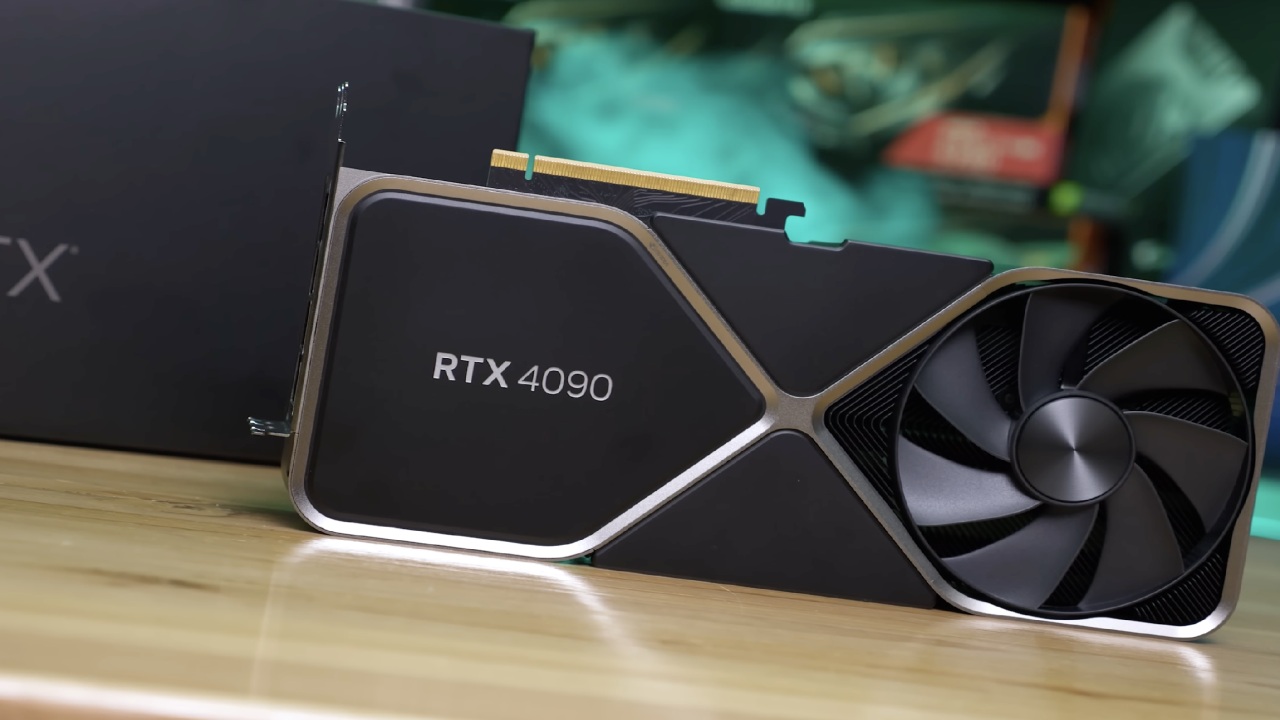
With 24GB of VRAM compared to 16GB for the RTX 5080, the RTX 4090 still has a big edge. 16GB is enough for now, but future games may need more.
The 4090's larger memory pool will definitely help users who want to keep their GPUs for a long time. A stock RTX 4090 can still be overclocked, potentially widening the speed gap if needed.
But because the 4090 is much more expensive and supplies are still limited, many buyers are more likely to find the RTX 5080 at MSRP, especially now that the 5070 and 5070Ti are easier to find.
Final Thoughts
We were truly amazed by how far the RTX 5080 can go when it is free to use any energy, power, or temperature. When overclocked, it works just as well as the RTX 4090 but costs a lot less.
The only difference is the VRAM size. Even though it's a shame Nvidia chose conservative stock settings, experienced users can unlock extra performance, making the card much more competitive.
If the RTX 5080 had launched closer to its boosted performance, it could have changed the category. Still, for people who are ready to tweak it, the card is a great deal because it performs as well as Nvidia's previous flagship but costs much less.
Also, check our other NVIDIA articles:
- NVIDIA GeForce RTX 5080 Review (2025): Still A 4K Gaming Powerhouse?
- RTX 5090 Performance Testing In GTA 5 – 1080p, 1440p, and 4K Max Settings Benchmark
- NVIDIA RTX 5070 Review: Mid-Range Muscle or Marketing Hype?
- RTX 5070 Ti Review: Performance, Thermals & Power Efficiency Tested
- ASUS ROG Astral RTX 5090 OC Edition Review: 32GB GDDR7 & 4K Gaming Benchmark
- ASUS GeForce RTX 5090 LC Liquid Cooled GPU Review: Unmatched Silence & Speed
- INNO3D RTX 5060 Ti 16 GB X2 Review: Gaming Benchmarks, Temps, and Power Efficiency
- HP Omen 45L Review: RTX 5090 Performance, Thermals, and Value Analysis
- ASUS TUF Gaming GeForce RTX 5060 Ti Review: DLSS 4, Power Efficiency, and Gaming
- ASUS Prime RTX 5060 Ti OC 16GB Review: DLSS 4, Ray Tracing, & Thermals Tested
- NVIDIA GeForce RTX 5060 Review: Specs, Gaming, and Cost per Frame
- MSI GeForce RTX 5090 GAMING TRIO OC Review: A Monster Power GPU
Contributor, NoobFeed
Gaming Hardware Updates
No Data.