
Ryzen 5 5500X3D vs. Ryzen 5 5500: Gaming Benchmarks Tested Across Modern AAA Games
Ryzen 5 5500X3D delivers major gaming gains through larger cache and stronger frame consistency in modern titles.
Hardware by Naheyan Tahmin on May 18, 2026
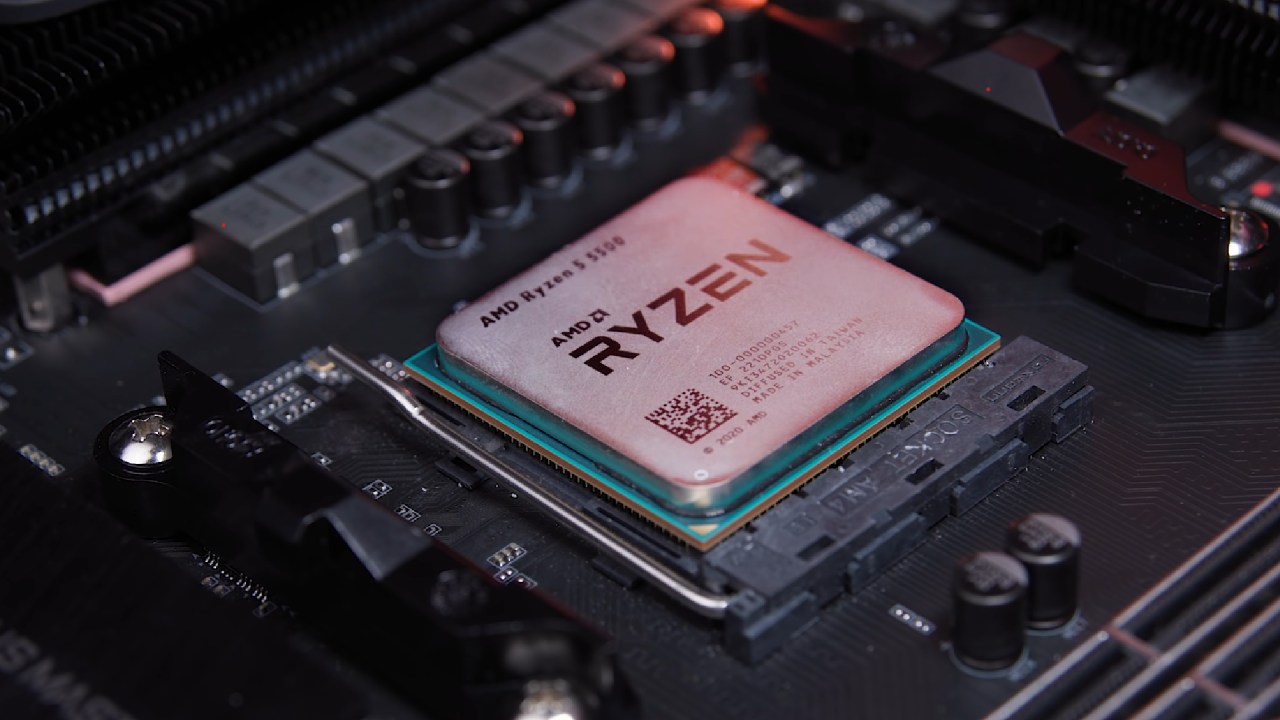
One of the entry points into a modern AM4 gaming system that has been relatively affordable has been the Ryzen 5 5500. Ryzen 5 5500 has been one of the less expensive options for upgrading to a modern AM4-powered gaming system, particularly for those upgrading from a quad-core processor.
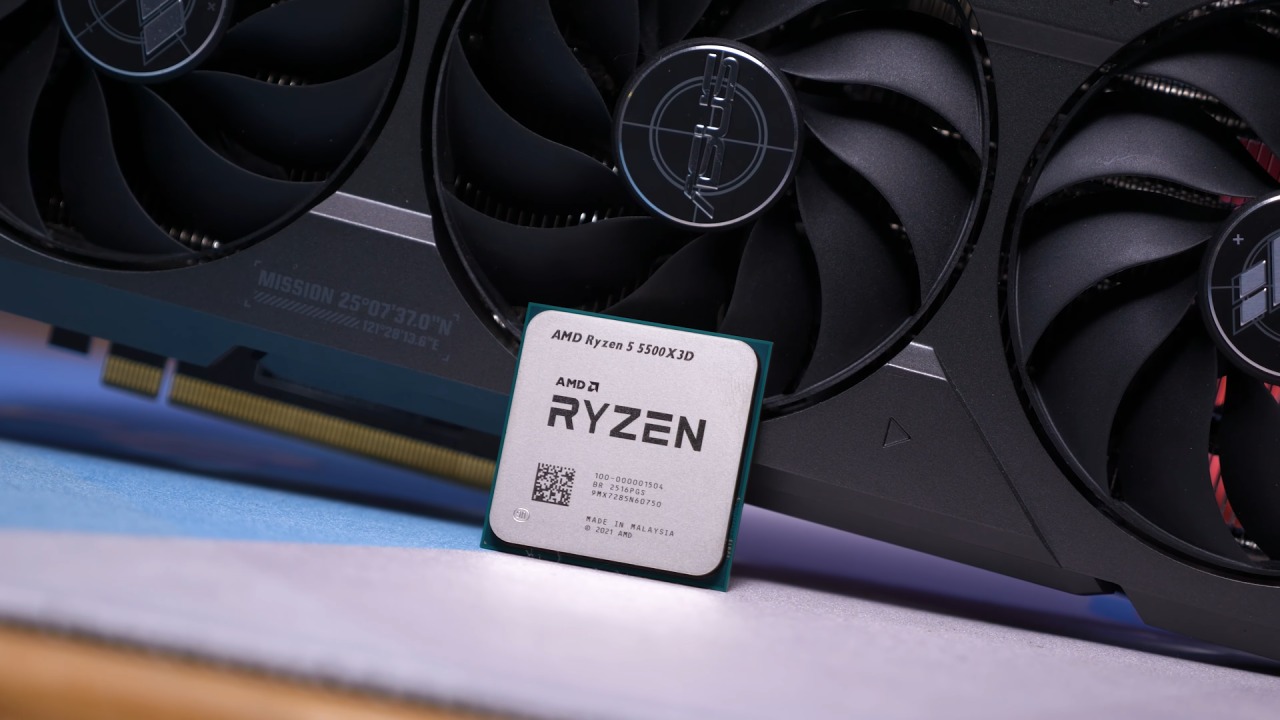
It performs decently with newer games but may reveal its shortcomings with CPU-heavy games. Ryzen 5 5500X3D is a higher-powered, 105W TDP edition that supports PCIe Gen4 and includes 96MB of L3 cache, catering to gamers. Both processors have the same naming scheme but serve vastly different performance ranges.
Additional Features for Benchmarking
The base Ryzen 5 5500 came with 16MB L3 cache, PCIe Gen 3 support, and an all-core clock speed of 4250 MHz. Ryzen 5 5500X3D, however, reduces clock speeds for gaming to approximately 3950MHz whilst matching the large cache boost optimized for gaming workloads.
In non-gaming applications, the two processors performed almost identically in DaVinci Resolve. The render benchmark was performed on each chip, and the results are listed below. For editing/rendering, it still makes more sense to use a high-core-count processor. The X3D lineup continues to focus on gaming performance and not productivity.
Both the CPUs were equipped with an NVIDIA GeForce RTX 4070 Super and 32GB of 3200MHz DDR4 RAM for testing. All testing has been done at 1080p for better visibility of CPU differences. It also featured an ASUS A320M-R, which only supports PCIe Gen3 speeds instead of the 5500X3D's Gen4.
In Cyberpunk 2077, the Ryzen 5 5500X3D delivered 100fps on average with a 1% low of 61fps and a 0.1% low of 49fps. The test sequence was seamless and continuous. The average performance of the standard Ryzen 5 5500 is 68 fps, while the minimum performance is 43 fps at 1% of the time and 39 fps at 0.1% of the time. Although playable, the difference between the two processors was readily apparent during more demanding gameplay.
The Battlefield 6 is a huge void
One of the biggest disparities between the two CPUs was seen in Battlefield 6. At 1080p / ultra / TAA, the Ryzen 5 5500X3D delivered 132 fps with 1% lows at 93 fps and 0.1% lows at 80 fps.
The performance level for the standard Ryzen 5 5500 was 81 fps, with much lower percentile scores at 58 fps and 45 fps. Completely new multiplayer maps and CPU-intensive combat situations quickly showed the limitations of the non-X3D chip. Despite the variations, the standard 5500 is still viable for today's games, particularly when considering its lower cost.
Crimson Desert CPU Scaling
The extra cache on the X3D processor was also greatly appreciated by Crimson Desert. At 1080p ultra settings, the Ryzen 5 5500X3D reached 96 fps with 1% lows at 58 fps and 0.1% lows at 47 fps.
There was some further weakness in performance in larger villages and cities, but there was little further deterioration in overall stability. The Ryzen 5 5500 averaged 68 fps, with a minimum of 41 fps and a maximum of 35 fps. The less expensive processor was fairly competent for its price, but it simply didn't have performance to spare under heavy CPU workloads.
GTA V Enhanced Results
At maximum ray tracing settings, GTA V Enhanced reached 113 fps and 1% lows at 86 fps and 0.1% lows at 72 fps with the Ryzen 5 5500X3D. Ryzen 5 5500 achieved 67 fps, 52 fps, and 42 fps.
Even at 1080p, both CPUs were a bit of a bottleneck for the RTX 4070 Super, but the X3D processor significantly reduced the burden. This resolution allowed the differences between the CPUs to be more properly captured and was representative of gaming scenarios in 2026 configurations.
Resident Evil Requiem Performance
Resident Evil Requiem also marked another solid performance for the X3D chip. With 1080p and TAA disabled, the Ryzen 5 5500X3D scored 135 fps with a 1% low of 113 fps and a 0.1% low of 62 fps. With 1080p and TAA disabled, the Ryzen 5 5500X3D achieved 135 fps with a 1% low of 113 fps and a 0.1% low of 62 fps.
Outdoor sections remained more difficult to perform, but indoor sections were even more difficult, further raising frame rates. Ryzen 5 5500 clocked in at 94 fps, with 66 fps and 58 fps as the minimum and maximum values. The overall experience was still good, but the performance benefit of the larger cache was consistently noticeable.
Remove the 3D, and the Ryzen 5 5500X3D is definitely much better than the standard Ryzen 5 5500 for gaming.
Along with the increased L3 cache to 96 MB, there are significant improvements in CPU-intensive titles, particularly with mid-range and high-end graphics cards. For those who already have a Ryzen 5 3600 or 5500, upgrading to the 5500X3D might offer a significant boost in gaming performance without requiring a switch to AM5, DDR5 memory, or a new motherboard.
The improvements won't be as significant for lower-end GPUs like a GTX 1660-class rig, but improvements in frame consistency and percentile lows can still make a game feel smoother. Ryzen 5 5500X3D may be a good option for those seeking a viable path to upgrade their AM4 gaming system just one last time.
Editor, NoobFeed
Gaming Hardware Updates
No Data.